Disney and Pixar’s Cars might be an animated movie about talking cars, but many of the places and people that inspired it were very real. Before creating Radiator Springs and its colorful cast of characters, the Pixar team took multiple research trips along Route 66, meeting business owners, exploring small towns, and learning firsthand about the communities that grew up along the Mother Road.
We actually hadn’t watched Cars since it came out when we were in high school, so before setting out on our Route 66 road trip, we decided to rewatch it (you can stream it or get the DVD on Amazon). We were surprised by just how accurately the movie captures the history and spirit of Route 66. Beneath the talking cars and cartoon setting is a story about small towns that were bypassed by the interstate, struggling businesses, and the people who refused to give up on their communities. Since the movie’s release, Route 66 towns and businesses have fully embraced their connection to Cars. You’ll find photo opportunities, murals, memorabilia, and references to the movie all along the route. Part of the fun of our trip was spotting places that looked familiar and realizing, “Wait, that’s from Cars!”
We’re always excited when we recognize places from movies we’ve seen, and visiting the real-life inspirations behind Cars made the movie even more fun to watch. In this post, I’m sharing the Route 66 locations, landmarks, businesses, and people that helped inspire the film, along with their history and tips for visiting them yourself.
From Hollywood Research to Route 66 Road Trip
One of the reasons Cars feels so authentic is because Pixar put in the work to understand Route 66 before ever starting production. In the foreword to The Art of Cars, director John Lasseter writes about the importance of research and getting the details right. When he first drove Route 66, what stood out most wasn’t just the roadside attractions or vintage signs, it was how every town seemed to tell its own story.
Pixar ended up doing more research for Cars than for any previous project. The team wanted to understand not only the road itself, but also the people and communities that made Route 66 special. As they traveled, they saw firsthand how many small towns and businesses had been affected when the interstate highway system diverted travelers away from Route 66. Lasseter wrote that the team was “quickly seduced by Route 66” and fascinated by what life must have been like in the towns that suddenly found themselves bypassed by modern highways.
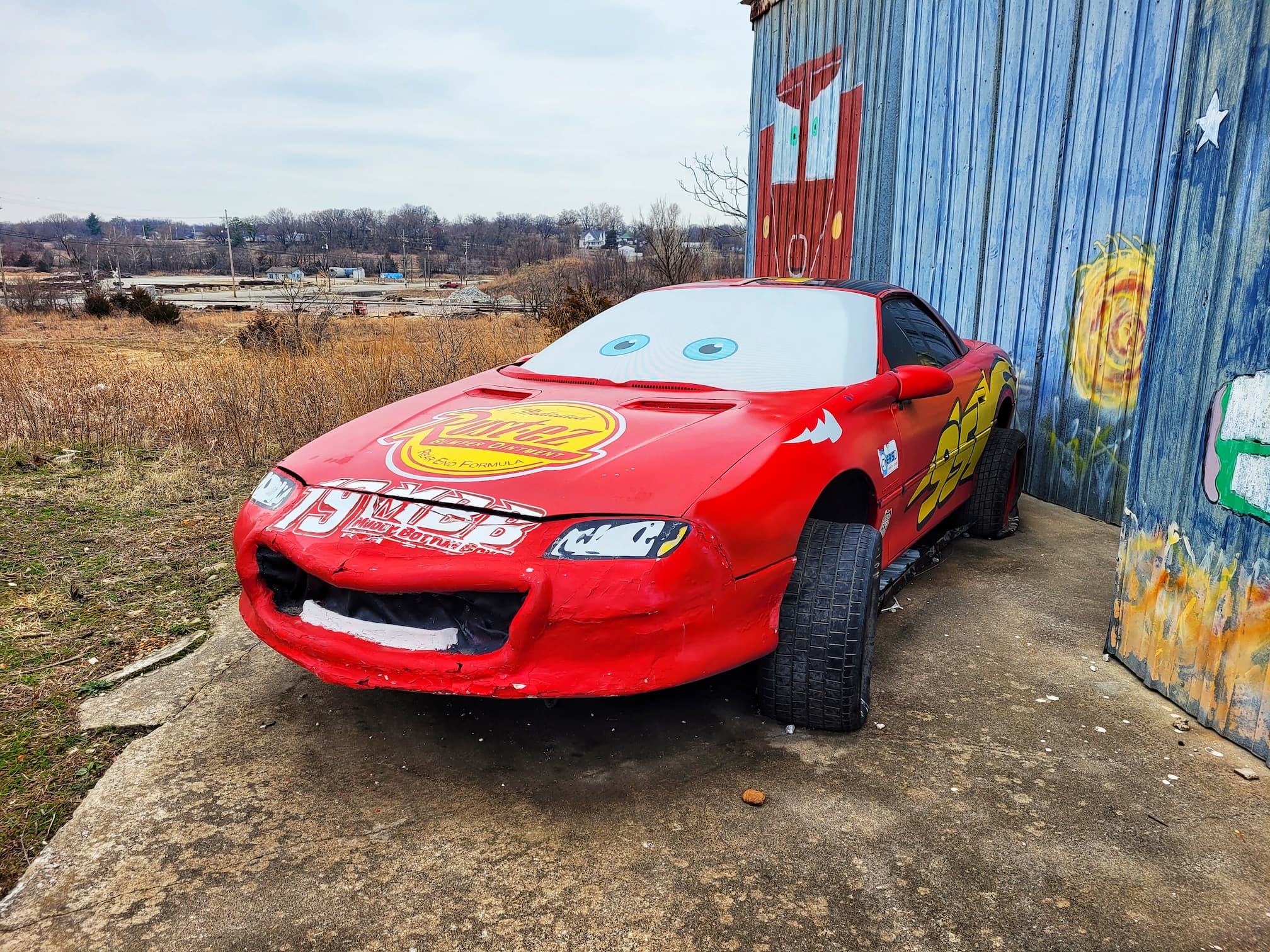
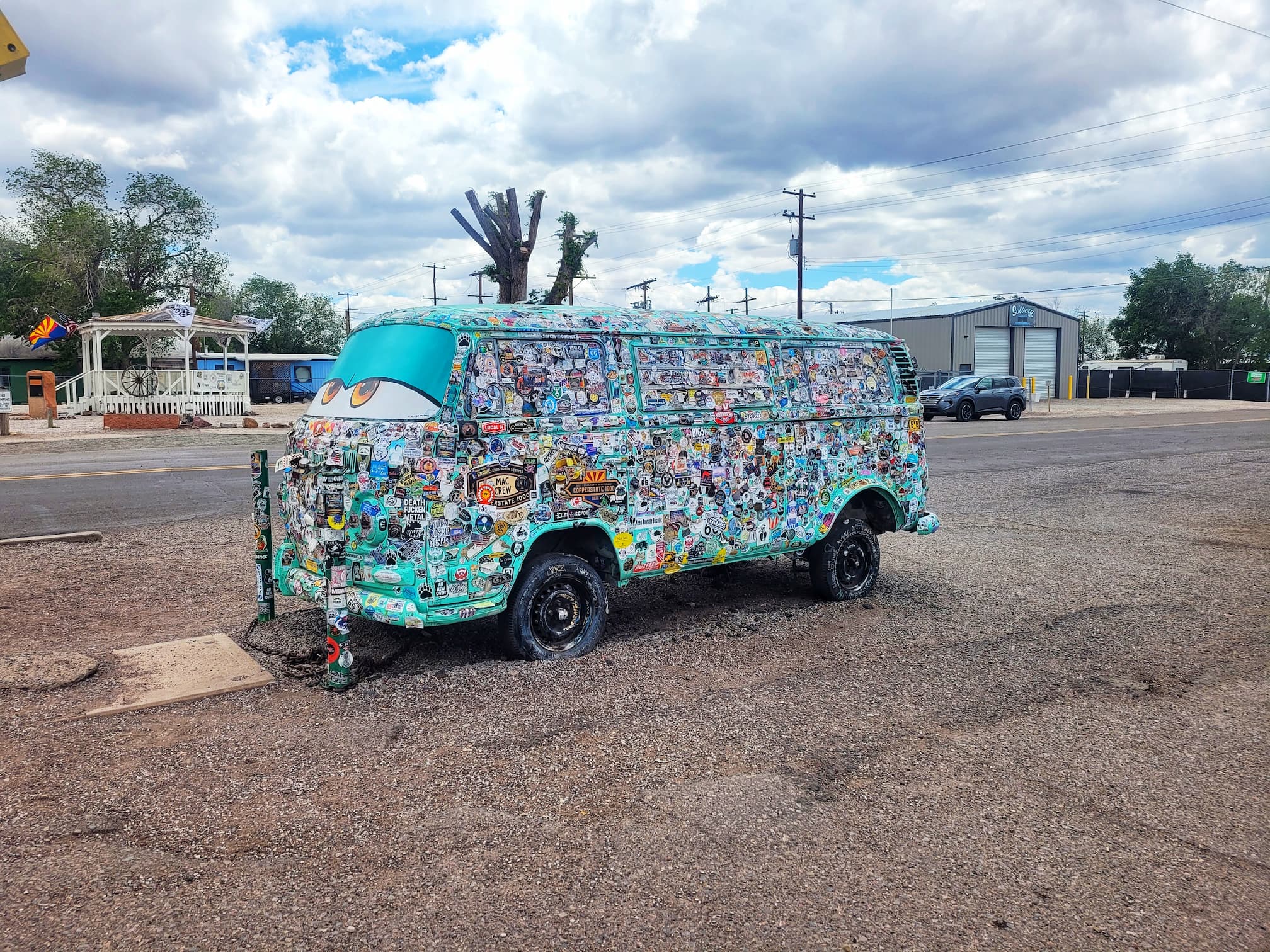
To help them experience the Mother Road, Pixar enlisted Route 66 expert Michael Wallis, author of several books about the highway and later the voice of Sheriff in Cars. Wallis led the team on two extensive Route 66 tours. The first trip took place in 2001 and included Lasseter, producer Darla Anderson, artists, writers, and other members of the Pixar team. They rented Cadillacs and drove the route, stopping wherever something caught their attention. A second research trip followed the next year.
Rather than rushing from one destination to the next, the team took time to explore, meet local residents, and hear their stories. Those conversations and experiences became the foundation for many of the characters, locations, and themes that eventually made their way into Cars.
The Art of Cars can be a little hard to find, but there are a couple copies available on Amazon
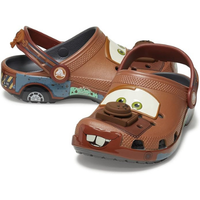
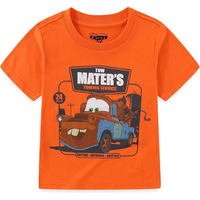
The Rusty Tow Truck That Became Mater
One of the most recognizable characters in Cars was inspired by a real tow truck sitting along Route 66 in Kansas.
According to The Art of Cars, the Pixar team came across “a lonely old tow truck that most folks would pass by without a second glance.” While many people might have seen nothing more than a rusty vehicle, Head of Story Joe Ranft saw something different. As John Lasseter wrote, “he saw beyond its rust and broken-down parts—he saw the inspiration for the character Mater.”
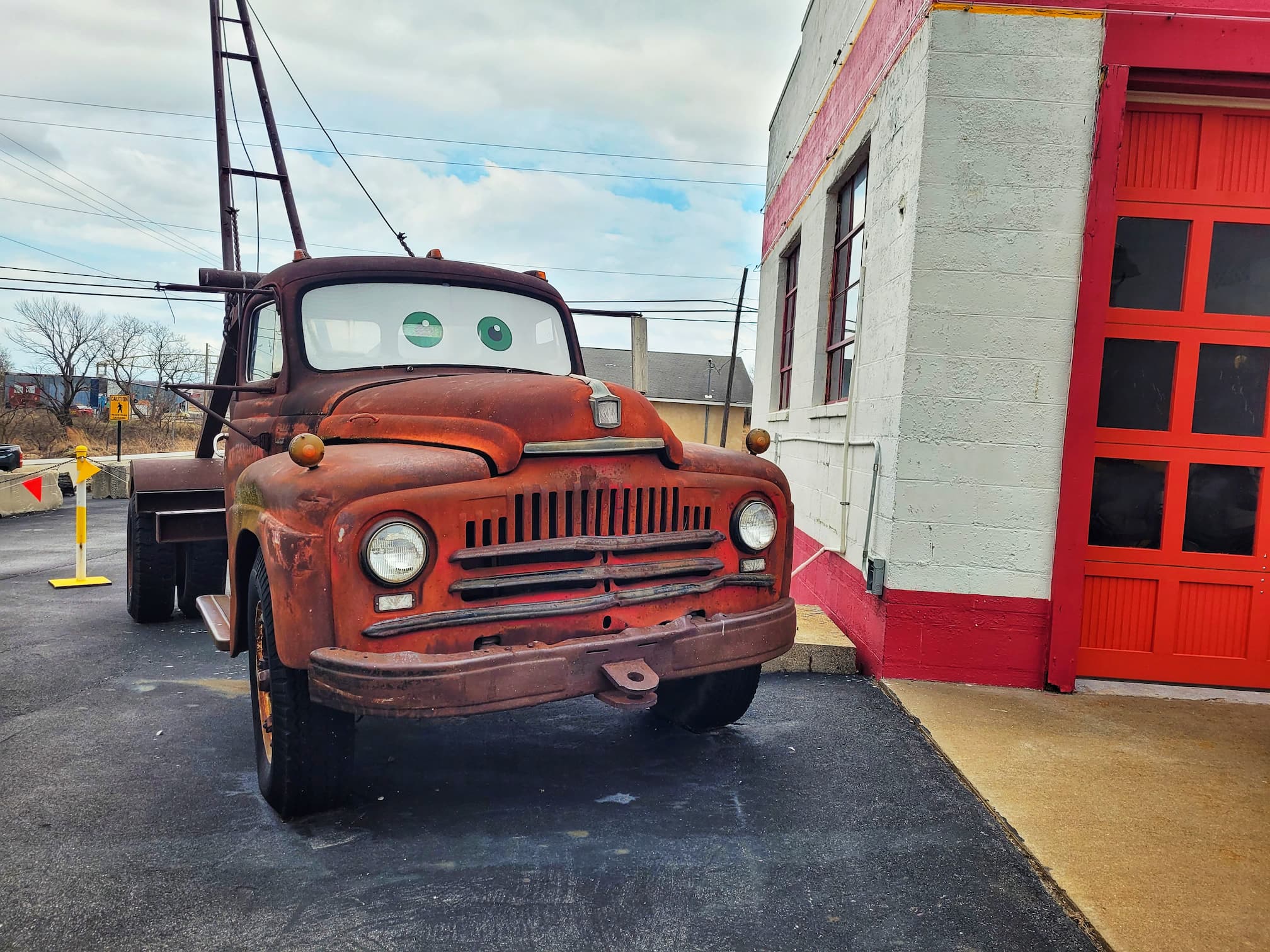
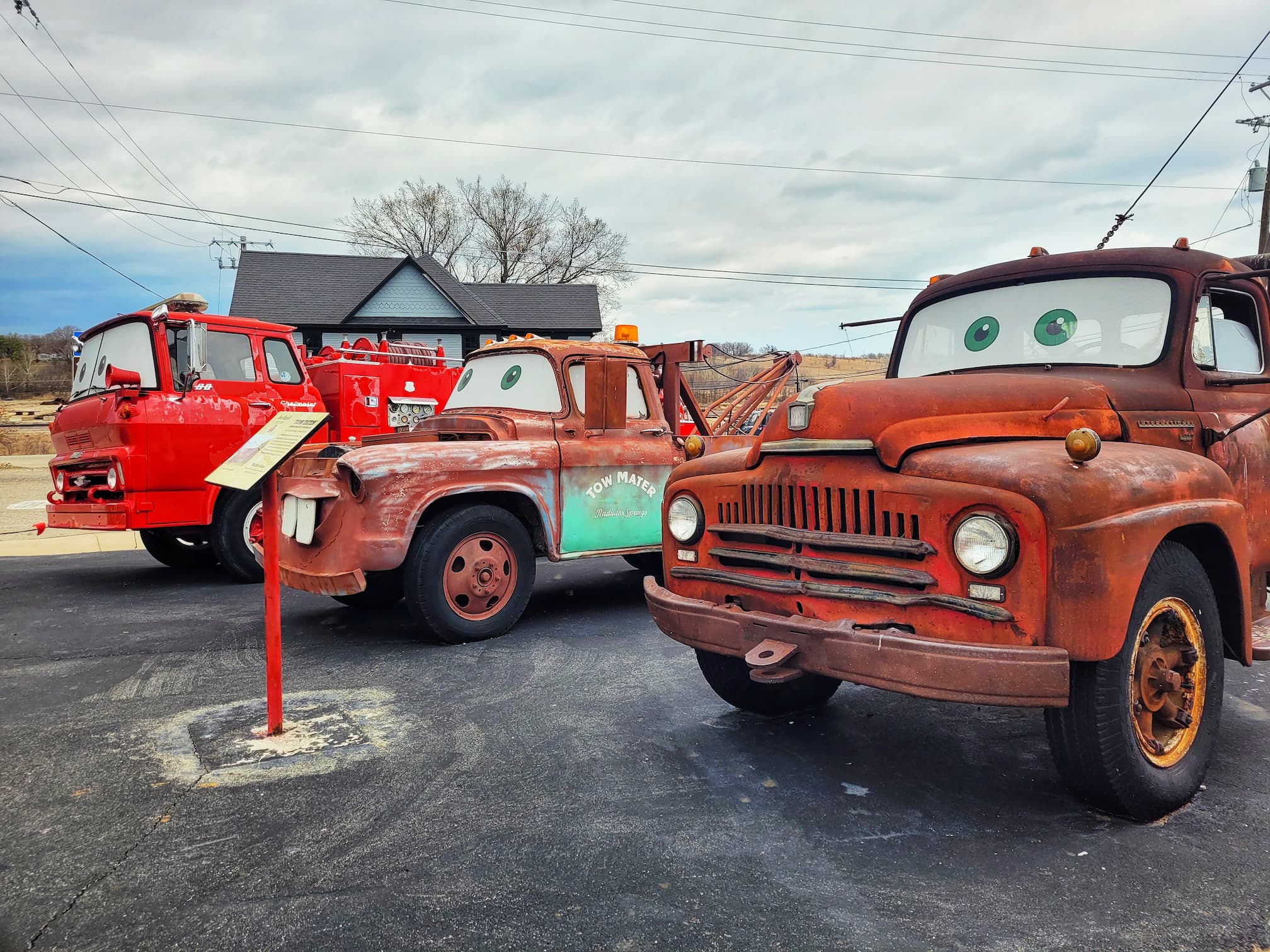
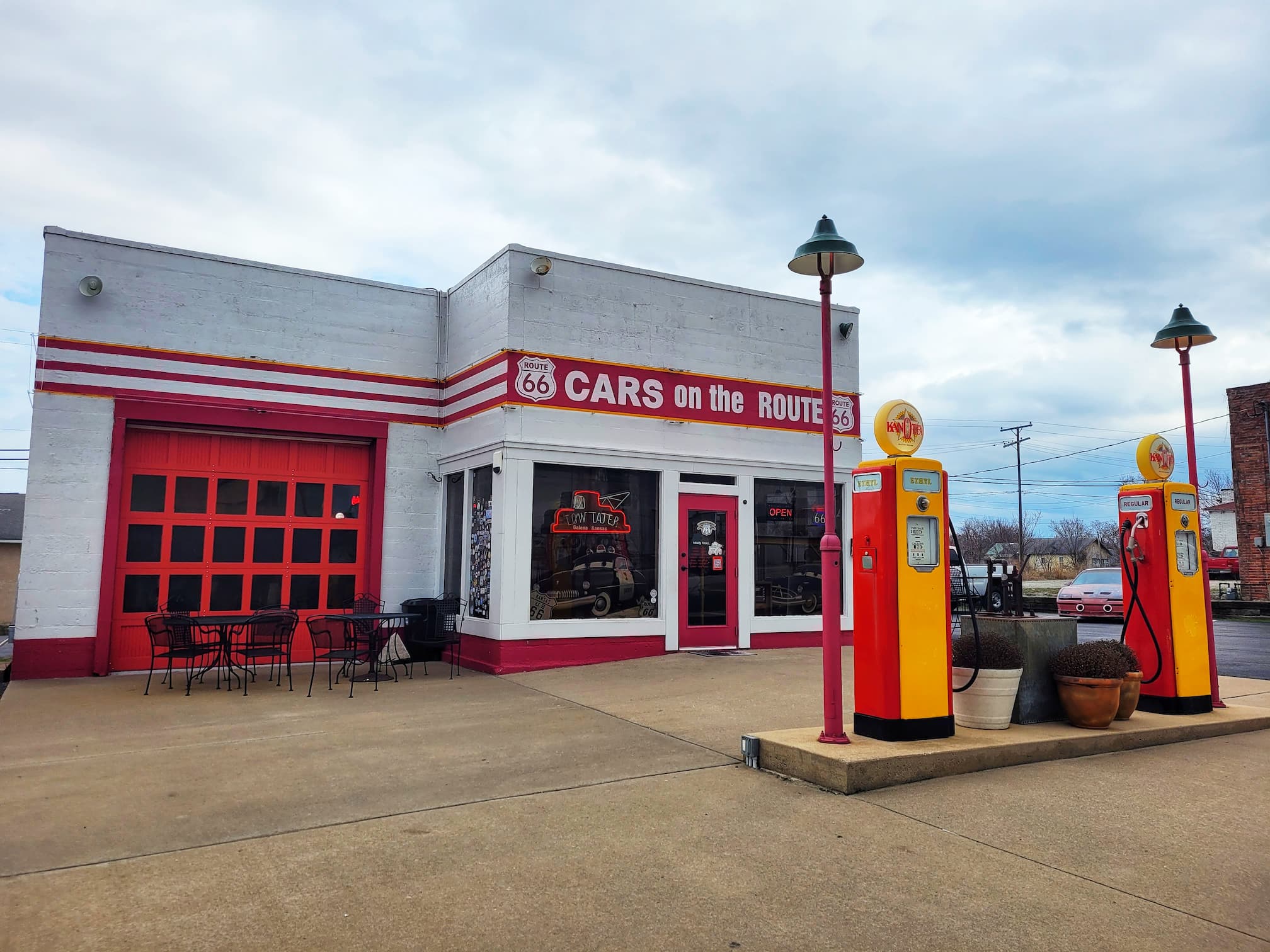
That tow truck was Toe Tater, a 1951 International Harvester tow truck that still sits outside Cars on the Route in Galena, Kansas. Long before its connection to Pixar, the business was known as Four Women on the Route and operated out of a historic 1934 Kan-O-Tex service station. After the current owners purchased the property, they renamed it Cars on the Route and embraced its connection to the movie.
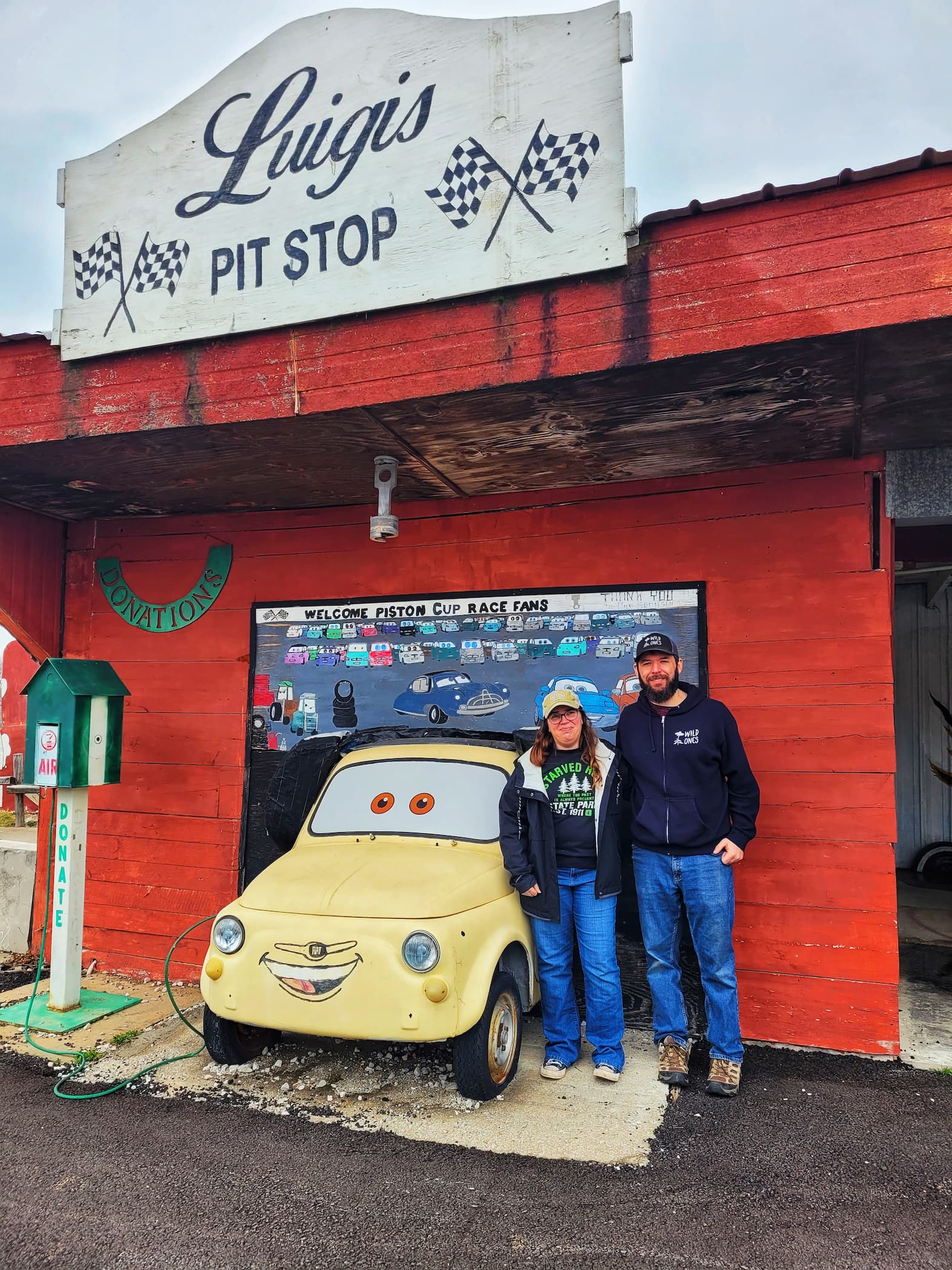
When we visited, we chatted with one of the owners, who showed us photos from Pixar’s Route 66 research trip and shared the story of how Toe Tater inspired Mater. Seeing those photos made the connection feel much more real than simply reading about it in a book. Today, Cars on the Route has become one of the most popular Cars-related stops on Route 66. In addition to Toe Tater, you’ll find character displays, photo opportunities, and plenty of movie memorabilia. The owners have fully embraced the connection and turned the property into a fun stop for both Route 66 travelers and Cars fans.
Mater Fan Essentials

How to Visit Cars on the Route
Address: 119 N Main St, Galena, KS 66739
Website: https://www.facebook.com/CarsOnTheRoute/
Hours: Tuesday-Sunday 10am-4pm
The Art Deco Landmark Behind Ramone’s Body Shop
If Ramone’s House of Body Art looked familiar while watching Cars, that’s because it was inspired by one of the most iconic buildings on Route 66.
Located in Shamrock, Texas, the Tower Conoco Station and U-Drop Inn Cafe served as the inspiration for Ramone’s neon-lit body shop in Radiator Springs. With its distinctive tower, curved lines, and Art Deco design, it’s easy to see why the Pixar team was drawn to it. The building dates back to 1936 and holds an important place in Shamrock’s history as the first commercial business constructed along Route 66 in town. According to local history, businessman John Nunn originally sketched his vision for the building in the dirt using an old nail. Architect Joseph Berry later transformed that rough drawing into the striking Art Deco structure that still stands today.
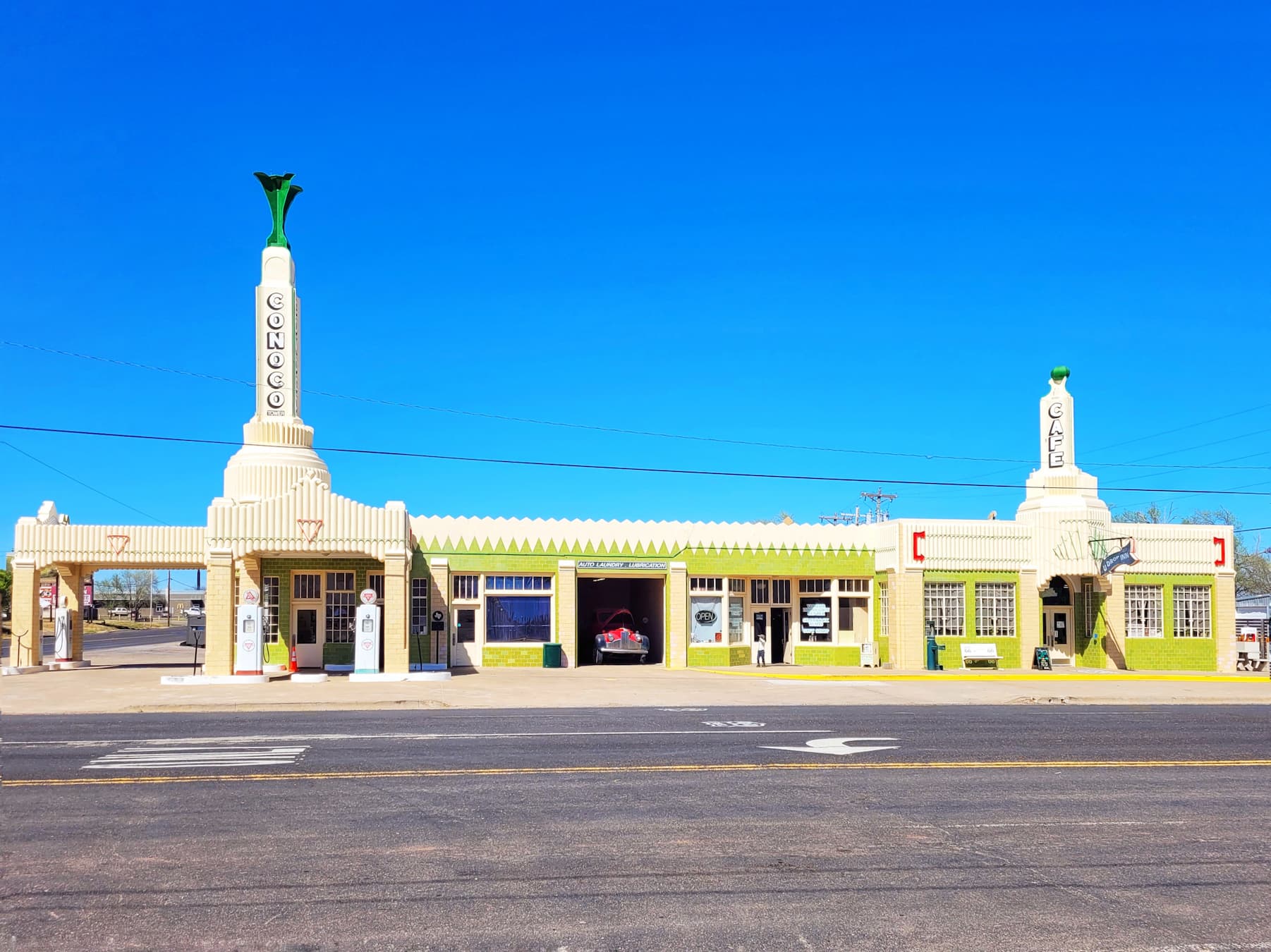
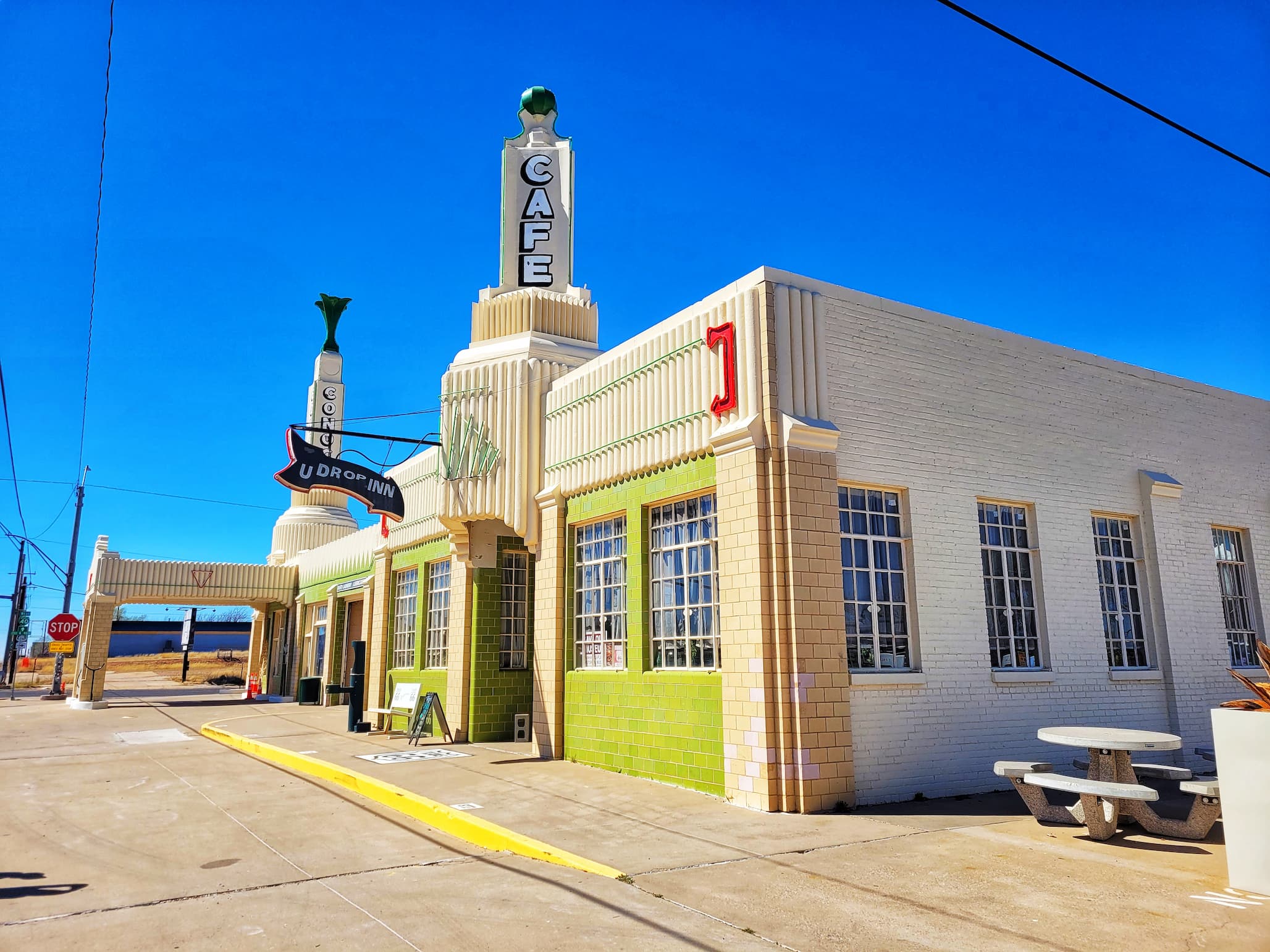
The first section completed was the Tower Conoco Station. The U-Drop Inn Cafe was added shortly afterward, and a third structure was eventually built to provide additional seating as the cafe grew in popularity. Like many Route 66 businesses, the property went through periods of decline as traffic shifted to the interstate. Fortunately, the building was preserved and restored rather than demolished.
Today, the City of Shamrock owns the landmark. It serves as the town’s visitor center and chamber of commerce office, and visitors can still stop in for a meal at the U-Drop Inn Cafe. Whether you’re a Cars fan, a Route 66 enthusiast, or simply someone who appreciates historic architecture, it’s one of the most impressive buildings you’ll find anywhere along the Mother Road.
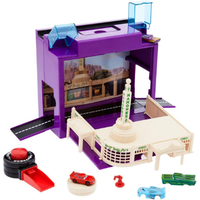
Disney even makes a Ramone’s Body Shop playset, how cool is this?! It’s like having your own mini Conoco Tower.
How to Visit Conoco Tower Station & U-Drop Inn Cafe
Address: 105 E 12th St, Shamrock, TX 79079
Website: https://www.shamrocktexas.net/
Hours: Monday-Saturday 10am-7pm
From Cadillac Ranch to Cadillac Range
One of the easiest Route 66 inspirations to spot in Cars is the connection between Cadillac Ranch in Amarillo, Texas, and the Cadillac Range mountain formation that appears throughout the movie.
In The Art of Cars, photos of Cadillac Ranch are shown alongside Pixar’s early concept sketches for the Cadillac Range, making the inspiration pretty obvious. The film’s credits even include acknowledgments to the Ant Farm collective and Cadillac Ranch itself.
Cadillac Ranch was created in 1974 by members of the art collective Ant Farm. The installation features ten Cadillacs buried nose-first in the ground at the same angle as the Great Pyramid of Giza. What began as a quirky piece of roadside art has become one of the most famous attractions on Route 66. Unlike many public art installations, visitors are encouraged to leave their mark. Over the years, the Cadillacs have become a constantly changing canvas covered in layers upon layers of spray paint. Every day, new visitors add their own artwork, messages, and colorful designs.


When we visited, there was a truck on-site selling souvenirs and spray paint, but you don’t necessarily need to buy your own. Visitors frequently leave behind partially used cans, and there were plenty available for anyone who wanted to contribute to the artwork. Even if you’ve never seen Cars, Cadillac Ranch is one of those classic Route 66 stops that’s worth experiencing. But once you’ve seen the connection between the colorful Cadillacs and the jagged Cadillac Range towering over Radiator Springs, it’s hard not to picture Lightning McQueen racing through the desert.
How to Visit Cadillac Ranch
Address: 13651 I-40 Frontage Rd, Amarillo, TX 79124
Hours: Open 24/7
The Route 66 Motels That Inspired the Cozy Cone
The Cozy Cone Motel is one of the most memorable landmarks in Radiator Springs, and its inspiration came from a real chain of quirky roadside motels that once dotted America’s highways.
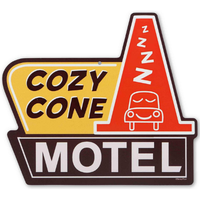
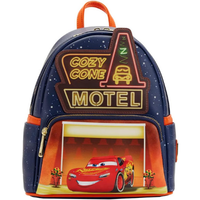
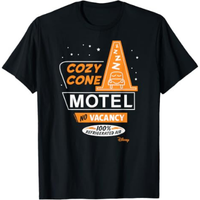
The Wigwam Villages were built during the golden age of road trips in the 1930s and 1940s. Despite the name, the rooms are actually shaped like tipis rather than wigwams. At one time there were seven Wigwam Village locations across the United States, but only three survive today, and two of them are located along Route 66. The Pixar team visited these iconic motels during their Route 66 research trips, and it’s easy to see how they inspired Sally’s Cozy Cone Motel. While the movie swapped tipis for traffic cones, the concept is nearly identical: a collection of individual cone-shaped rooms arranged around a classic roadside motor court.
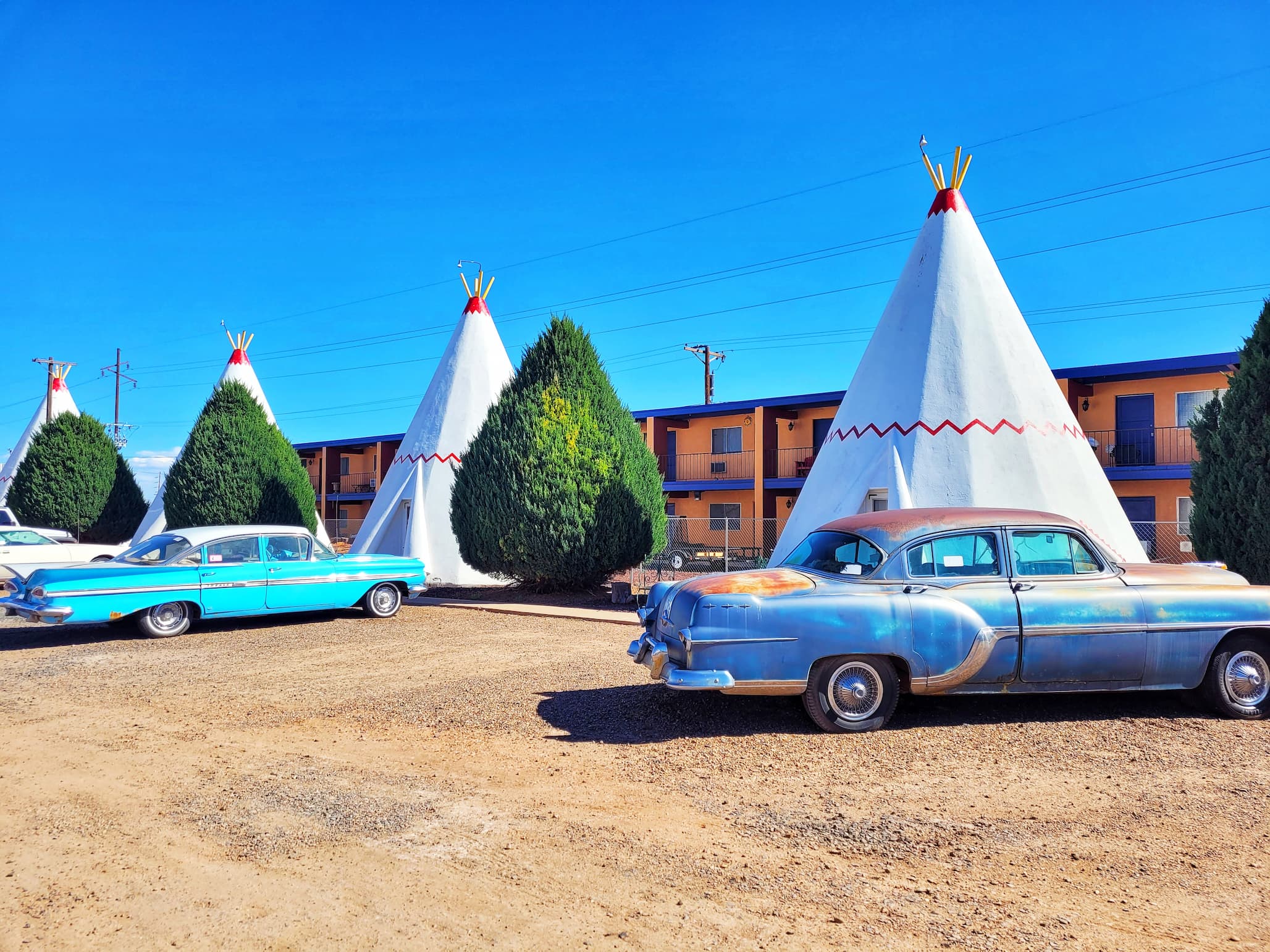
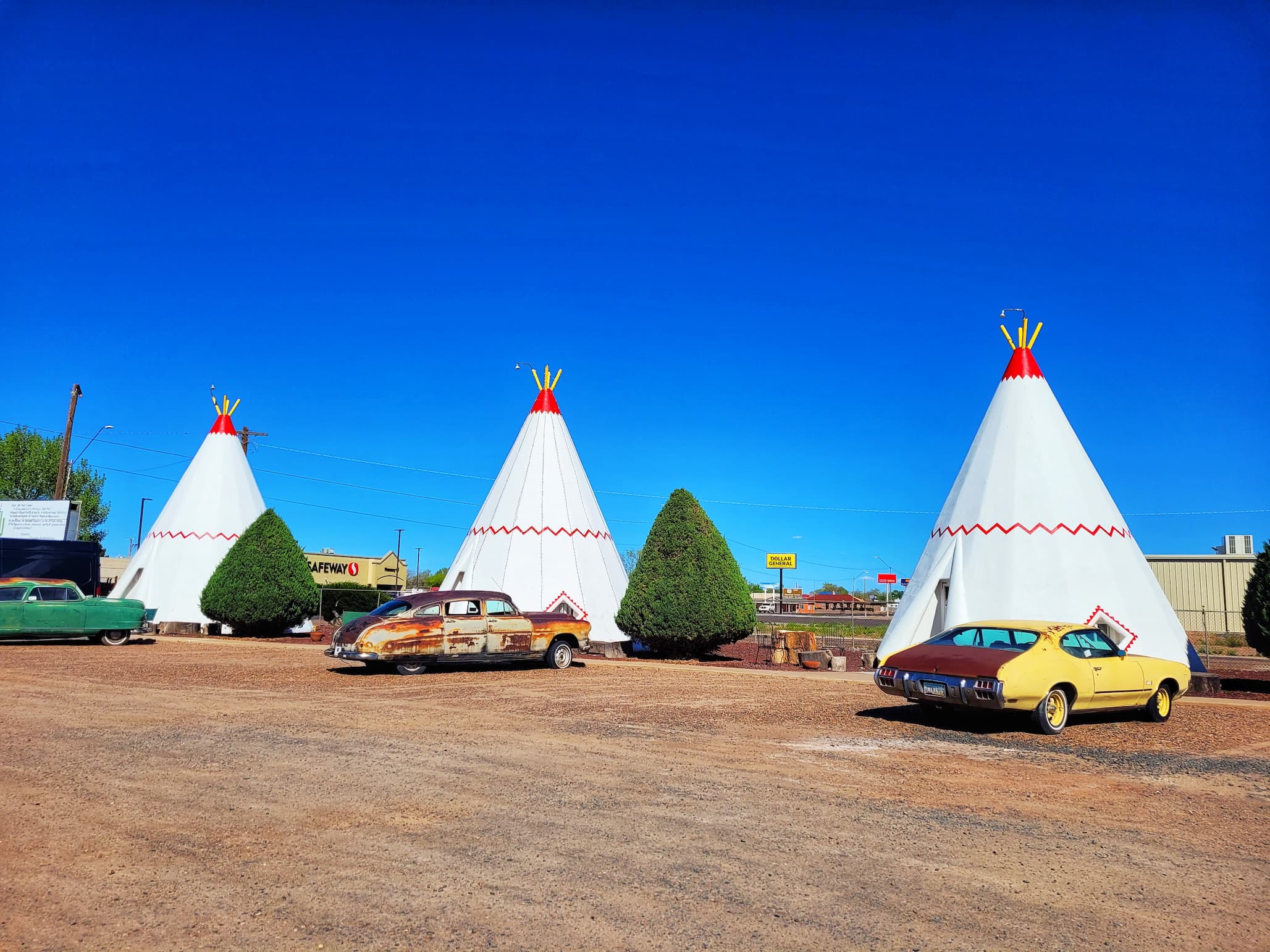
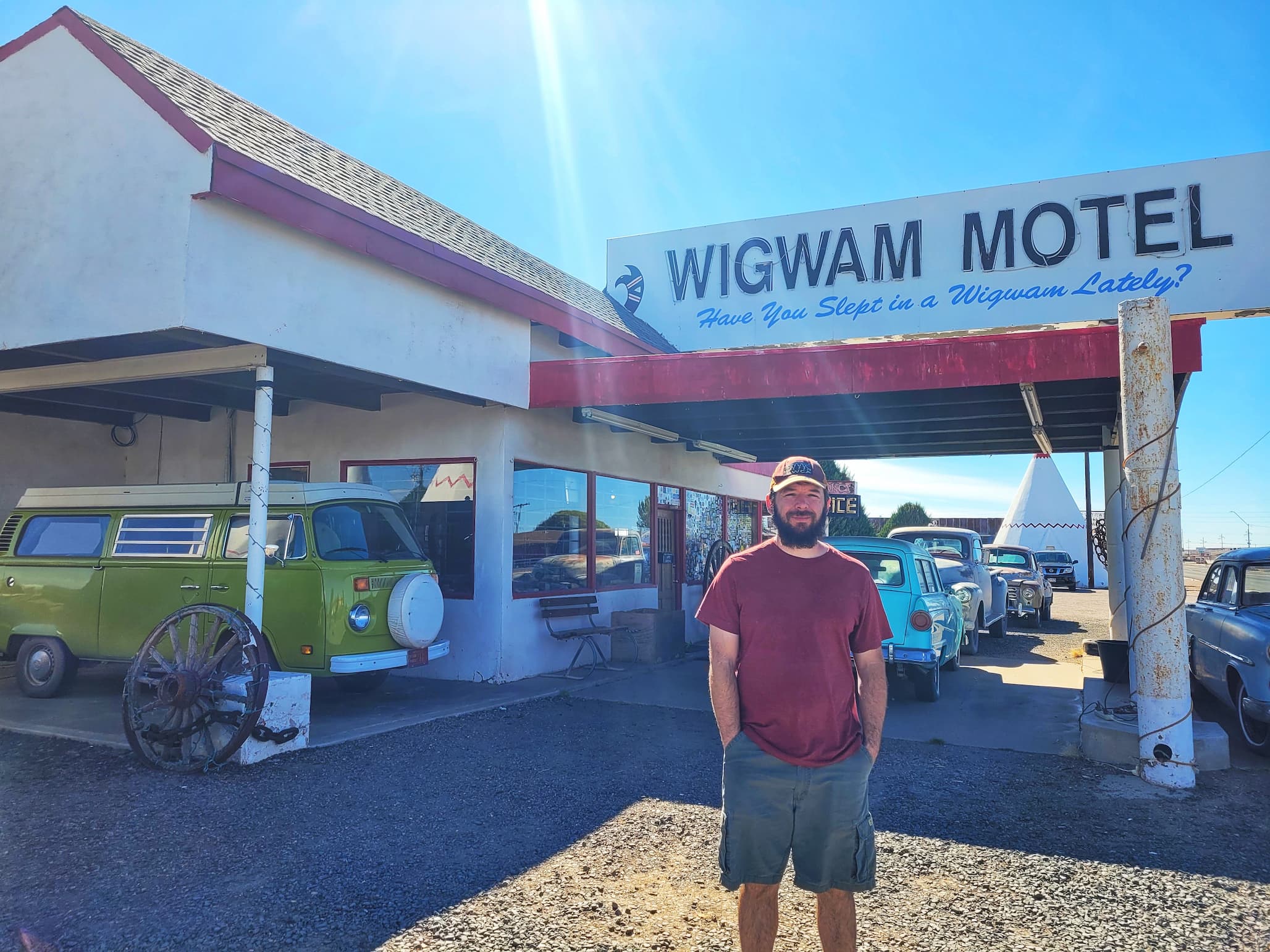
The best-preserved Route 66 example is Wigwam Village #6 in Holbrook, Arizona. Built in 1950 by motel owner Chester E. Lewis, it continues to operate today and is still run by members of the Lewis family. In addition to the famous tipi rooms, the property features a collection of restored vintage cars parked throughout the grounds, making it feel even more like a scene from Cars. Further west, Wigwam Village #7 in San Bernardino, California, was built between 1947 and 1949 by Frank Redford. Located along Historic Route 66, the motel features 20 tipi-shaped rooms and remains one of the most recognizable roadside attractions in Southern California.
Of all the real-world inspirations behind Cars, the connection between the Wigwam Villages and the Cozy Cone Motel might be the most obvious. If you’ve ever wanted to spend the night in a real-life version of Radiator Springs, these historic Route 66 motels are about as close as you can get.
Bring Home the Cozy Cone Motel
How to Visit Wigwam Motel
Holbrook Address: 811 W Hopi Dr, Holbrook, AZ 86025
Holbrook Website: https://sleepinawigwam.com/
San Bernadino Address: 2728 E Foothill Blvd, San Bernardino, CA 92410
San Bernadino Website: https://www.wigwammotel.com/
The Route 66 Gift Shop That Feels Like Radiator Springs
While several Route 66 businesses likely influenced Radiator Springs Curios, Hackberry General Store in Arizona is probably the closest real-life match.
Stepping inside feels a lot like walking into the movie. The shelves are packed with Route 66 memorabilia, vintage signs cover the walls, and every corner seems to hold another interesting artifact. The cluttered, treasure-hunt atmosphere is remarkably similar to the Curios shop run by Lizzie in Radiator Springs. The building itself dates back to 1934 and originally operated as a general store serving travelers along Route 66. Like many businesses on the Mother Road, it struggled after Interstate 40 diverted traffic away from the highway and eventually closed in the late 1970s.
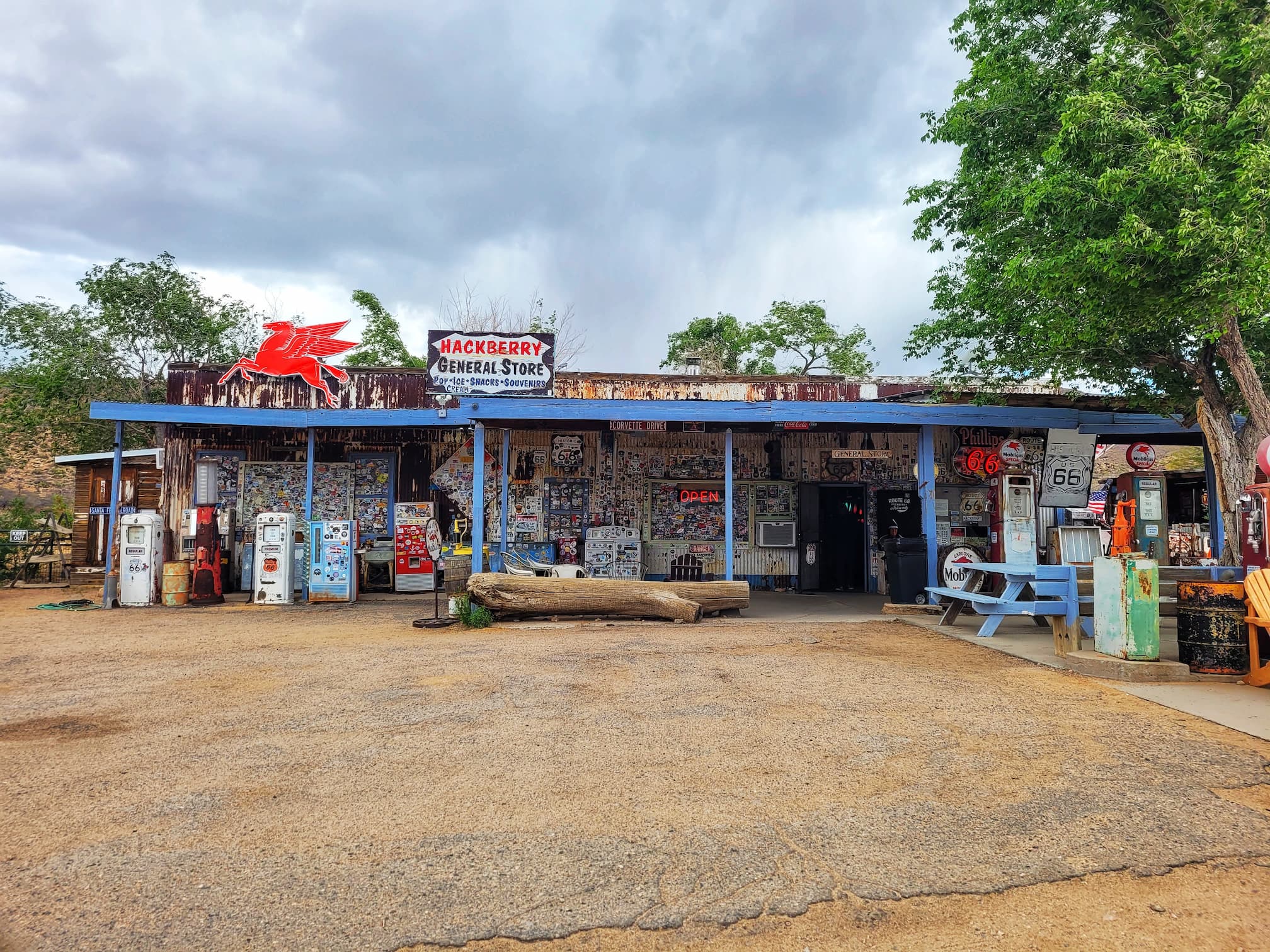
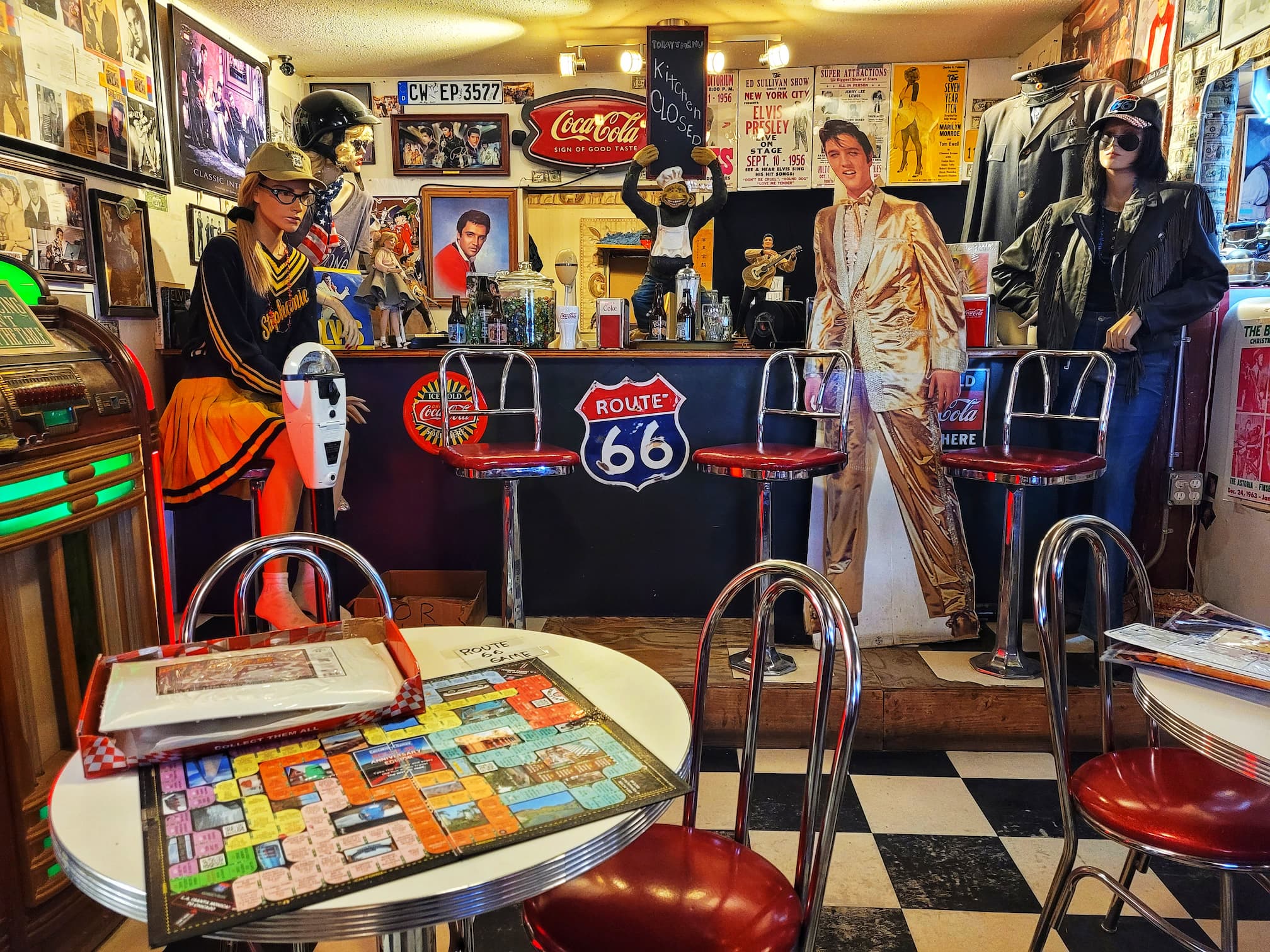
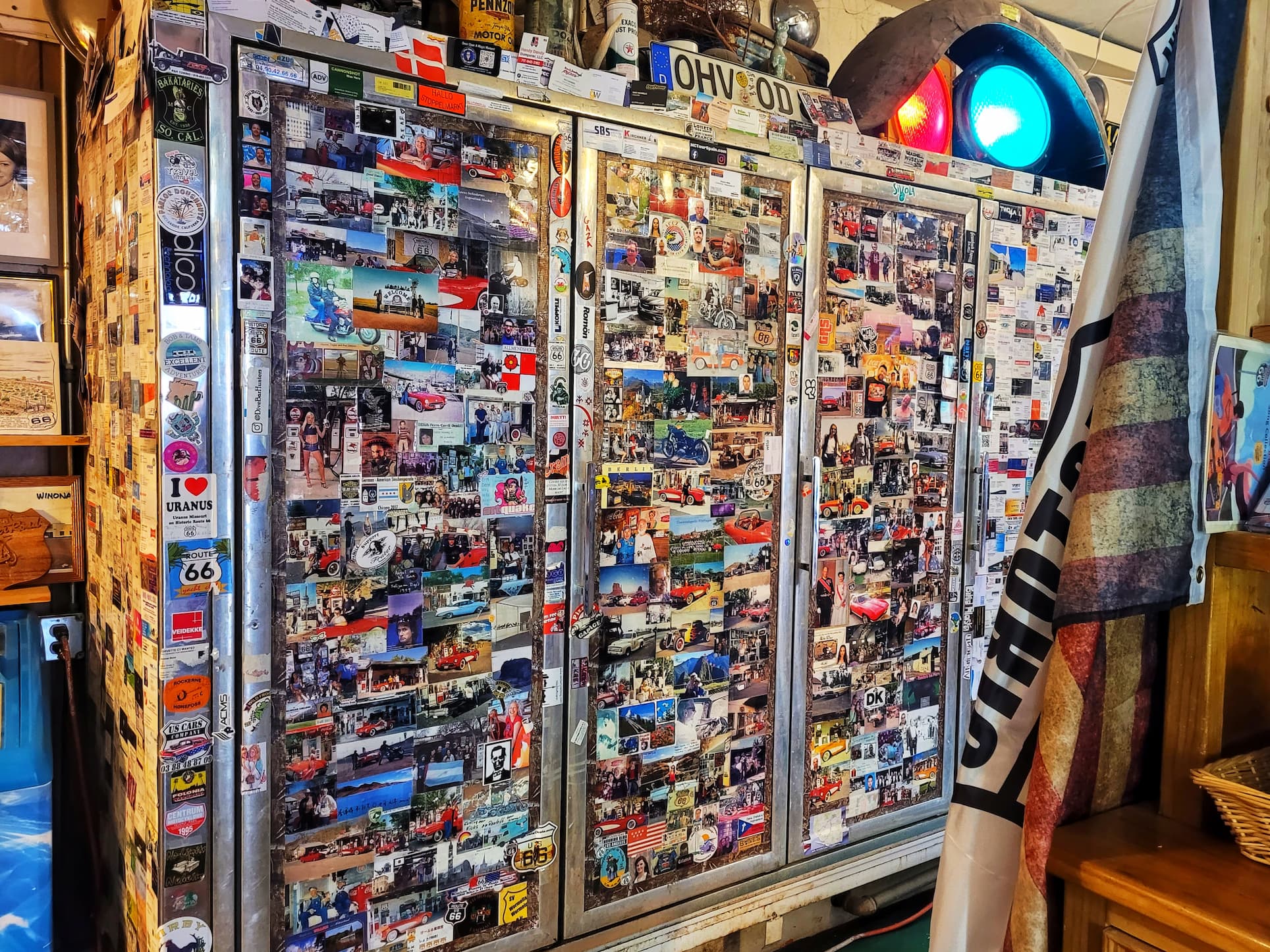
Fortunately, the story didn’t end there. In the 1990s, the property was revived by renowned Route 66 artist Bob Waldmire, whose artwork and passion for preserving Route 66 helped introduce a new generation of travelers to the historic highway. Many Route 66 enthusiasts believe Waldmire also helped inspire the character Fillmore in Cars, making Hackberry General Store’s connection to the movie even more interesting.
Today, the store is one of the most popular stops on Arizona’s stretch of Route 66. Outside, you’ll find vintage vehicles, old gas pumps, and classic roadside photo opportunities. Inside, the walls, ceilings, and displays are covered with stickers, signs, license plates, and mementos left by Route 66 travelers from around the world.
Whether or not it directly inspired Radiator Springs Curios, Hackberry General Store perfectly captures the nostalgic, slightly quirky spirit that Pixar worked so hard to recreate in Cars. It’s exactly the kind of place where you can spend far longer than you planned just looking around.
How to Visit Hackberry General Store
Address: 11255 AZ-66, Kingman, AZ 86411
Hours: Daily 9am-6pm
The Small Arizona Town Behind Radiator Springs
Many Route 66 towns helped inspire Radiator Springs, but Seligman, Arizona, is often considered the community that most closely captures the heart and spirit of the fictional town.
One of the biggest reasons is Angel Delgadillo, a longtime Seligman barber who became one of the most important figures in Route 66 history. During Pixar’s research trips, Delgadillo shared stories with John Lasseter and the team, helping them understand what life was like in Route 66 communities before and after they were bypassed by the interstate.
In 1978, Interstate 40 rerouted traffic away from Seligman, leaving the town facing an uncertain future. Rather than accepting its decline, Delgadillo became a passionate advocate for preserving Route 66. He helped found the Historic Route 66 Association of Arizona and spent years promoting the highway and encouraging travelers to return to the small towns that depended on it. That story will sound familiar to anyone who has seen Cars. The movie’s central theme, a town struggling after a new highway diverts travelers elsewhere, mirrors the real experiences of communities like Seligman.
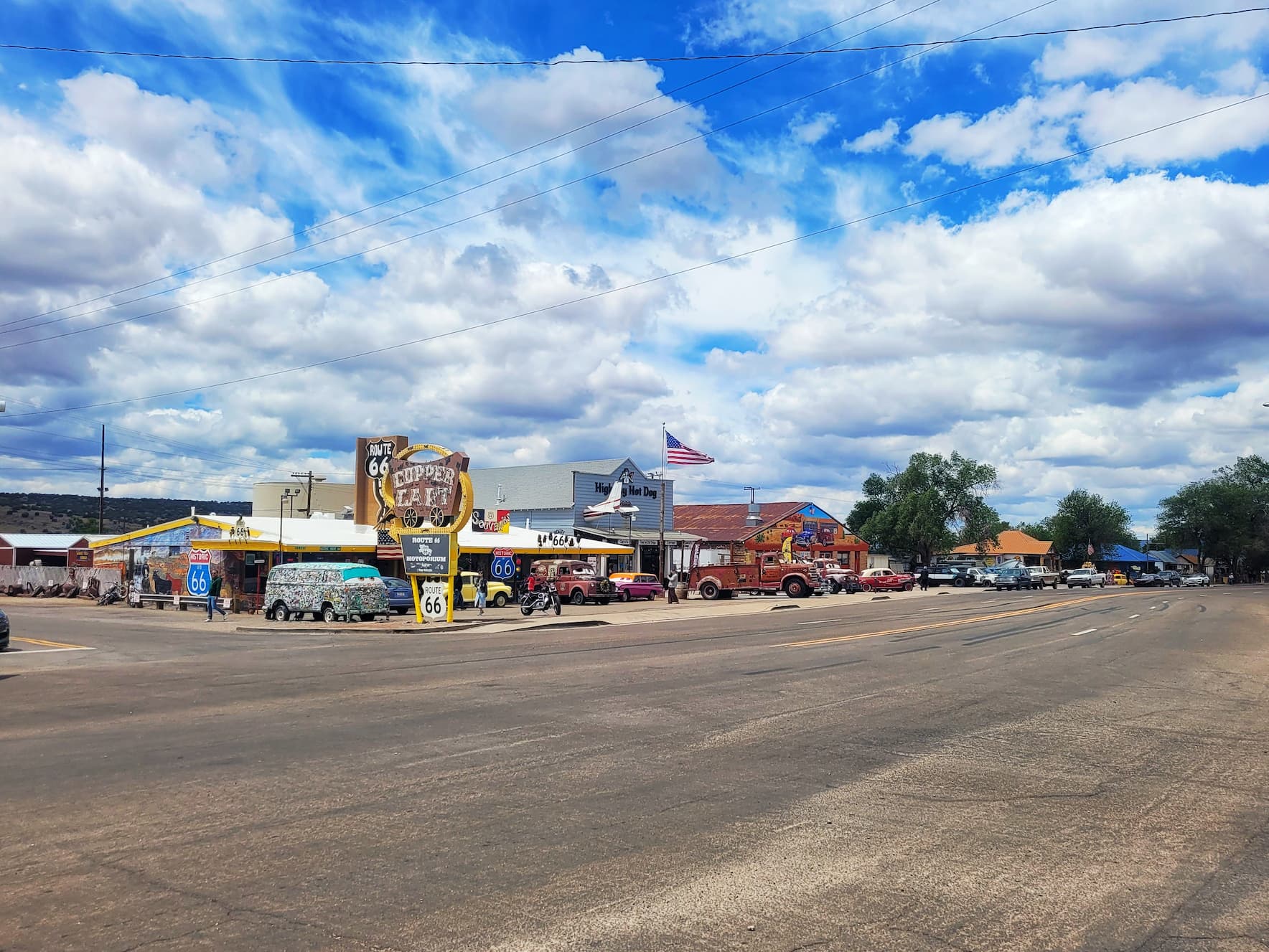
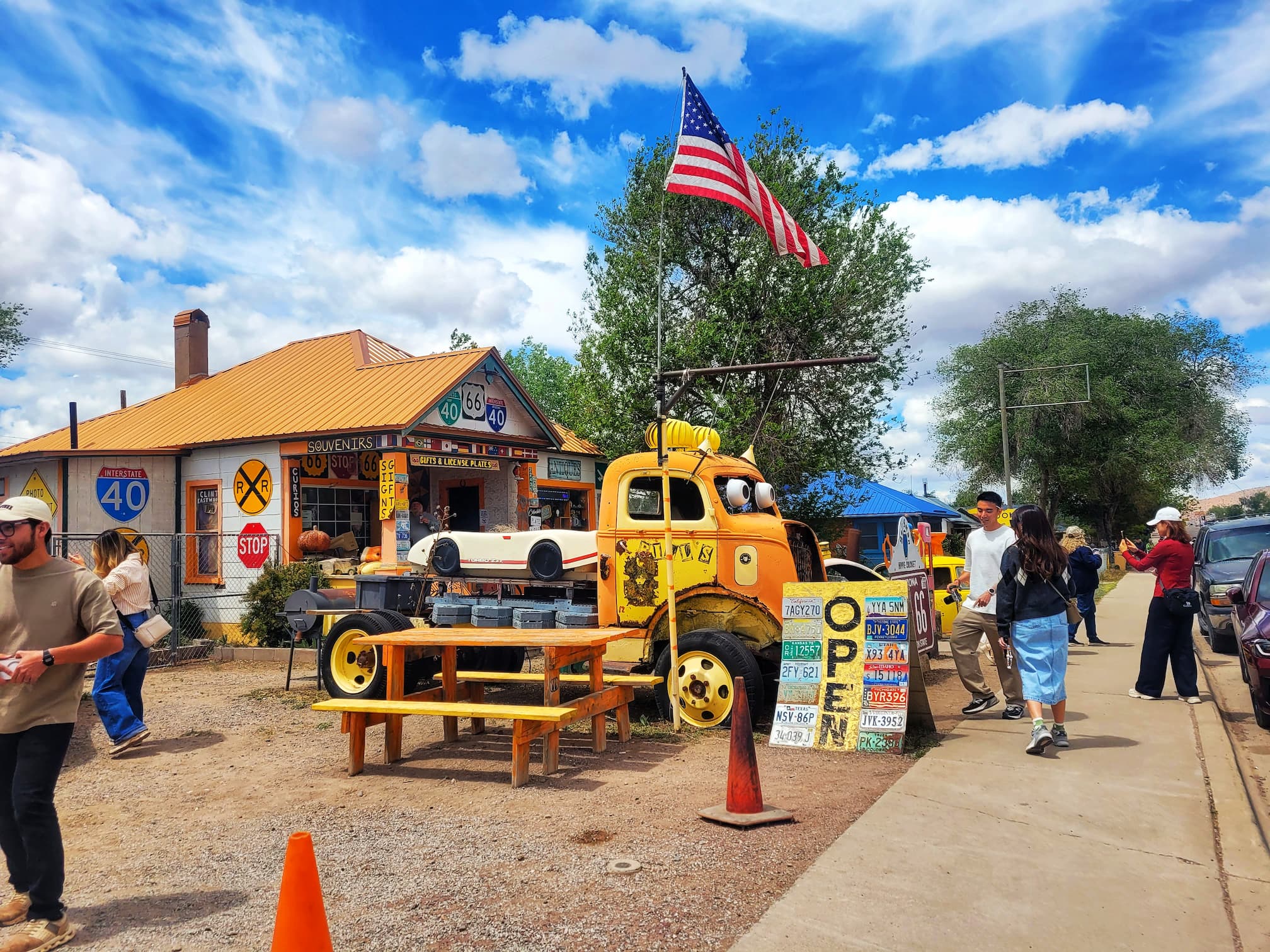
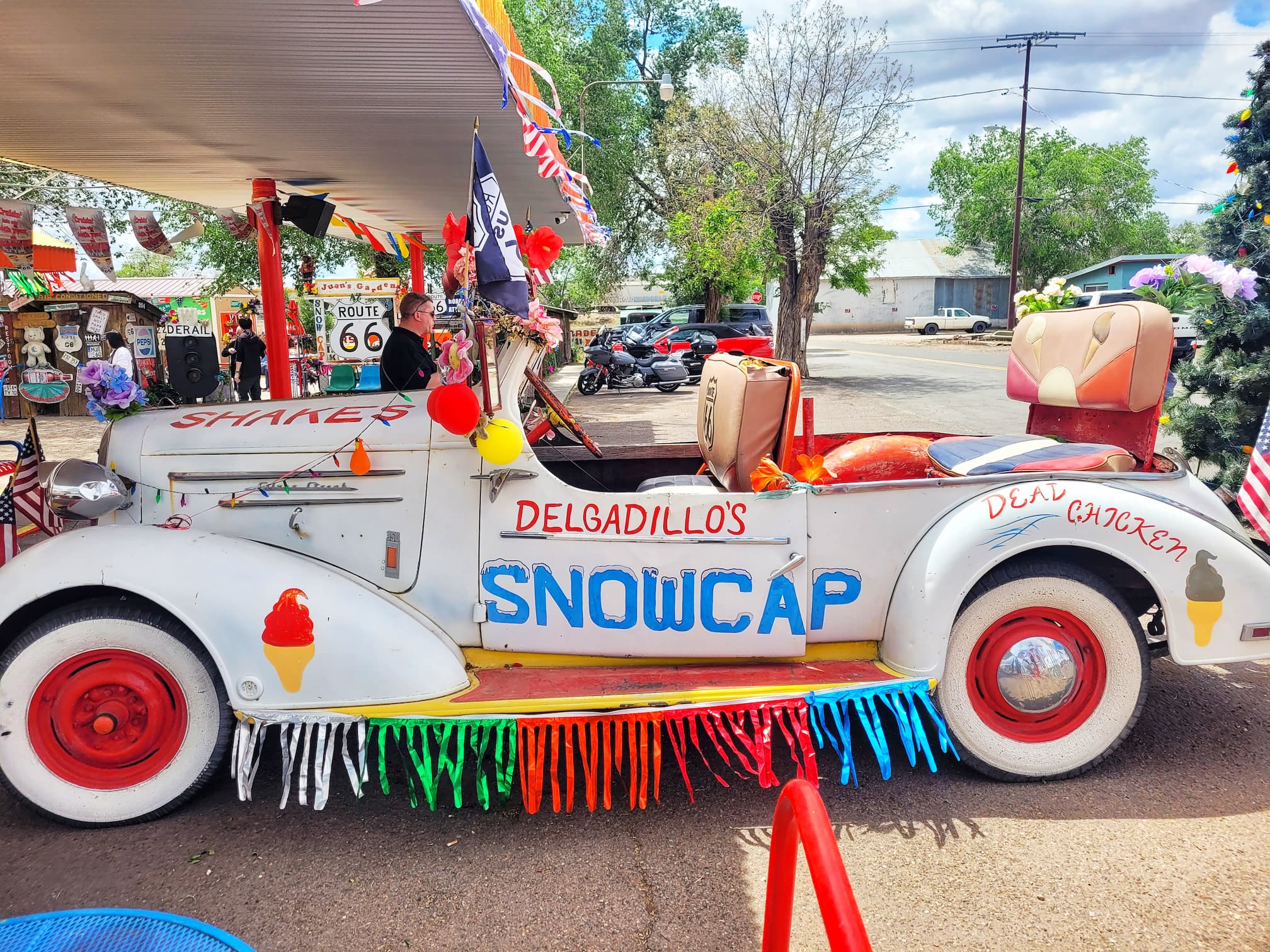
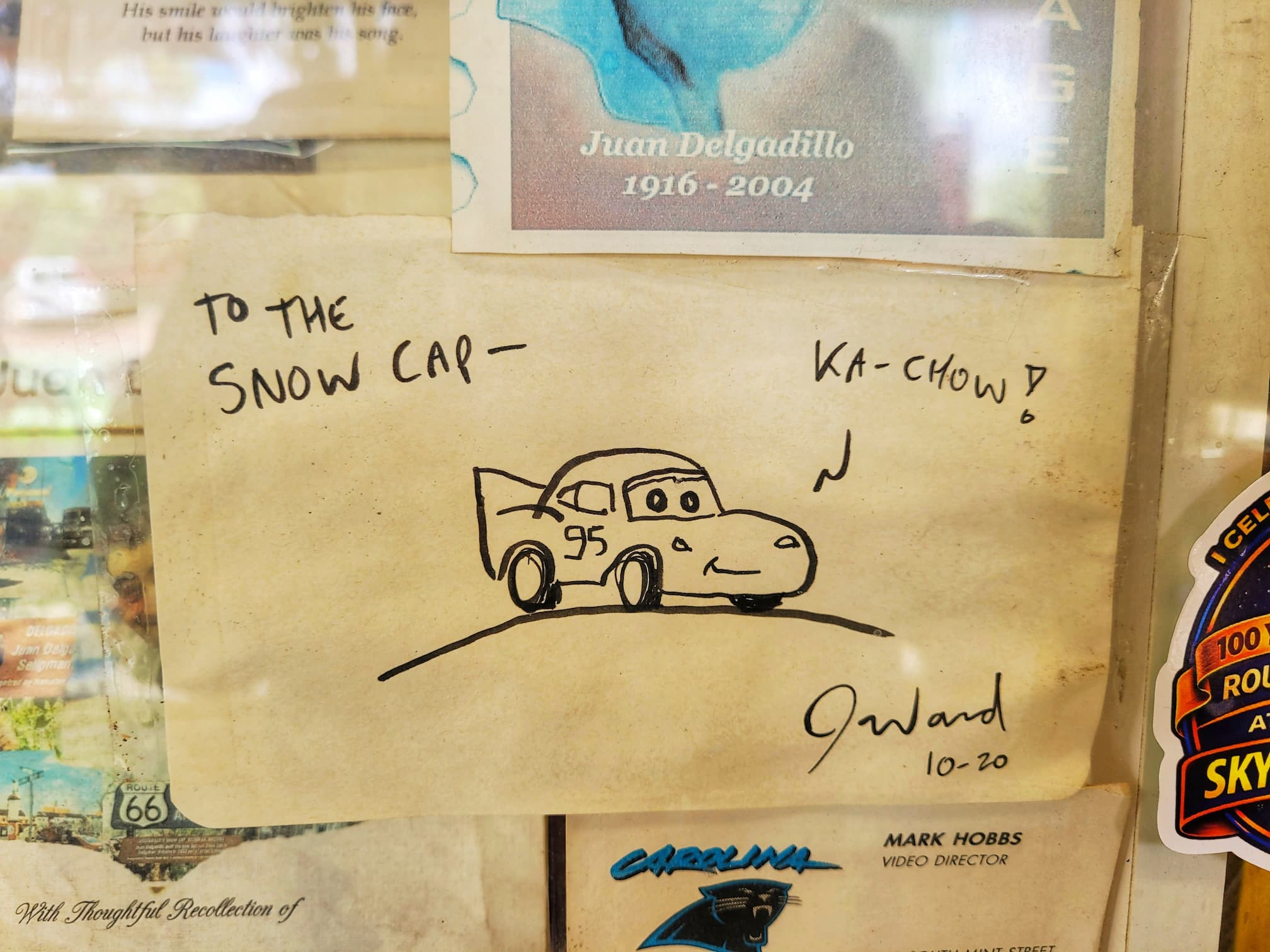
If Angel Delgadillo’s efforts were meant to save his town, they were certainly successful. When we visited, Seligman was packed with tourists exploring the shops, restaurants, and colorful Route 66 attractions. Despite its popularity, it still feels like a small, welcoming town that embraces its Route 66 heritage at every turn.
The downtown area is full of vintage signs, quirky roadside attractions, classic cars, and photo opportunities that feel like they could have been pulled straight from Radiator Springs. And if you’re lucky, you may even get the chance to meet Angel himself. Even in his 90s, he has been known to stop by the barber shop and chat with visitors, making a trip to Seligman feel like a visit to one of Route 66’s living legends.
Radiator Springs Souvenirs
How to Visit Seligman, Arizona
Chamber of Commerce Website: https://www.seligmanazchamber.com/visit-seligman/
Other Route 66 Stops Mentioned in The Art of Cars
While some locations had a clear influence on specific characters or landmarks in Cars, Pixar’s research trips took the team to dozens of places across Route 66 and the Southwest. Many of these stops are mentioned in The Art of Cars and helped shape the overall look, feel, and atmosphere of Radiator Springs and the surrounding landscape.
Some of the locations featured in the book include:
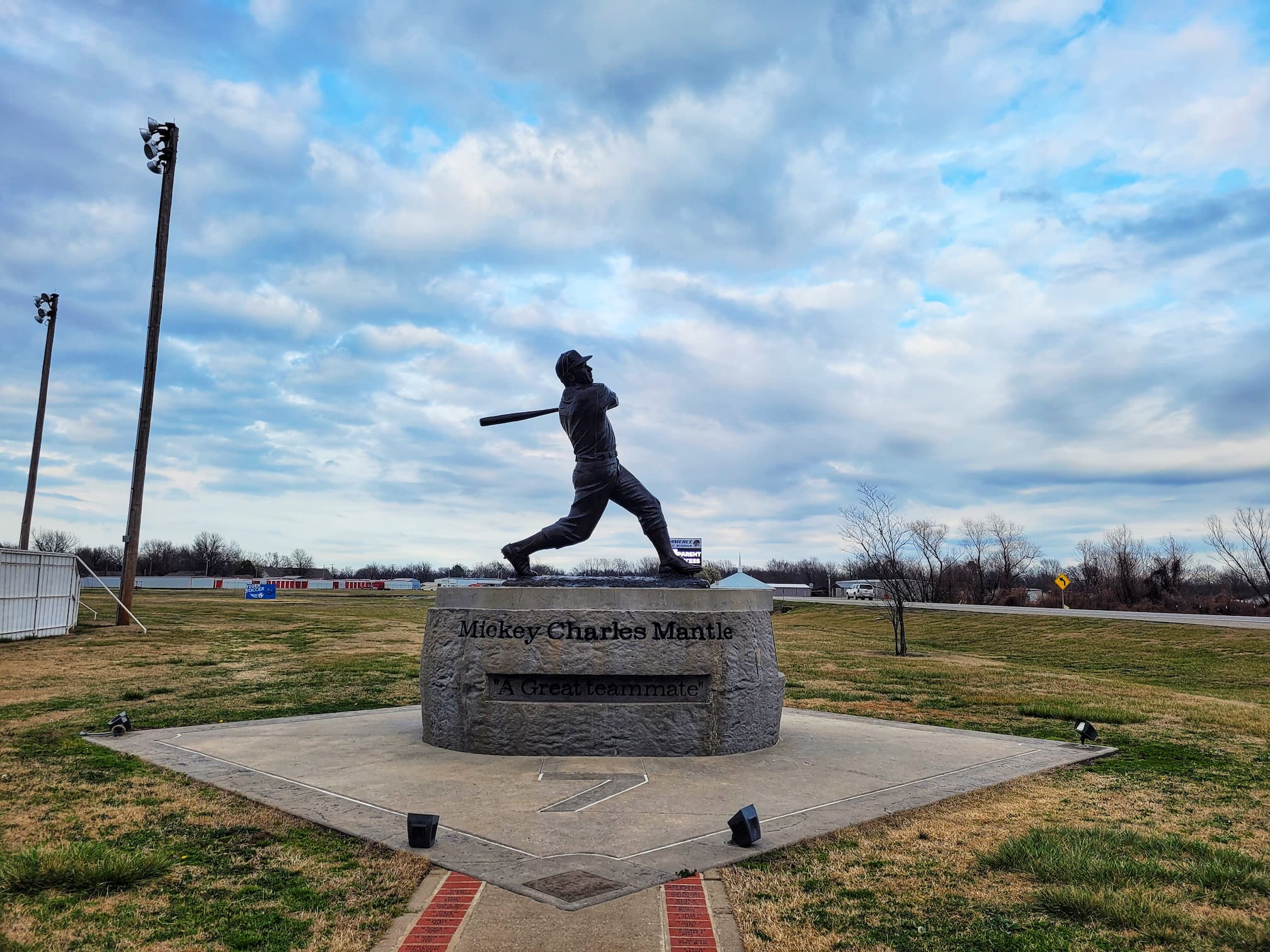
- Commerce, Oklahoma: The hometown of baseball legend Mickey Mantle
- Ed Galloway’s Totem Pole Park (Foyil, Oklahoma): A quirky roadside attraction featuring one of the world’s largest concrete totem poles
- The Blue Whale of Catoosa (Catoosa, Oklahoma): One of Route 66’s most beloved roadside attractions and a favorite photo stop for travelers
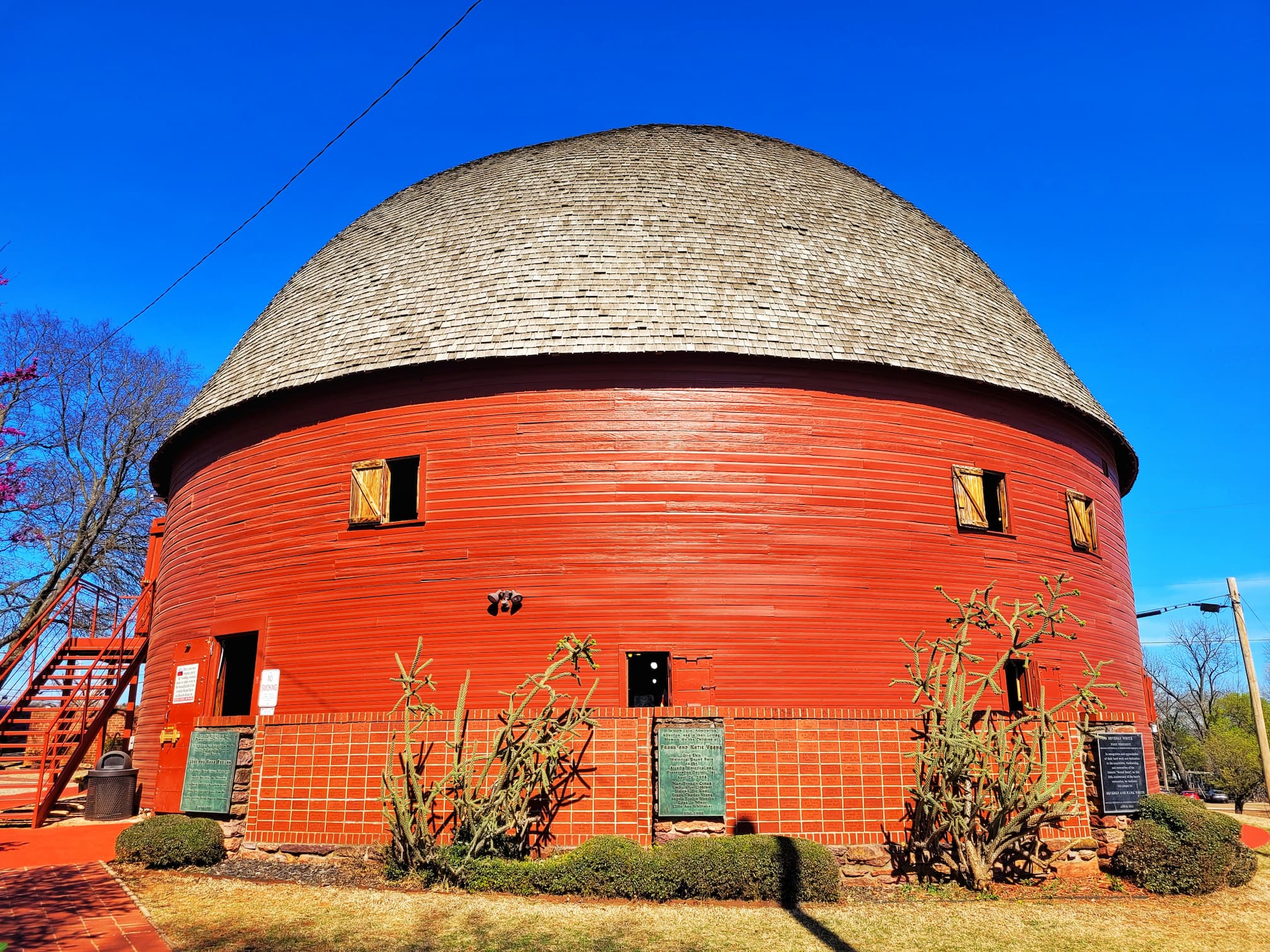
- Arcadia Round Barn (Arcadia, Oklahoma): A unique round barn that has become one of Oklahoma’s most recognizable Route 66 landmarks
- Rail Haven Motel (Springfield, Missouri): A classic Route 66 motel where Elvis Presley once stayed
- Meteor Crater (Arizona): The massive impact crater that has fascinated travelers for generations
- Fort Reno Post Cemetery (El Reno, Oklahoma): Home to graves of German prisoners of war and soldiers from several conflicts
- Santa Fe, New Mexico: Including visits to the historic San Miguel Chapel and the Oldest House Museum, two of the city’s most famous landmarks
- The Cross of Our Lord Jesus Christ (Groom, Texas): The towering cross visible from Interstate 40 near Route 66
The Pixar team also made plenty of stops for food along the way, including several legendary Route 66 restaurants:
- Big Texan Steak Ranch (Amarillo, Texas): Home of the 72 ounce steak challenge
- Rock Cafe (Stroud, Oklahoma): Later became closely associated with Cars and is often linked to Sally’s character.
- Country Dove Restaurant (Litchfield, Illinois)
- MidPoint Cafe (Adrian, Texas): Famous for being located at the midpoint of Route 66
- Joe & Aggie’s Cafe (Holbrook, Arizona)
One of the fun things about reading The Art of Cars after driving Route 66 ourselves was recognizing so many of these places. We had visited quite a few of them during our own road trip and found ourselves pointing at photos in the book saying, “We’ve been there!”

More of Our Route 66 Adventures
You can find all our Route 66 blog posts from our 3+ months on the Route here:

As Amazon Associates, we earn commission on qualifying purchases.