As full-time RVers, we end up visiting a lot of Walmarts. I was never a regular Walmart shopper before we started living on the road, but when you spend a lot of time in small towns, Walmart is often the only grocery store around, or at least the only affordable one. After three years of full-time RV life, we’ve become pretty familiar with them.
So when we found ourselves in Bentonville, Arkansas, the birthplace and headquarters of Walmart, we obviously had to visit the Walmart Museum. It’s a pretty fitting stop for us, and it turned out to be a lot more interesting than I expected a museum about a retail chain to be.
If you’re looking for things to do in Bentonville, the Walmart Museum is an especially easy one to add to your itinerary because it’s free. It’s also one of several free museums in Bentonville, making it a good option if you’re trying to explore the city without spending a fortune. Here’s what we found inside, what we thought of the museum, and a few other Walmart-related stops you can add while you’re in town.
How to Visit the Walmart Museum
Admission: Free!
Hours: Mon-Thurs 10am-9pm, Fri/Sat 10am-10pm, Sun 12-6pm
Holiday Closures: Easter Sunday, Thanksgiving, Christmas Day
Address: 105 N. Main St, Bentonville, AR 72712
Website: https://corporate.walmart.com/about/walmart-museum
A Little History of Walmart
The story of Walmart starts with Sam Walton, who opened his first variety store long before the blue-and-yellow Walmart signs became a familiar sight across the country. At just 26 years old, Walton was already managing a variety store, having returned to civilian life after serving in the military. He eventually purchased a Ben Franklin variety store in Newport, Arkansas, and began experimenting with the ideas that would eventually become the foundation of Walmart: keeping prices low, moving a lot of merchandise, and making up for smaller profit margins with higher sales volume.
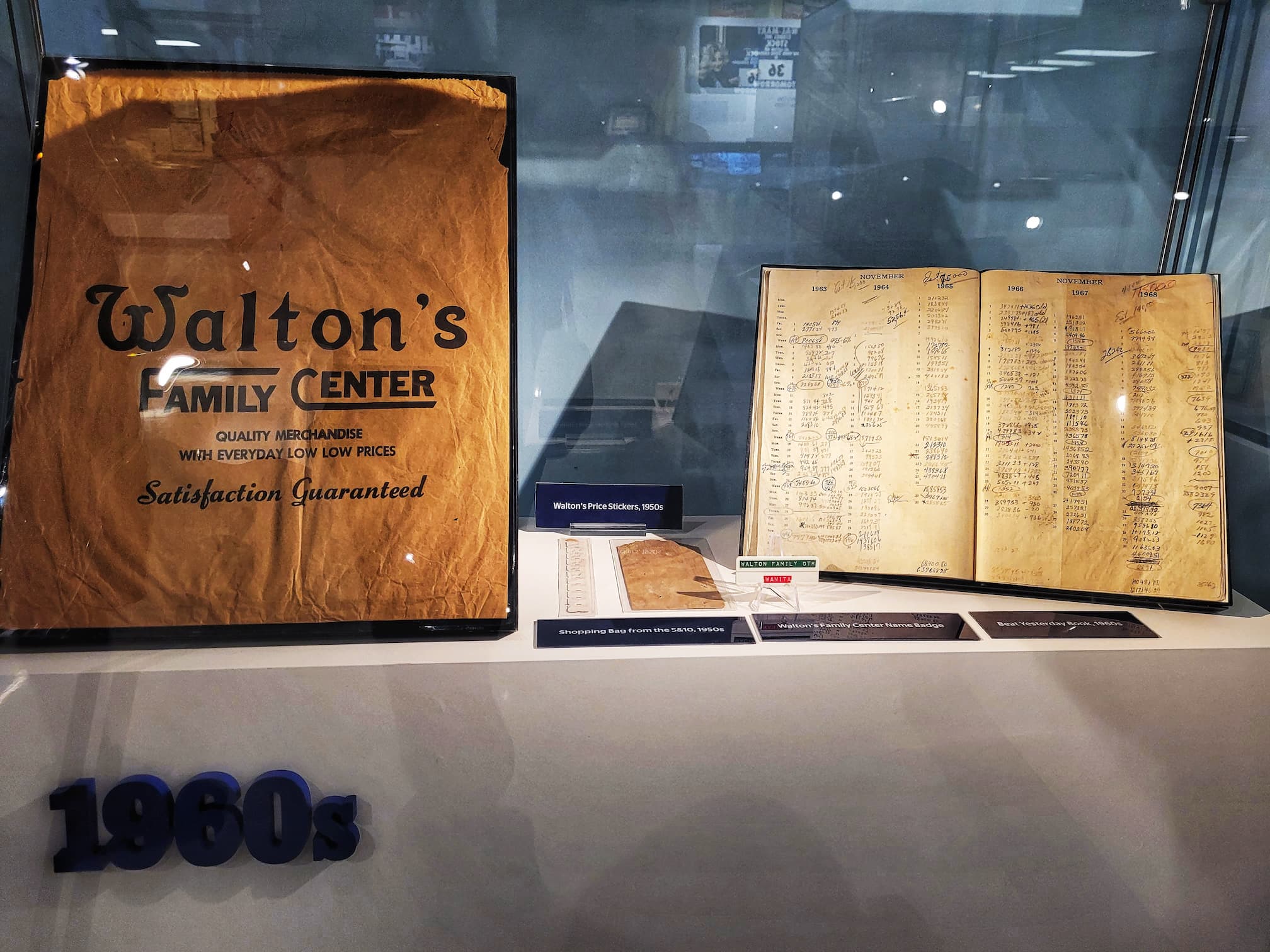
In 1950, Walton moved to Bentonville and purchased another Ben Franklin store on the town square. He called it Walton’s Five and Dime. That little store would become a pretty important piece of retail history, it occupied the building that now houses the Walmart Museum.
Walton officially opened the first Walmart, then called Wal-Mart Discount City, in Rogers, Arkansas, on July 2, 1962. His idea was fairly simple: instead of charging higher prices and making more money on each item, he would keep prices low enough to attract more customers and sell a much larger volume of merchandise. It wasn’t necessarily a revolutionary concept on its own, but Walton was relentless about putting it into practice, especially in smaller towns that larger retailers tended to overlook. The strategy worked and by 1967, Walmart had grown to 24 stores, and the company continued expanding beyond Arkansas. Walmart went public in 1970, and its first stock split came in 1972, by which point stores had spread across five states. From there, the growth really took off.
Walmart continued moving into new states throughout the 1970s and 1980s, while also experimenting with new types of stores. In 1983, Walton opened the first Sam’s Club in Midwest City, Oklahoma, creating a warehouse membership business that would become a major part of the company. By the middle of the 1980s, Walmart had become a major national retailer, rather than the regional chain it had started out as.
Walton stepped down as Walmart’s CEO in 1988, although he remained chairman of the board. By then, the company was already much bigger than the handful of discount stores he had started with. Walmart began expanding internationally in the 1990s, opening stores and entering markets outside the United States. Sam Walton died in 1992, but the company he built continued growing at a remarkable pace.
Today, Walmart is a very different company from the small-town discount store Walton opened in Rogers in 1962. As of 2026, it is the world’s second-largest company by revenue and the largest private employer in the world. Its headquarters are still in Bentonville, Arkansas, and the Walton family remains the company’s largest shareholder, with Sam Walton’s heirs collectively controlling more than half of Walmart’s shares.
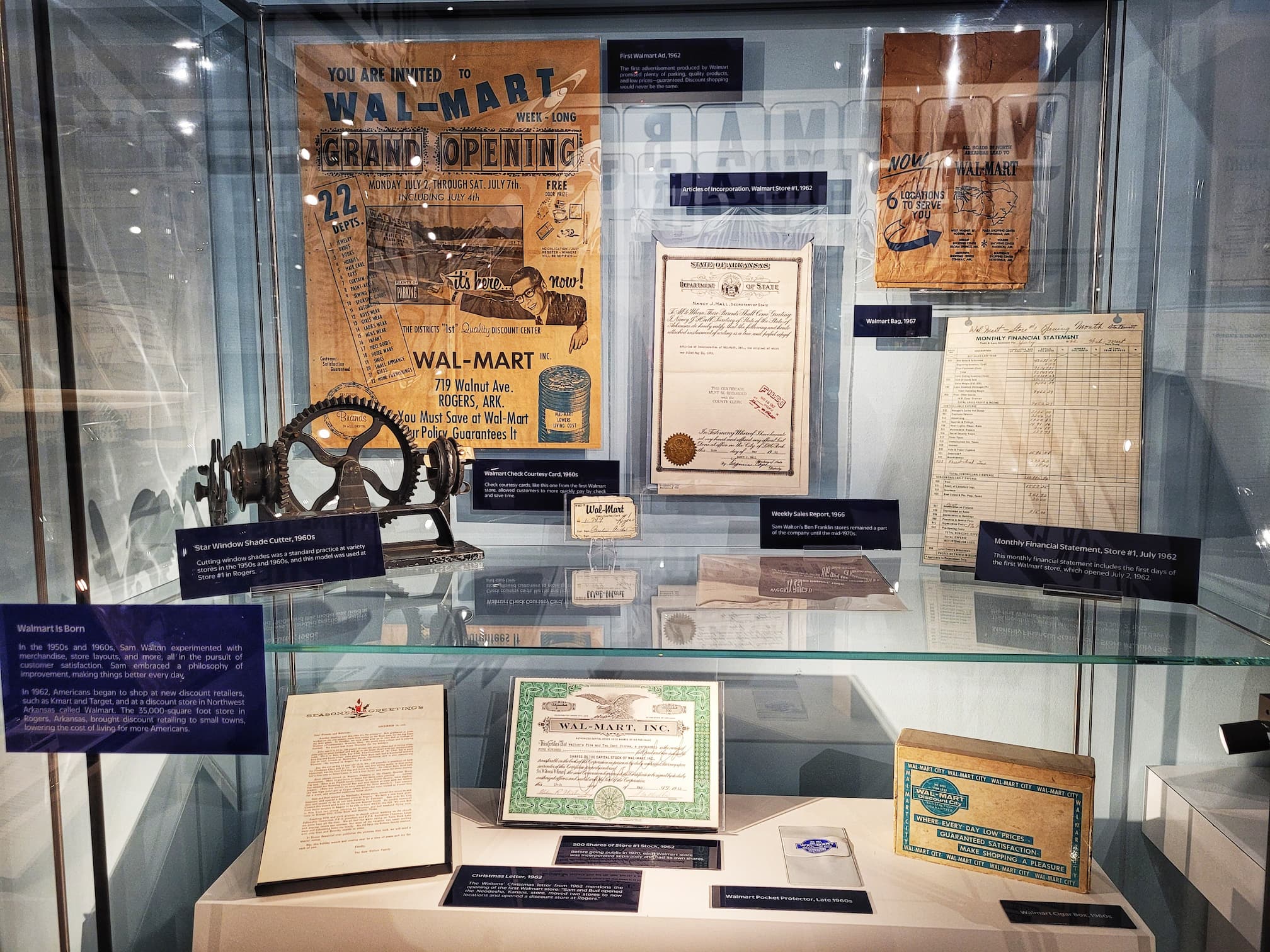
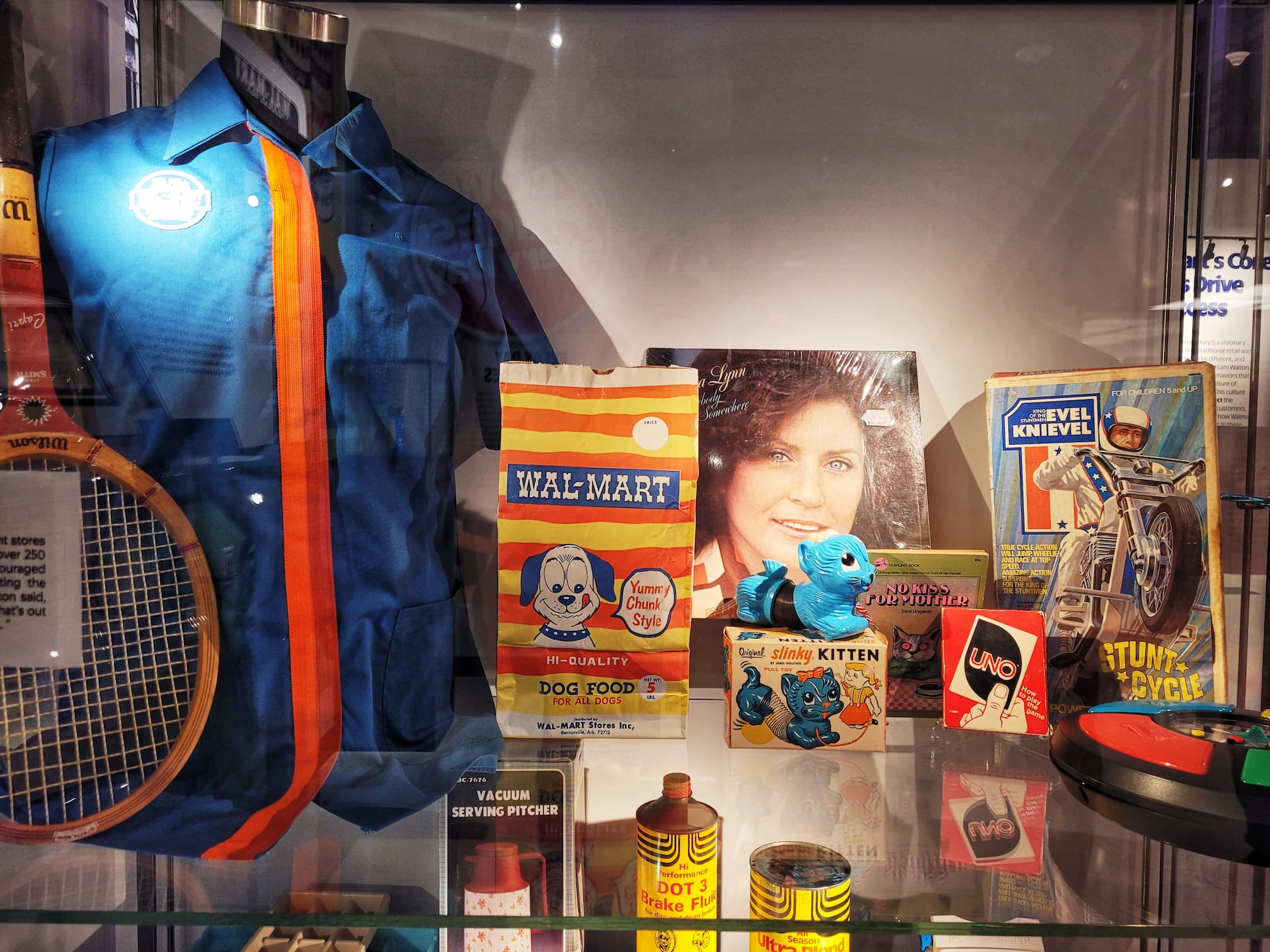
What to Expect at the Walmart Museum
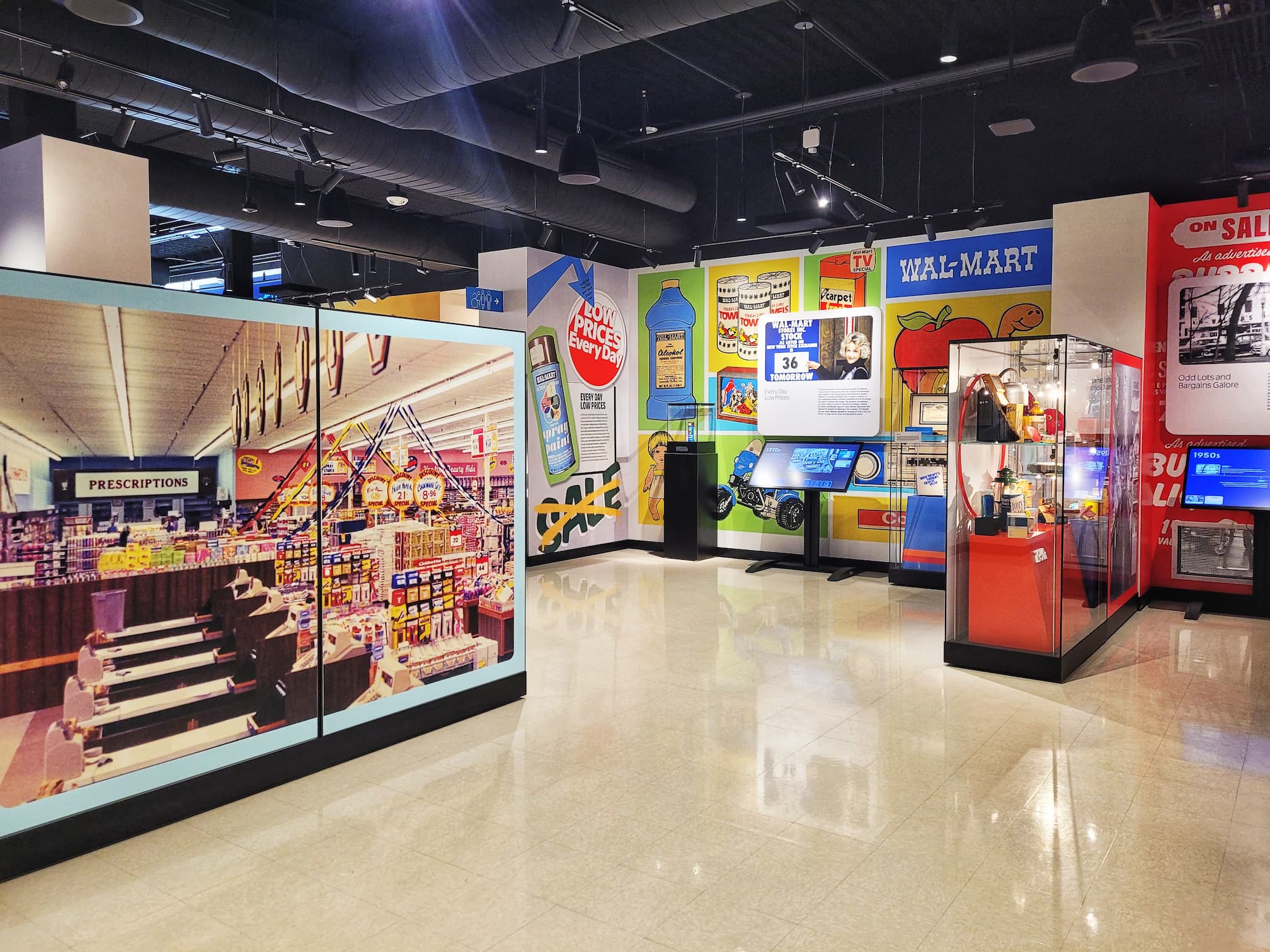
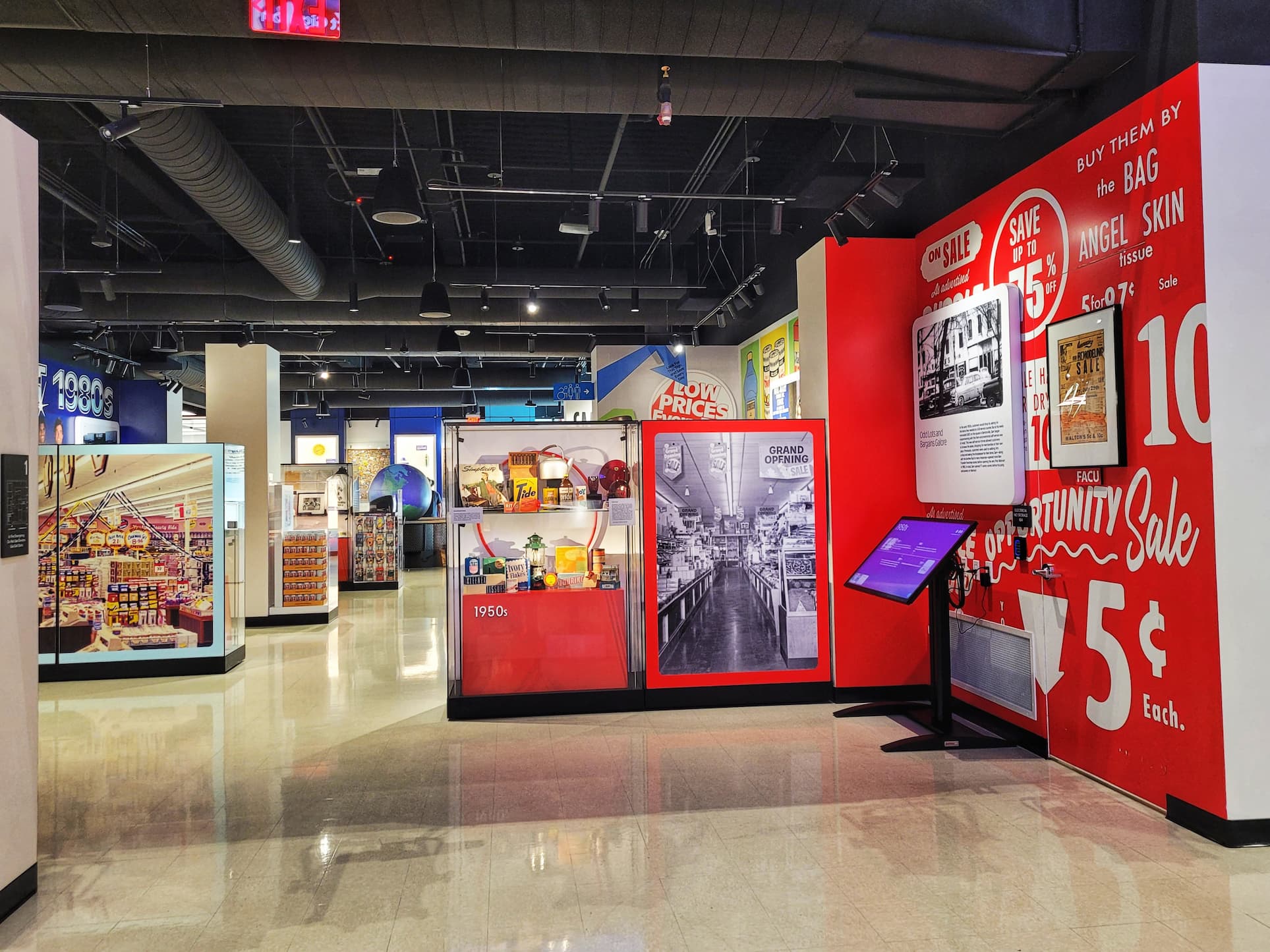
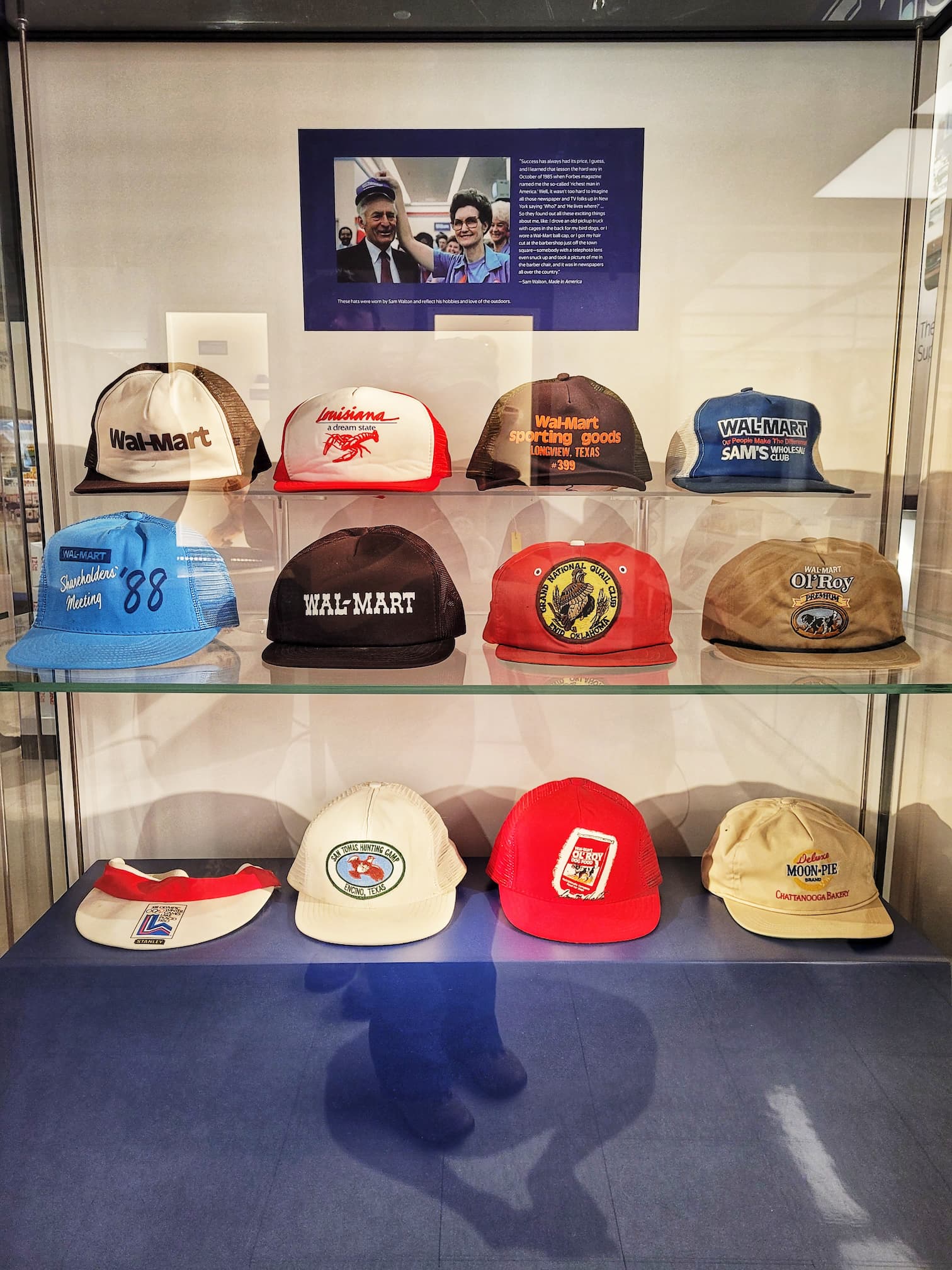
The Walmart Museum isn’t a huge museum, but there’s a surprising amount to see packed into the space. The exhibits walk you through the company’s history, from Sam Walton’s early stores to the enormous retailer Walmart is today, with plenty of artifacts and displays along the way. The galleries are organized around different parts of Walmart’s history and show how the stores changed as the company grew. There are old advertisements, company memorabilia, products, photographs, and other artifacts from different eras of Walmart. Even if you’re not particularly interested in the business side of Walmart, there’s a definite nostalgia factor here. Seeing products and store displays that you remember from childhood makes the exhibits feel a little more personal than you might expect from a corporate history museum.
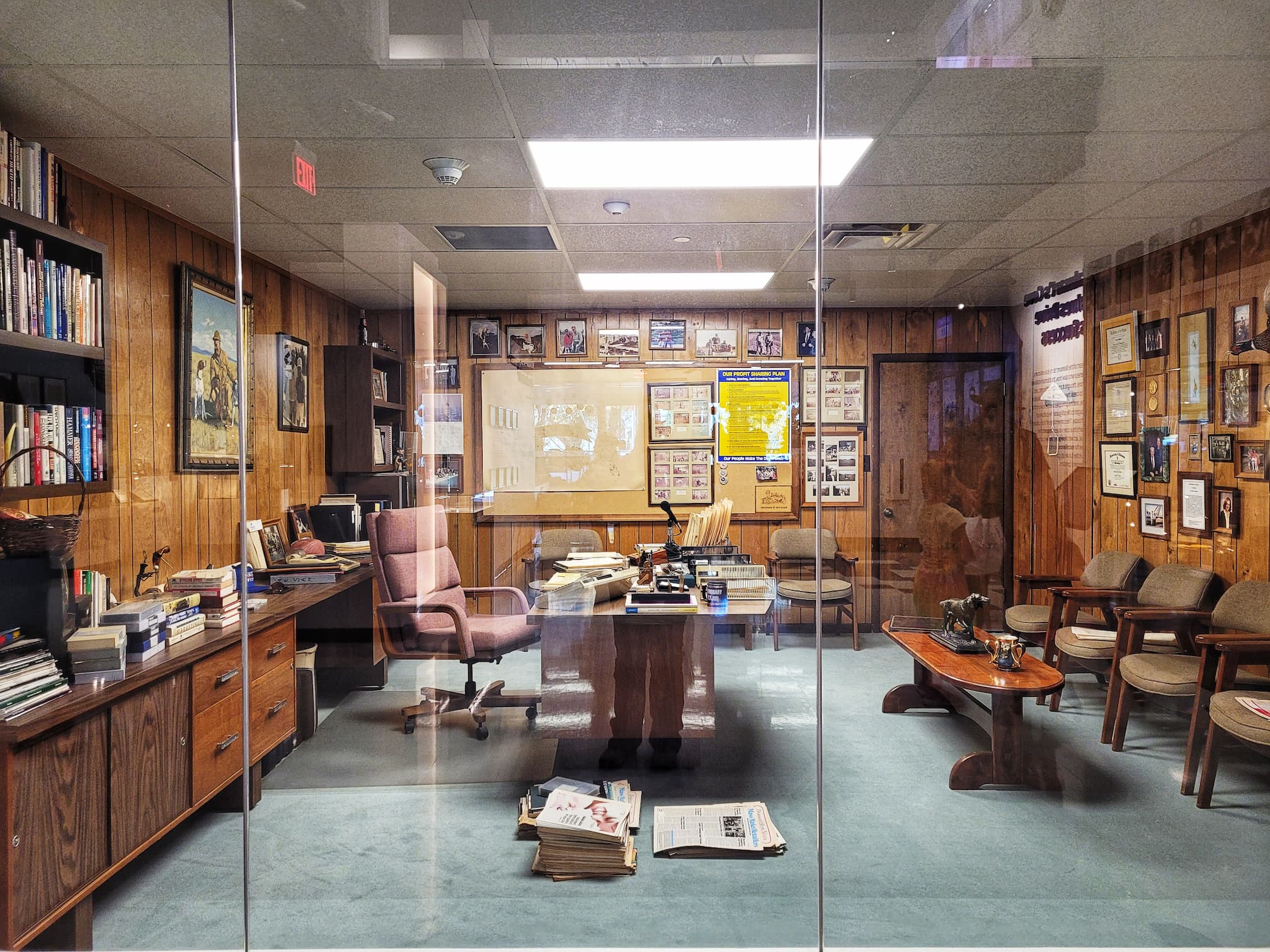
One of the more interesting displays is a recreation of Sam Walton’s office. You can also meet a holographic version of Walton, who tells parts of the company’s story. It’s definitely a little unusual, but it fits with the museum’s effort to make the history feel more interactive rather than simply putting artifacts behind glass.
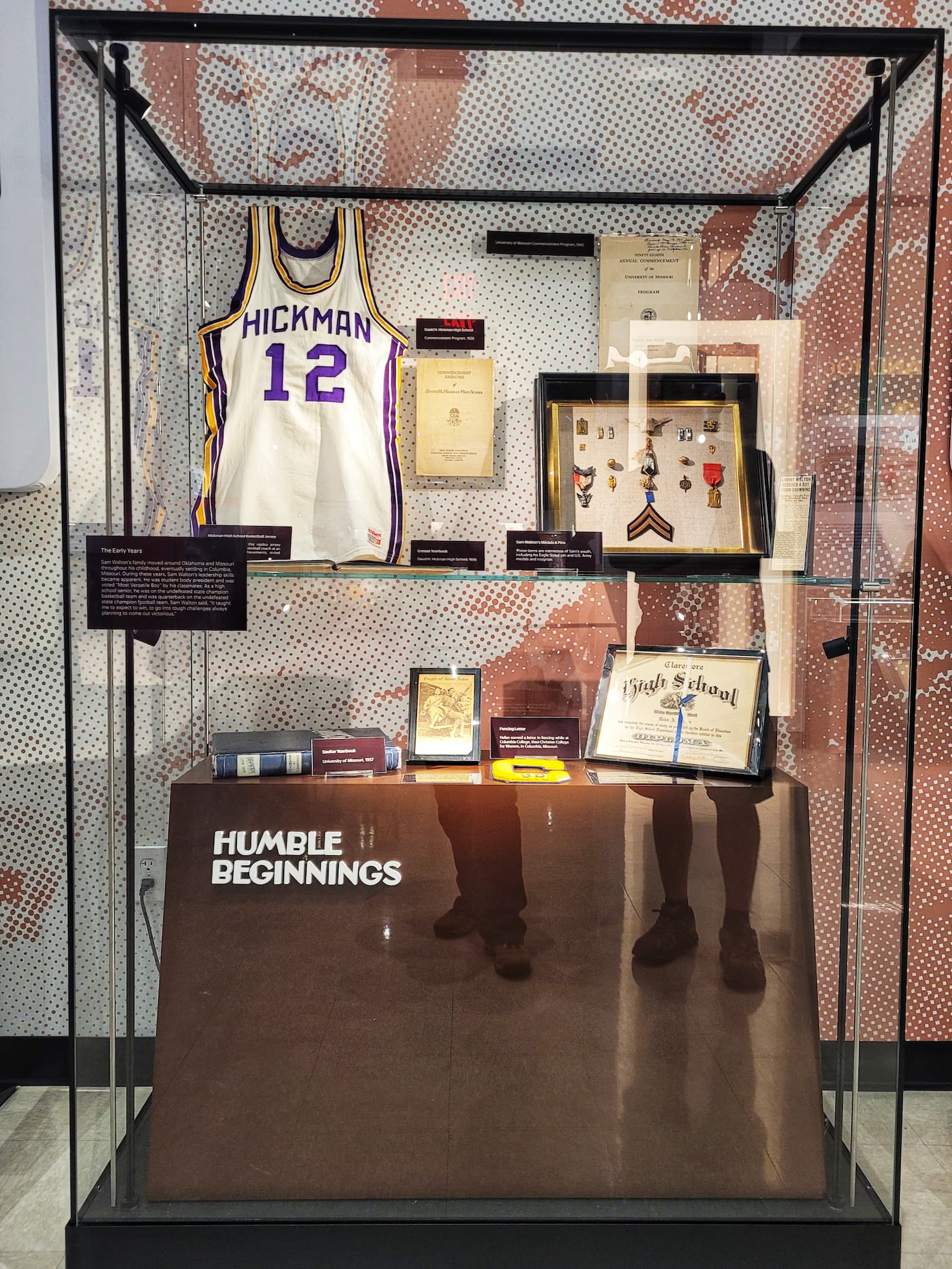
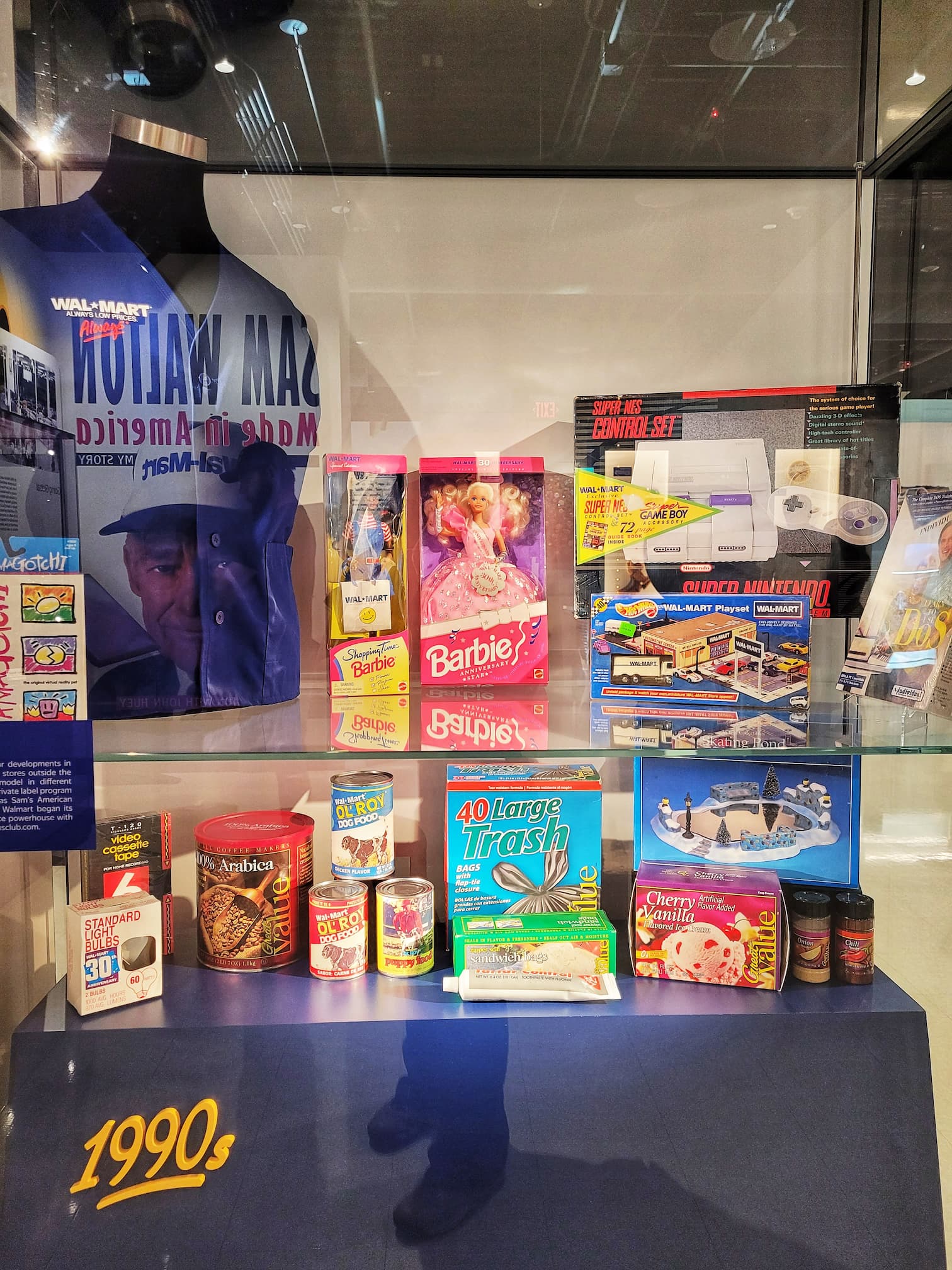
Of course, one of the biggest highlights is Walton’s 5 & 10, the original variety store Sam Walton purchased in 1950. The store still occupies the historic space on Bentonville’s square, complete with original fixtures and plenty of merchandise. Today, it also serves as the museum’s gift shop, so you can browse the old-fashioned store and actually buy something to take home. And if all that walking through Walmart history works up an appetite, there’s Spark Cafe that serves up ice-cream next door.
Overall, the museum is a mix of corporate history, retail nostalgia, and a look at the people and ideas behind one of the world’s biggest companies. Even if Walmart isn’t normally the sort of thing you’d put on your museum list, it’s an interesting stop when you’re exploring Bentonville.
Our Walmart Museum Review
As two people who are a little nerdy about museum design, we thought the Walmart Museum was really well done. The exhibits are thoughtfully put together, there’s a good mix of artifacts and interactive elements, and the museum does a nice job of making what could be a pretty dry corporate history interesting. And, of course, it’s hard to complain about the price when admission is free.
That said, I think it’s worth going into the museum with a little bit of skepticism about the story you’re being told. This is, after all, Walmart’s museum. The history here is very much told from Walmart’s perspective, and the Sam Walton presented throughout the exhibits is the Sam Walton the company wants you to remember: a retail genius who revolutionized shopping, kept prices low because he cared about customers, and built a company around giving people a good deal.
There is another side to that story. Critics and former employees have long painted Walton as someone far more motivated by money and growth than the museum’s version suggests. He was well known for resisting higher wages, including efforts to keep employee pay as low as possible, and Walmart under his leadership became known for aggressively fighting unionization. So depending on which version of Sam Walton you find more convincing, you can walk out of this museum with two very different interpretations of what he would think about Walmart today.
If you buy into the museum’s version of Walton, it’s easy to imagine him walking into a modern Walmart and being horrified by what the company has become. If you see him primarily as an extremely ambitious, profit-driven capitalist, you could just as easily imagine him looking around at the size of Walmart today and thinking, “Yep, this is exactly what I was trying to build.”
I actually think that tension makes the museum more interesting, rather than making it not worth visiting. You don’t have to accept every part of the company’s narrative to appreciate the museum itself. It’s still a genuinely interesting look at how a small Arkansas variety store grew into one of the biggest companies in the world, and the artifacts make the history feel much more tangible.
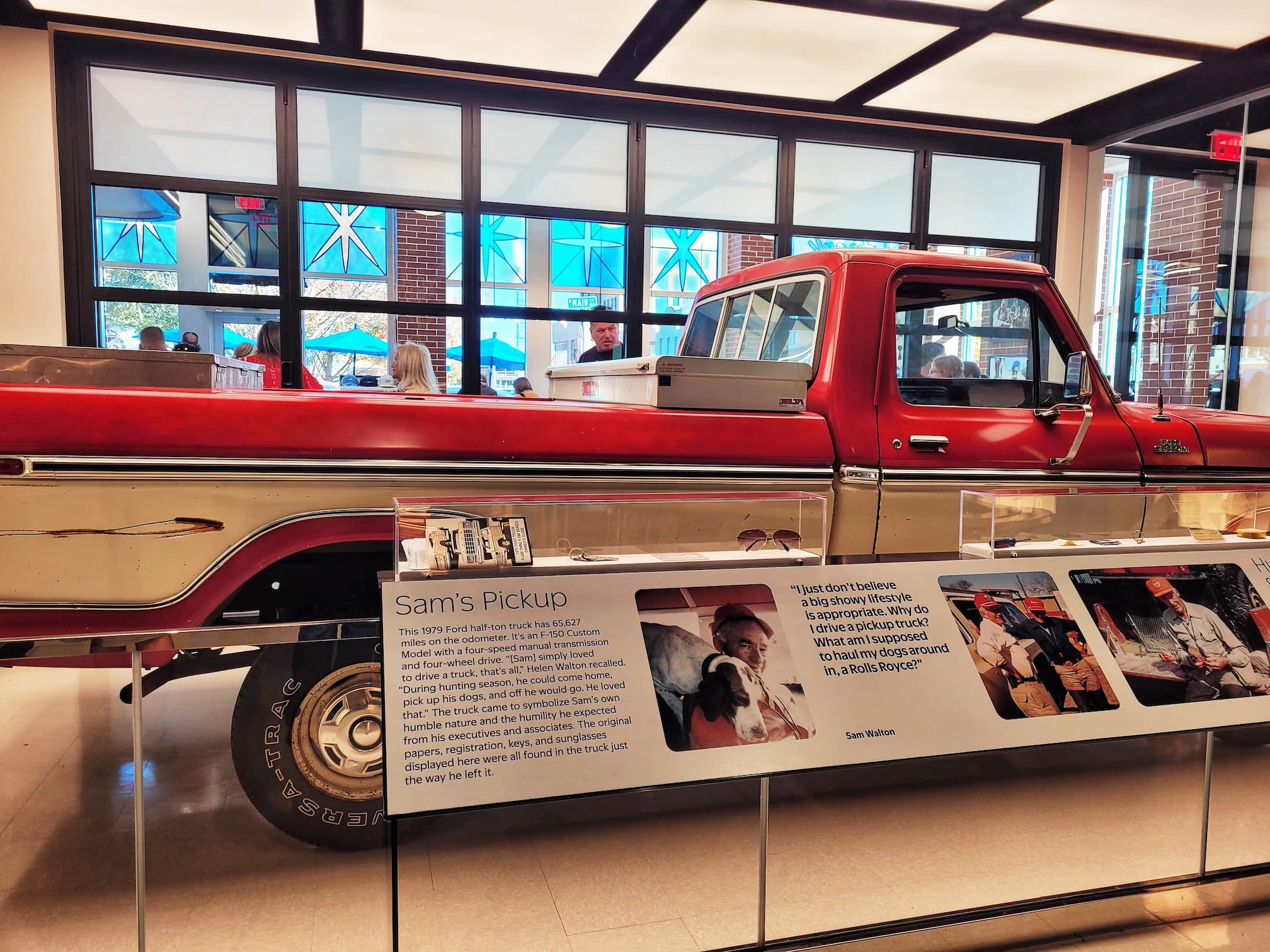
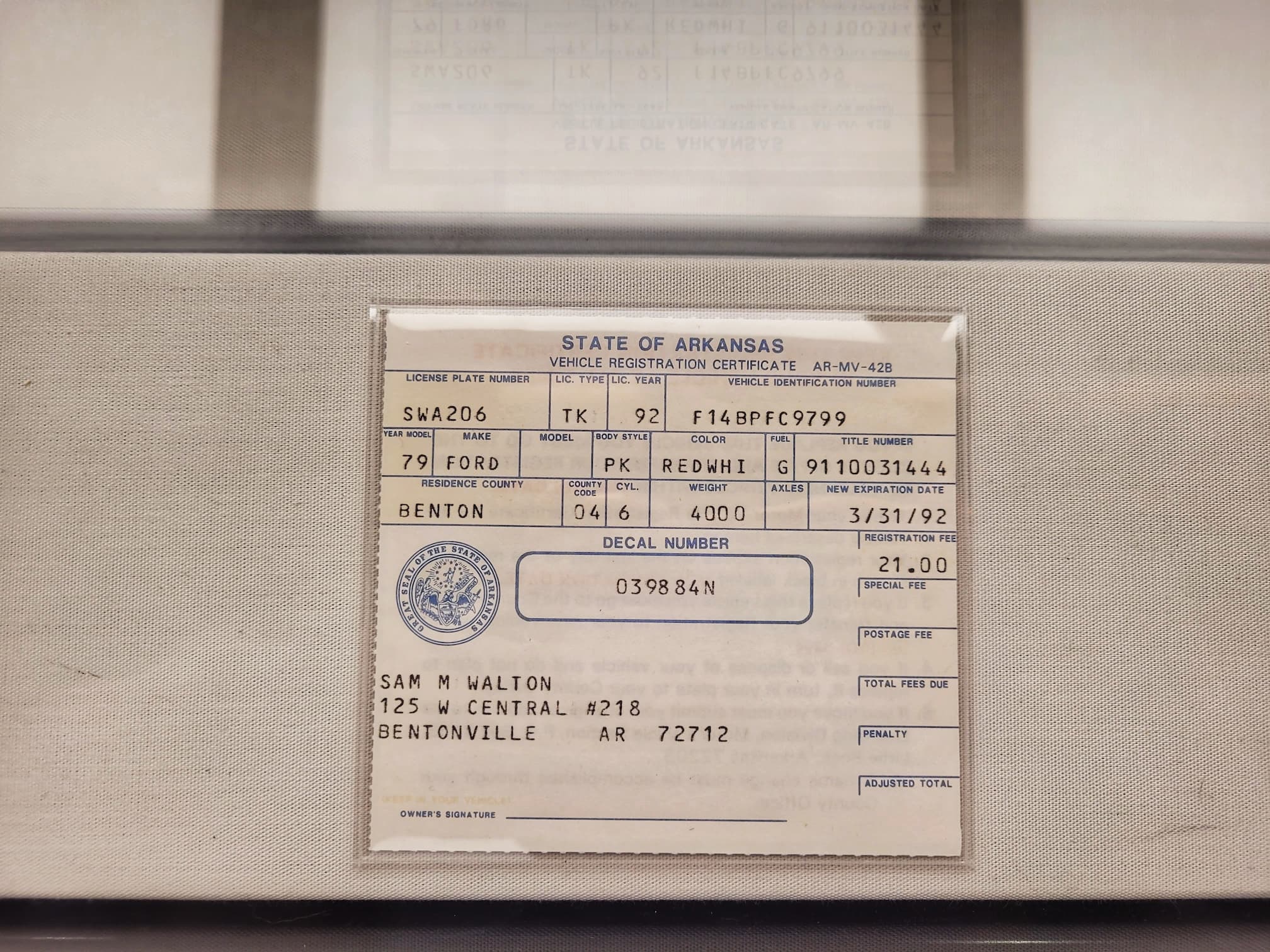
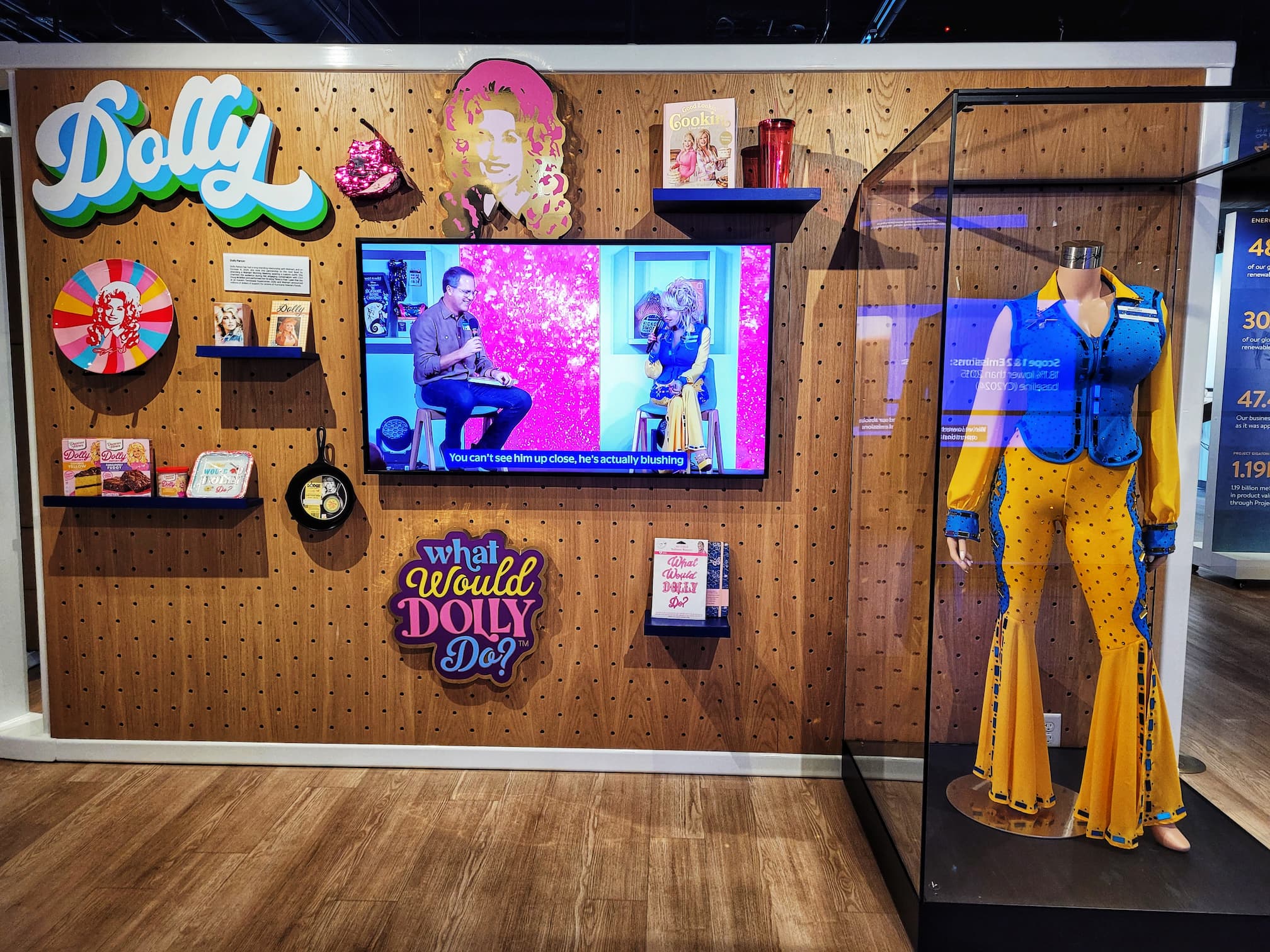
We also each had a favorite item in the museum. Josh’s was Sam Walton’s actual pickup truck, which is about as fitting a choice as you could make for him. My favorite was considerably more unexpected: a custom Walmart uniform that was made for Dolly Parton for a television appearance. Because apparently even Walmart has Dolly Parton merch in its corporate history.
Overall, I’d absolutely recommend stopping at the museum if you’re in Bentonville. It’s free, it’s well designed, and there’s enough history and nostalgia to make it worthwhile. Just remember that you’re visiting Walmart’s version of Walmart history, and there’s a lot more to the story than what’s inside those galleries.
Bonus Stops: Sam Walton’s Grave & Walmart
If you’re going to visit the Walmart Museum, you might as well lean all the way into the Walmart history. We actually needed groceries while we were in Bentonville, so we stopped at the Walmart just across the street from the company’s headquarters. It felt a little funny to intentionally visit a Walmart while visiting a museum about Walmart, but when you’re full-time RVers, grocery shopping doesn’t exactly stop just because you’re sightseeing.
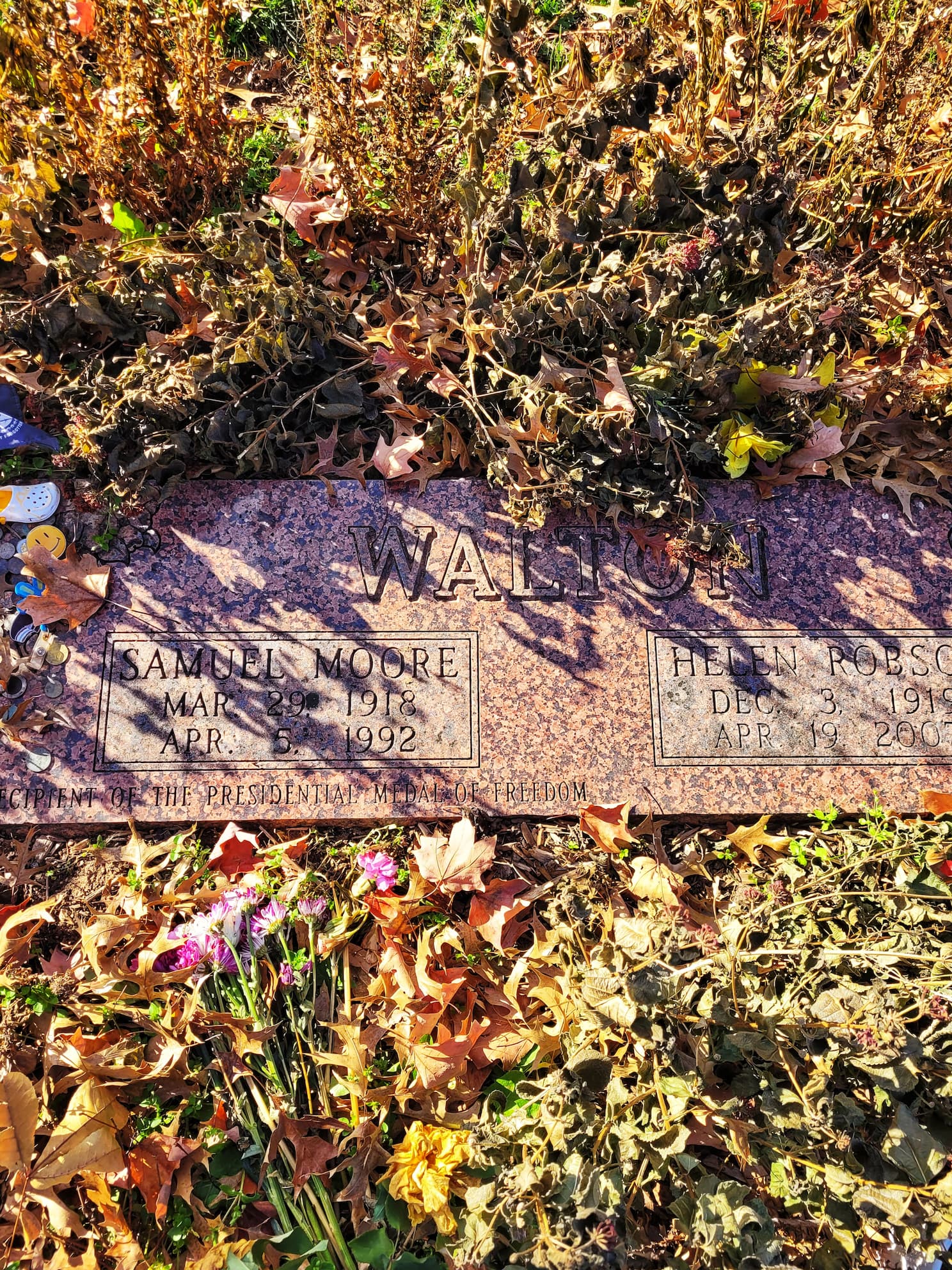
We also made a quick stop at Bentonville Cemetery to visit Sam Walton’s grave. Given how important Walton is to Bentonville and to the company that made the city famous, we were honestly a little surprised by how unkempt the gravesite was when we visited. It wasn’t anything particularly elaborate to begin with, and the condition of the area around it definitely didn’t match the larger-than-life legacy that’s presented inside the museum.
Still, if you’re interested in the history of Walmart, it’s an easy enough stop to add to your itinerary. Between the museum, the original Walton’s 5 & 10, the nearby Walmart headquarters, and Walton’s gravesite, you can see quite a bit of the company’s history without going far.