Joshua Tree National Park was one of the side trips we added while driving Route 66, and it ended up being one of my favorite stops of the entire journey. I’ll admit that part of the appeal was simply that I got to spend a few days wandering around a national park named Joshua with Josh. The jokes practically wrote themselves. Of course, the park isn’t actually named after Josh, or even after a tree. Joshua trees are actually a species of giant yucca, making them more closely related to succulents than the trees they resemble. No matter what you call them, though, seeing thousands of these strange, twisted plants scattered across the desert landscape is something you won’t soon forget.
We spent two full days exploring Joshua Tree National Park, hiking to old homesteads and abandoned mines, searching unsuccessfully for desert tortoises, visiting all four visitor centers, and squeezing in plenty of scenic stops along the way. In this post, I’ll share our complete Joshua Tree itinerary, along with a few tips to help you plan your own visit.
Where We Stayed While Visiting Joshua Tree National Park
We spent our two nights near Joshua Tree National Park at Joshua Tree Lake RV & Campground. While there are several campgrounds inside the national park, none of them offer electric hookups. Since we travel with a snake that needs reptile lights we needed electric hookups, and it was pretty warm and we wanted our AC!
The campground ended up being a great choice. It’s located just outside of town and felt surprisingly quiet and peaceful. During our stay, a yoga festival was taking place on the property. The campground staff gave us a heads up before we arrived that there might be some extra noise and music, which we really appreciated. In reality, the festival grounds were far enough away that it wasn’t much of an issue at all.
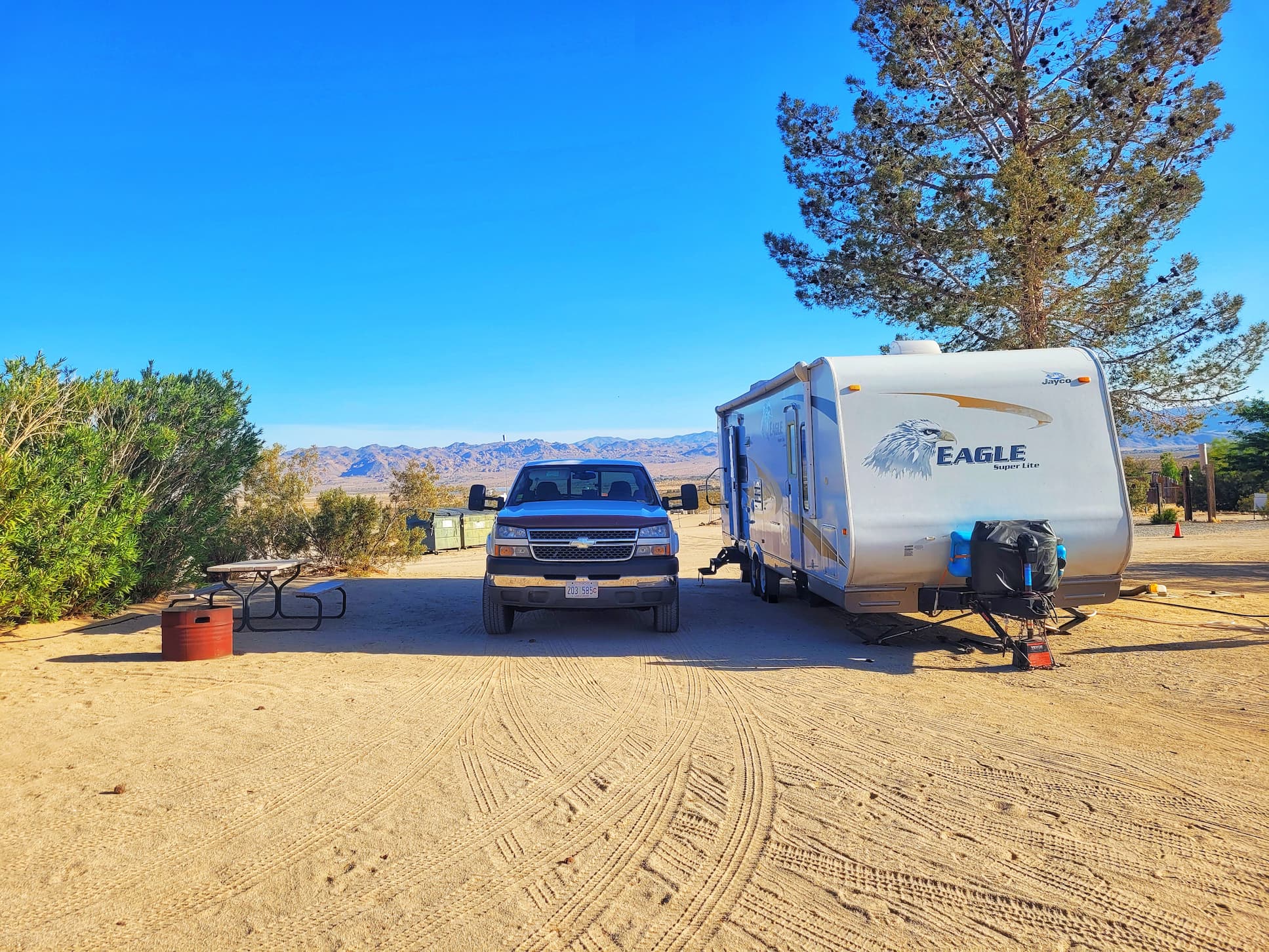
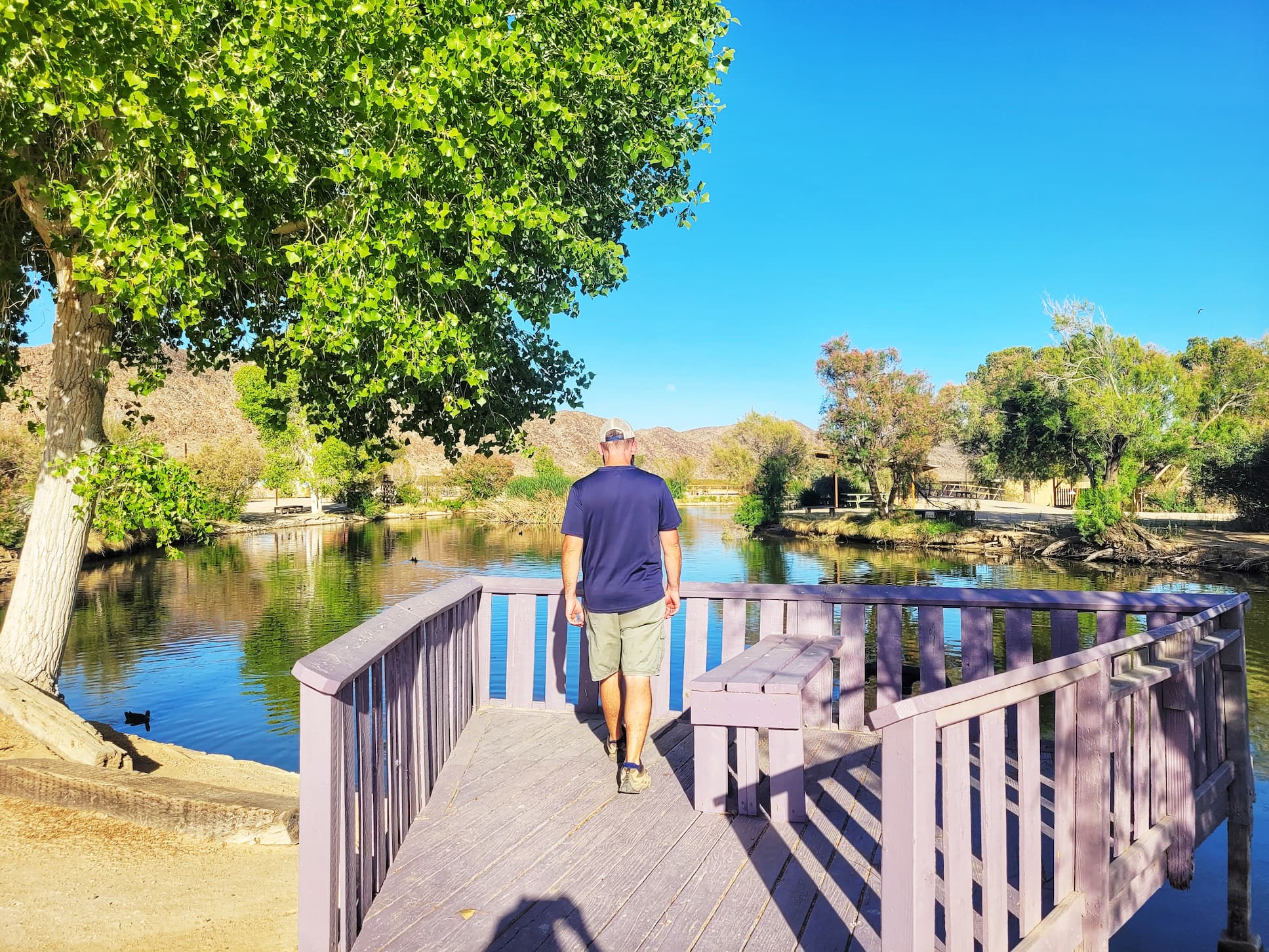
Overall, we had a great experience here and would definitely stay again. That said, after seeing some of the incredible campsites tucked among the giant boulders inside Joshua Tree National Park, we’d also love to camp in the park someday. It seems like the perfect place for a tent camping trip, especially if you want to fully experience the desert landscape after the day crowds leave.
How to Stay at Joshua Tree Lake RV & Campground
Website: https://www.joshuatreelake.com/
Address: 2601 Sunfair Rd, Joshua Tree, CA 92252
Average Rates: $40-65/night (we saved 15% off our total stay with Harvest Hosts!)
Joshua Tree National Park Trip Summary
Dates Visited: April 27-28
Average Temps During Our Visit: around 72-79° F during daytime
Visitor Centers Visited: Joshua Tree, 29 Palms, Cottonwood, Black Rock
Miles Hiked: Approx. 10 miles total
Day 1: Homesteads, Ruins, and Desert Views
Pregaming at the Visitor Center
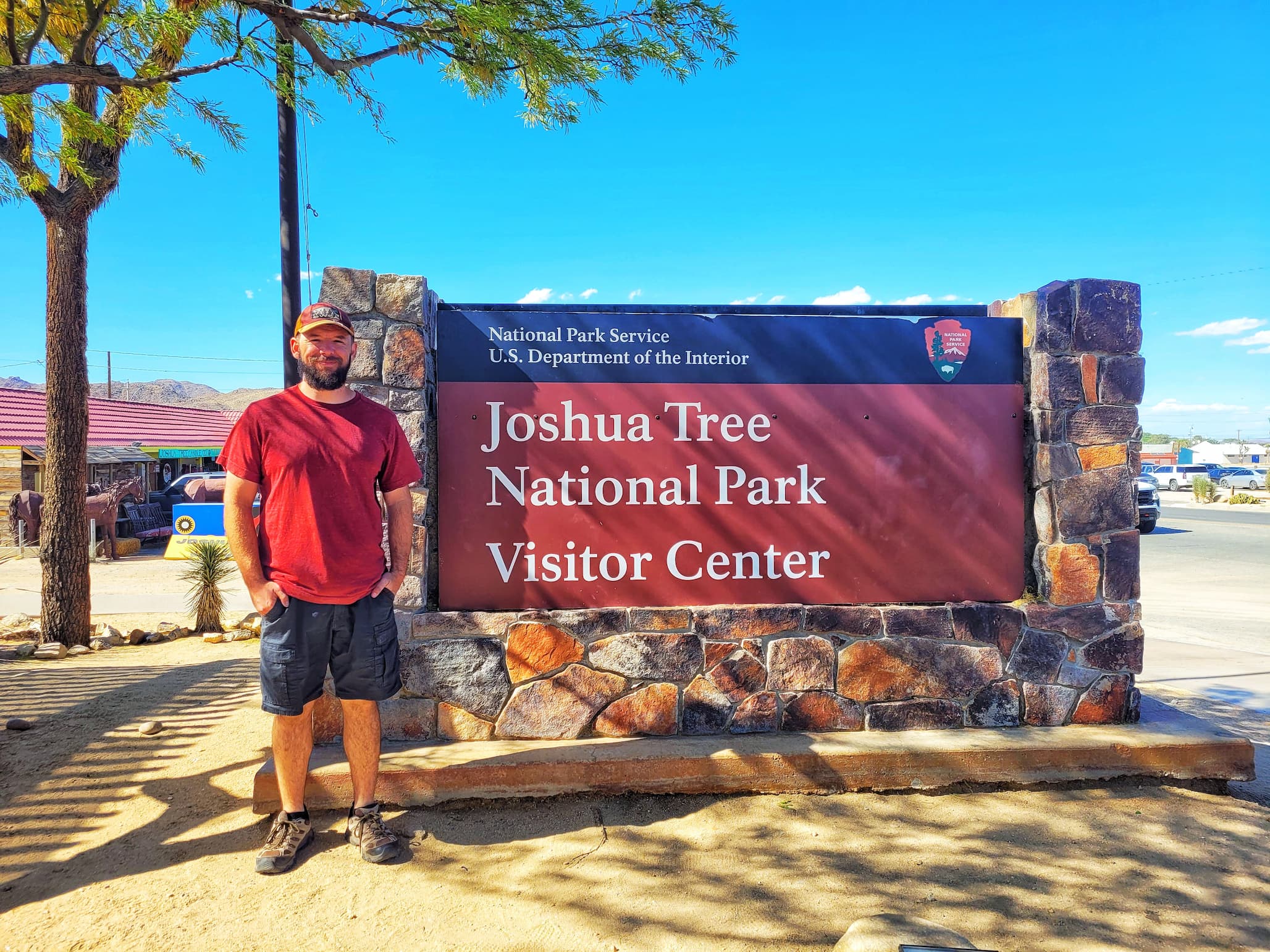
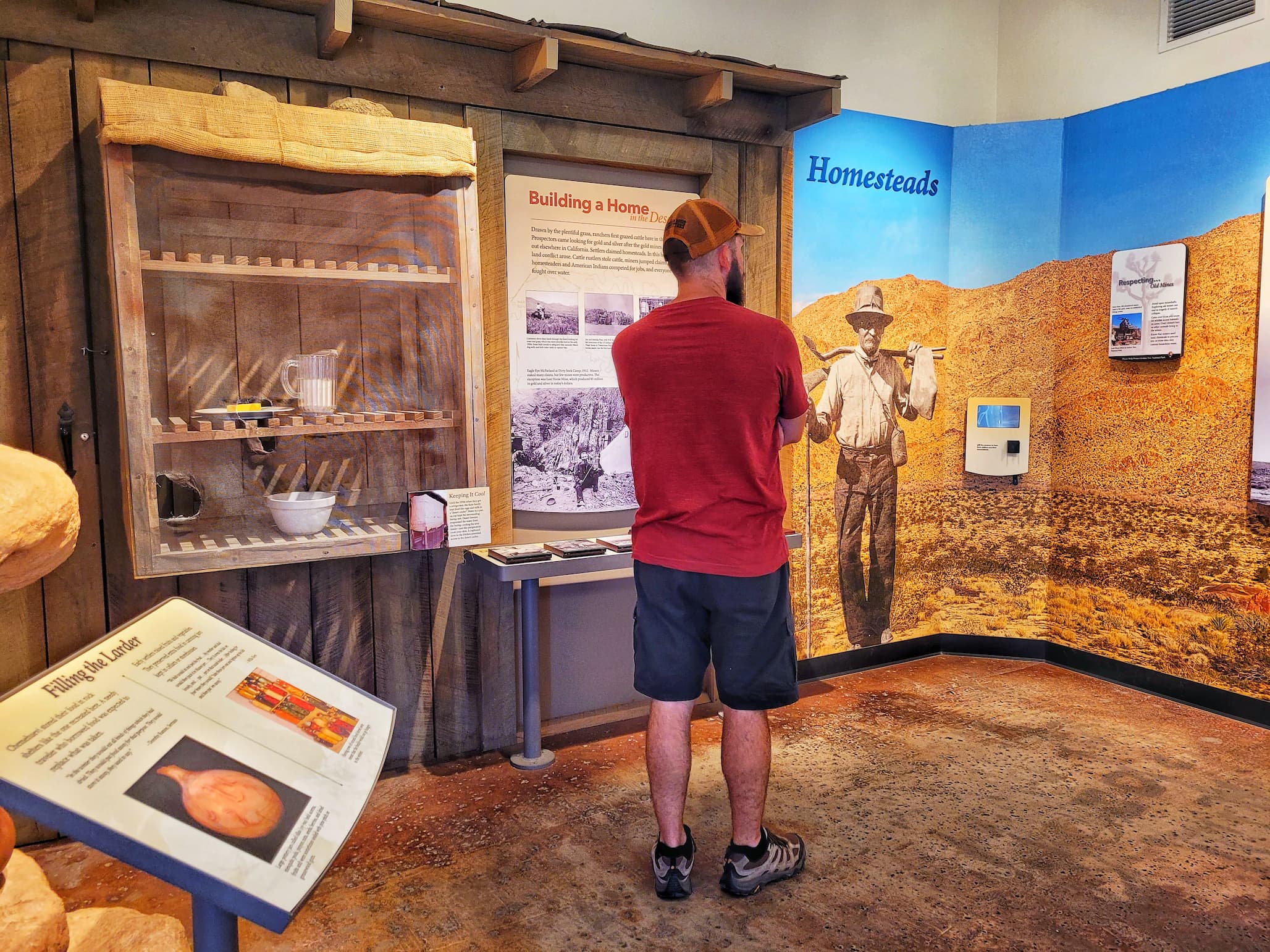
Technically, our Joshua Tree adventure started the afternoon before our first full day in the park when we stopped at the Joshua Tree Visitor Center. Joshua Tree National Park has four different visitor centers, and by the end of our trip we had visited all of them. Part of the motivation was collecting different National Park Passport stamps, but each visitor center also had its own exhibits and information about the park.
Samuelson’s Rocks
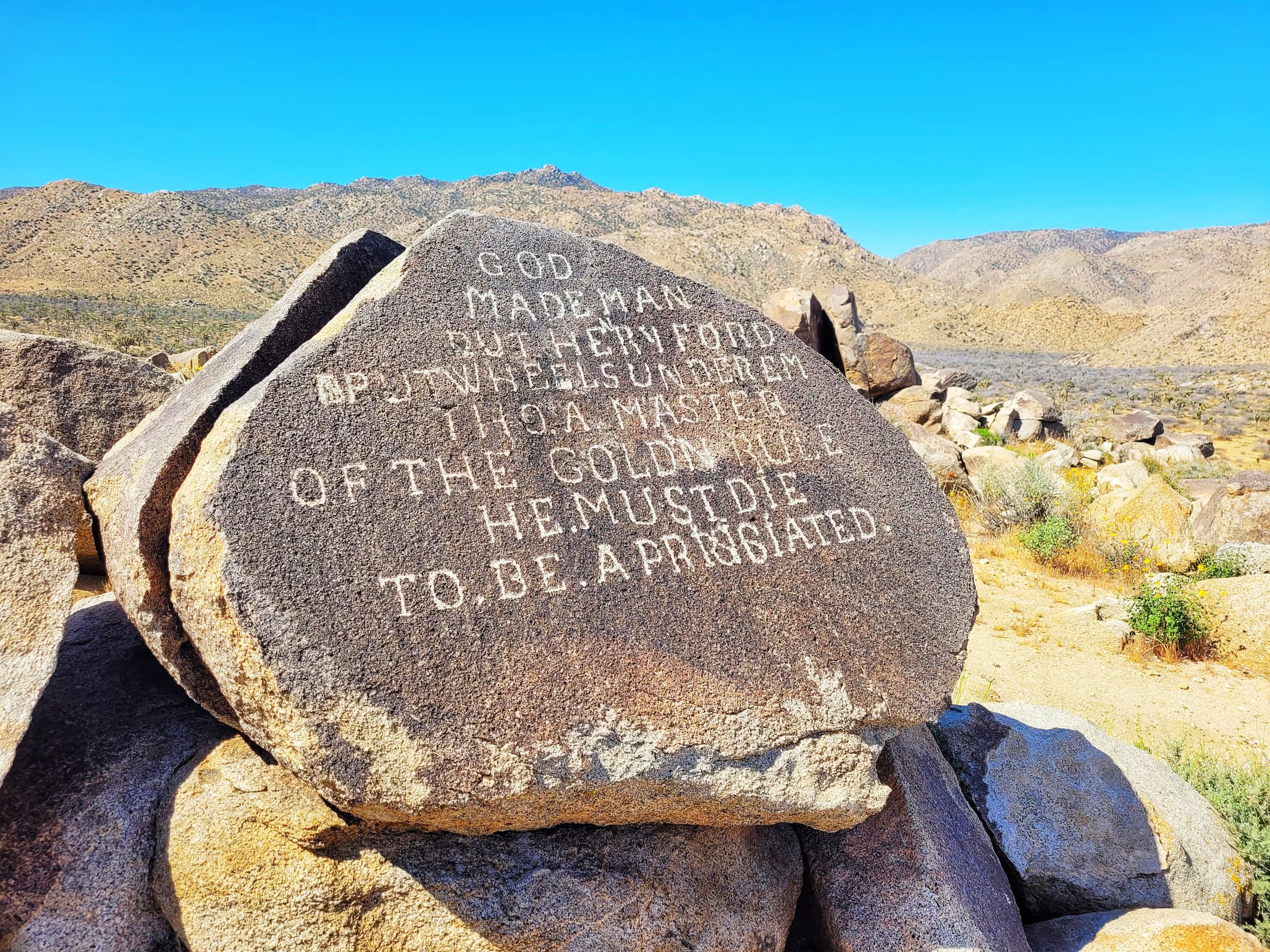
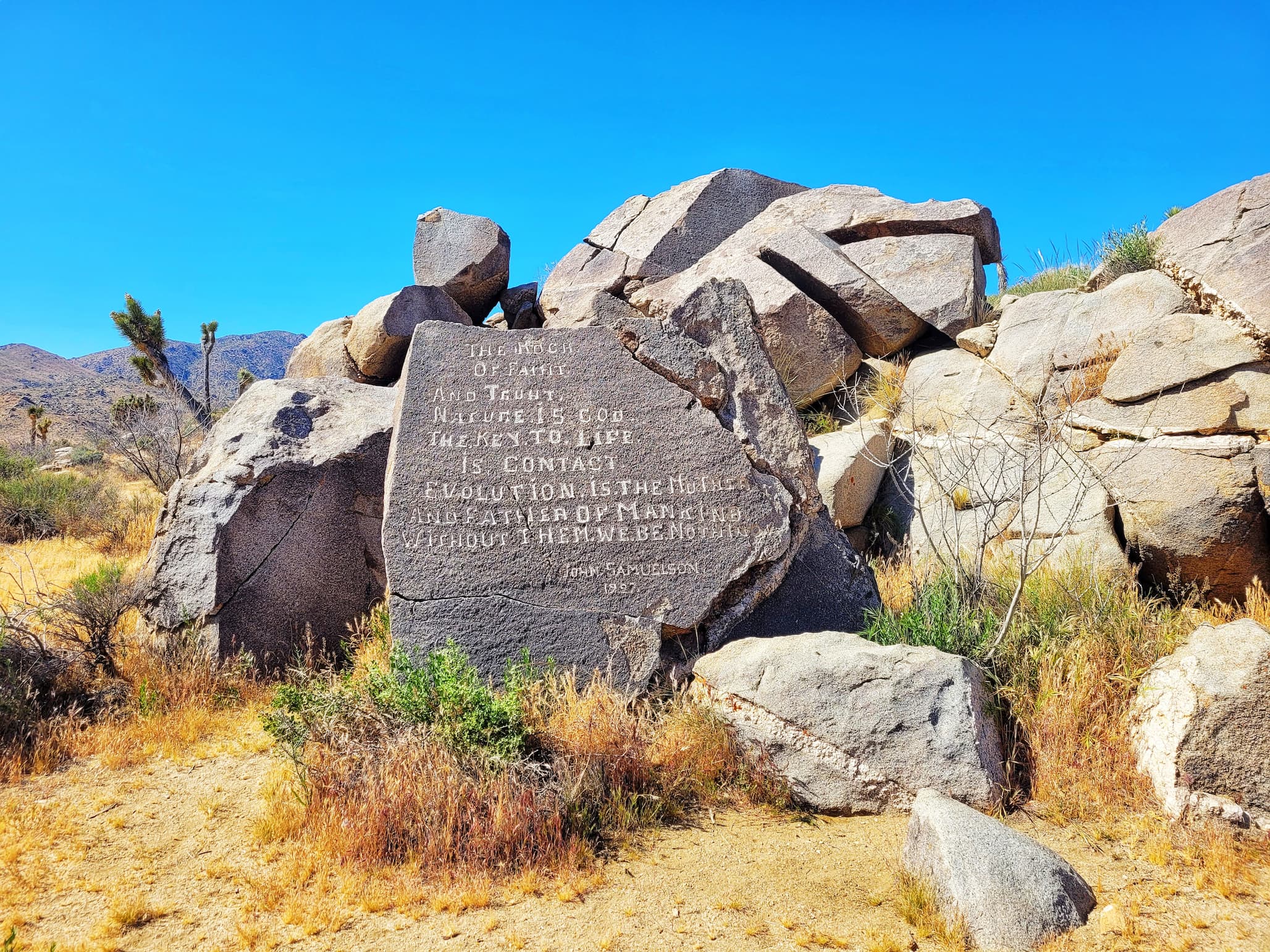
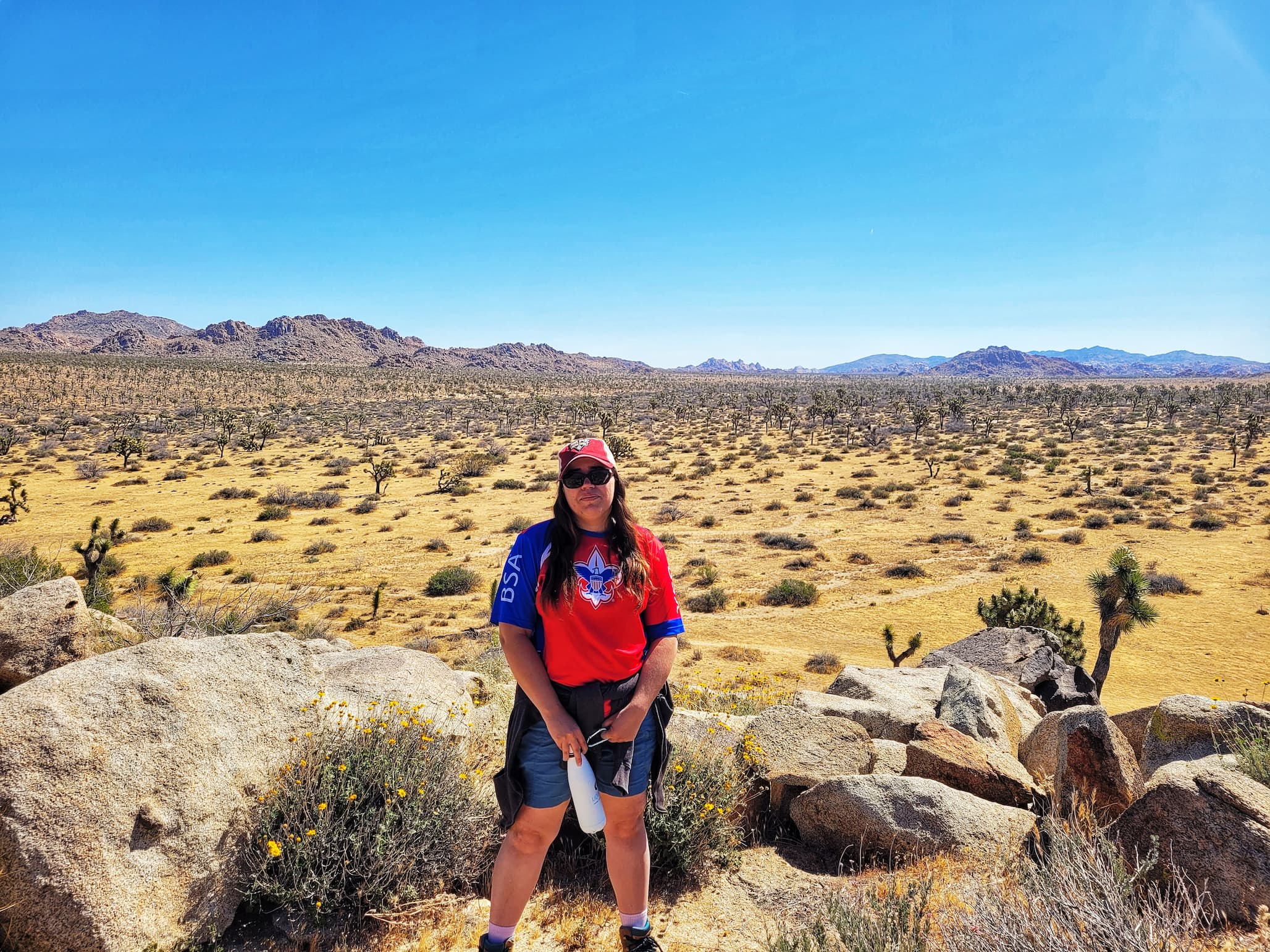
Our first hike of the day was to Samuelson’s Rocks, one of the more unusual places we visited in the park. This unmarked trail is about 3 miles round trip and leads to the former homestead of John Samuelson, who lived here in the 1920s.
The main attraction is a collection of large boulders covered in strange sayings and messages carved by Samuelson himself. Some are inspirational, some are religious, and some are just plain odd. The site also includes a few remnants of the old homestead, and the small hill provides excellent views across the surrounding desert. Because the trail isn’t marked and doesn’t receive nearly as many visitors as some of Joshua Tree’s more famous attractions, we didn’t see another person during our entire hike. We always love finding these quieter corners of national parks where it feels like you have the place all to yourself.
Wall Street Mill and Wonderland Ranch
Our next hike combined two historic sites along the same trail: Wall Street Mill and Wonderland Ranch.
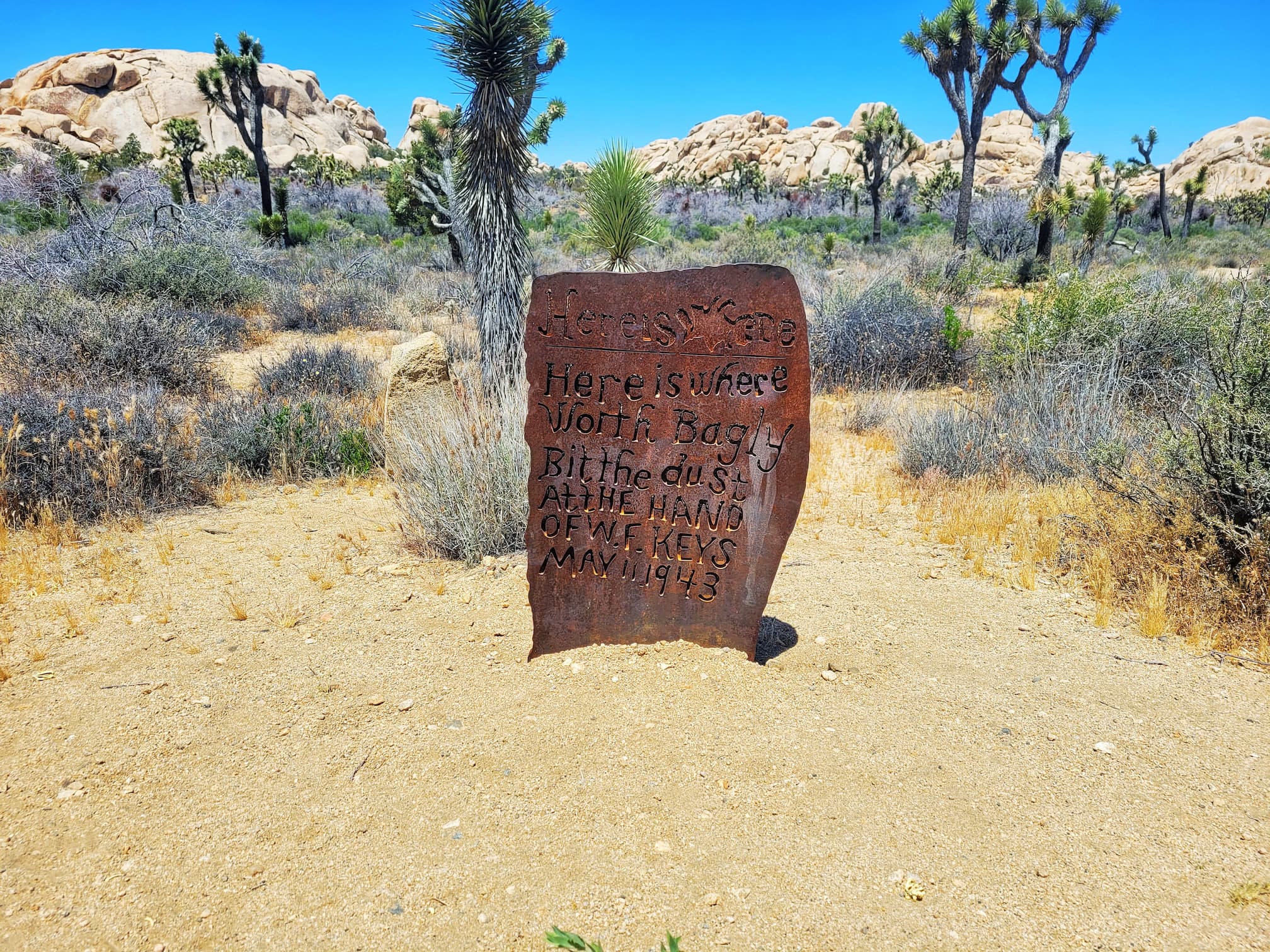
Before reaching the mill, we passed a marker commemorating one of Joshua Tree’s most infamous events. William F. Keys, who owned the mill, had a long-running feud with his neighbor Worth Bagley, a former sheriff. The two argued for years over property boundaries and access roads. The dispute eventually escalated into a shootout after Bagley blocked Keys’ access to the mill, claiming the road crossed his property. The confrontation ended with Keys killing Bagley. Although Keys maintained that Bagley had ambushed him, he was ultimately convicted and sent to prison.
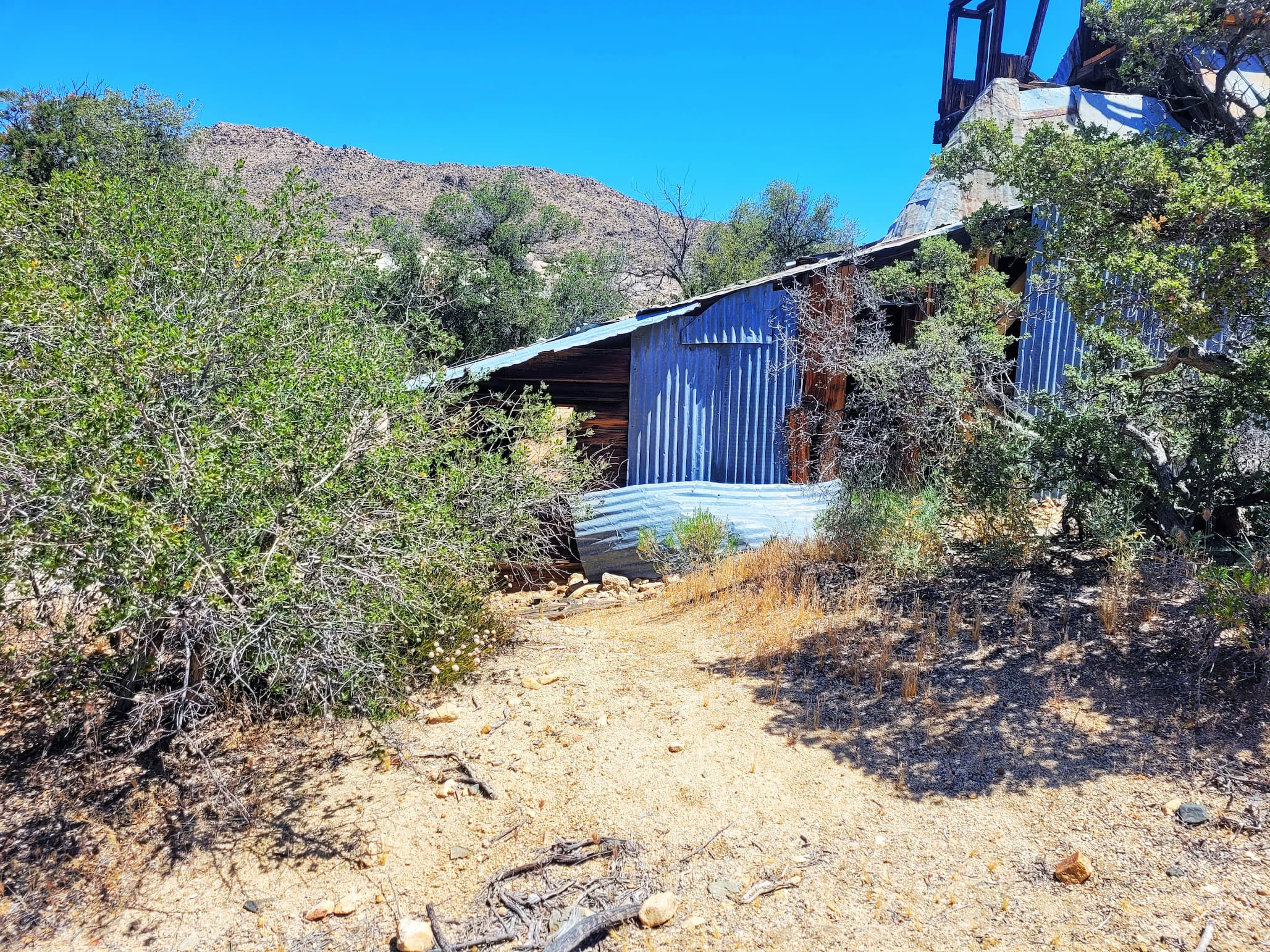
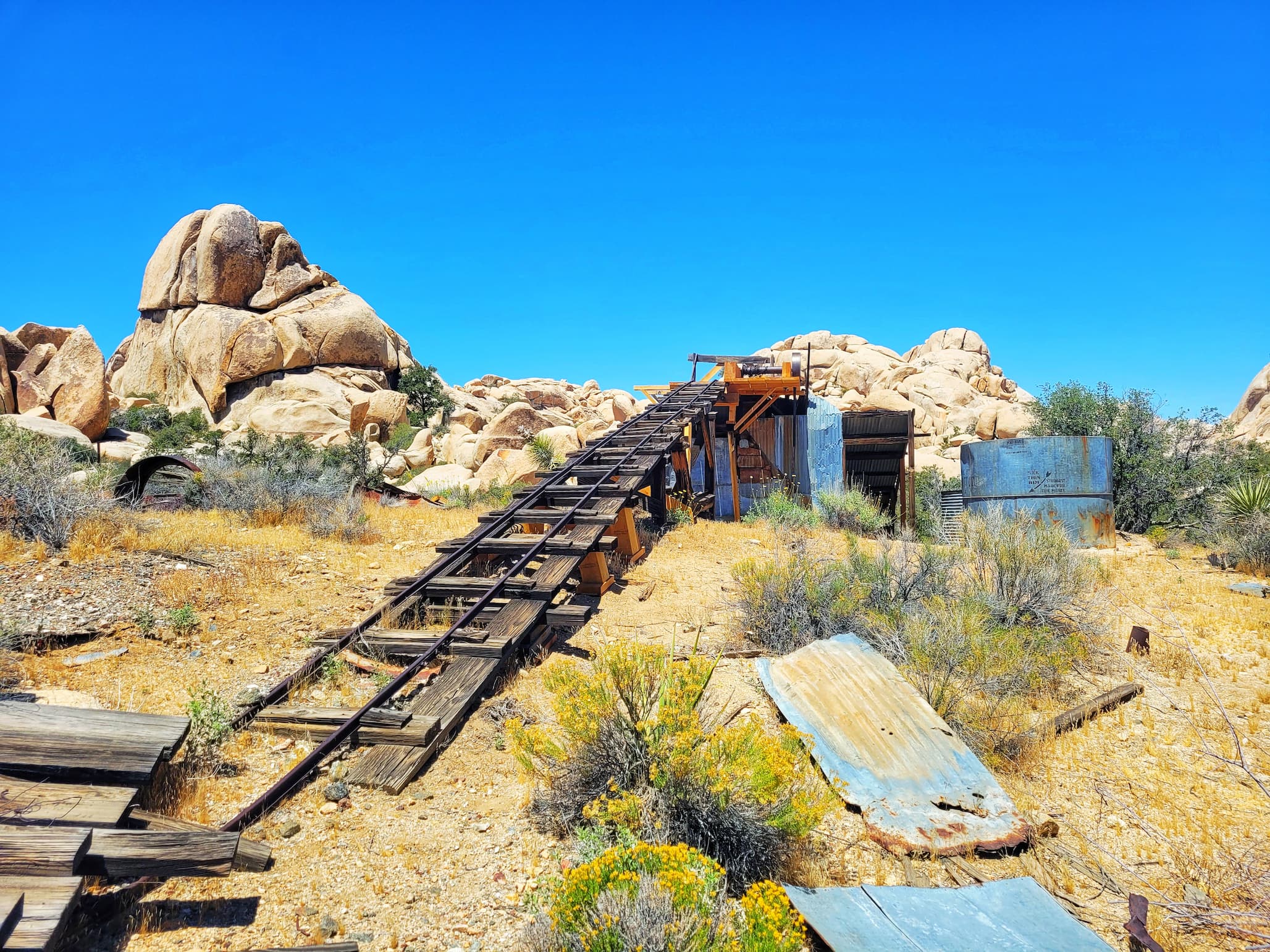
Not long after, we arrived at Wall Street Mill itself. The stamp mill operated on and off between 1930 and 1966, processing gold ore from nearby mines. Today it is one of the best-preserved historic mining structures in Joshua Tree National Park and is listed on the National Register of Historic Places. It’s fascinating to see how much of the machinery still remains in place after decades in the desert.
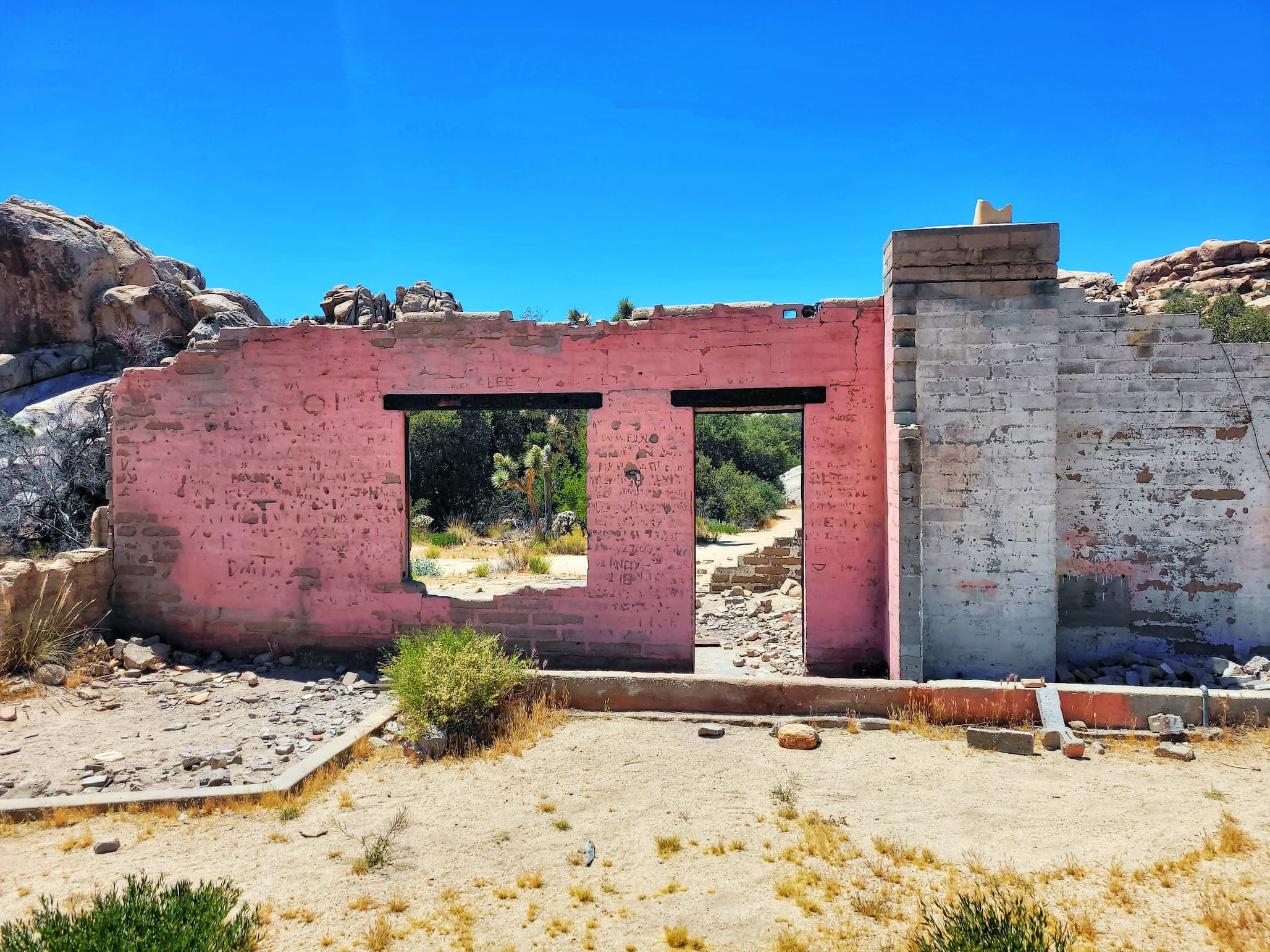
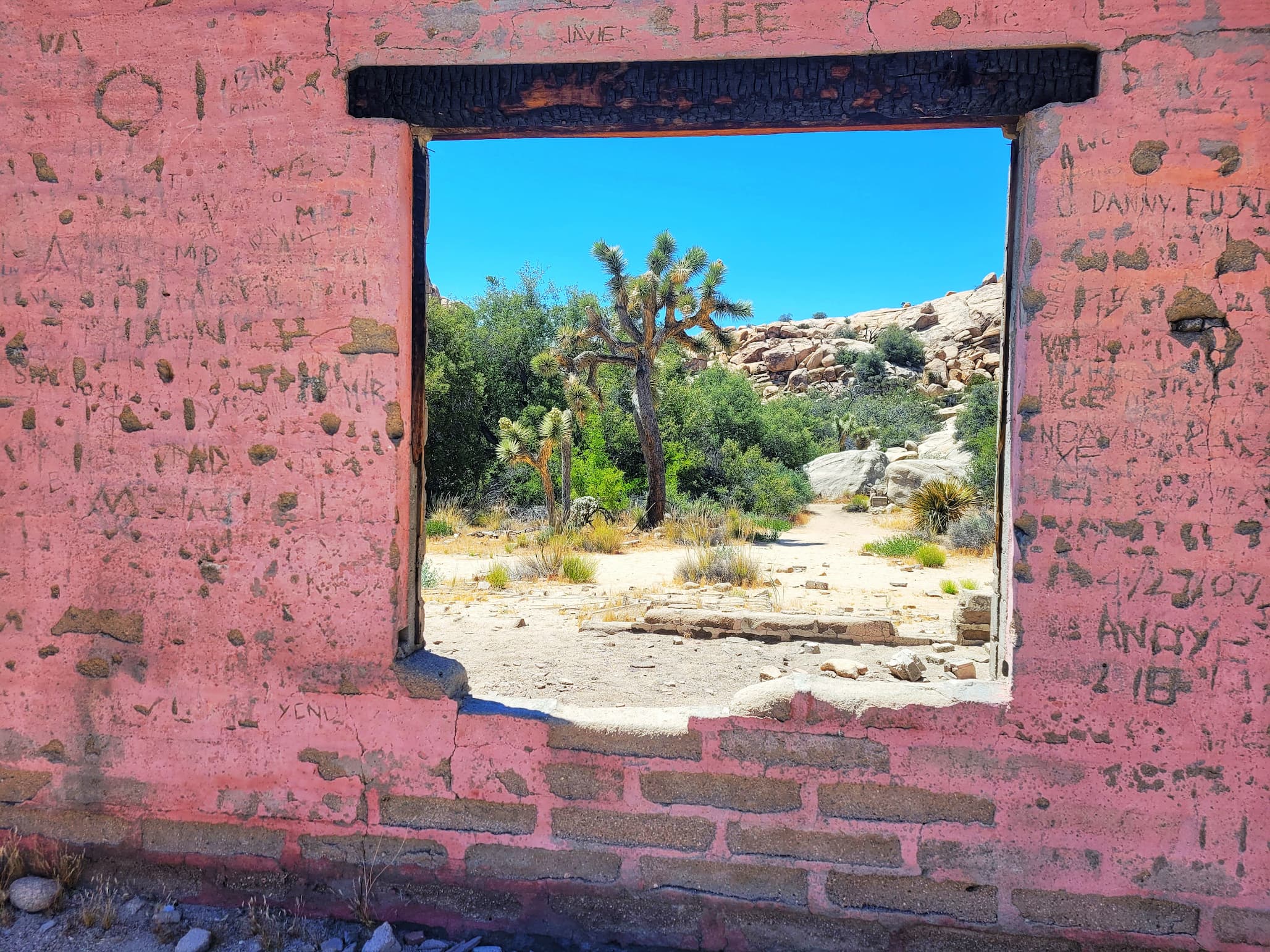
Continuing down the trail brought us to the ruins of Wonderland Ranch. The ranch was built by the Ohlson family, who came to the area hoping to strike it rich mining gold. What remains today is a collection of colorful ruins that stand out against the desert landscape. The pink walls were especially striking and made this one of the most photogenic historic sites we visited in the park.
Ryan Ranch
Next up was the Ryan Ranch Trail.
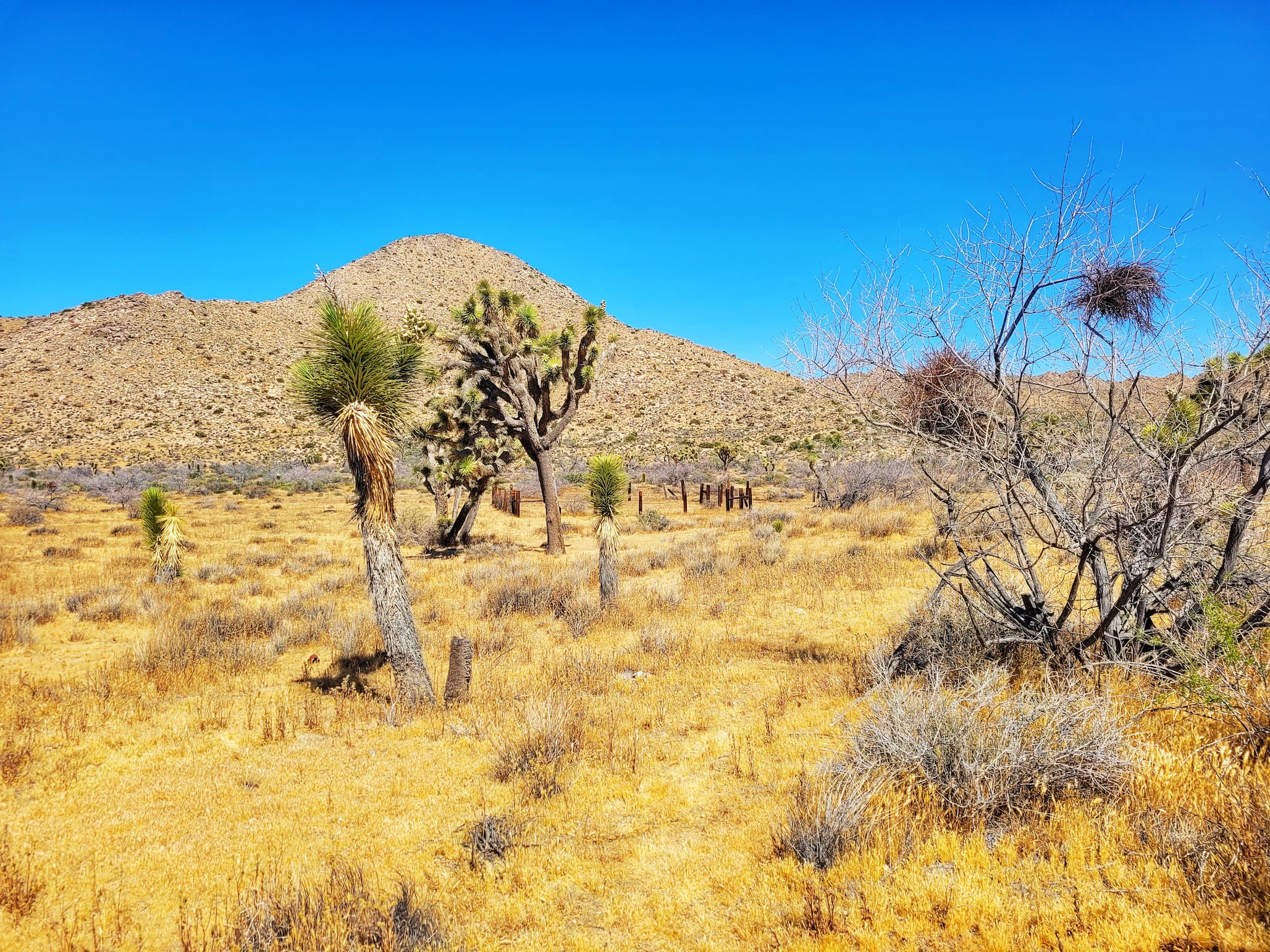
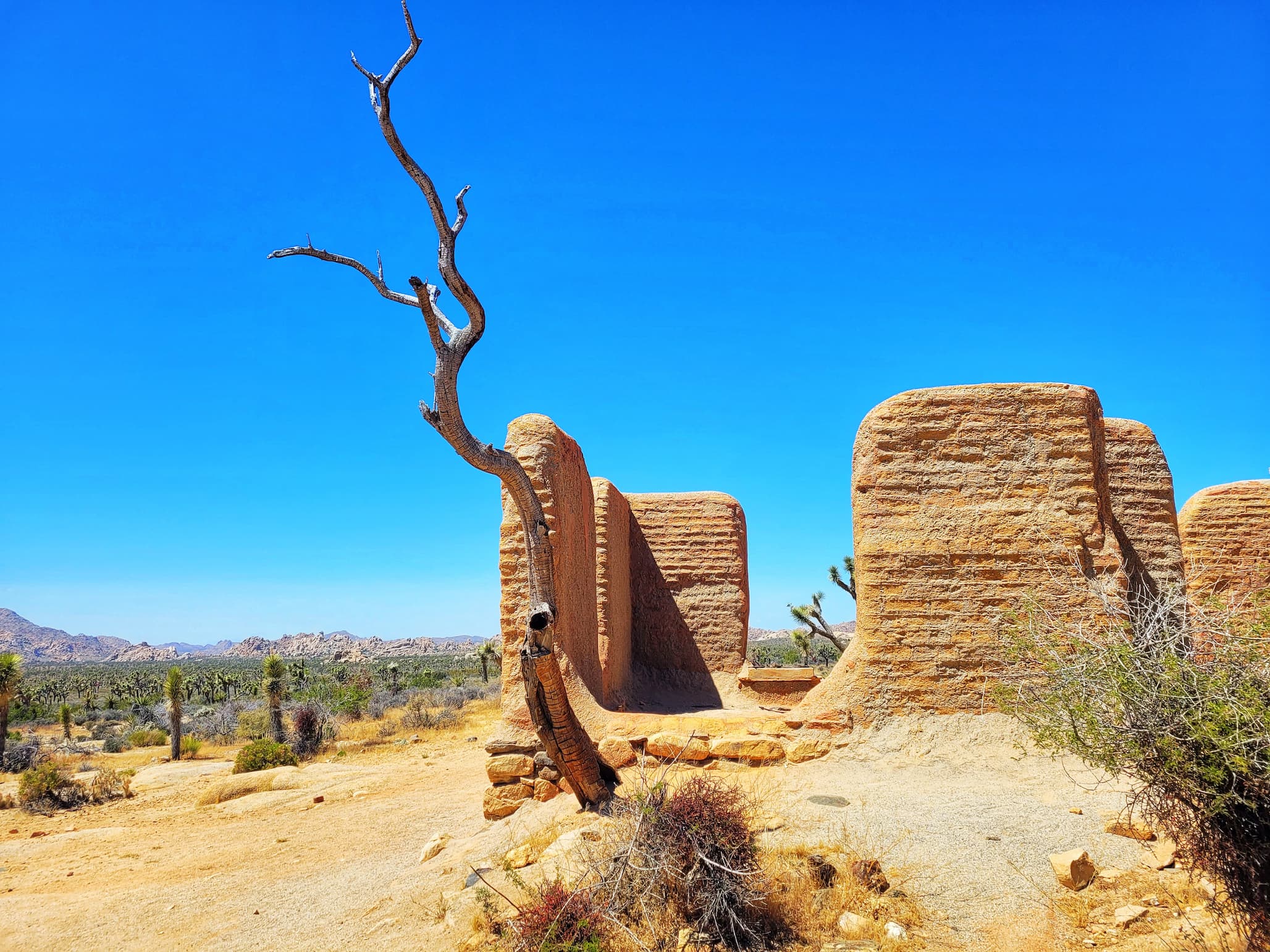
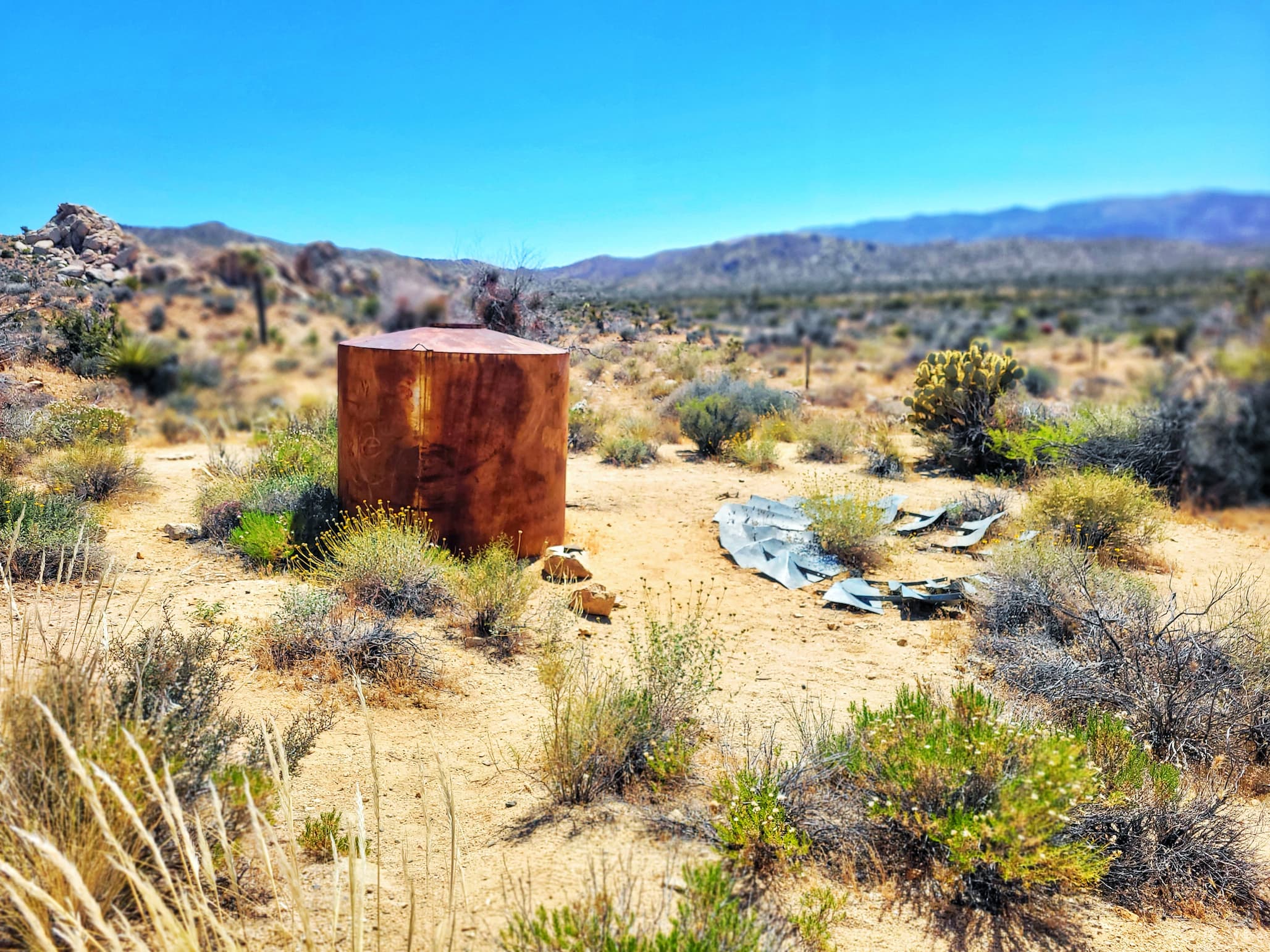
The ranch was originally established by J.D. Ryan in 1896 while he operated the nearby Lost Horse Mine. Much of the ranch complex was destroyed by fire in the late 1970s, but several stone ruins still remain. While there isn’t a huge amount left to see, it was another interesting glimpse into the lives of the miners and ranchers who once called this harsh desert environment home.
Quick Stops Around the Park
After several longer hikes, we spent the rest of the afternoon checking out some of Joshua Tree’s most popular attractions.
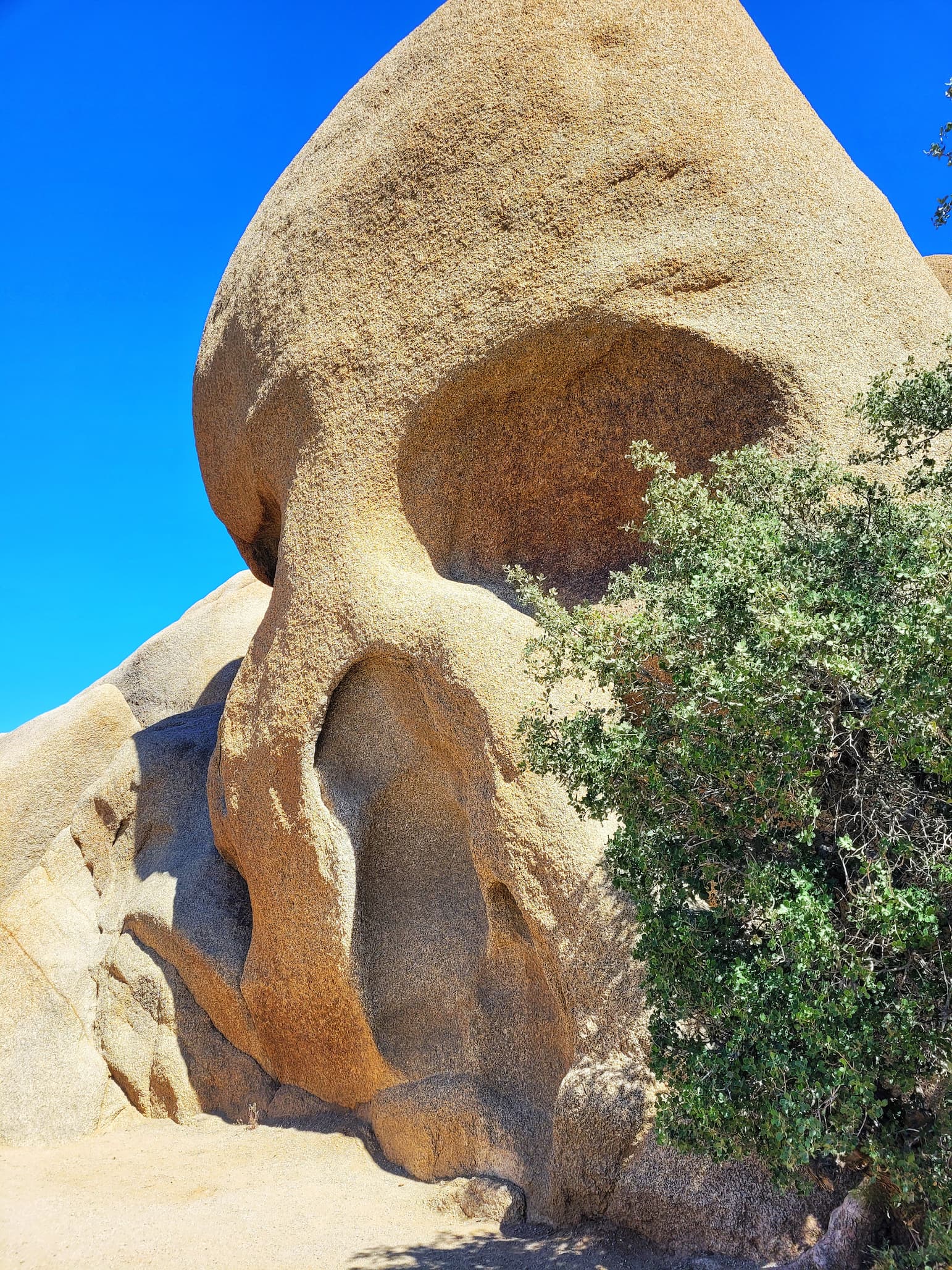
Skull Rock was exactly what its name suggests, a giant rock formation that looks remarkably like a skull. It was also one of the busiest places we visited all day.
We also stopped at Cap Rock and walked the short nature trail. Like Skull Rock, it was very crowded, but the rock formations were still worth seeing.
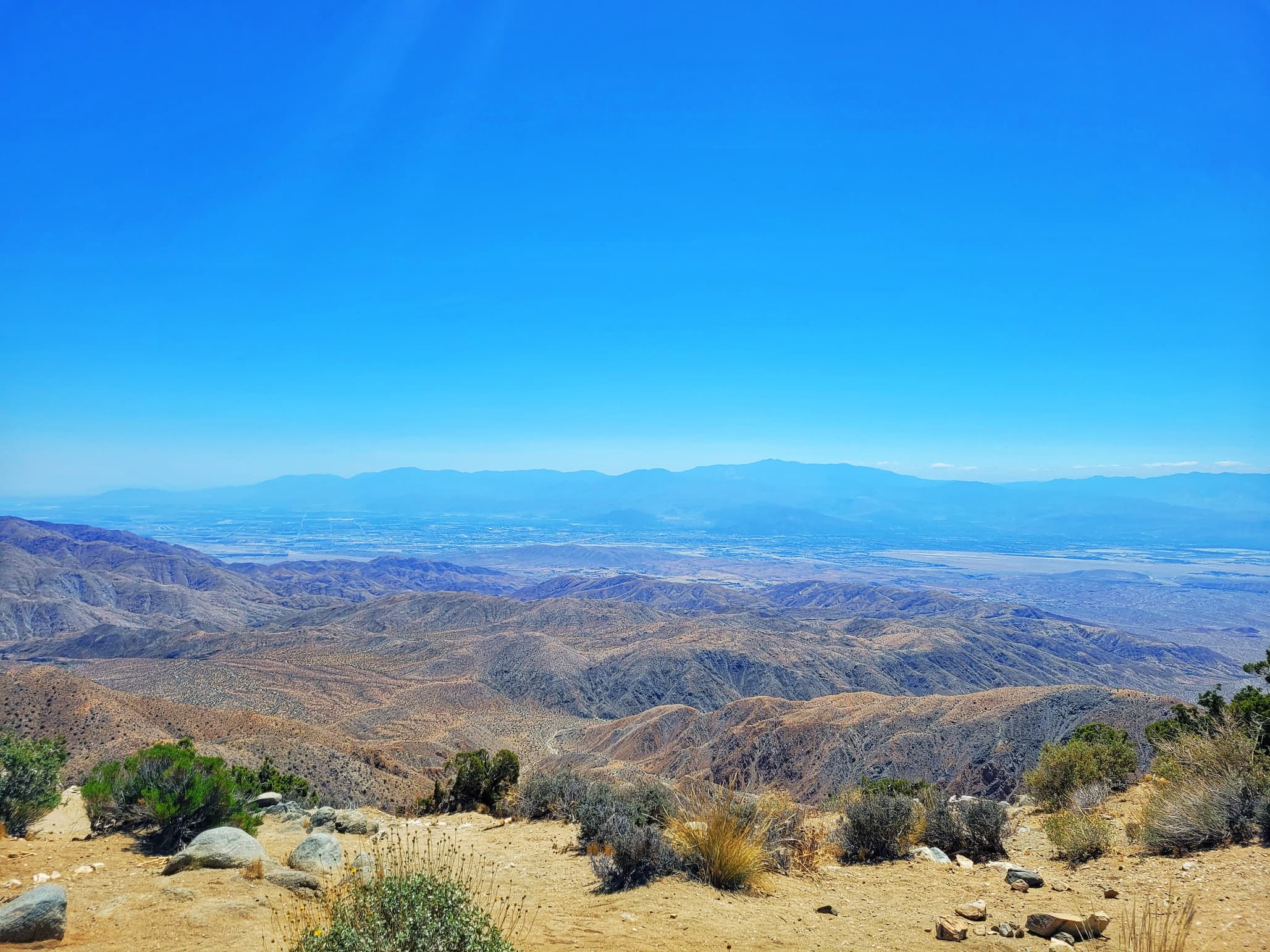
At Keys View, visitors can often see all the way into Mexico on a clear day. Unfortunately, our visit wasn’t particularly clear, so the distant views were a bit hazy. Even so, the overlook provides an impressive perspective of the Coachella Valley below.
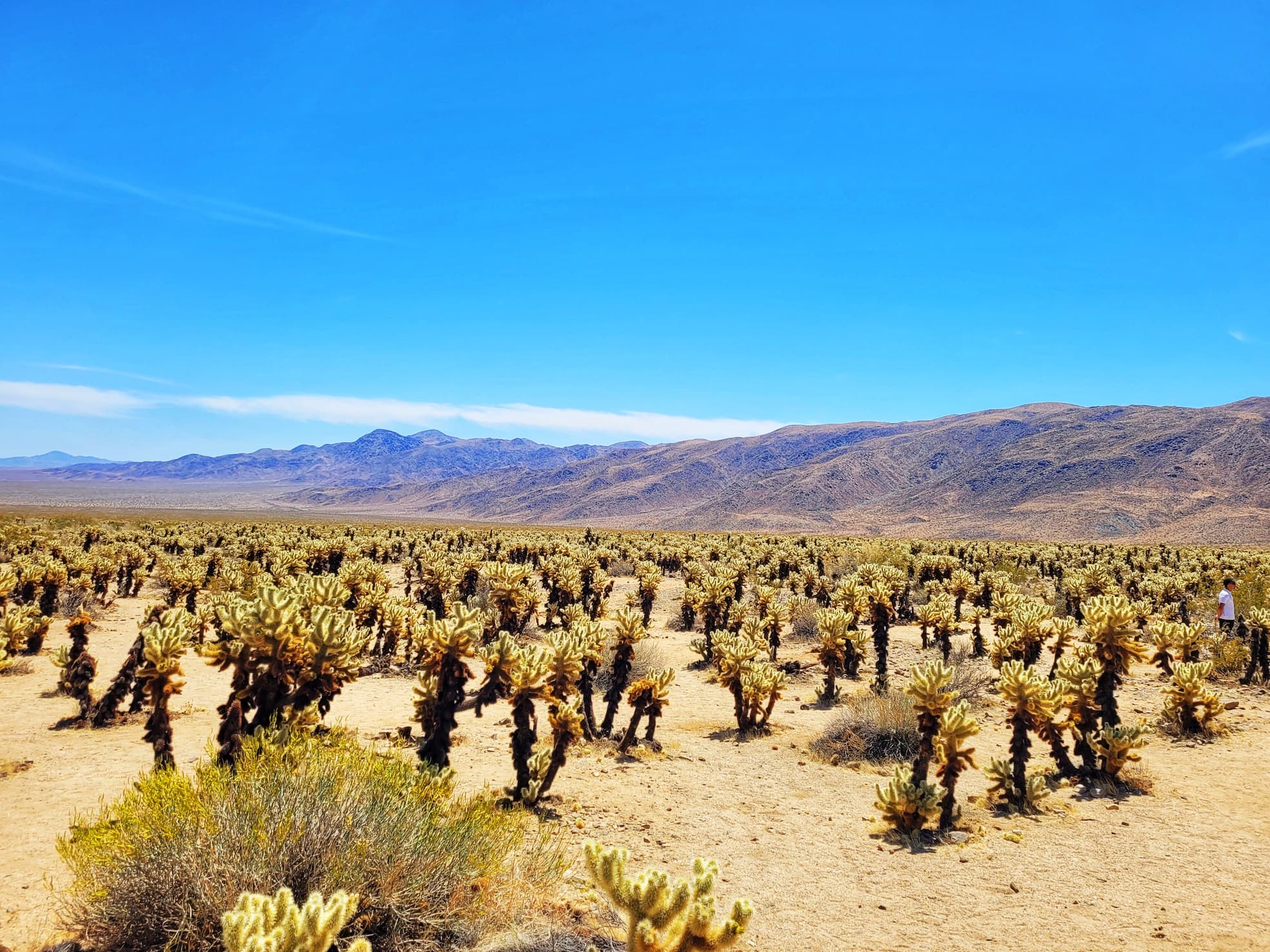
The trail through the Cholla Cactus Garden was closed during our visit, but we still stopped along the road to admire the landscape. Seeing an entire area covered with cholla cacti was incredibly cool and unlike anything we’ve seen elsewhere.
Mara Oasis and the Twentynine Palms Visitor Center
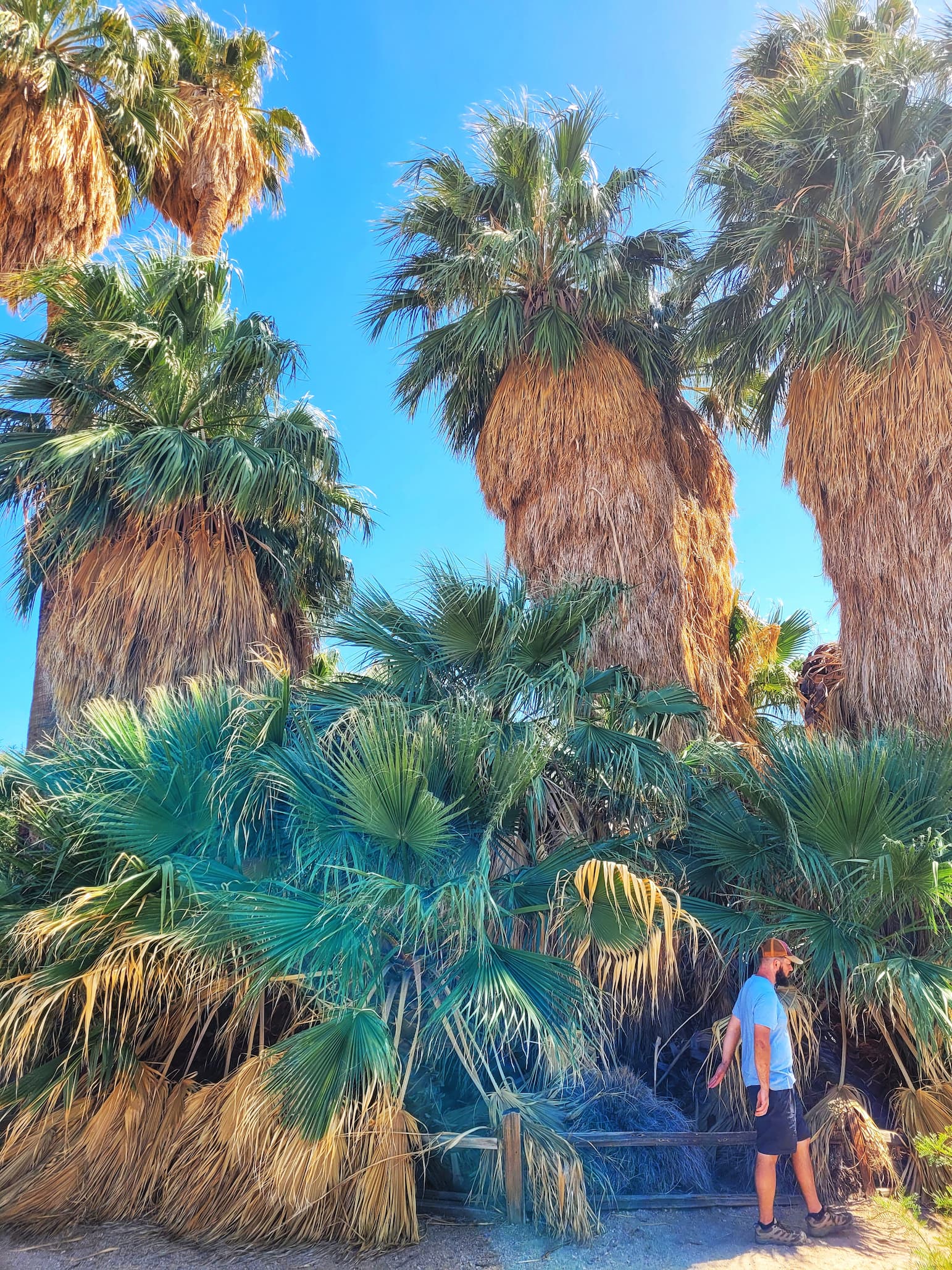
To wrap up the day, we visited Mara Oasis and then stopped at the Oasis Visitor Center in the town of Twentynine Palms just outside the park.
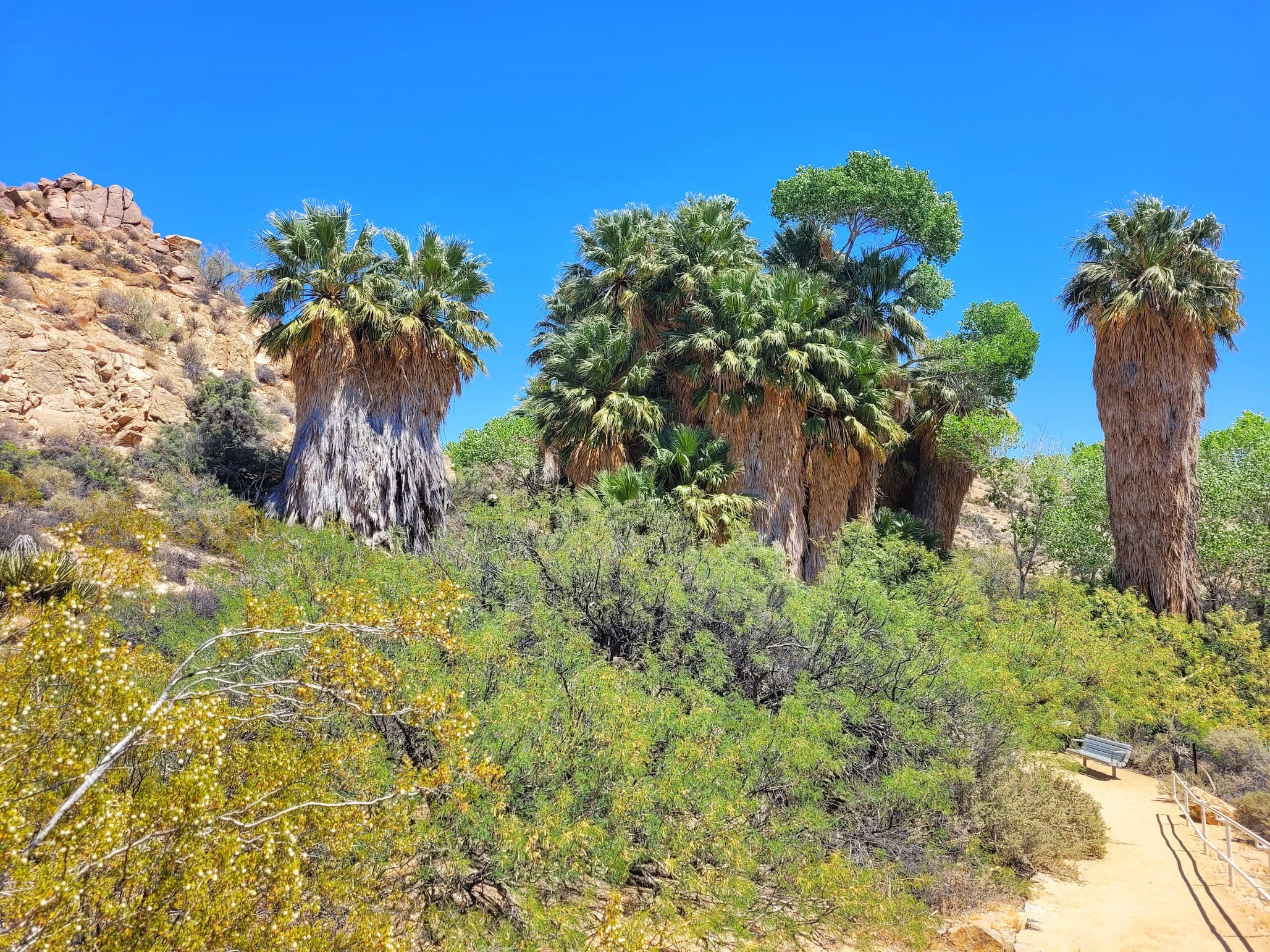
The oasis is one of the few places in this desert environment where water naturally reaches the surface, creating habitat for plants and wildlife. It was a nice contrast to the rocky desert scenery we had spent most of the day exploring.
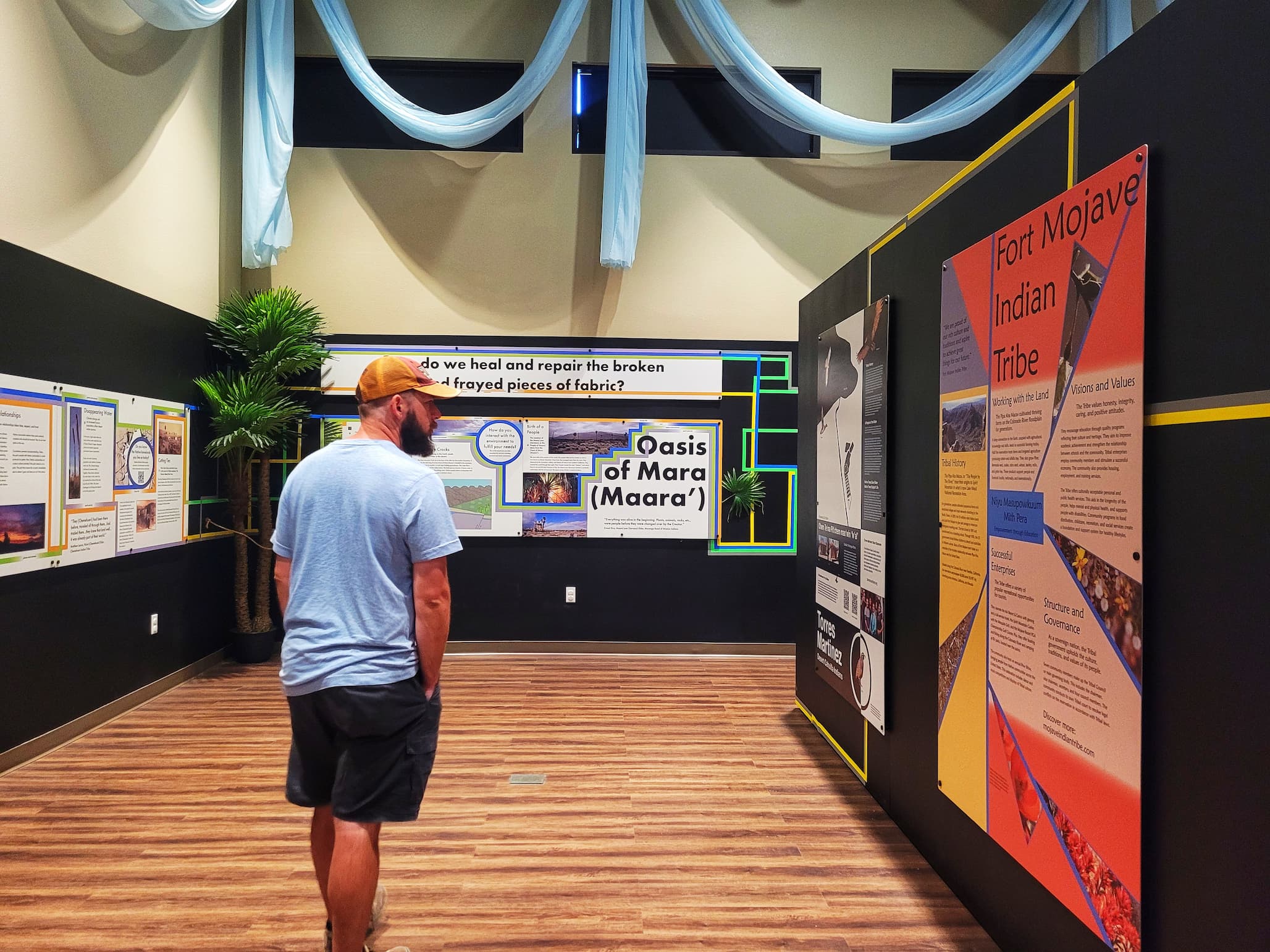
The visitor center was another chance to learn more about the park’s history, geology, and wildlife, and, of course, add another passport stamp to the collection.
Day 2: Desert Tortoise Dreams and One Last Hike
Searching for Desert Tortoises at Indian Cove
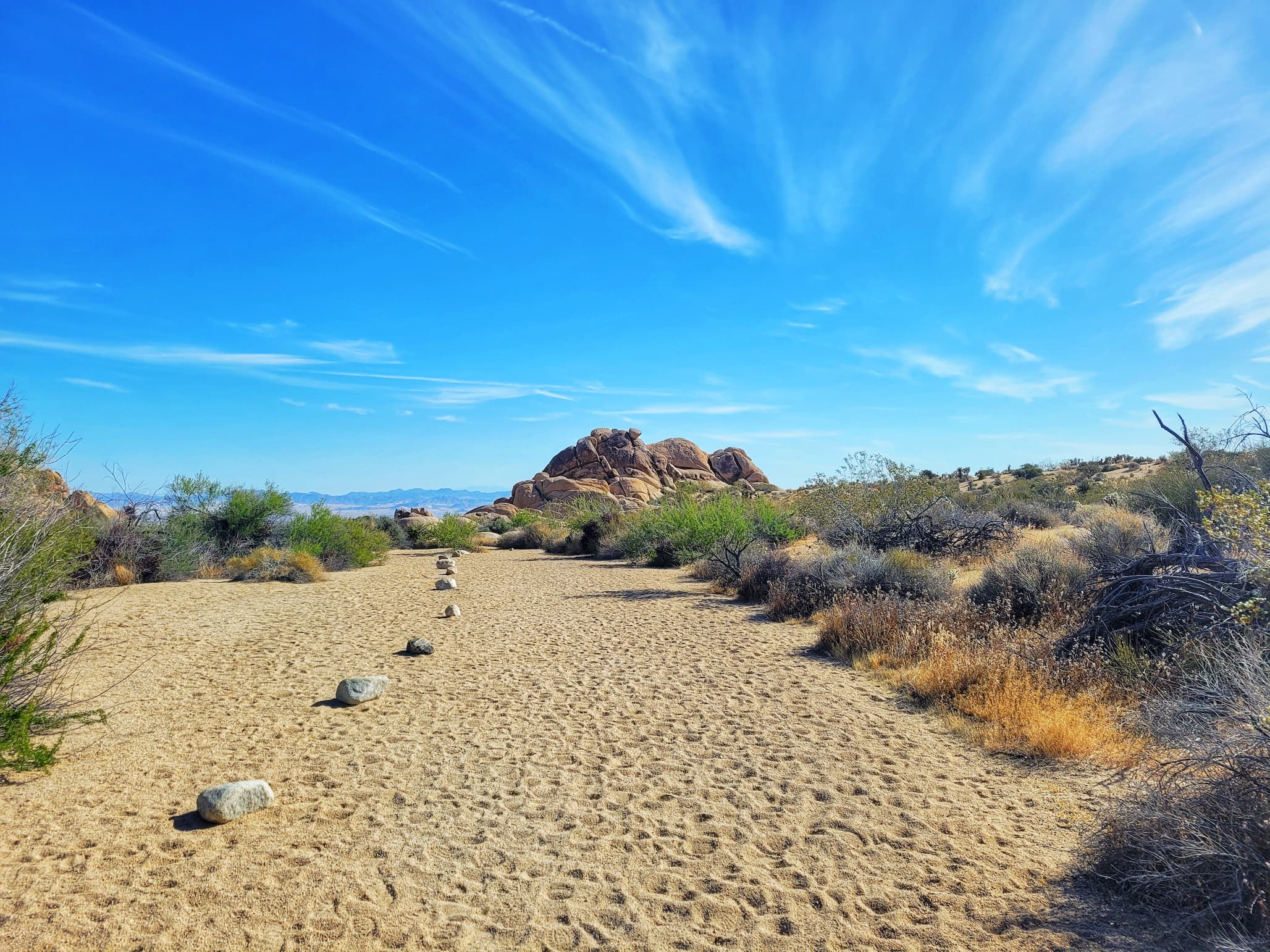
We started our second day with a mission. Before our trip, I had read on the National Park Service website that the Indian Cove area is one of the best places in Joshua Tree National Park to spot a desert tortoise. Josh used to foster a large red-footed tortoise, so he has a bit of a soft spot for tortoises and was determined to find one.
Armed with plenty of optimism, we headed out to Indian Cove and spent some time scanning the desert landscape for any signs of movement. Unfortunately, the tortoises had other plans. Despite our best efforts, we didn’t spot a single one.
Contact Mine Trail
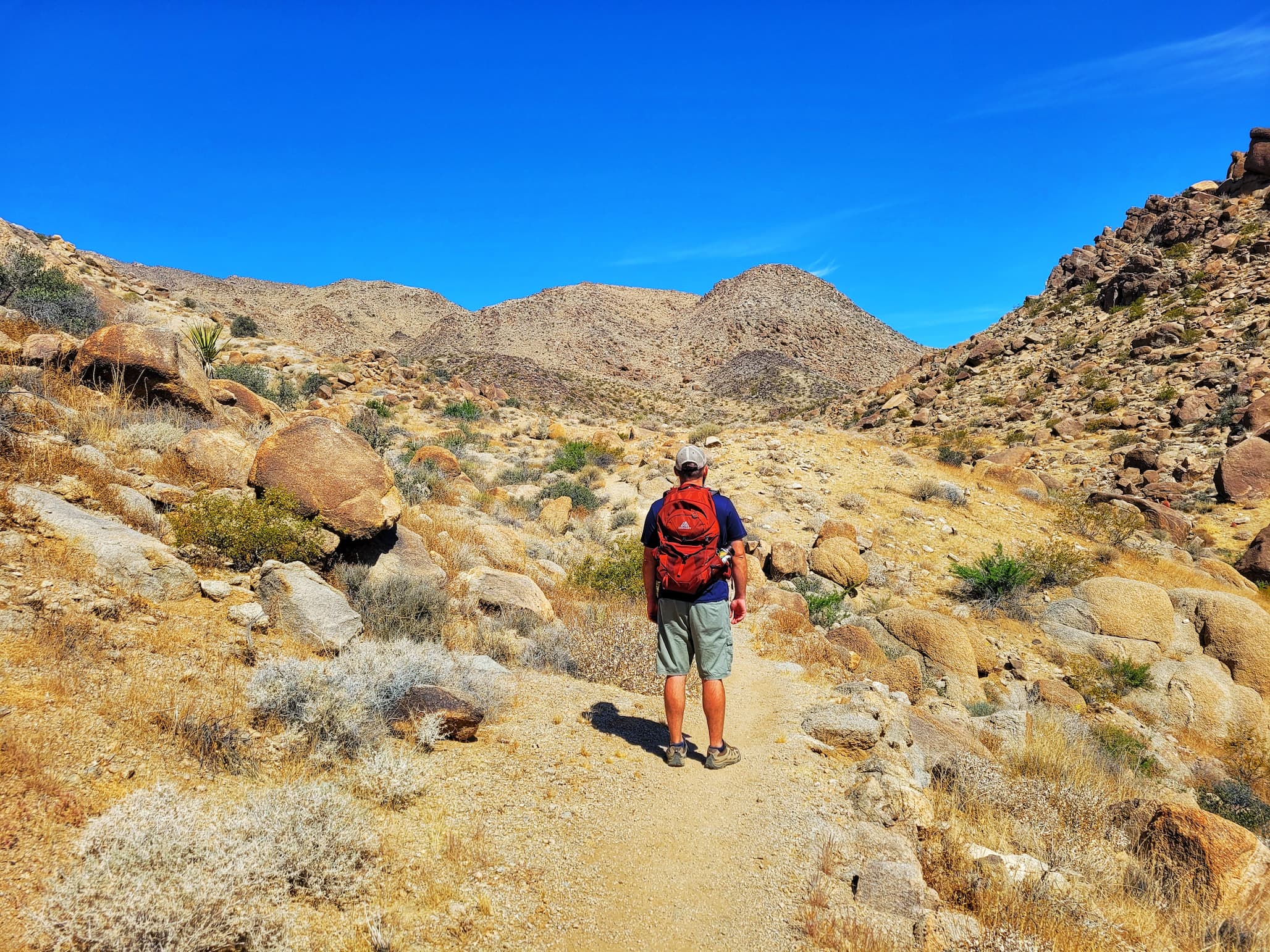
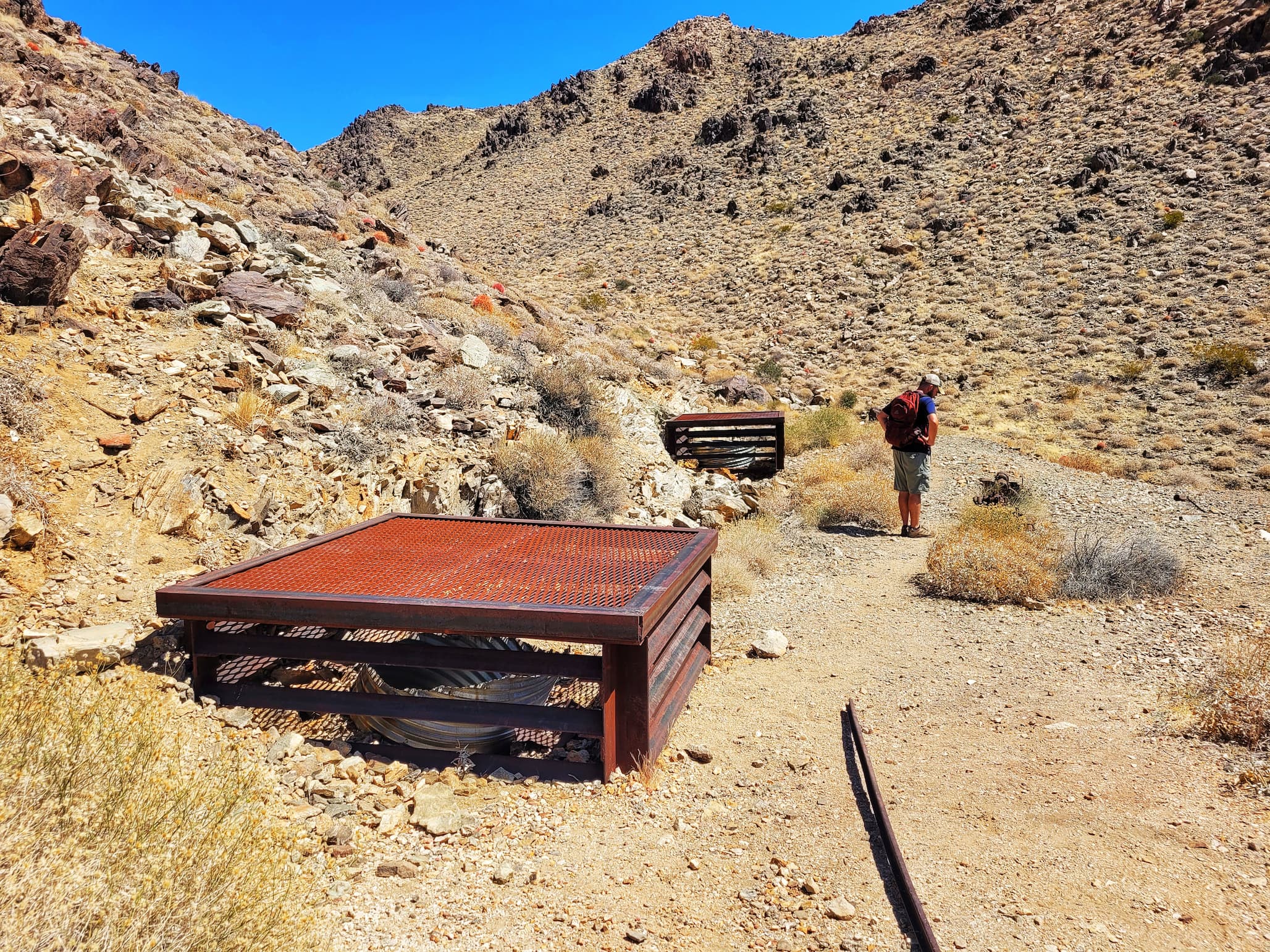
Our main hike of the day was the Contact Mine Trail. This out-and-back trail leads into the mountains to the remains of an old gold mine. Compared to some of Joshua Tree’s more popular areas, this hike was wonderfully quiet. We only encountered a couple of other hikers the entire time, which made it feel much more remote than many of the park’s roadside attractions.
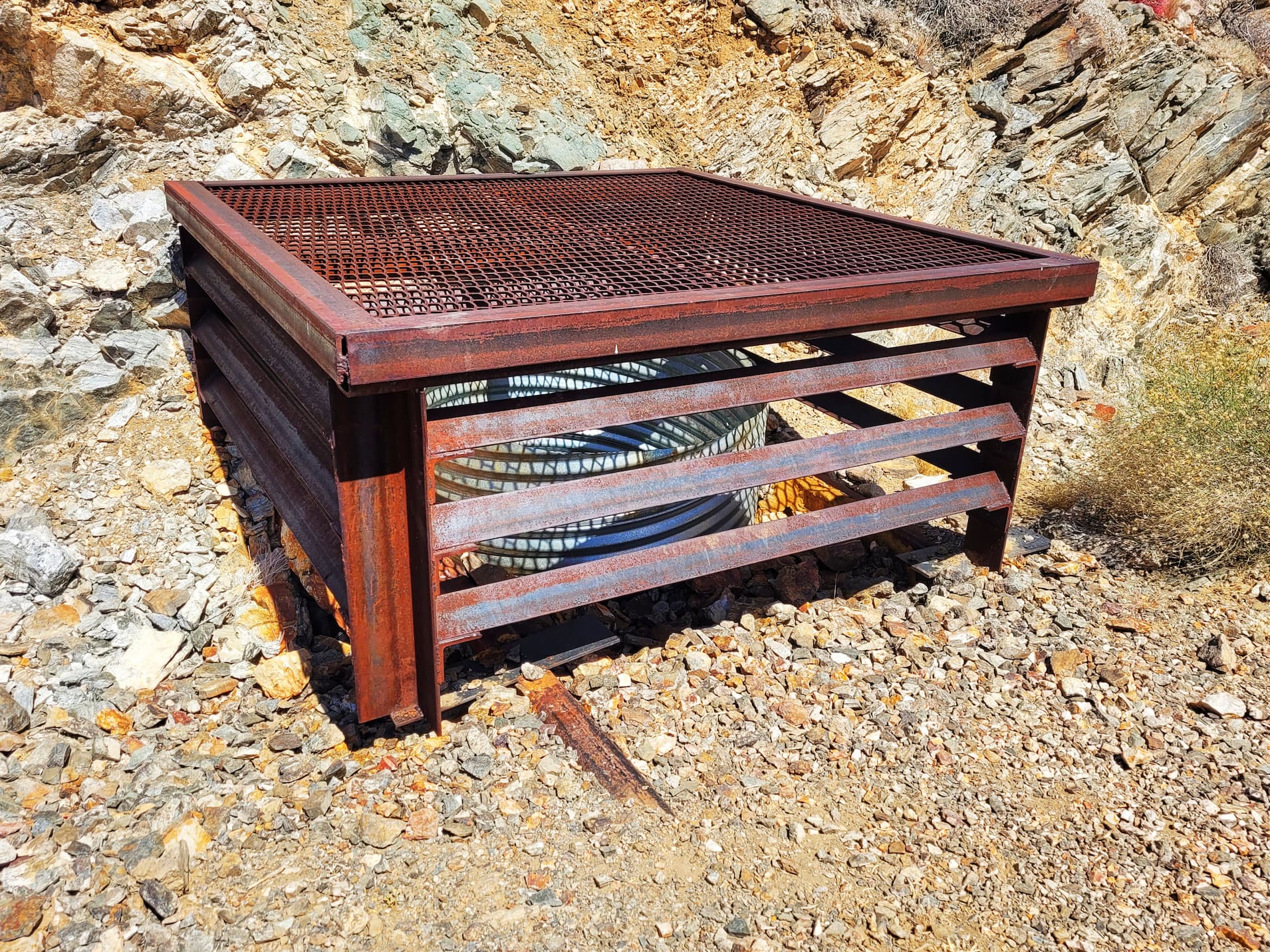
The mine itself is tucked into the rocky hills and includes a handful of historic remnants, including old mining equipment and several capped mine shafts. While there isn’t a huge amount left standing, the setting is what really makes the hike worthwhile. The rugged desert scenery and lack of crowds made this one of our favorite hikes of the trip.
Cottonwood Visitor Center and Oasis
After our hike, we made our way to the Cottonwood area of the park. We stopped at the Cottonwood Visitor Center and visited the nearby oasis, another reminder of how important water is in such an otherwise harsh environment. Seeing these pockets of green vegetation scattered throughout the desert never gets old. It’s amazing how dramatically the landscape changes when even a small amount of water is present.
Black Rock Nature Center
Our final stop of the trip was the Black Rock Nature Center. This area of the park is known primarily for its campground (but does have plenty of trails, too), but for us there was one more important task to complete: collecting our final Joshua Tree passport stamp. With that stop, we had officially visited all four visitor centers in Joshua Tree National Park.
Tips for Visiting Joshua Tree National Park
After spending two full days exploring Joshua Tree National Park, here are a few things I wish every first-time visitor knew before they go:
- Start Early: Even during our visit, temperatures warmed up quickly and many of the popular attractions became crowded as the day went on. Getting an early start will help you beat both the heat and the crowds.
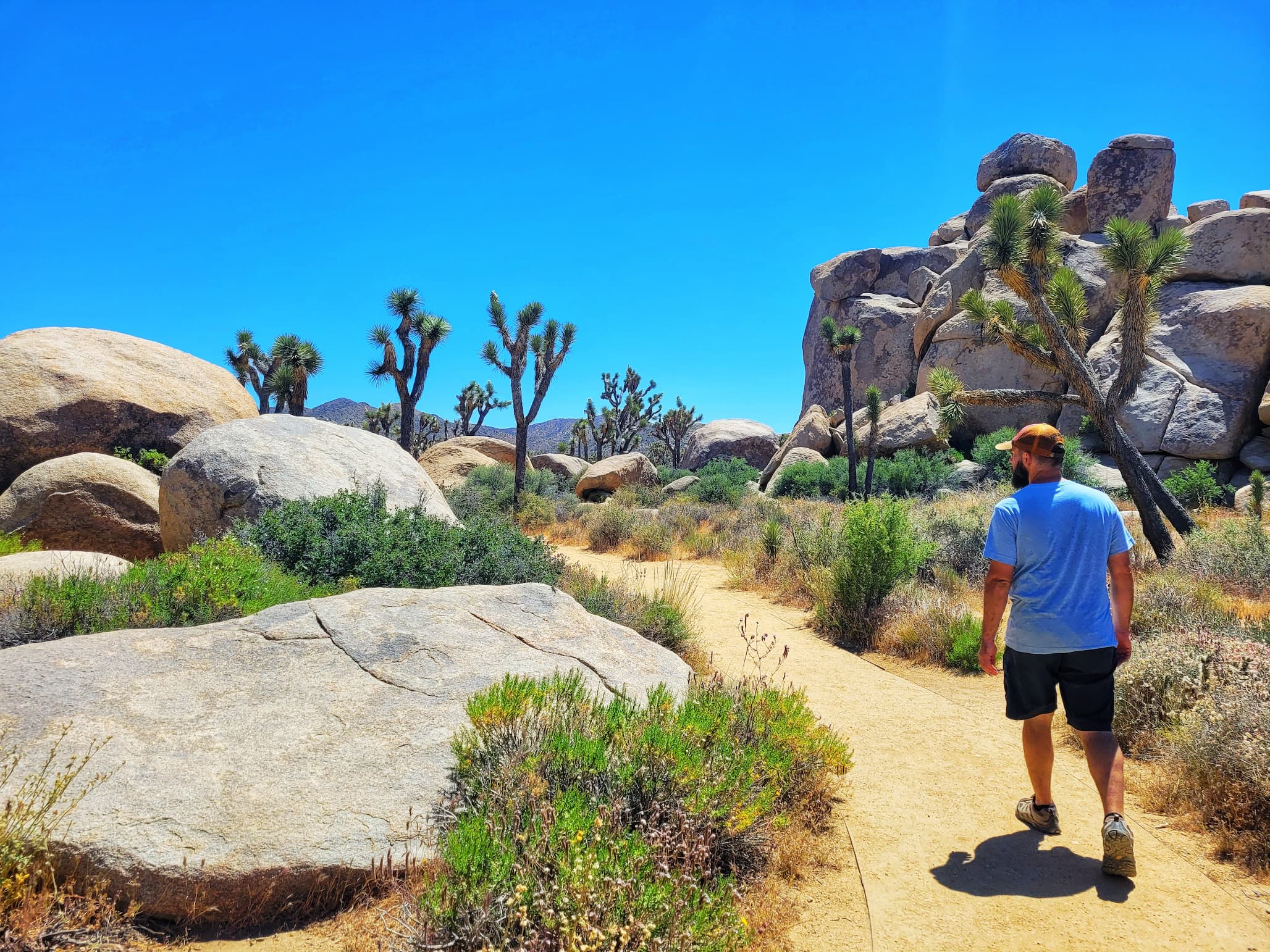
- Don’t Skip the Lesser-Known Hikes: Places like Skull Rock and Keys View are popular for a reason, but some of our favorite experiences were on quieter trails like Samuelson’s Rocks, Ryan Ranch, and Contact Mine. We often had entire sections of the park to ourselves, which made the experience feel much more special.
- Bring More Water Than You Think You’ll Need: This is the desert, and it can be deceptively dry. Even on shorter hikes, we made sure to carry plenty of water with us. It’s much better to return to the car with extra water than to run out on the trail.
- Visit Multiple Visitor Centers: Most people stop at just one visitor center, but each of Joshua Tree’s four visitor centers has different exhibits and information. If you’re a National Park Passport collector, you’ll also find different cancellation stamps at each location.
- Keep an Eye Out for Wildlife: We spent part of our trip hoping to spot a desert tortoise and struck out completely, but we did see plenty of cool lizards, birds, and even a snake.
- Consider Camping Inside the Park: We enjoyed our stay at Joshua Tree Lake RV & Campground, especially because we needed electric hookups. However, after seeing some of the campgrounds nestled among the giant rock formations inside the park, I would love to return someday and camp within the national park itself. The scenery around many of those campsites looked incredible.
- Give Yourself at Least Two Days: You can see some of Joshua Tree’s highlights in a single day, but we were glad we had two full days to explore. That gave us enough time to visit multiple areas of the park, tackle several hikes, explore the historic sites, and still have time for scenic stops along the way without feeling rushed.
As Harvest Hosts affiliates, we earn commission on qualifying purchases.