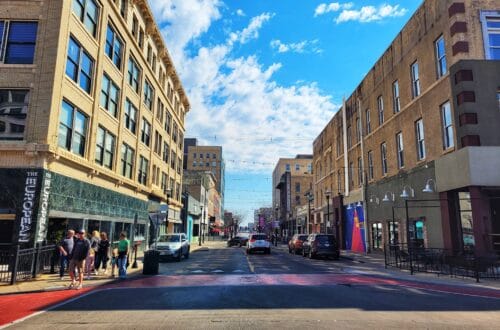
Our Route 66 trip officially began from our home base in the Chicago suburbs, but we intentionally skipped Illinois (for now). After exploring much of Illinois Route 66 over the years, we’re planning a separate summer road trip (without the RV) to properly revisit and document those stops. We also chose to save St. Louis for our return journey, focusing instead on the first stretch of Route 66 Missouri just west of the city.
This post covers our first week exploring things to do on Route 66 in eastern Missouri, including stops in Chesterfield, Pacific, Eureka, and Gray Summit. From historic bridges and neon signs to overlooked museums and state parks, this section of the Mother Road offers more than many travelers expect- especially with the Route 66 Centennial approaching and interest in the historic highway growing.
If you’re looking for things to do near Saint Louis or planning your own Route 66 Missouri road trip, here’s exactly how our first week unfolded, including where we stayed, what we visited, and tips to help you plan your drive.
Monday 2/23: Arrival at Babler State Park
We were originally scheduled to drive to Missouri on Sunday, but high winds along our entire route changed that plan. Wind advisories and RV travel are not a combination we’re willing to test, so we delayed our arrival by a day. That decision felt oddly on-theme since the last two times we’ve stayed at Missouri State Parks, we’ve had to leave early to avoid driving in blizzard conditions. At this point, we joke that Missouri State Parks are cursed for us. Beautiful, but cursed.
Even with the delay, we passed several Illinois Route 66 landmarks from the highway. Since we’ve already visited many of them, it felt more like a preview of our upcoming Illinois-focused trip than something we were missing.
Getting through St. Louis, however, required some patience. Traffic was heavier than expected, and we hit multiple standstill slowdowns, one due to an accident and others simply from congestion around on- and off-ramps. Navigating city traffic in an RV always demands extra awareness, especially on travel days when you’re already mentally juggling route planning and campground arrival timing.
By late afternoon, we arrived at Babler State Park, located about 30 minutes west of downtown St. Louis.
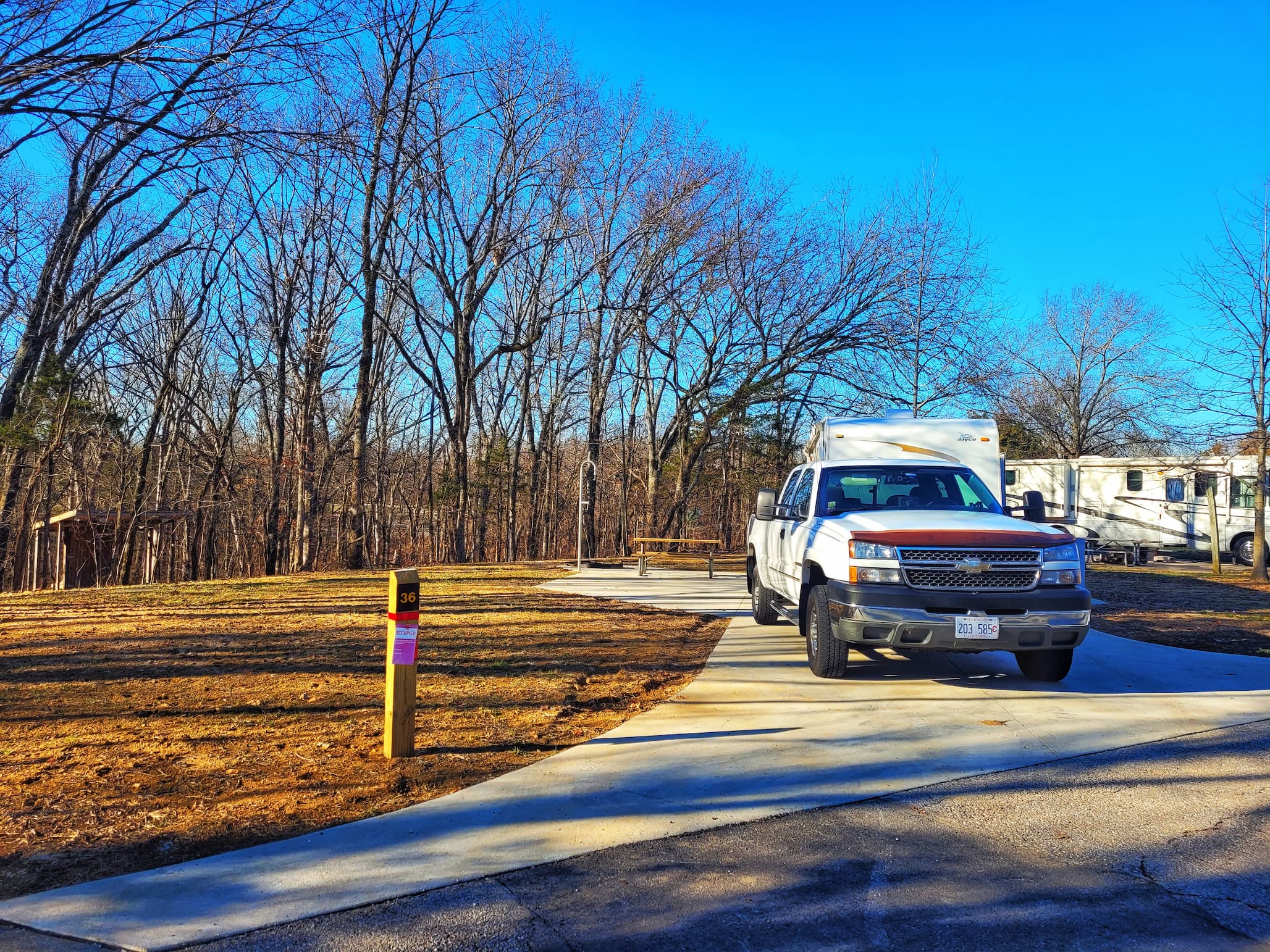
Where We Stayed Near St. Louis, Missouri: Dr. Edmund A. Babler State Park
For most of our stay, we were the only campers in our loop. Winter camping often brings quieter campgrounds, but Missouri has surprised us more than once with just how empty its parks can feel in the off-season. Our experience reminded us of a previous February stay at Echo Bluff State Park, where we were nearly alone in the entire campground.
Babler’s campground includes newly refurbished full hookup sites, and they are exceptionally well done- level concrete pads, modern hookups, and spacious layouts. Missouri consistently invests in its state park system, and it shows.
Even if the weather keeps trying to cut our stays short, we can’t deny the quality of the parks themselves.
How to Camp at Babler State Park
Website: https://mostateparks.com/park/babler/camping
On Season Camping Costs: $15/basic sites, $29/50 amp electric sites, $35/full hook-up sites
Off Season Camping Costs: $14/basic sites, $25/50 amp electric sites, $29/full hook-up sites
Tuesday 2/24: Chesterfield, Missouri
Tuesday served two purposes: sightseeing and restocking groceries. We planned a few stops in and around Chesterfield so we could make the most of being out.
Weldon Spring Site Interpretive Center
Our first stop was the Weldon Spring Site Interpretive Center, one of the more unexpected and thought-provoking stops along this stretch of Route 66.
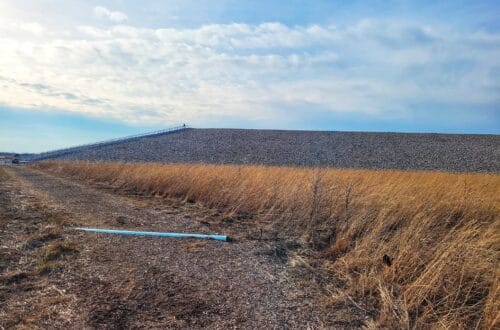
The Weldon Spring Site is a former EPA Superfund cleanup location. During World War II and the Cold War, the area was used first for TNT production and later for uranium processing. The waste from those operations was eventually consolidated into a large, engineered disposal cell that now safely contains the material. Today, visitors can explore a modern interpretive center that explains the site’s layered history, from wartime production to environmental remediation, and then walk to the top of the disposal cell itself.
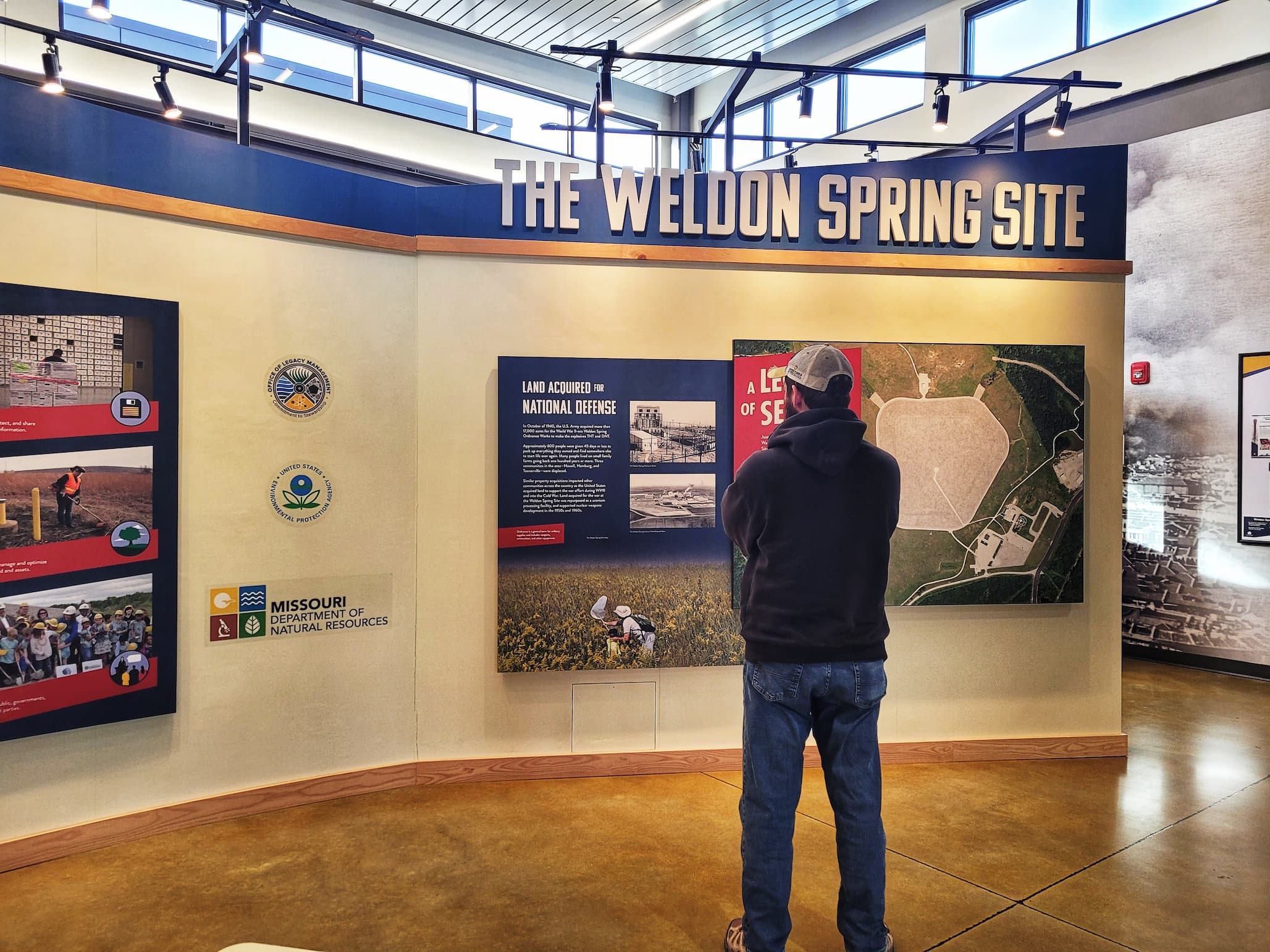
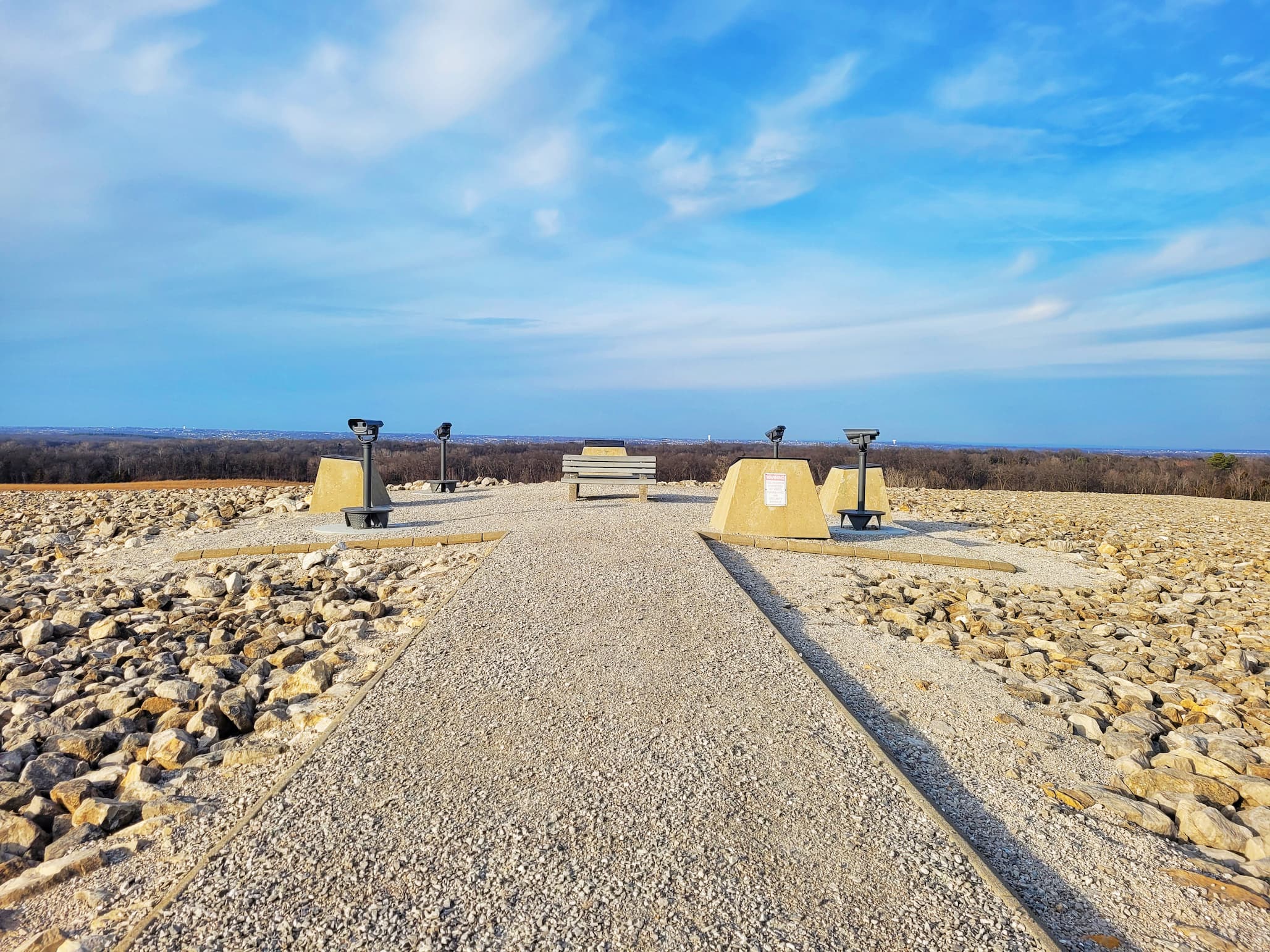
The exhibits inside were more detailed and engaging than we anticipated, offering a balanced look at both the scientific and environmental aspects of the site. Climbing to the top of the disposal cell provided sweeping views of the surrounding landscape, and a tangible reminder of how much effort went into reclaiming this land.
If you’re interested in more details about what to expect during your visit, I’ve written a full guide to the Weldon Spring Site separately: Standing on Cold War Secrets: Visiting the Weldon Spring Site
How to Visit the Weldon Spring Interpretive Site
Address: 7295 MO-94, St Charles, MO 63304
Website: https://www.energy.gov/lm/weldon-spring-site-interpretive-center
Interpretive Center Hours: Mon-Fri 9am-5pm, Sat/Sun 10am-5pm
Pecan Legacy Park
Next, we stopped at Pecan Legacy Park.
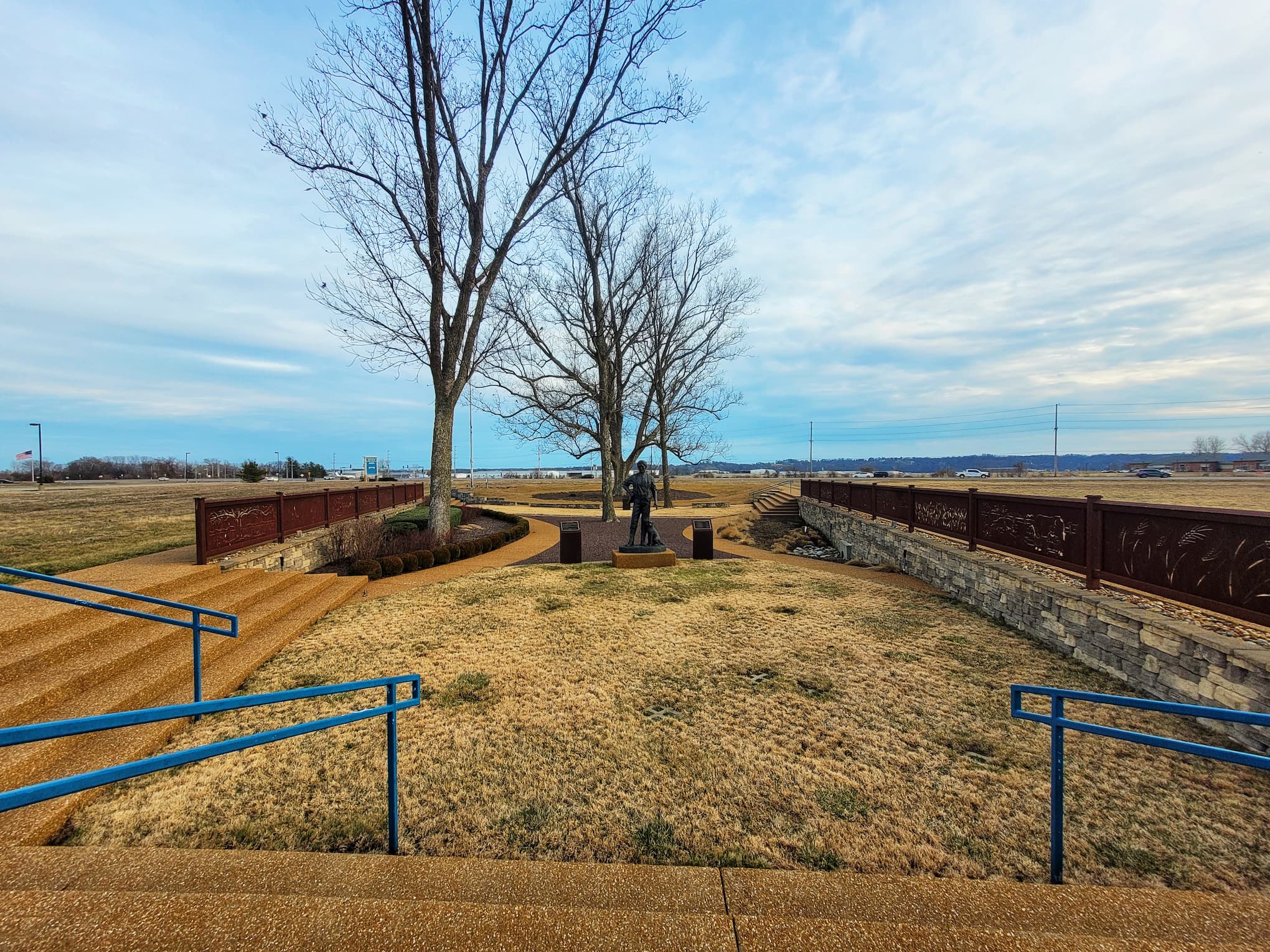
This is not a large park, nor is it a traditional tourist attraction, but it’s the kind of small, story-driven stop that adds texture to a road trip.
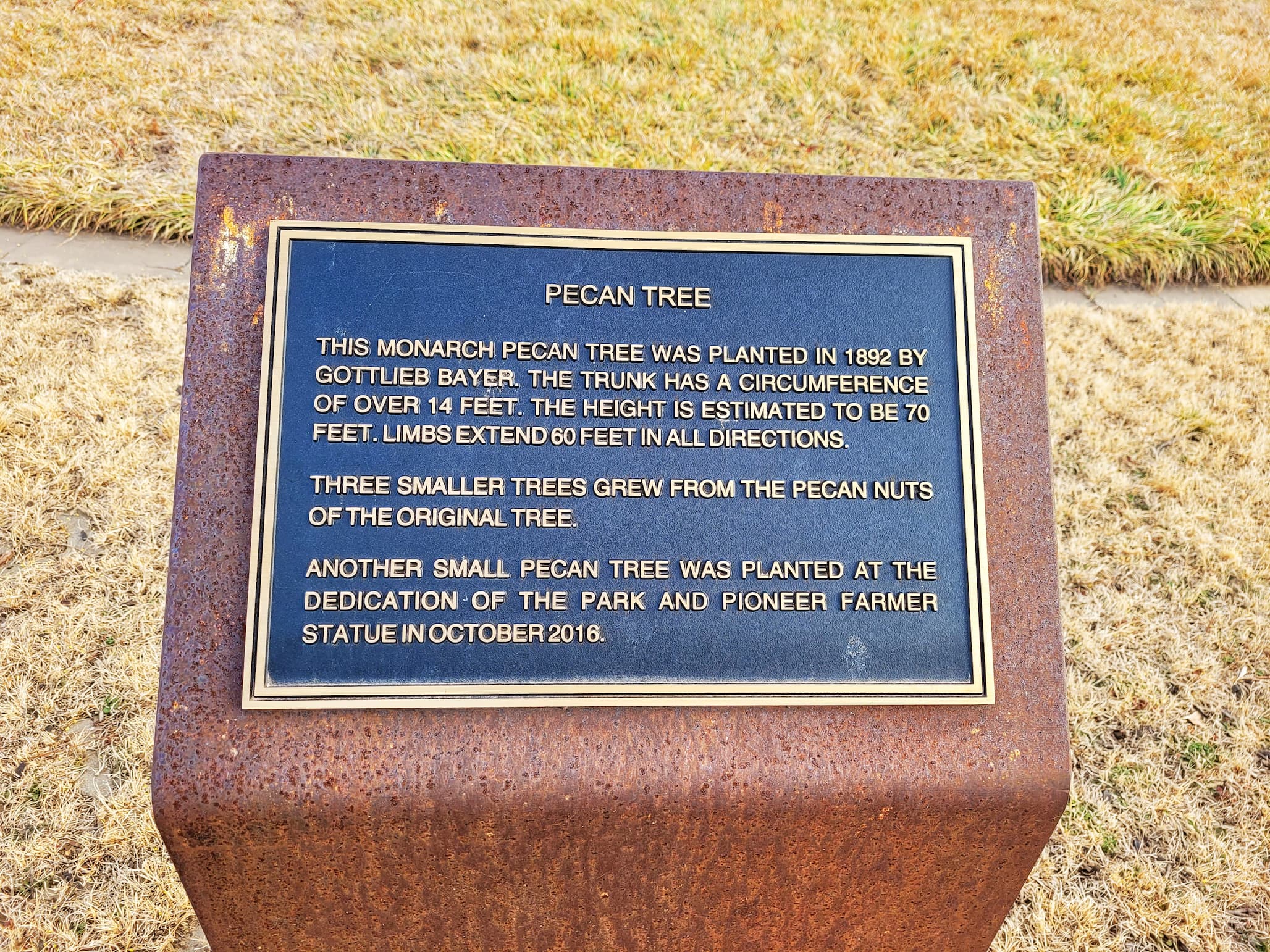
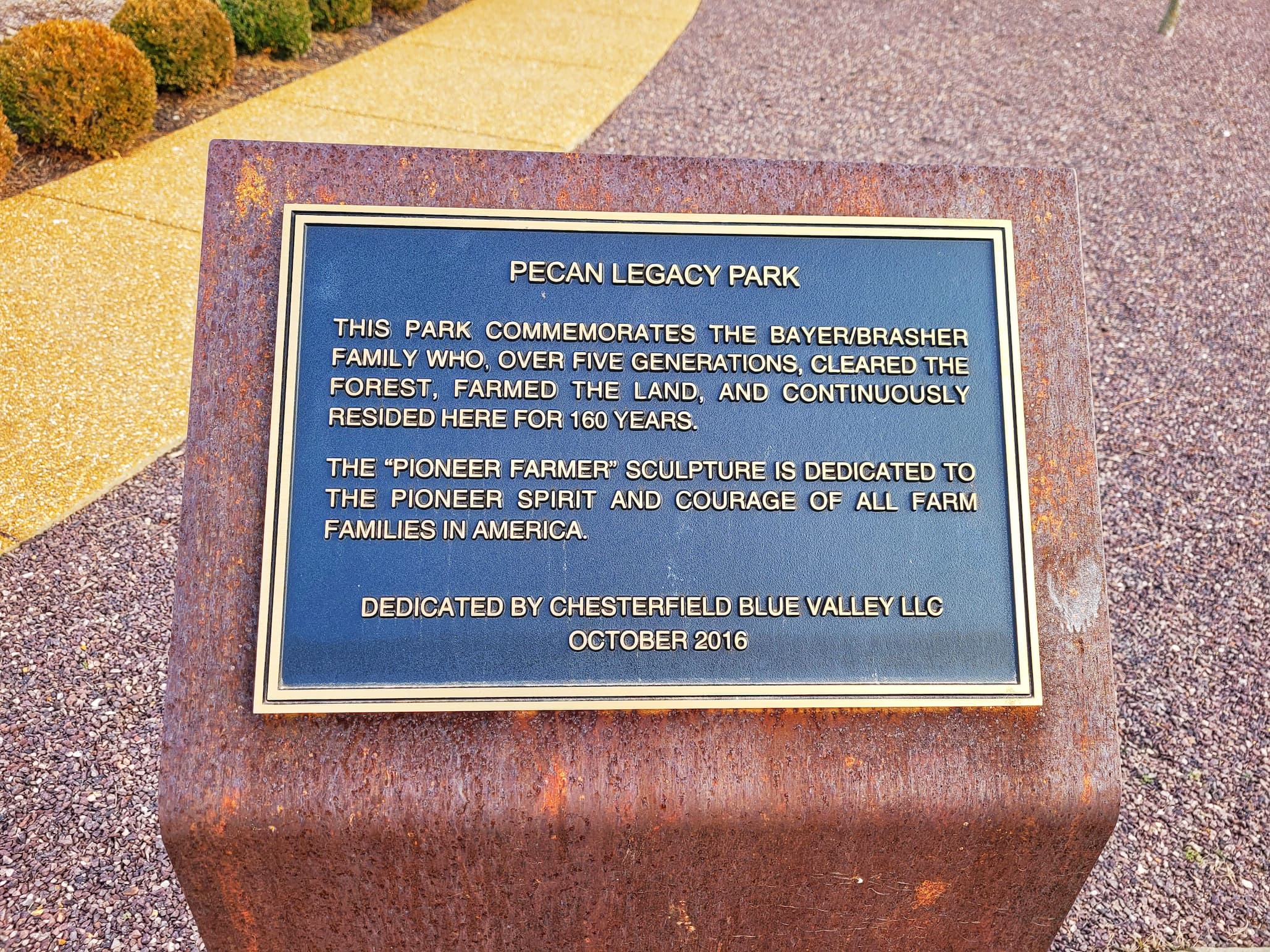
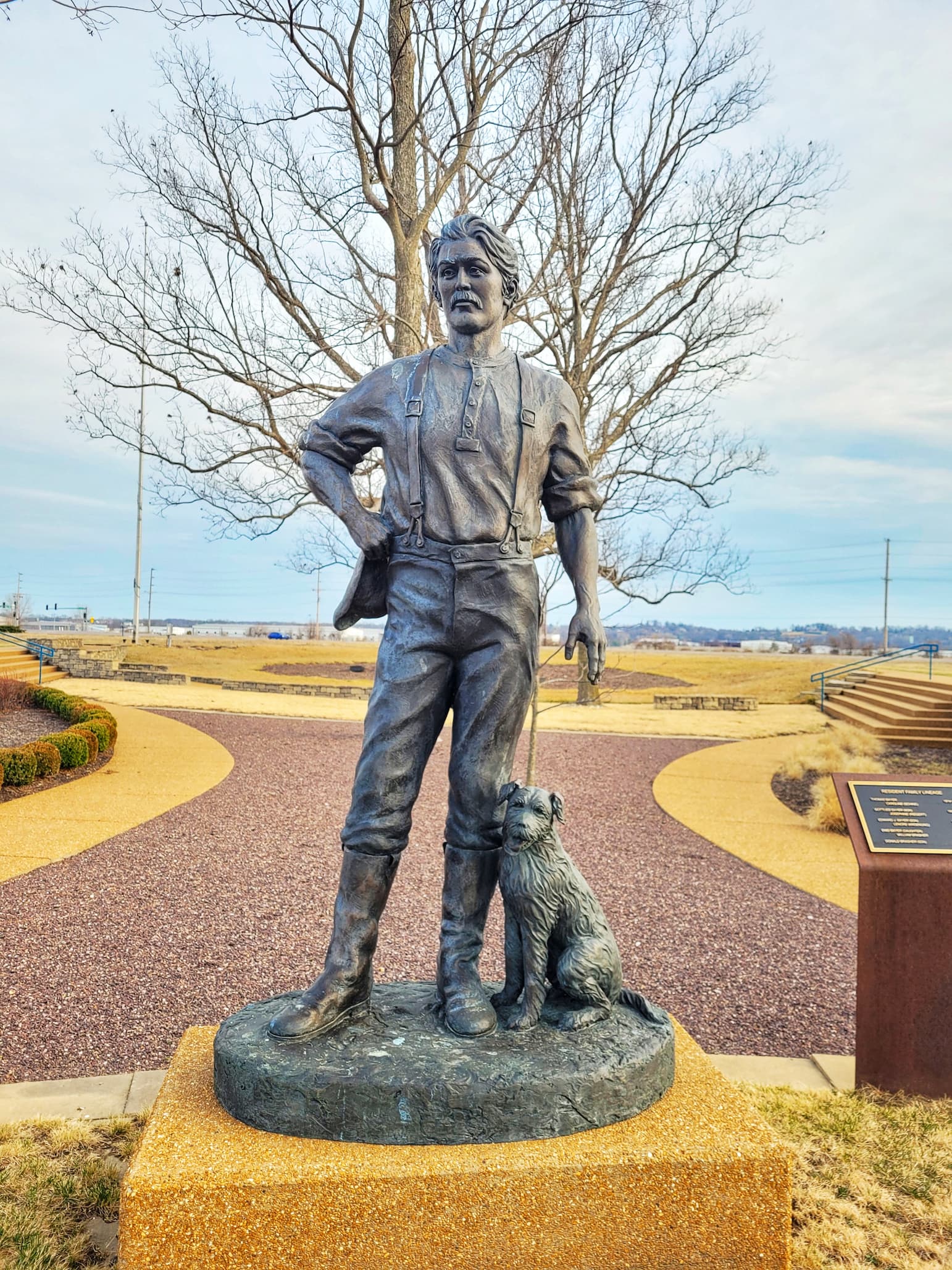
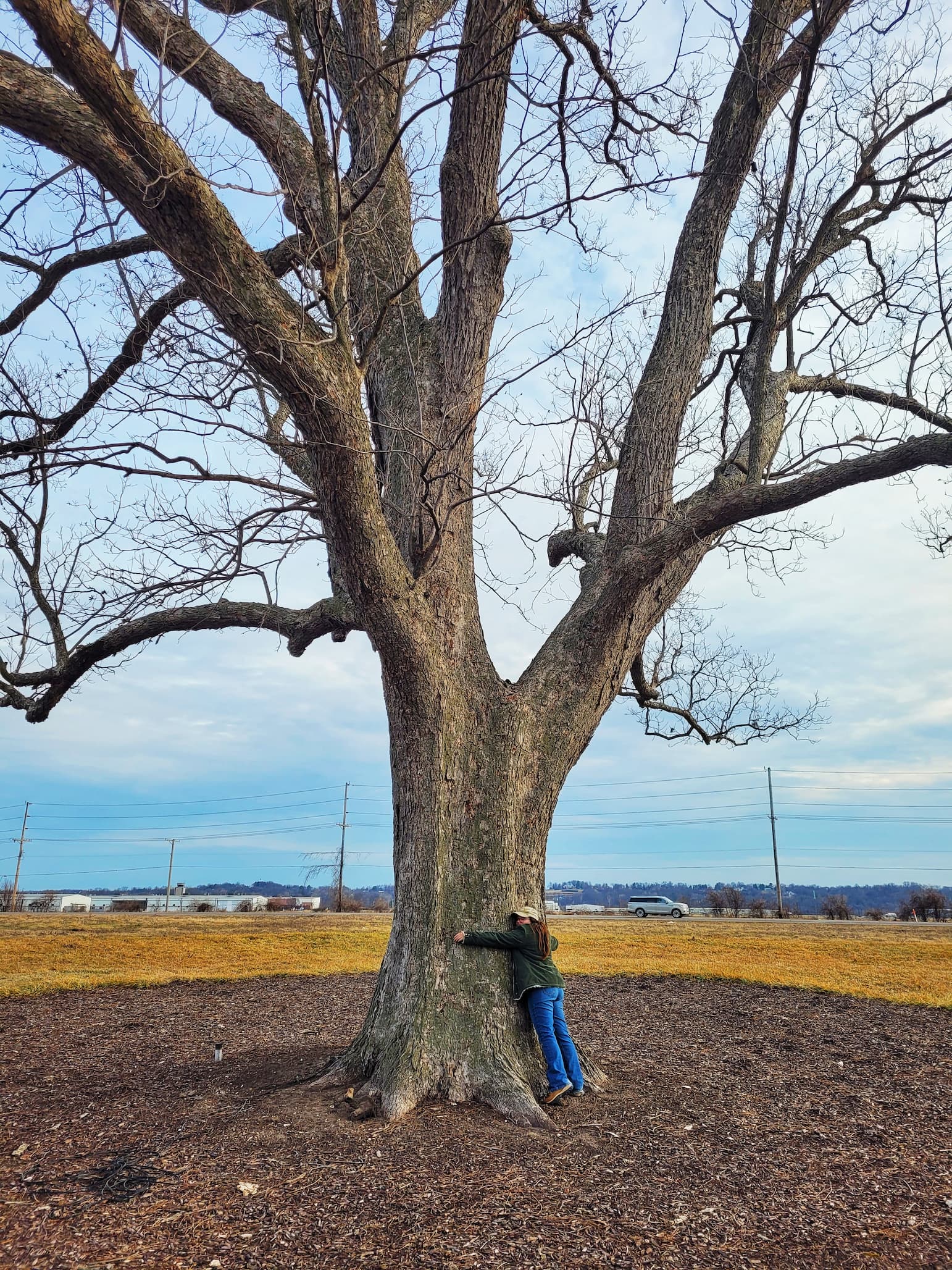
The park centers around a pecan tree that is more than a century old, along with several younger trees that grew from its nuts. What makes these trees particularly notable is their survival of the Great Flood of 1993, when the levee in Chesterfield failed and much of the surrounding area was inundated. During the city’s rebuilding process, the park was created to preserve the trees and commemorate the Bayer/Brasher family, who farmed this land for more than five generations.
It’s a brief stop, but one that connects the modern suburban landscape to its agricultural past. We’ve found that these quieter sites often leave as strong an impression as the more famous Route 66 landmarks.
How to Visit Pecan Legacy Park
Address: 18470 Blue Valley Ave, Chesterfield, MO 63005
Grocery Stop: Aldi in Chesterfield
No road trip day is complete without the practical side of travel.
We stocked up at the Aldi in Chesterfield, a clean, well-organized store with easy parking access (always a plus when you’re maneuvering a larger vehicle).
Balancing everyday tasks with exploration is part of what makes long-term RV travel sustainable. Route 66 might be known for vintage motels and roadside diners, but it also includes grocery runs and campground evenings, and those quieter rhythms are just as much a part of the journey.
Wednesday 2/25: Pacific, Missouri
On Wednesday, we dedicated the day to exploring the Route 66 town of Pacific, Missouri.
Red Cedar Inn Museum & Visitor Center
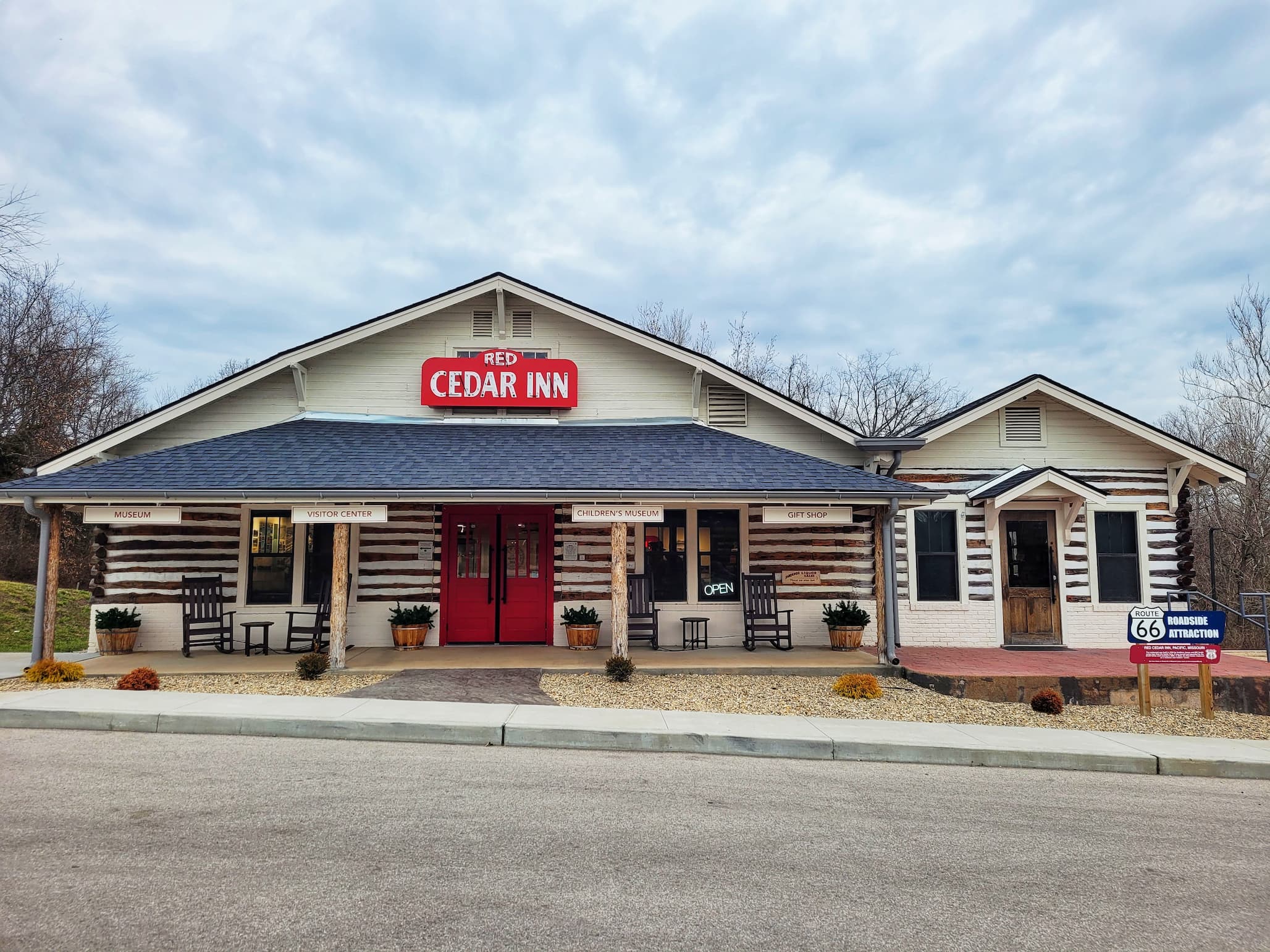
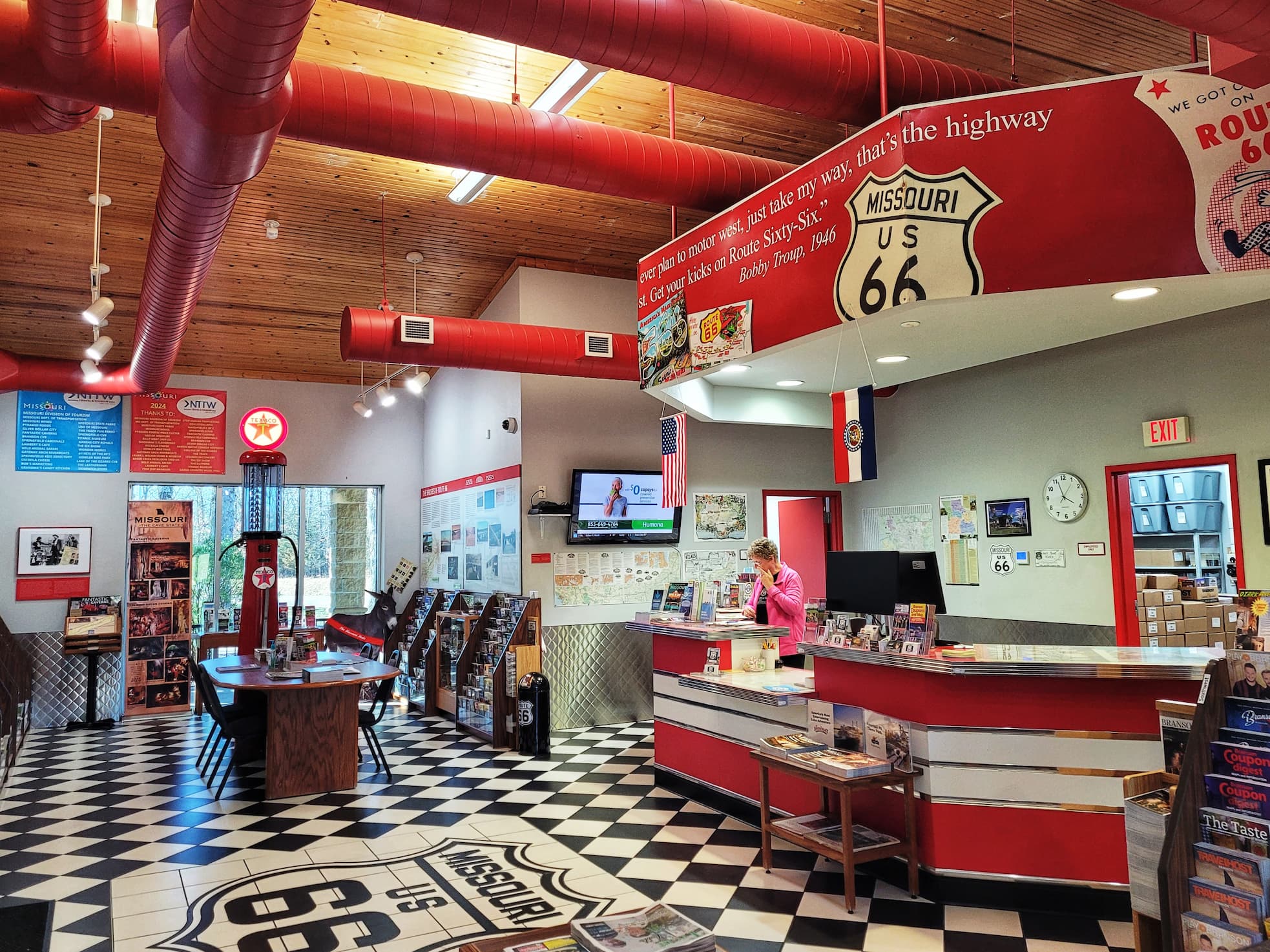
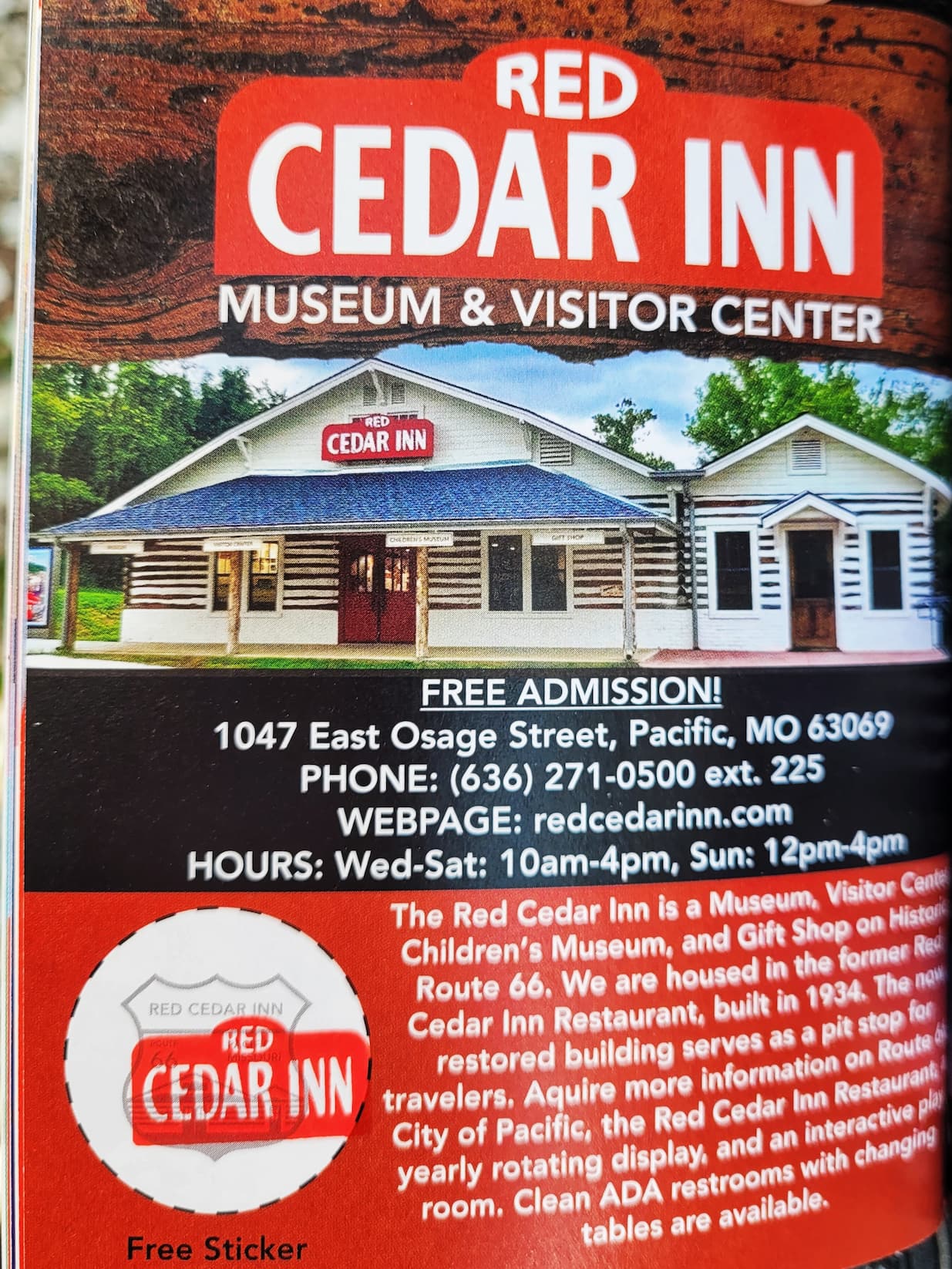
We started at the Red Cedar Inn Museum and Visitor Center, which serves as both a small museum and a welcoming introduction to the town. The staff at the front desk were genuinely some of the friendliest we’ve met on this trip. They chatted with us about our Route 66 plans, offered suggestions for other stops in town, and even took our photo. It’s a small center, but it does exactly what a good visitor center should do: it connects you to the place.
Inside, exhibits cover the history of Route 66 through Pacific, the development of the town itself, and include a few artifacts from local businesses. There was also a special Bigfoot display recognizing the 50th anniversary of the famous monster truck brand headquartered in town.
One of the most interesting things we learned was that long before Route 66, this corridor was part of the Ozark Trail. Originally an ancestral trail used by the Osage people, it later became a more formal network of locally maintained roads stretching from St. Louis to New Mexico. When Route 66 was constructed through Pacific in 1933, it followed the path of transportation that had already defined the region for generations.
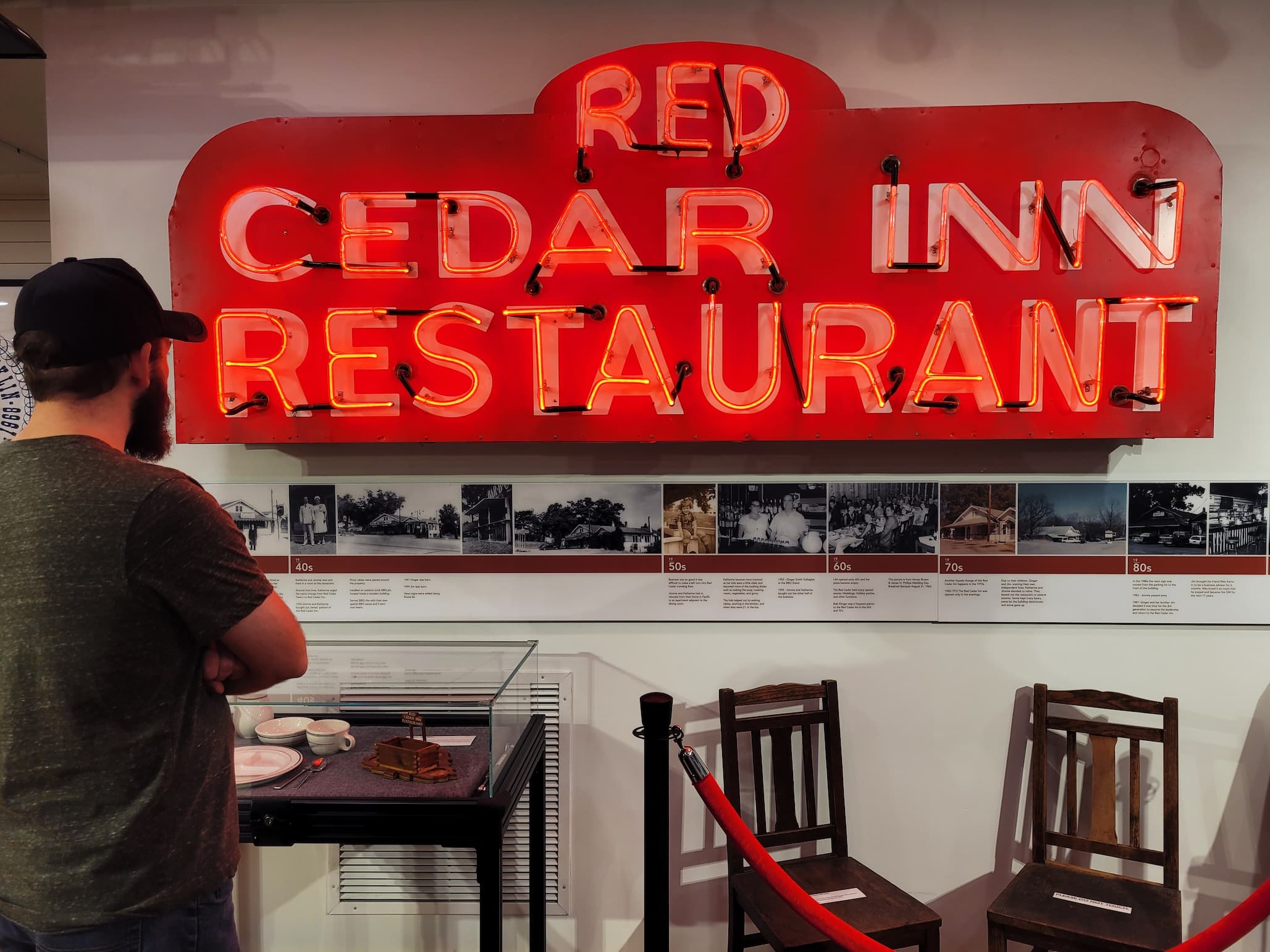
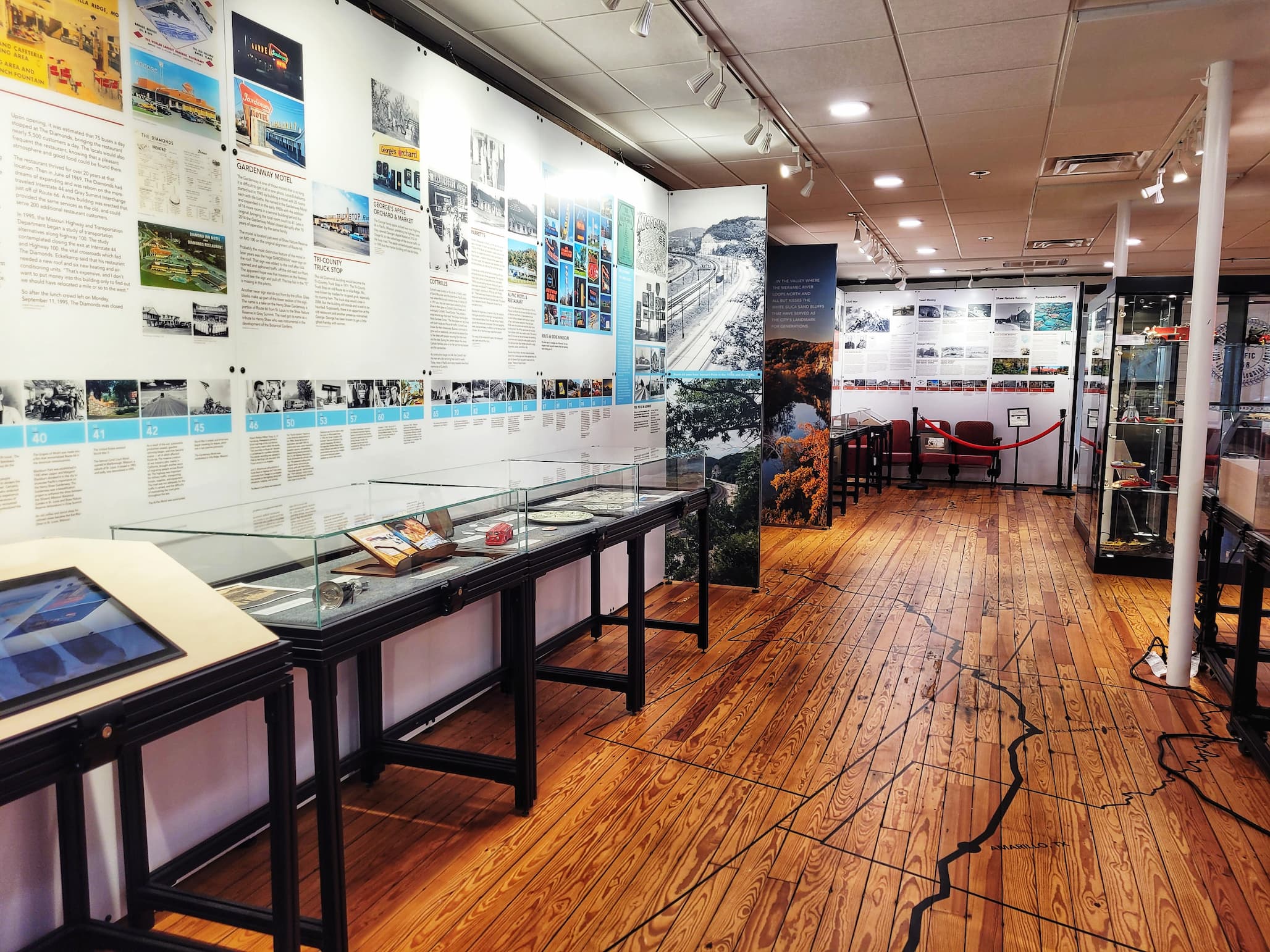
Pacific itself was founded in 1852 under the name Franklin. In 1895, the town was renamed to honor the Pacific Railroad, which had reached the area in 1853. The arrival of the railroad spurred rapid development, and the town still carries the nickname “Train Town USA.”
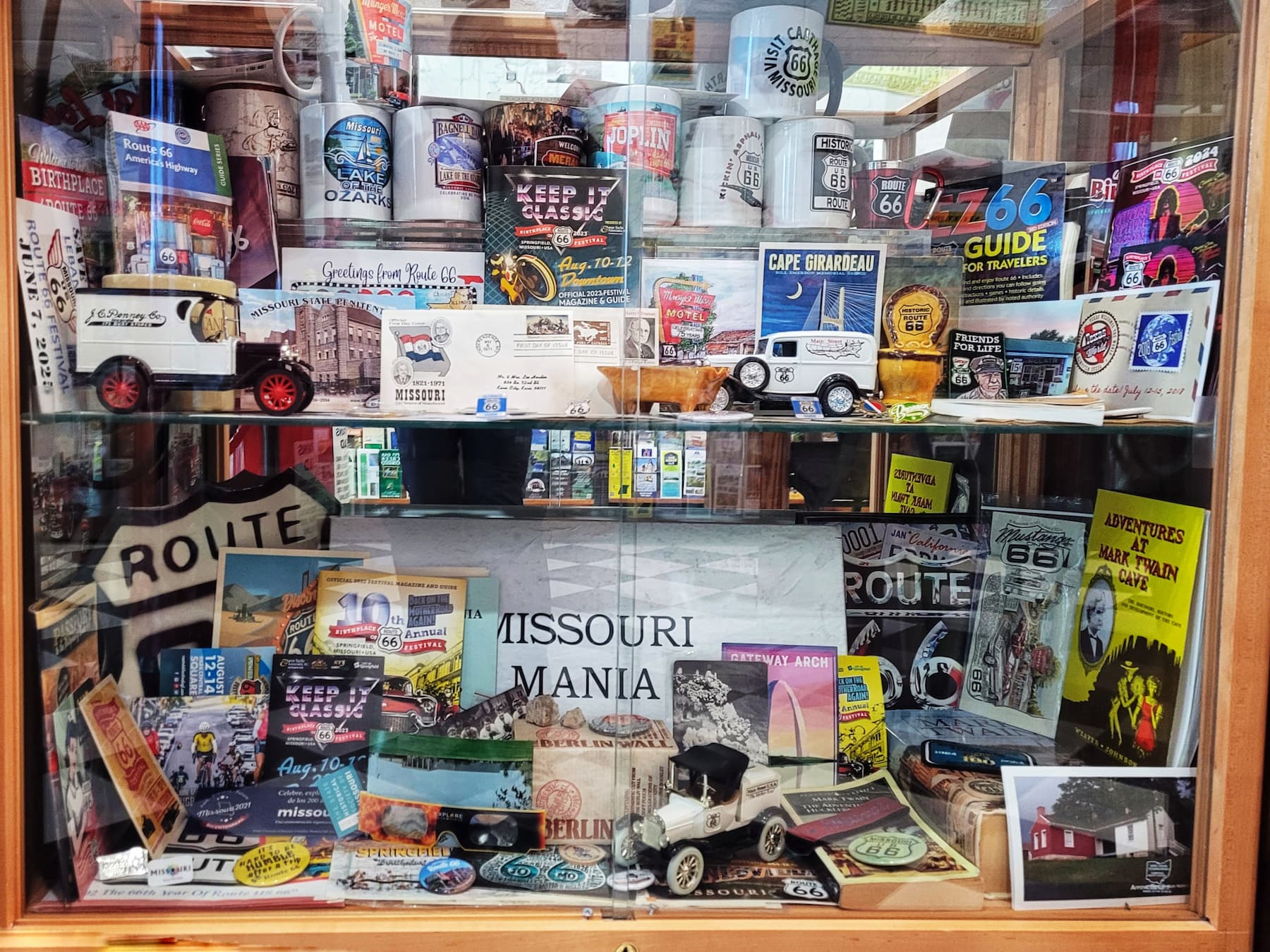
Before leaving, we picked up a Route 66 passport, a few postcards, and Josh got his first pin for his Route 66 hat.
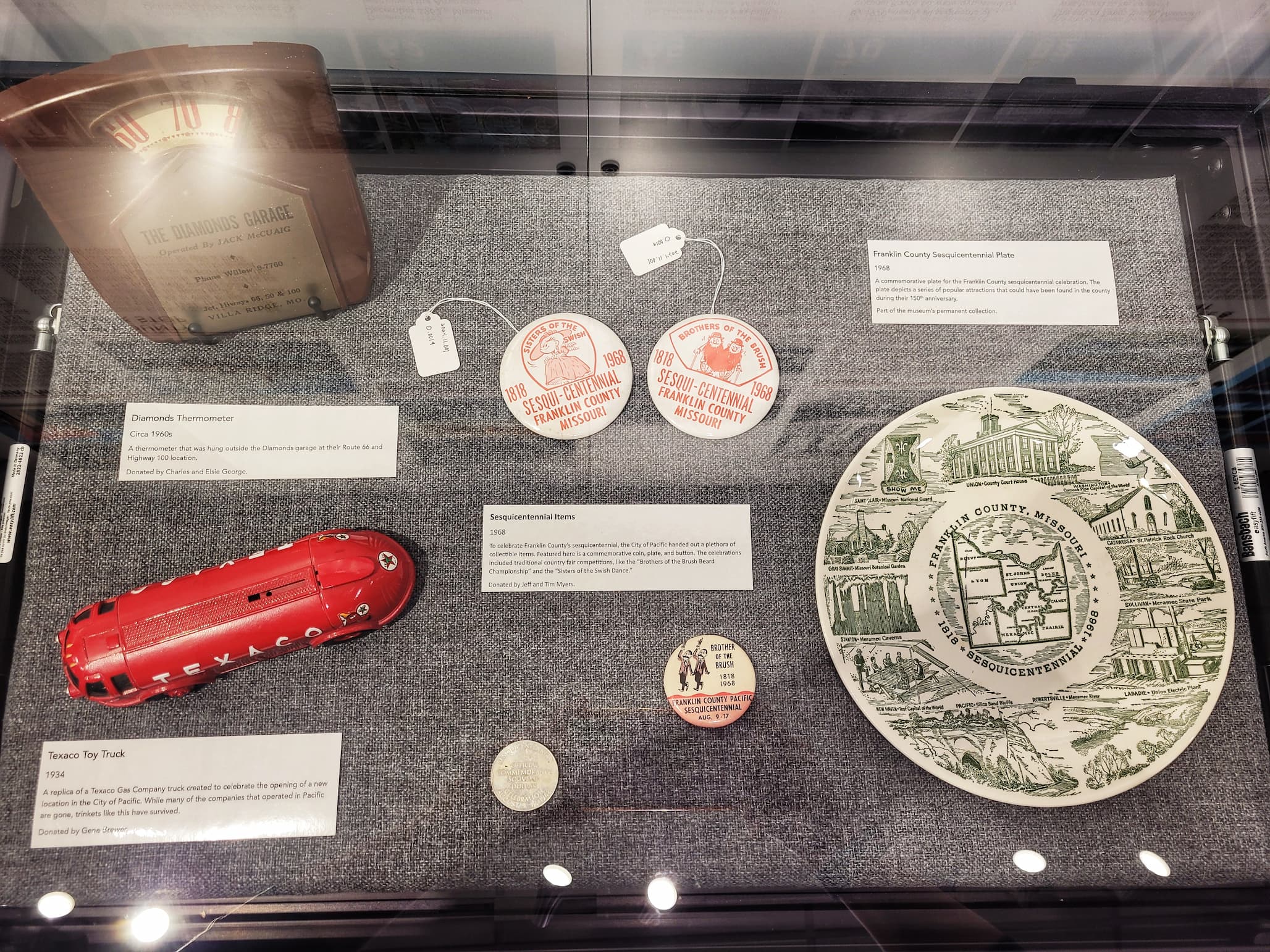
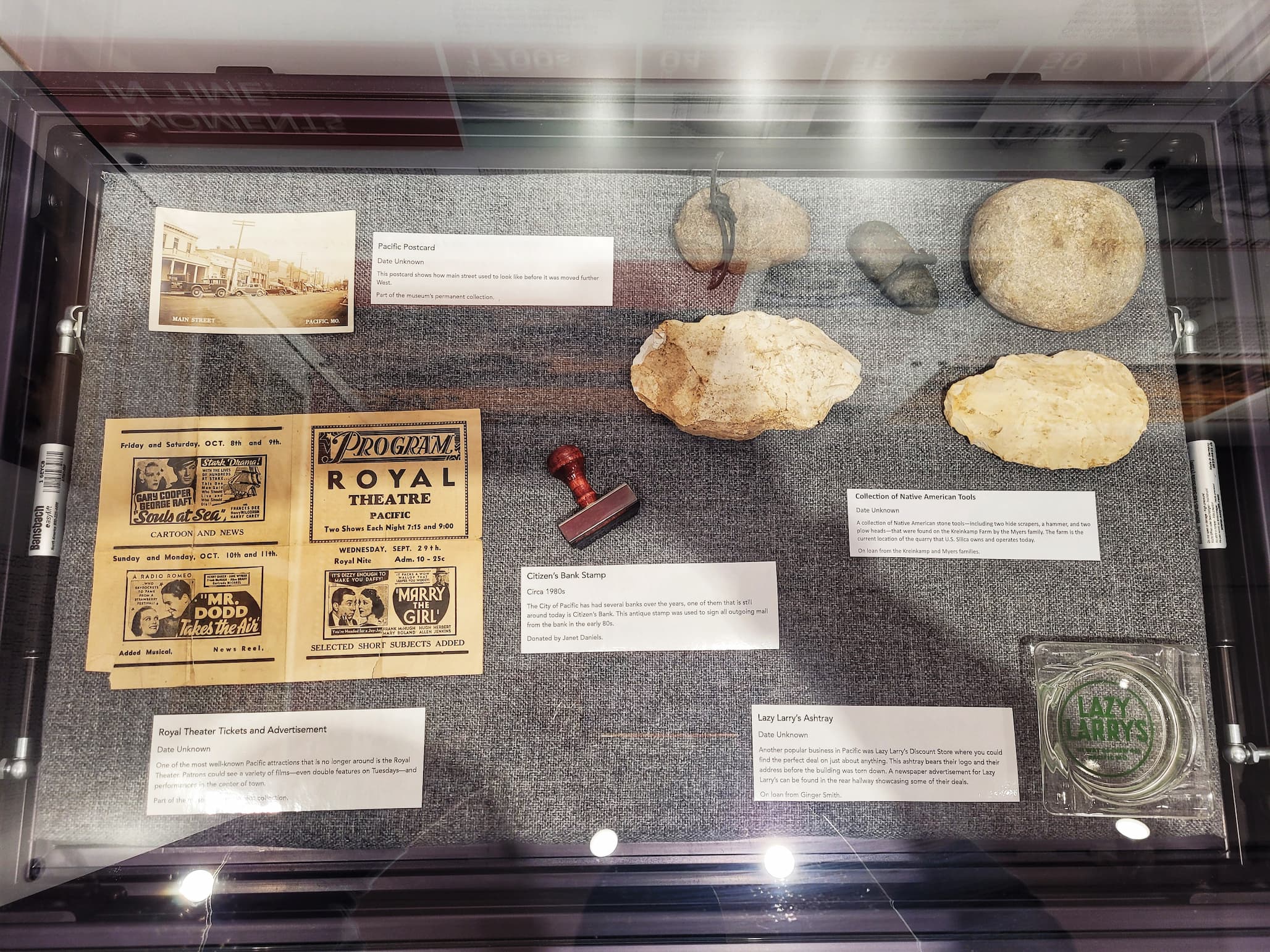
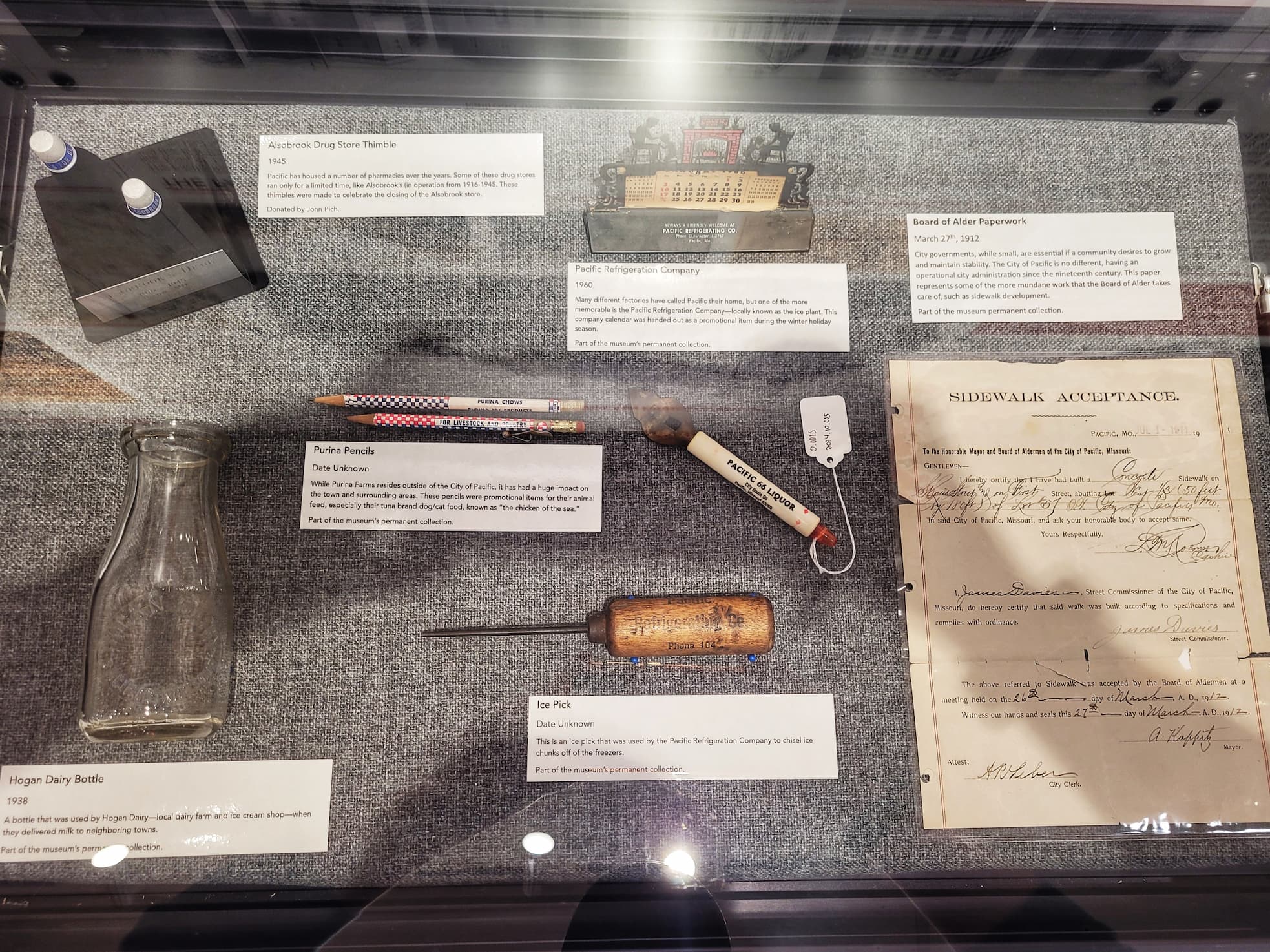
How to Visit the Red Cedar Inn Museum & Visitor Center
Address: 1047 E Osage St, Pacific, MO 63069
Website: https://www.pacificmissouri.com/324/Red-Cedar-Inn
Hours: Wed-Sat 10am-4pm, Sun 12-4pm
Jensen’s Point Overlook
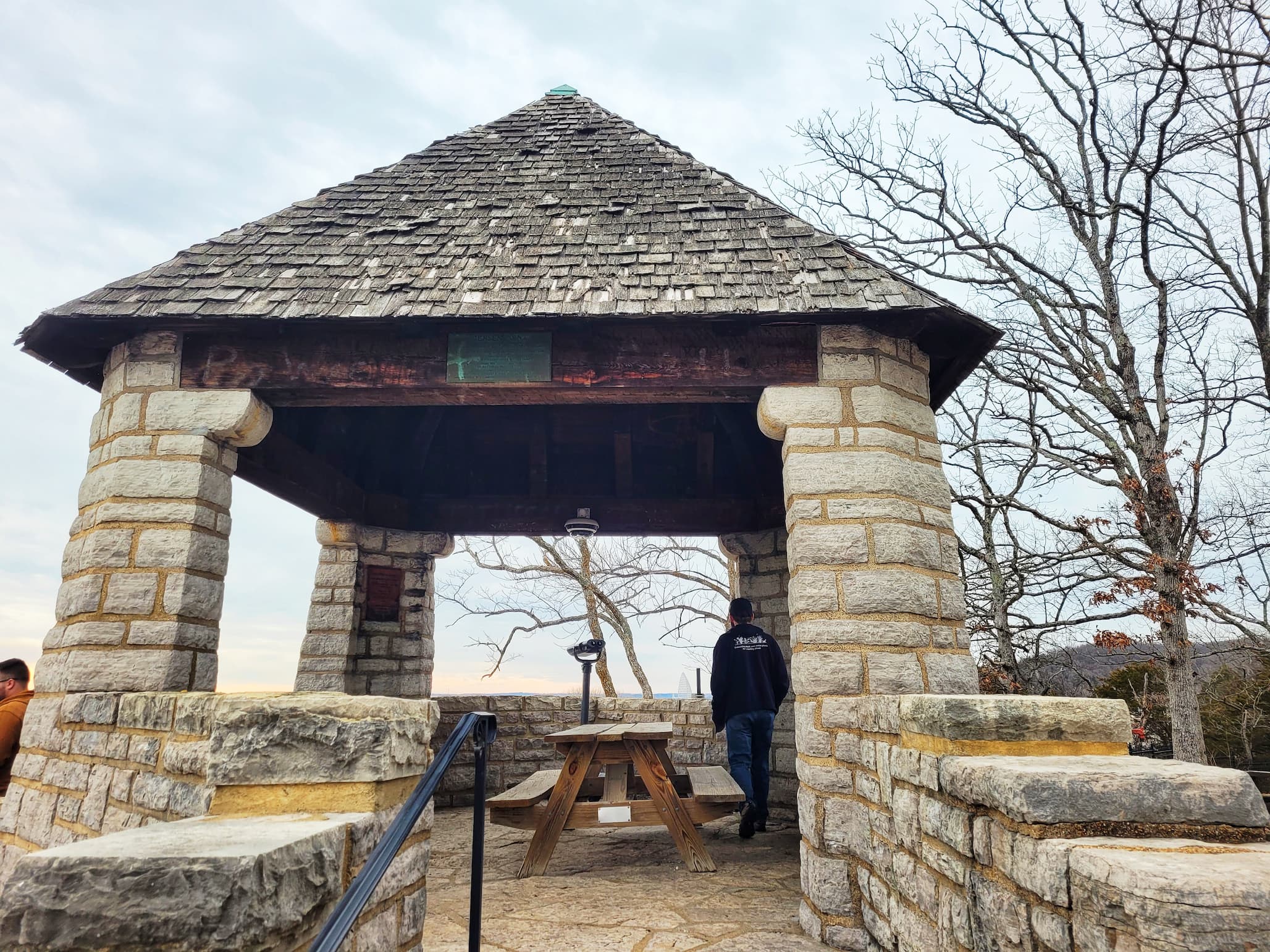
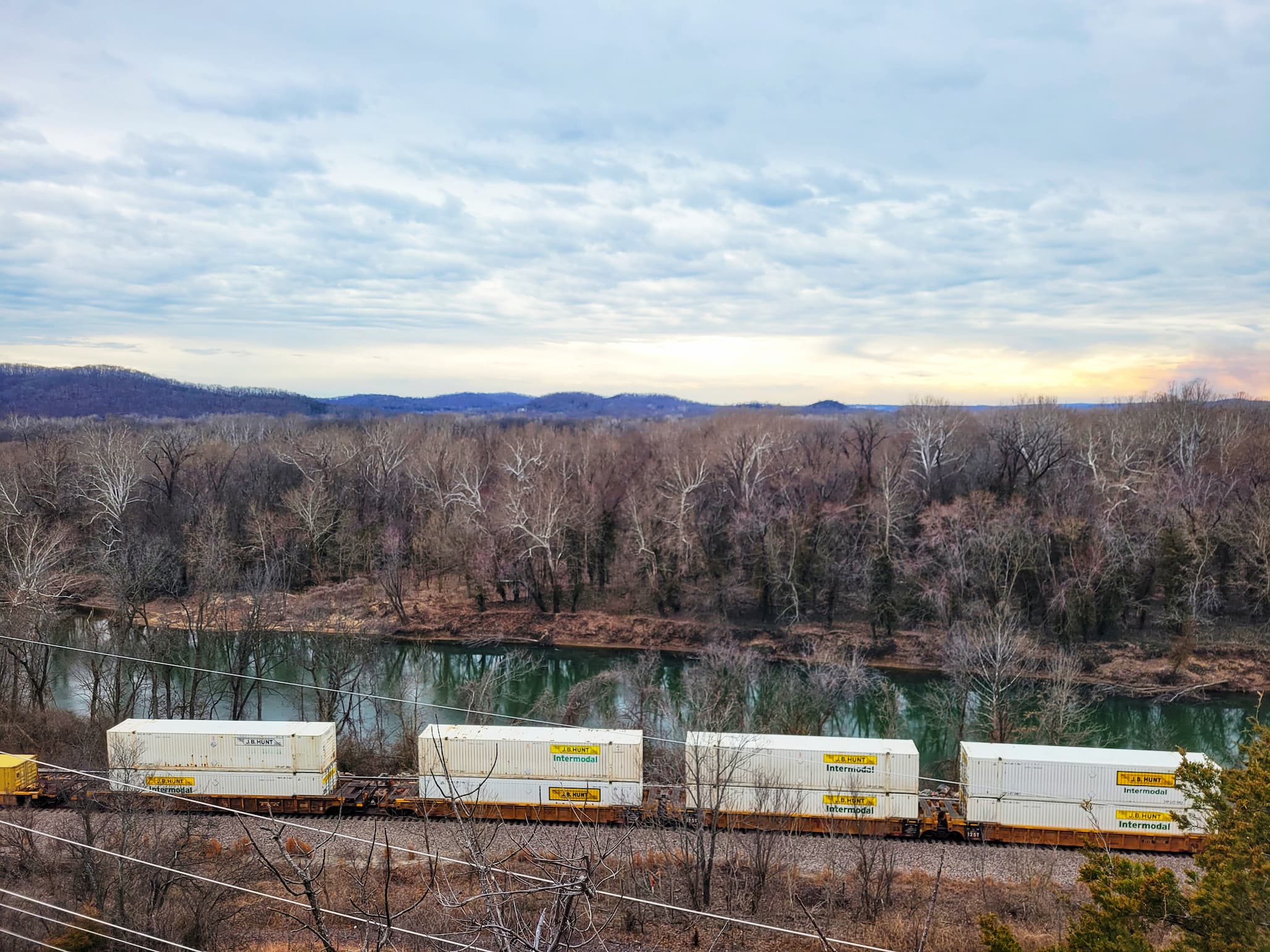
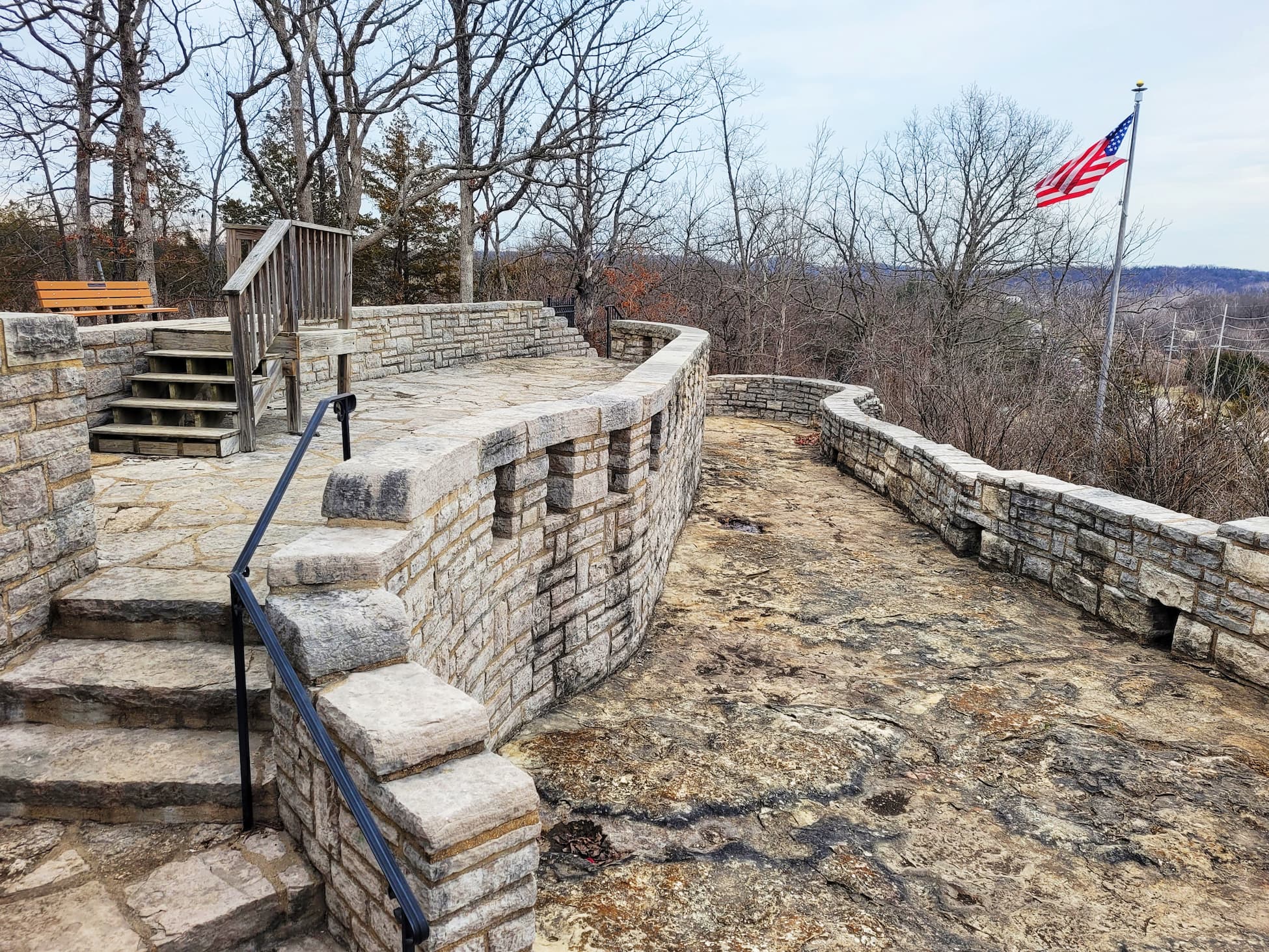
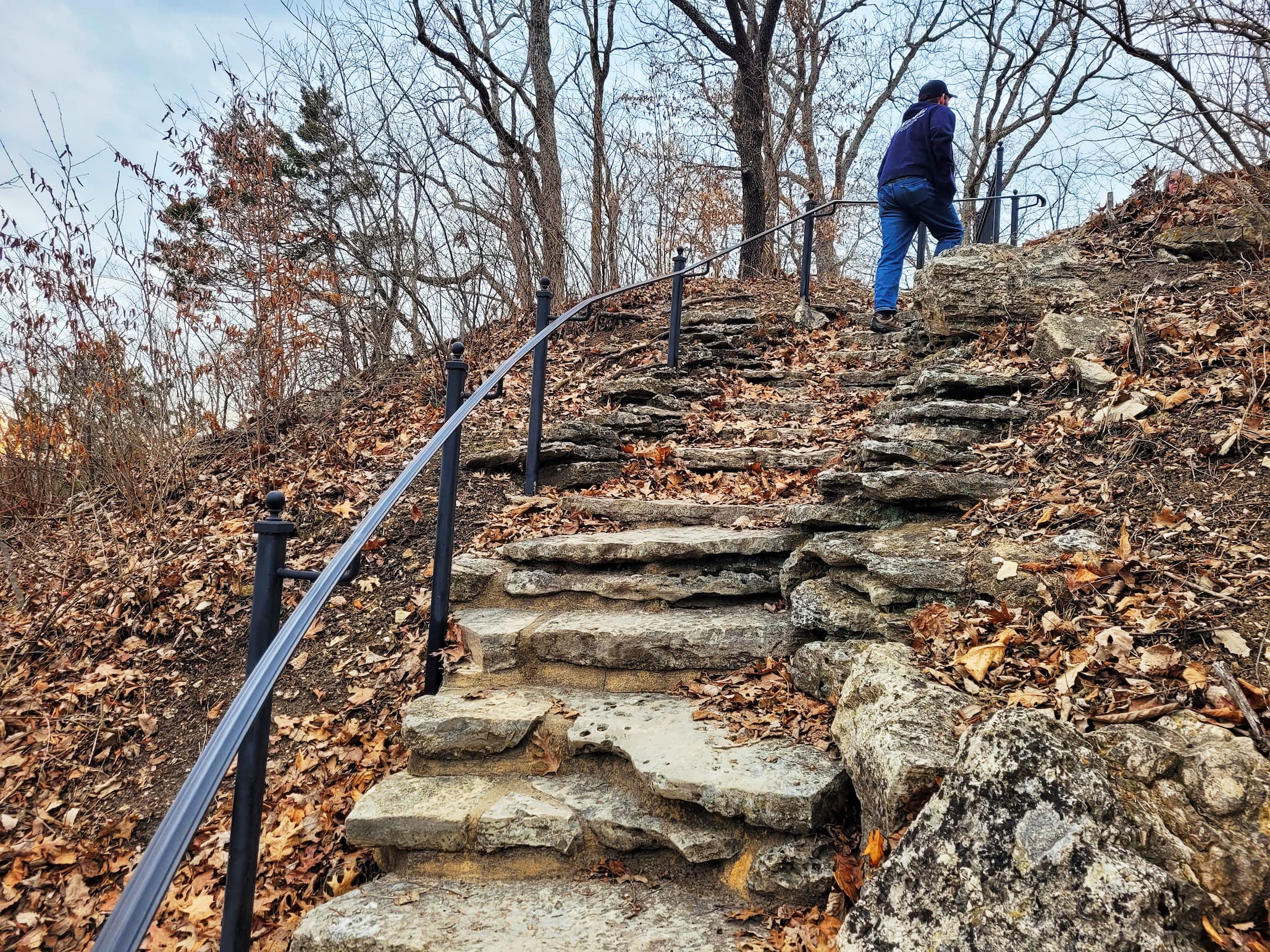
Just next door is Jensen’s Point Overlook, a scenic stop constructed in 1939 as a designated pull-off along Route 66 and the Henry Shaw Gardenway. From here, you get a sweeping view of the Meramec River Valley and a clear perspective of the historic highway corridor below. The overlook is named after Lars Peter Jensen, former manager of the Missouri Botanical Garden’s arboretum.
The Henry Shaw Gardenway itself was an early roadside beautification effort. Beginning shortly after Route 66 opened, sections of the highway leading toward what is now Shaw Nature Reserve were landscaped and formally designated in 1934. The stone shelter at the overlook was constructed by the Civilian Conservation Corps (CCC), who began projects in the Pacific area in 1935, including grading and planting along the Route 66 easement.
It’s a peaceful stop, part scenic overlook, part historic infrastructure, and a reminder that even roadside pull-offs along Route 66 were intentionally designed.
How to Visit Jensen’s Point Overlook
Address: 1039 E Osage St, Pacific, MO 63069
Bigfoot 4×4 Headquarters
I knew before we arrived in Pacific that I wanted to see the Bigfoot trucks around town. Pacific is home to the headquarters of Bigfoot 4×4 Inc., the original monster truck brand. What I didn’t know was that they offer shop tours.
After hearing about it at the Red Cedar Inn, we drove over to see if we could squeeze in a tour before closing. The staff member who greeted us couldn’t have been more welcoming. He walked us through the shop, shared behind-the-scenes insights about the industry, and answered every question we had.
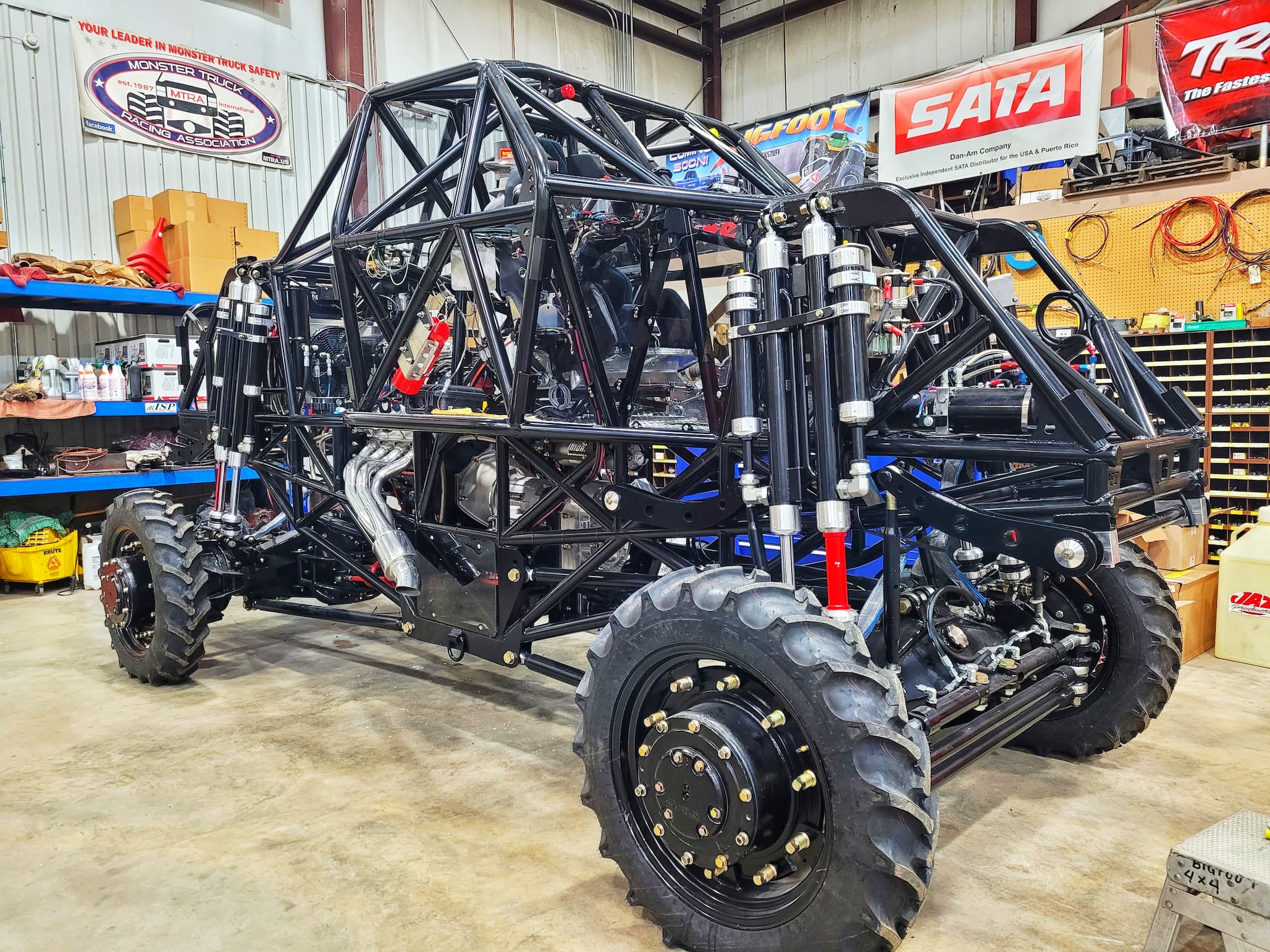
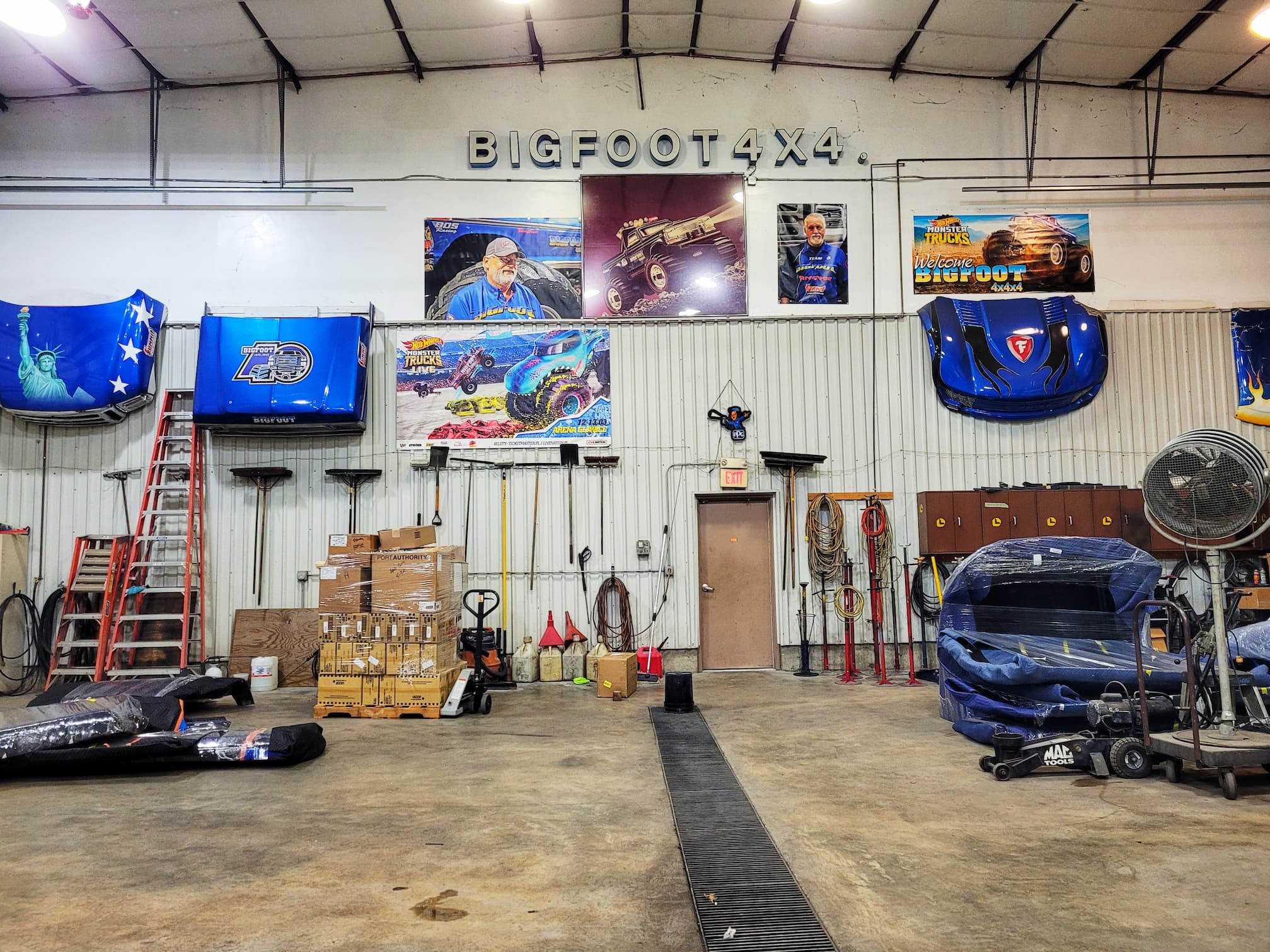
We saw Truck 25 in the garage, currently incomplete, and learned that newer trucks are often purchased as base builds and then customized in-house with Bigfoot panels and modifications. Because they now primarily perform at Hot Wheels events, the trucks aren’t run as aggressively as some competitive circuits, which reduces breakage. We also learned that newer builds are narrower to fit inside overseas shipping containers.
The company has a small staff , around a dozen people, and we even got some fascinating insider perspective on how the monster truck entertainment industry has evolved over the years. I grew up watching monster trucks at our county fair, so even just stepping inside the garage would have been enough for me. Seeing the shop in person, even with only one truck actively being worked on, was still incredibly fun.
After the tour, I bought a Hot Wheels Bigfoot truck (naturally) and a postcard before heading back into town to see a few of the display trucks parked around Pacific.
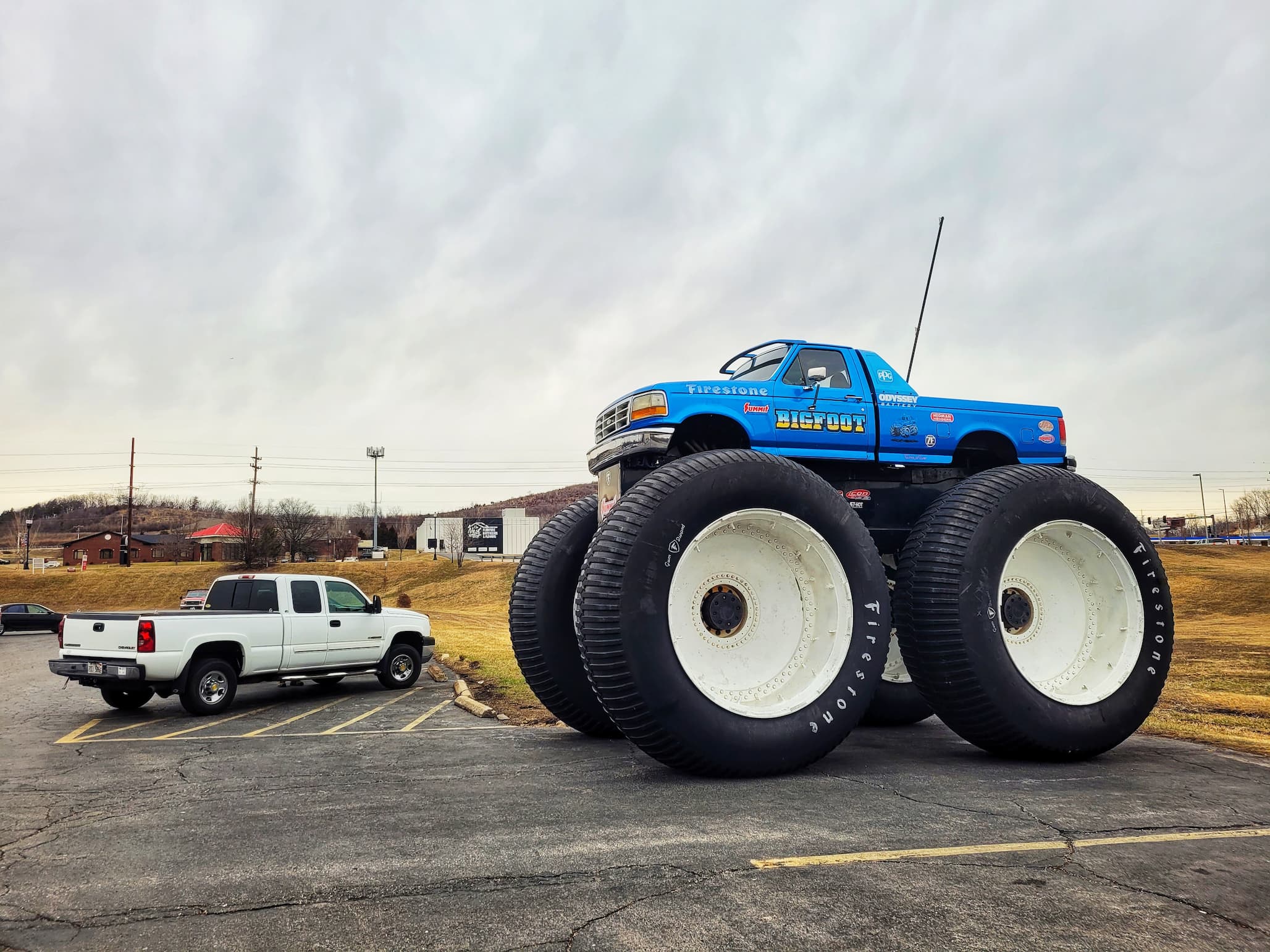
We stopped at the truck outside B&H Market (home to Bigfoot Café) and then visited Bigfoot Plaza for another photo opportunity.
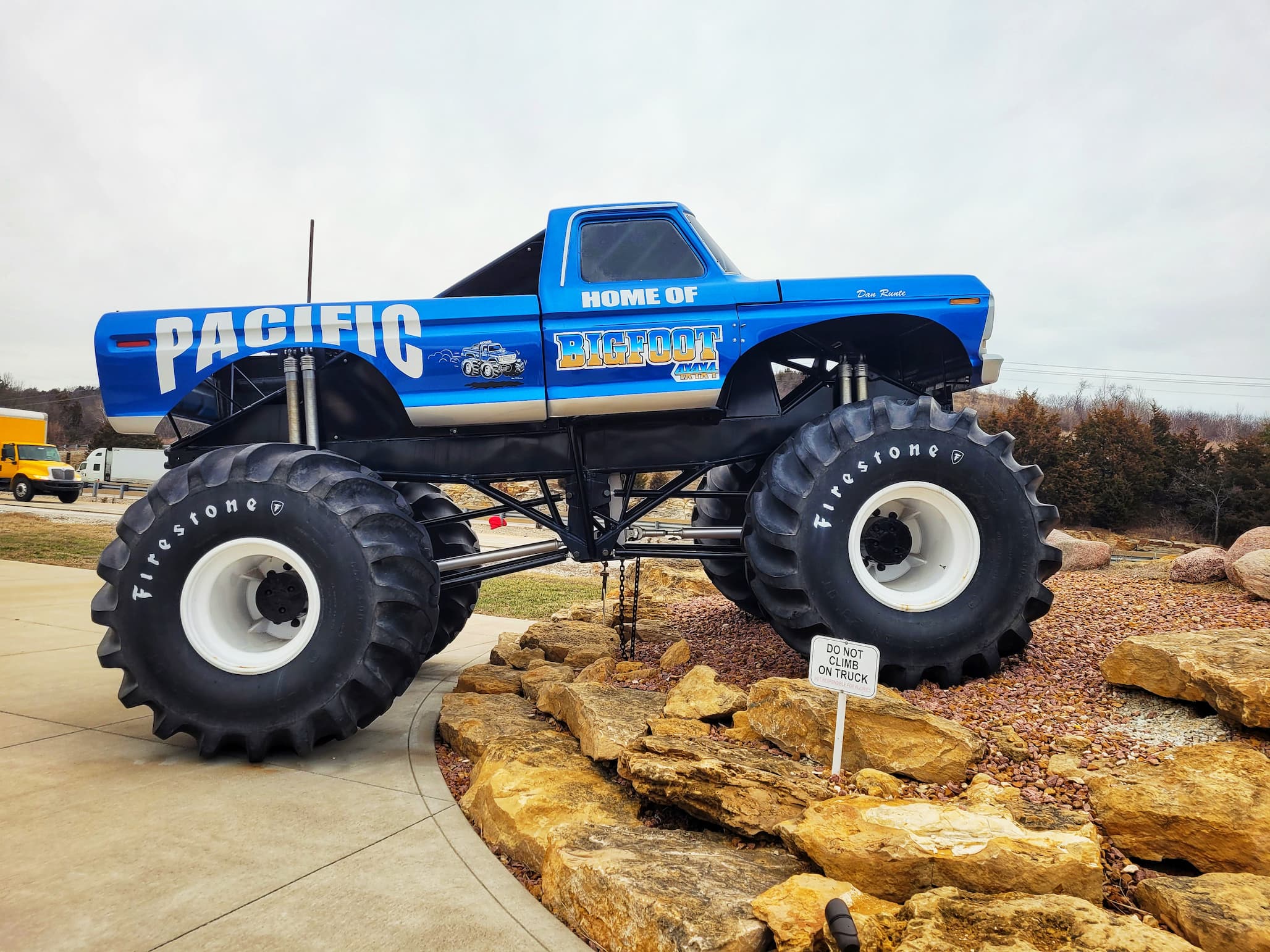
How to Visit Bigfoot 4×4
Website: http://www.bigfoot4x4.com/
HQ Address: 2286 Rose Ln, Pacific, MO 63069
HQ Hours: Mon-Thurs 9am-4pm
Bigfoot at H&H Market: 2244 W Osage St, Pacific, MO 63069
Bigfoot Plaza: 300 Hoven Dr, Pacific, MO 63069
Gardenway Motel Sign (Gray Summit)
Our next stop was technically in Gray Summit, just outside Pacific: the remaining sign from the former Gardenway Motel.
The motel itself has been demolished, but its mid-century sign still stands beside a commuter parking lot. Originally built in 1945 with 25 rooms, the motel expanded in the 1950s to include a second building with 16 additional rooms. It remained family-operated for 70 years before closing in 2015. Even without the building, the preserved sign offers a tangible connection to Route 66’s mid-century travel era.
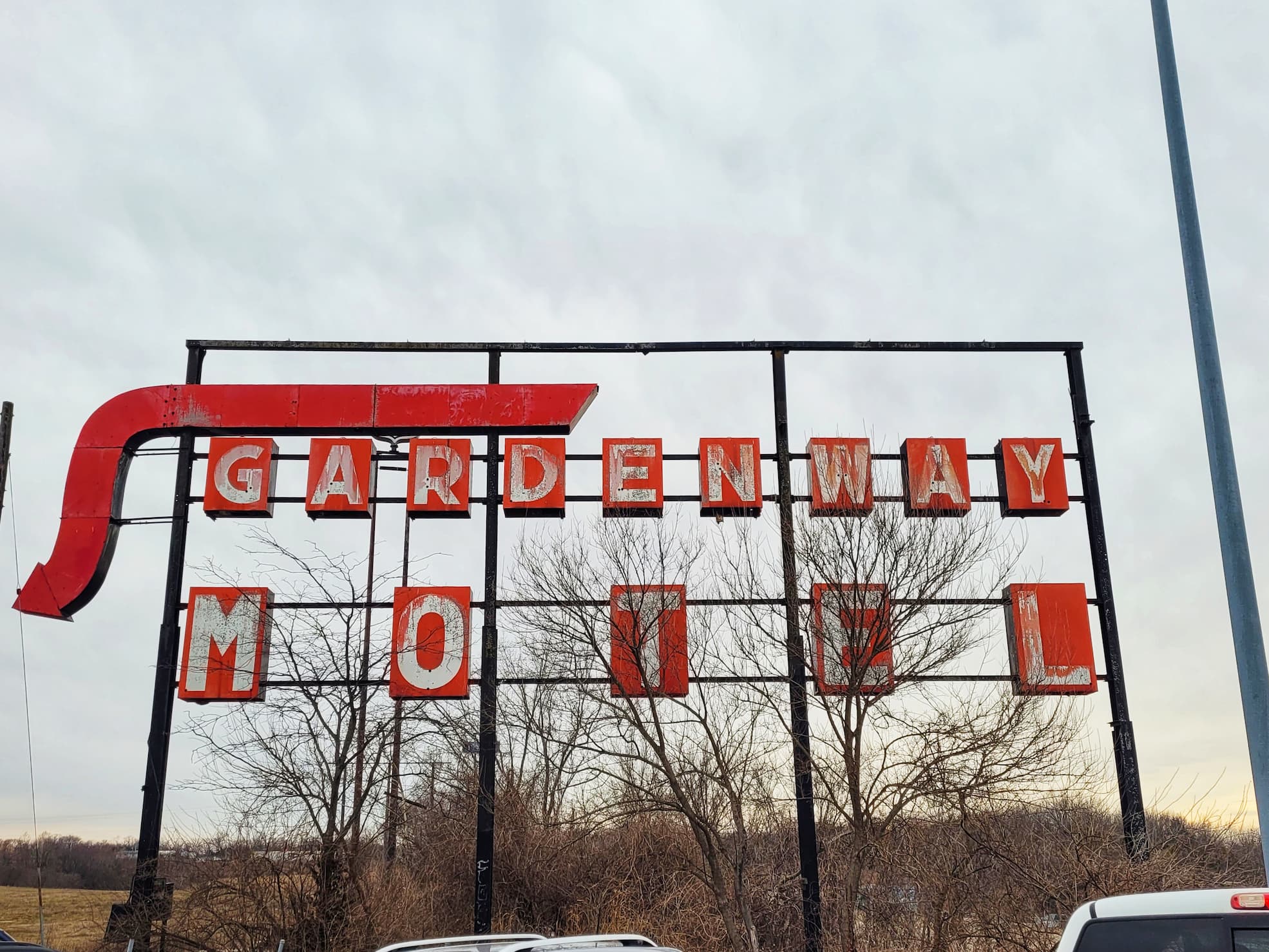
How to Visit the Gardenway Motel Sign
Address: 2827 MO-100, Villa Ridge, MO 63089
Blackburn Park & Civil War History
Back in Pacific, we visited Blackburn Park. The park offers another excellent overlook of the area, along with a replica cannon and interpretive signage detailing the Civil War history of Pacific.
During the war, the Pacific Battalion Home Guard protected railroad bridges in Franklin, Jefferson, and St. Louis Counties. In September 1864, a brigade of Arkansas cavalry was ordered to Pacific to destroy railroad infrastructure. They burned the depot, car shops, water tanks, and a railroad bridge a few miles from town before Union troops arrived by rail from St. Louis. By the time Union forces reached Pacific, much of the destruction had already occurred. Casualties in what became known as the Battle of Pacific were relatively light.
It’s a reminder that Pacific’s importance as a transportation hub long predates Route 66.
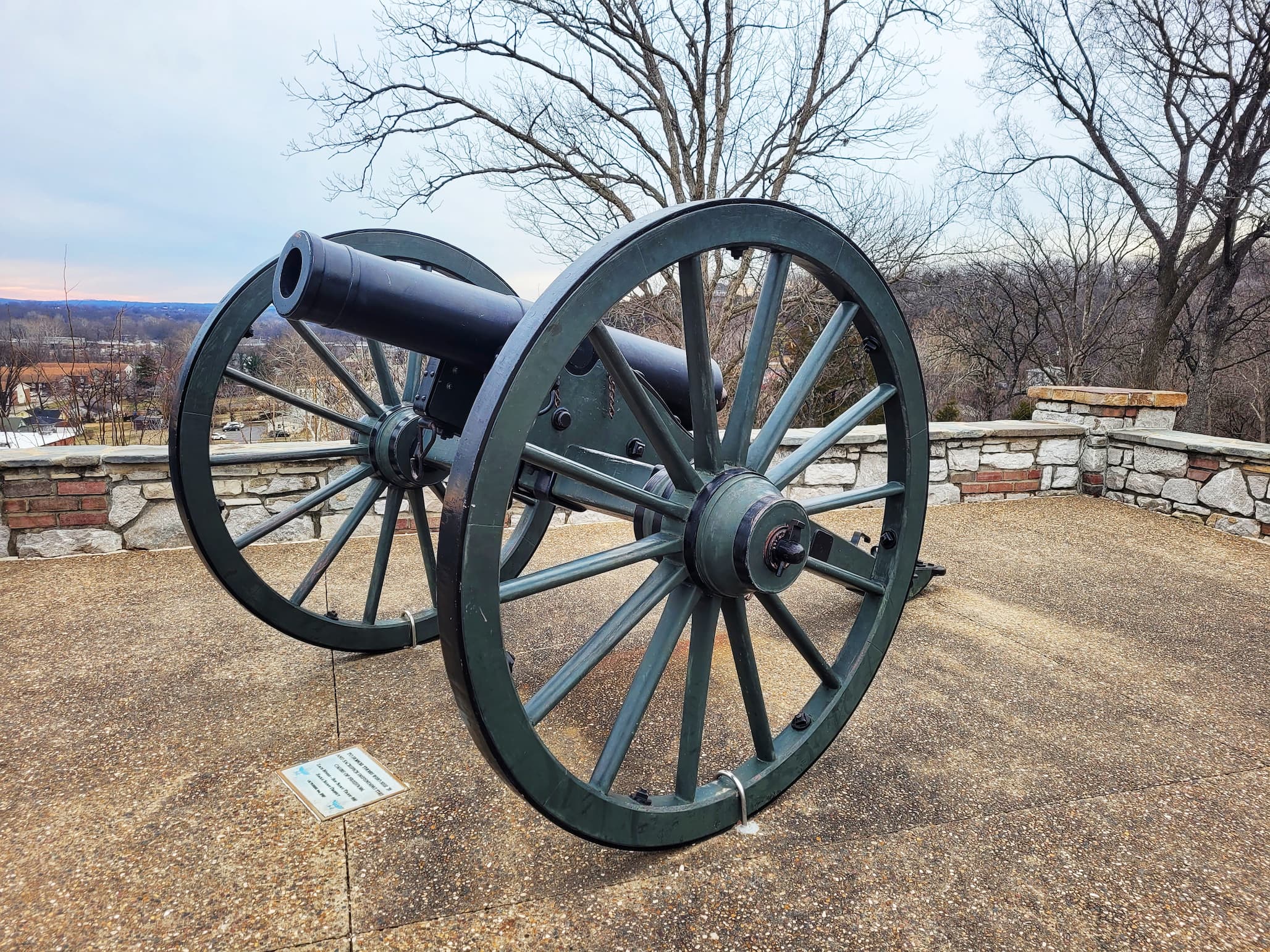
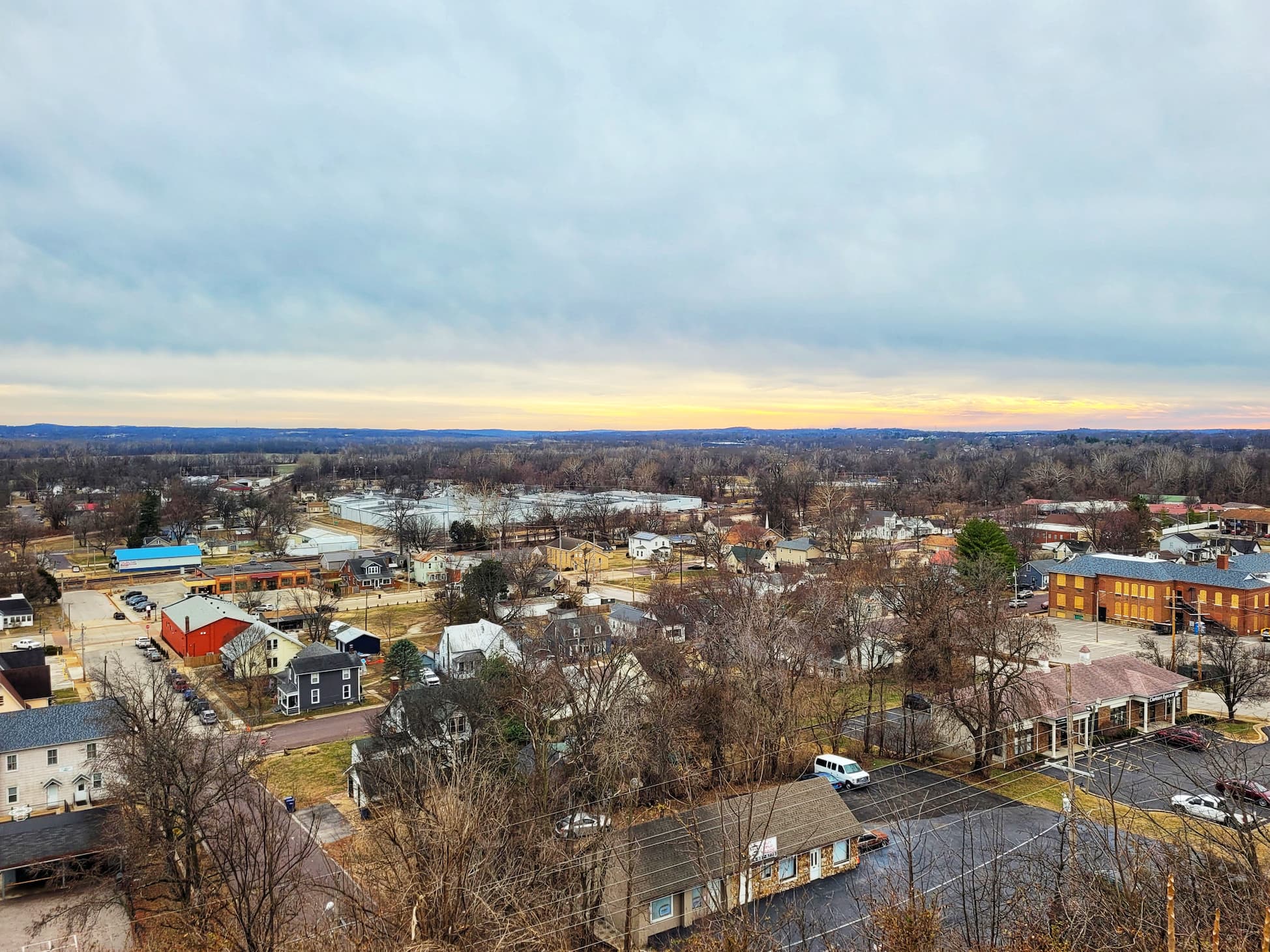
How to Visit Blackburn Park
Address: 233-299 W Osage St, Pacific, MO 63069
Beacon Car & Pet Wash Neon Sign
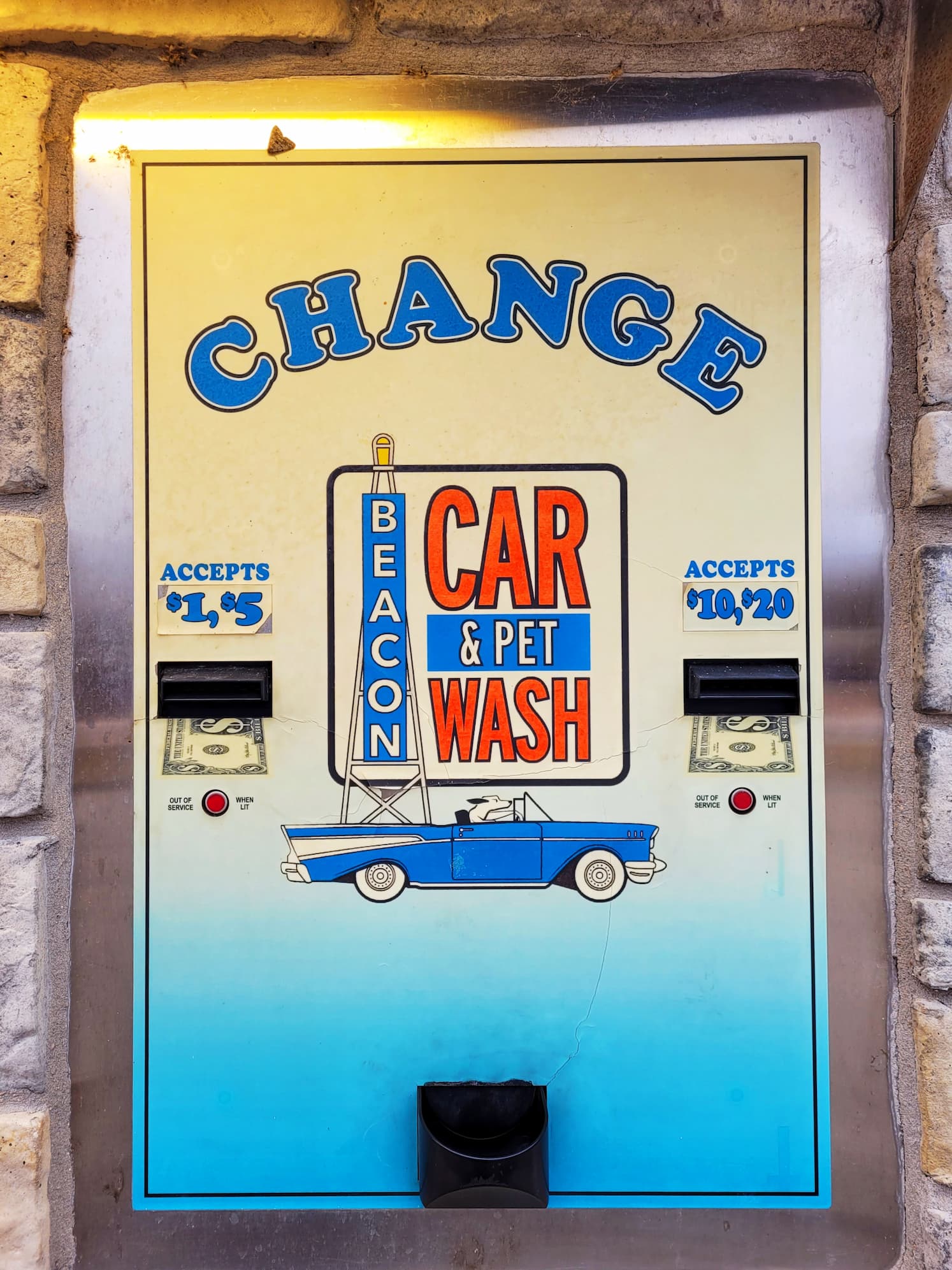
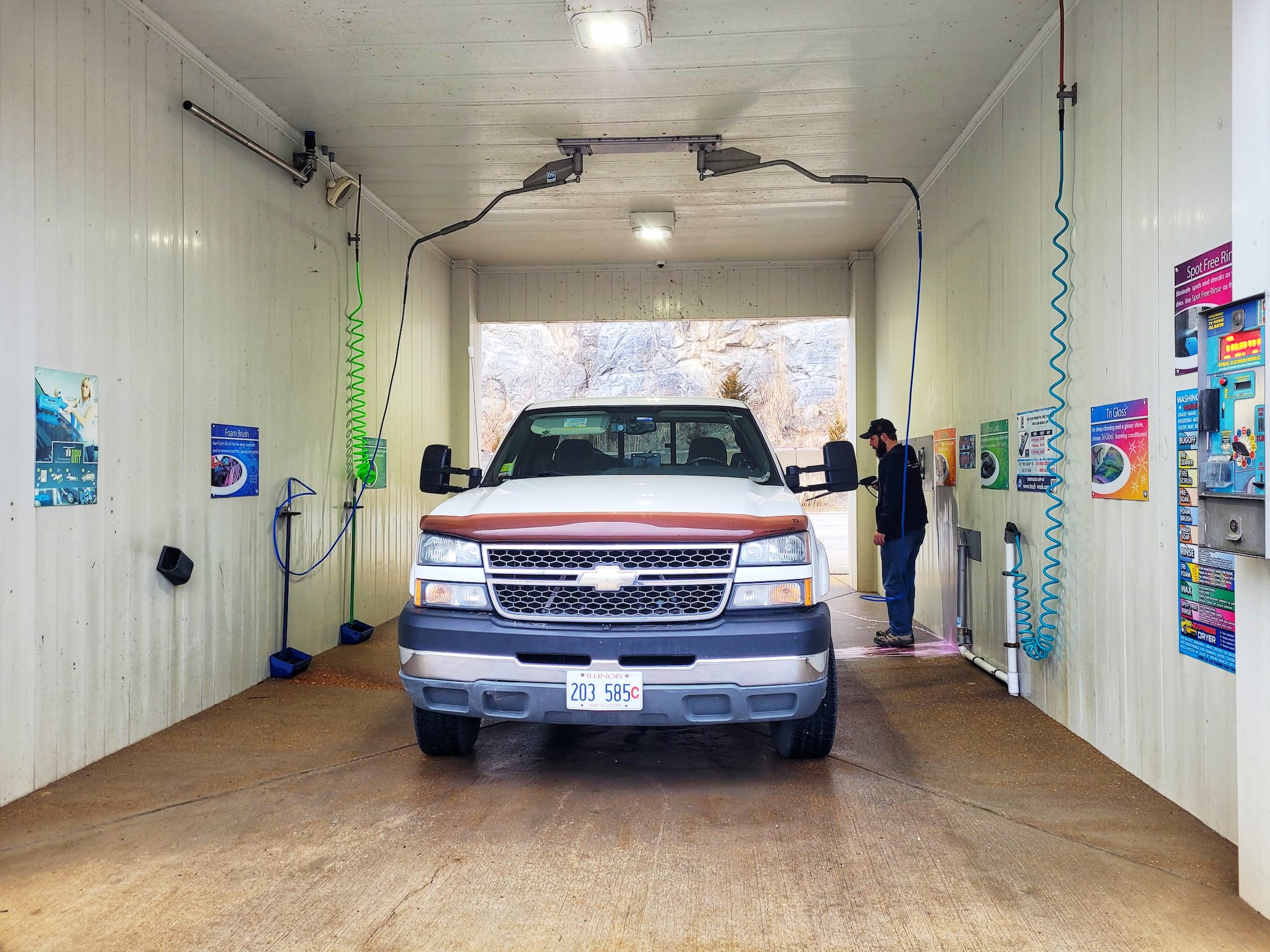
Our final stop in Pacific was the Beacon Car and Pet Wash, home to the restored neon sign from the 1940s-era Beacon Court Motel. The motel is gone, but the fully restored sign now serves as the logo for the car wash, a creative way to preserve Route 66 history in a functional modern space.
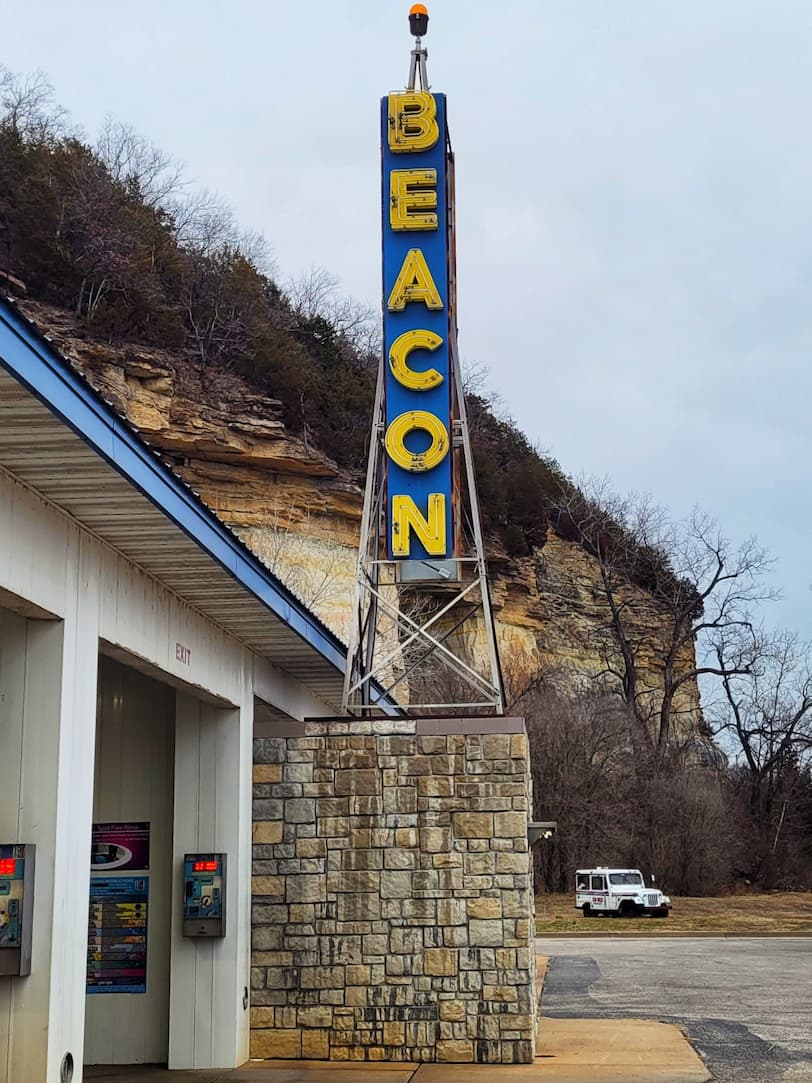
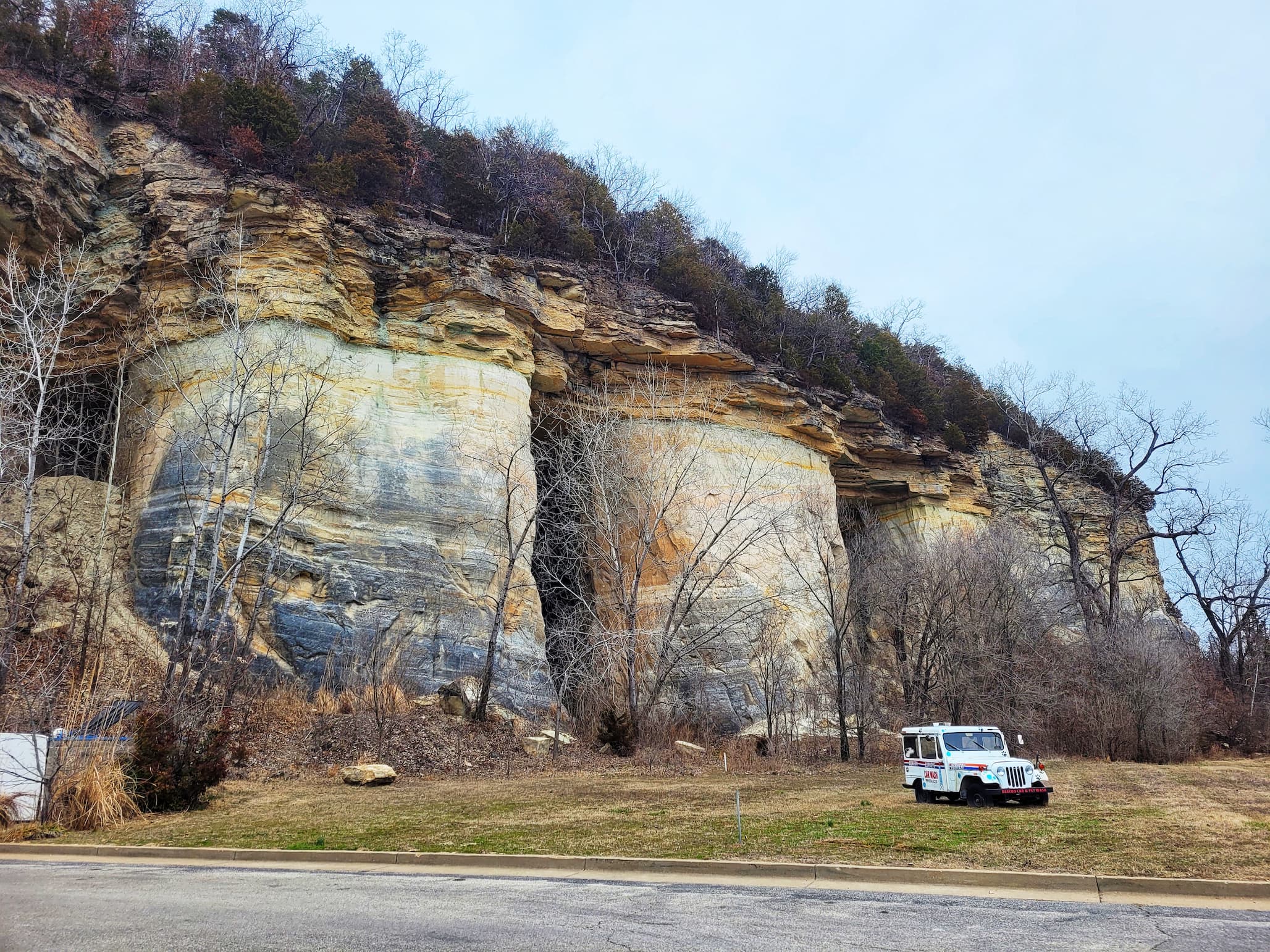
This location also offers a clear view of Pacific’s striking white bluffs. These bluffs are composed of St. Peter Sandstone, a 400-million-year-old formation created from ancient beach dunes. Silica mining here dates back to before the Civil War and continues today. The highly pure white sand has long been valued for glass production, foundry work, chemicals, and oil and gas applications.
The mining industry helped shape Pacific just as much as the railroad and Route 66 did. Standing there, looking at both a restored neon sign and active industrial bluffs, you can see the overlapping layers of history that define this town.
How to Visit Beacon Car & Pet Wash
Address: 675 E Osage St, Pacific, MO 63069
Thursday 2/26: Babler State Park and Route 66 State Park
Thursday was a workday for us, but one of the benefits of traveling slowly is being able to fit in short explorations between responsibilities. During our lunch break, we set out on a short hike in Babler State Park, mostly because I wanted to find one of the historic cemeteries within the park.
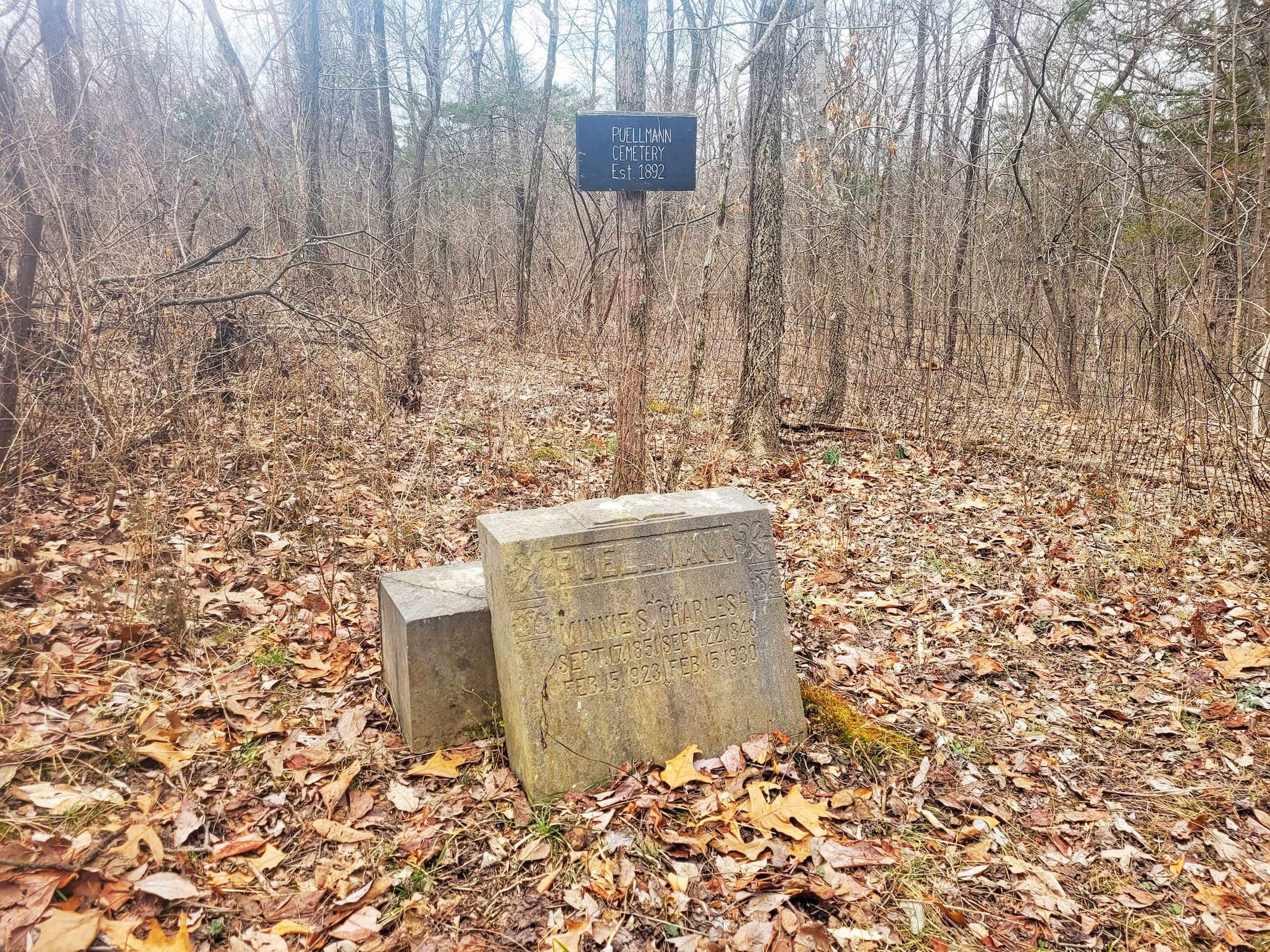
There are several small family cemeteries scattered throughout Babler, remnants of the farms that existed here before the land became a state park. The one closest to the campground is the 1892 Puellmann Cemetery, located just off the paved bike trail. Only one headstone still stands, the rest having been lost to time- just my kind of place.
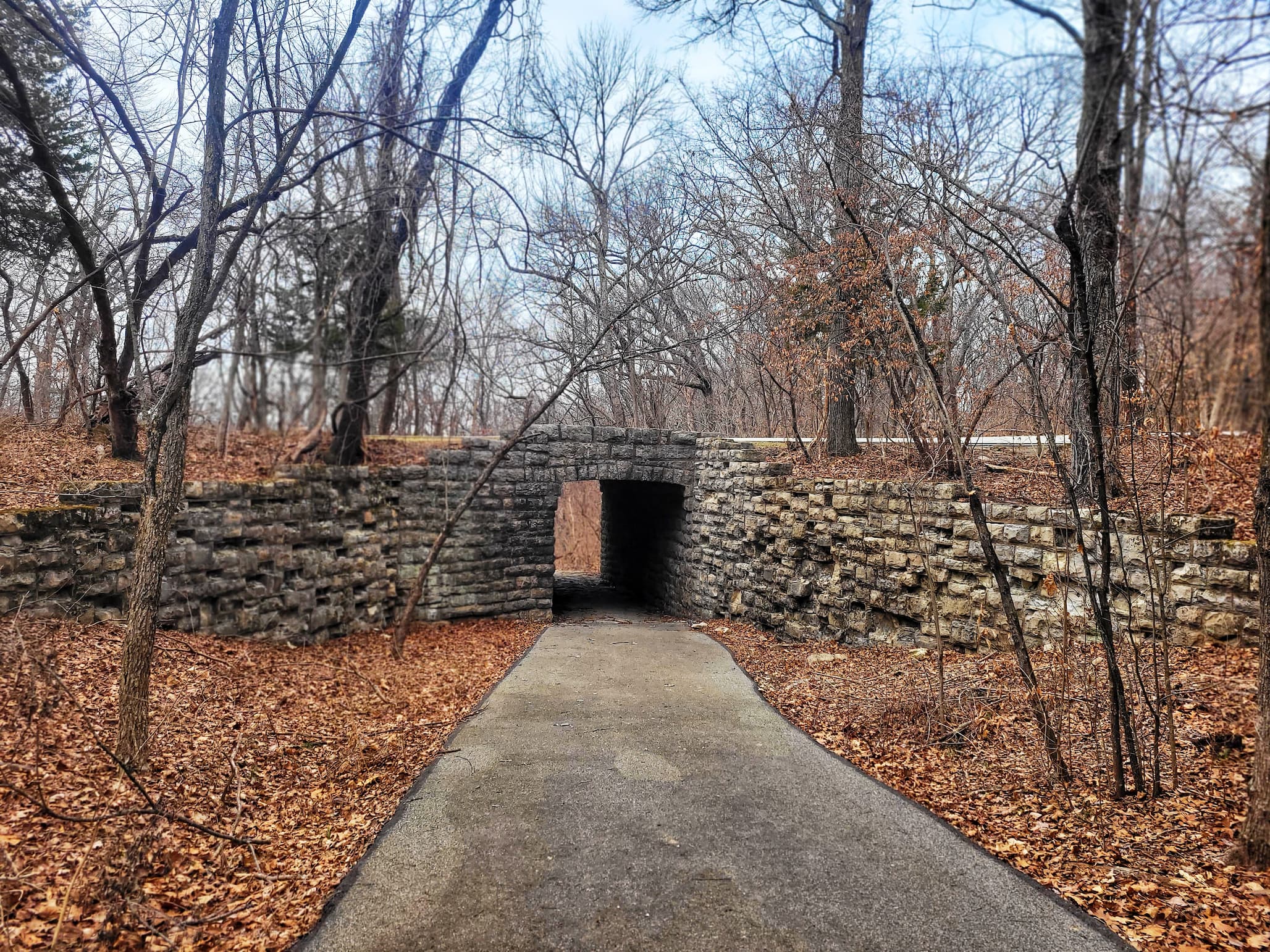
That same trail also led us to one of the park’s Civilian Conservation Corps (CCC) tunnels. Between 1935 and the early 1940s, two CCC companies, totaling around 200 men, worked to develop Babler State Park. They cut roads, built trails and bridges, and constructed many of the park’s buildings. In total, 22 CCC structures within the park are listed on the National Register of Historic Places. You can feel that legacy throughout Babler. The stonework especially gives the park a sense of permanence and craftsmanship that modern construction rarely replicates.
Route 66 State Park
My original Thursday evening plan was to visit the Lazarus Pinball Museum, but I misread the hours I had written in my notes, so that was a bummer. We had so much fun at the Chattanooga and Roanoke Pinball Museums, that I’ve been keeping my eye out for more.
But we still made it to another stop on my list: Route 66 State Park. If you go, a quick planning note: Google Maps does not reliably direct you to the visitor center entrance, which is separate from the main park access. It’s worth confirming directions ahead of time.
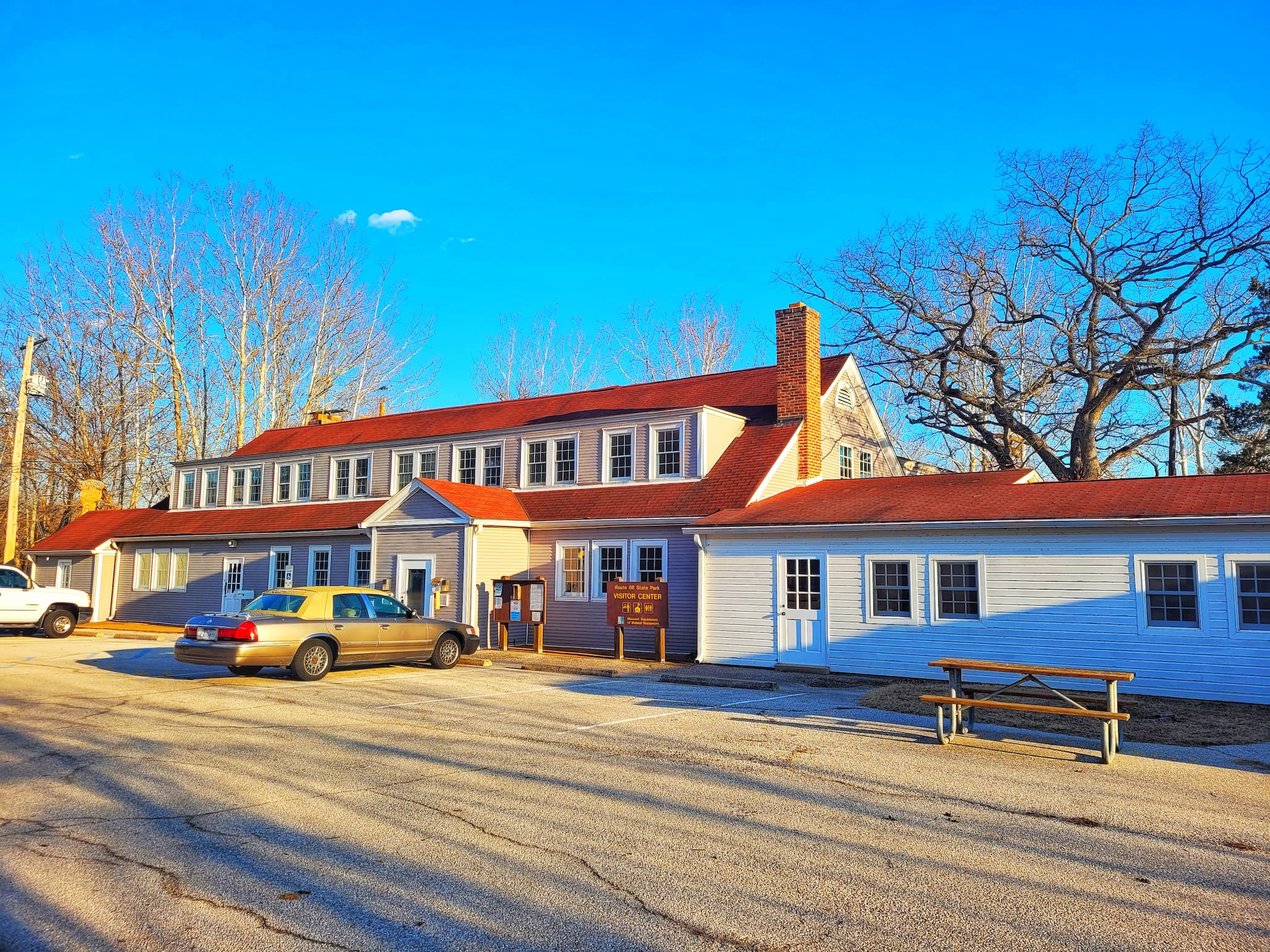
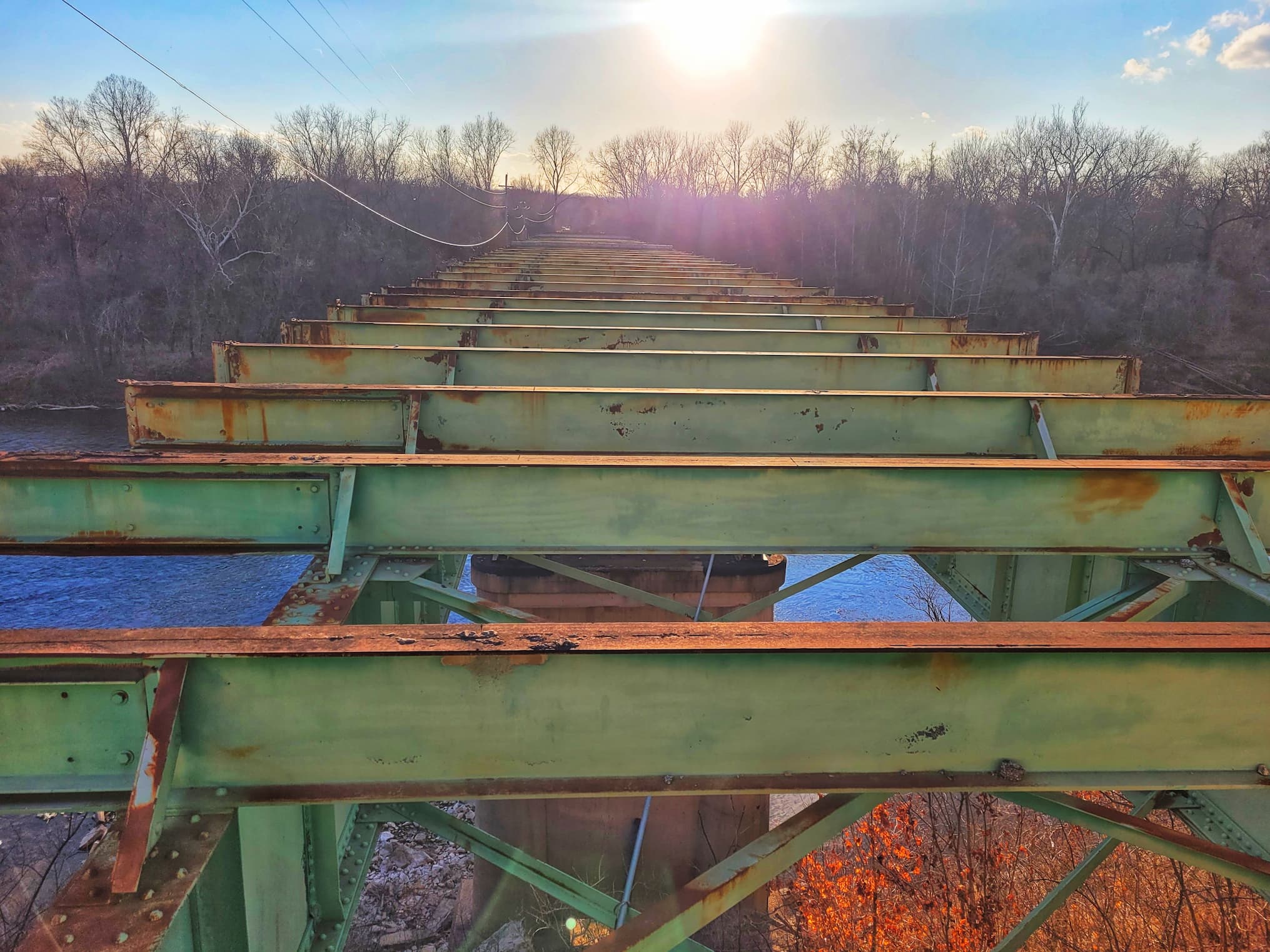
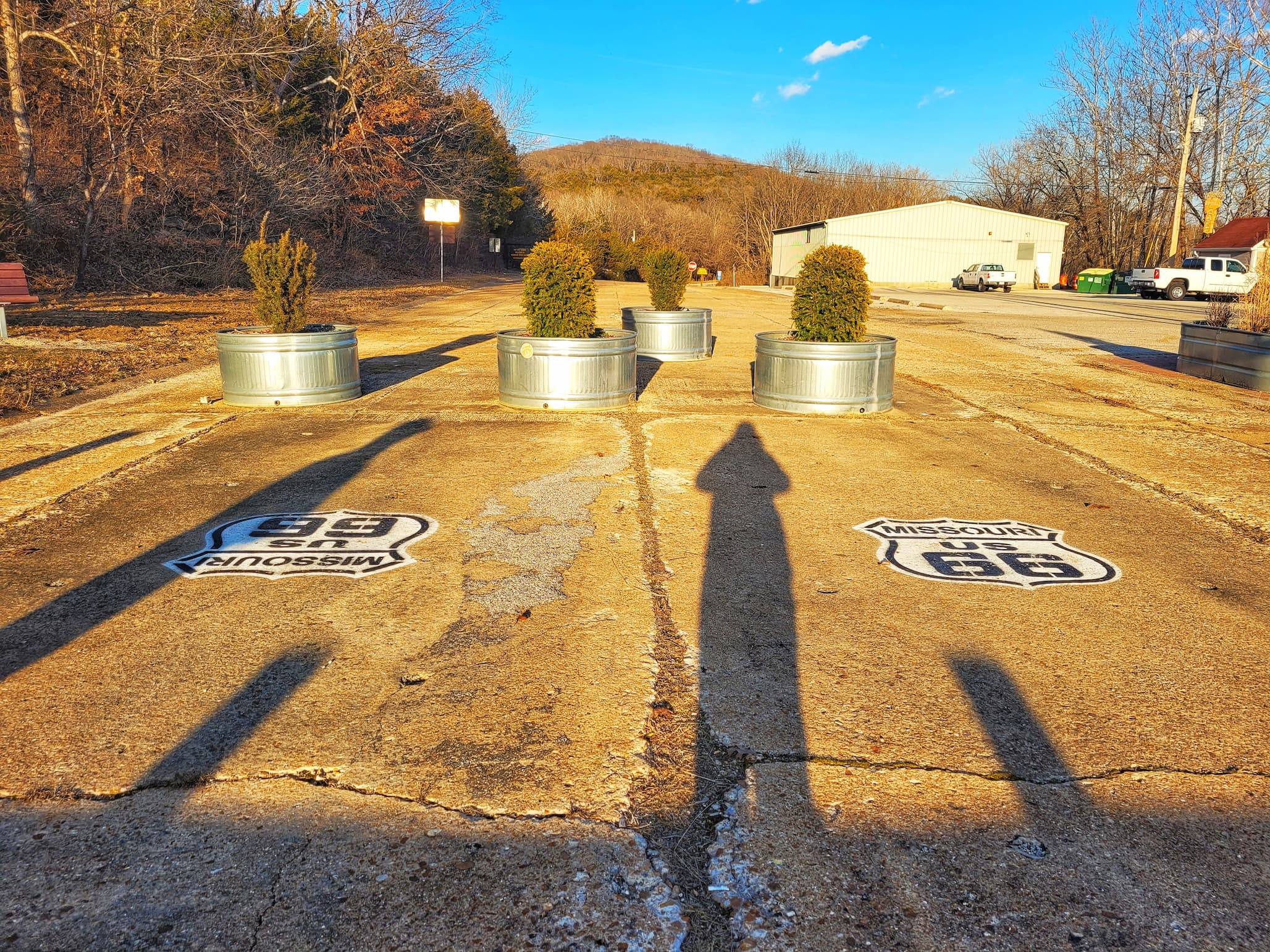
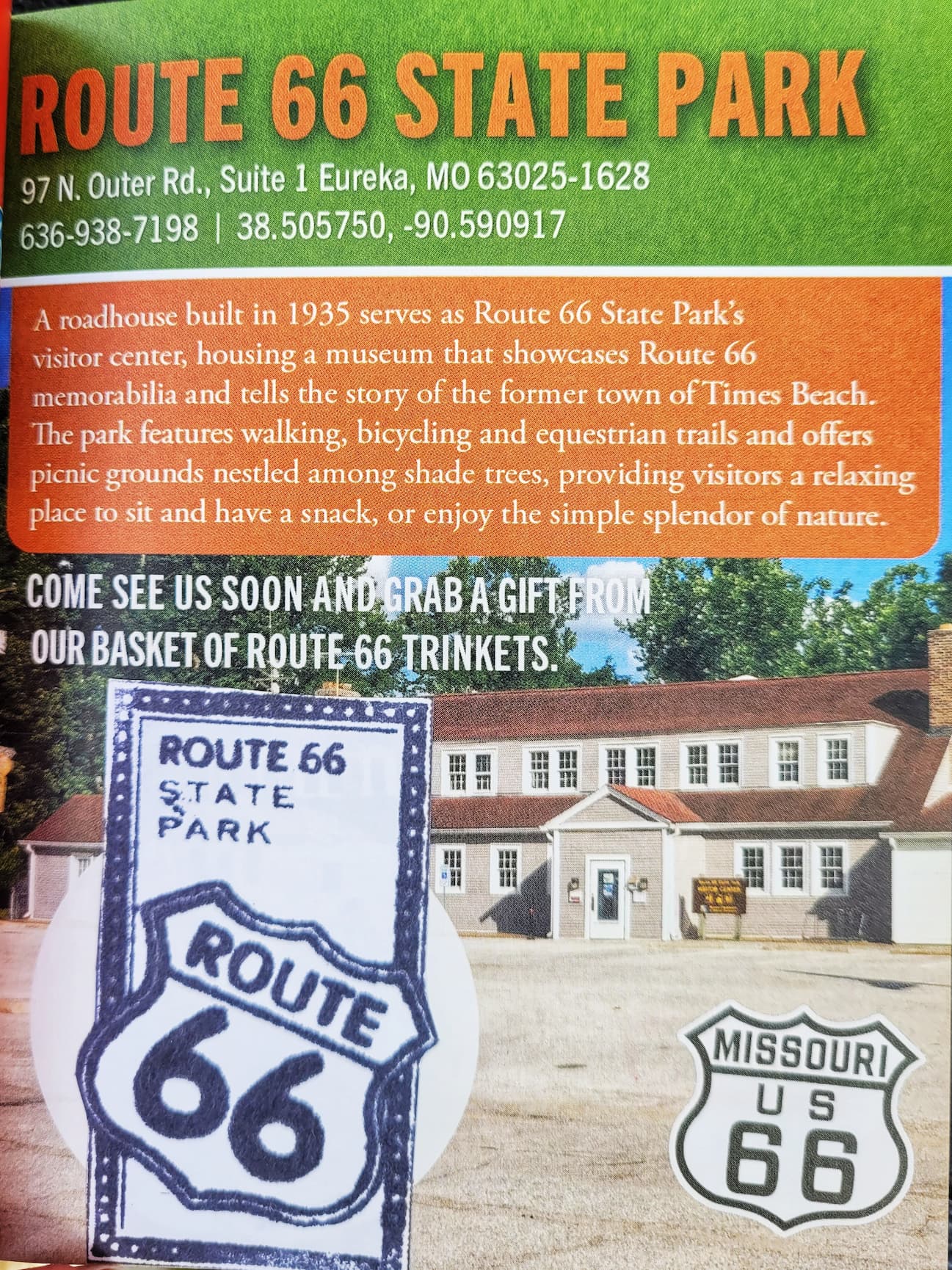
Because it was winter, the visitor center, which houses Route 66 exhibits, was closed. However, it’s a stop on the Route 66 passport program, and during closures the park thoughtfully leaves stamp stickers in a box outside so visitors can still mark their books. The visitor center building itself is historic. It was originally the Bridgehead Inn, a 1935 roadhouse that once sat directly on Route 66. Just beyond it stands the historic Route 66 bridge over the Meramec River, which opened to traffic in 1932.
The bridge closed to vehicles in 2009, and its decking was removed in 2012. In 2017, it nearly faced demolition. Community advocacy efforts ultimately helped the state park system gain ownership and begin long-term restoration planning. The goal is to eventually make it a functional connection between the two sections of the park. From an engineering standpoint, it’s rare. It was the first vehicle bridge over the Meramec River and is a Warren truss design, one of only four of this type still standing. It is also Missouri’s only three-span rigid deck truss structure.
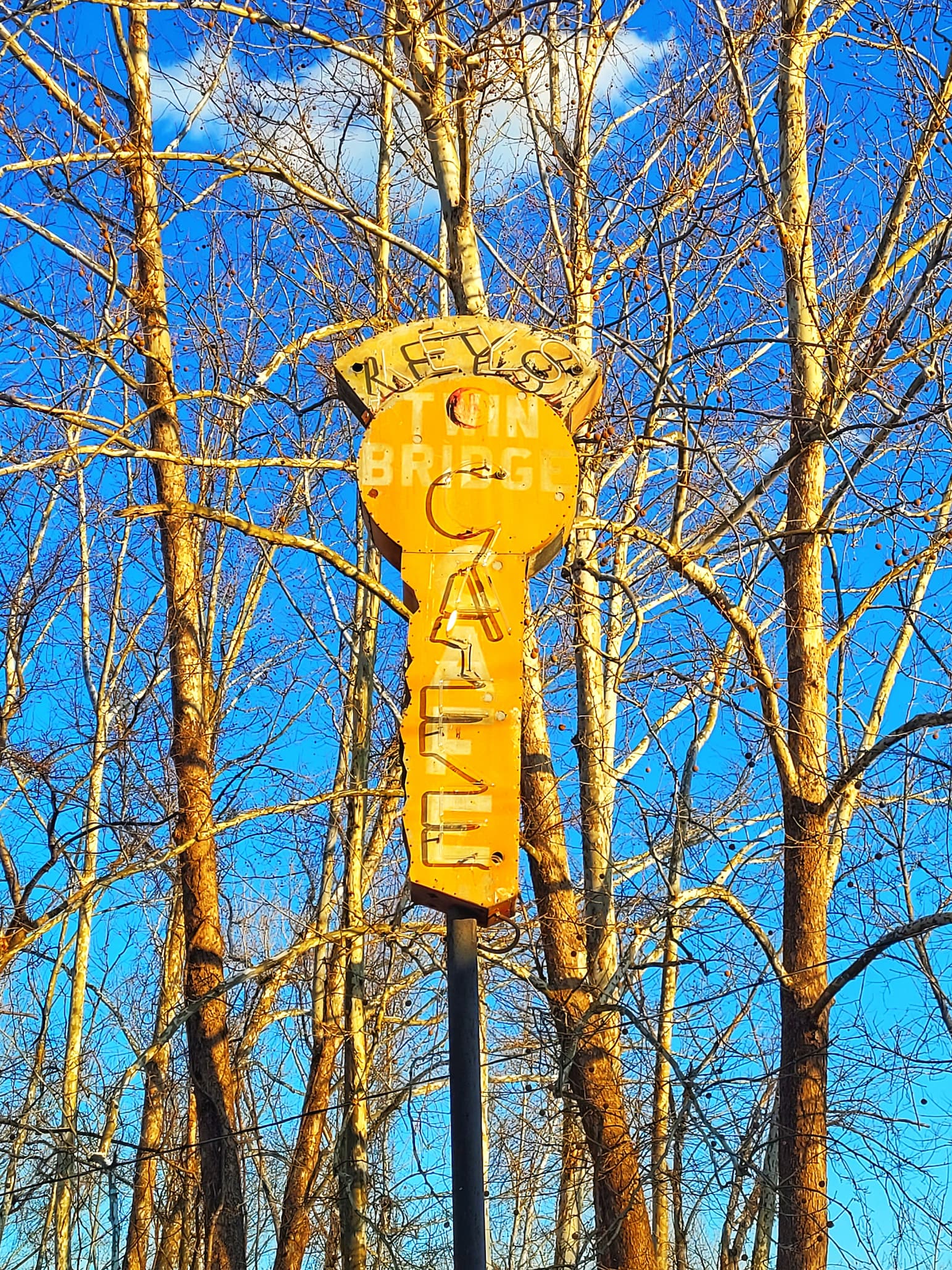
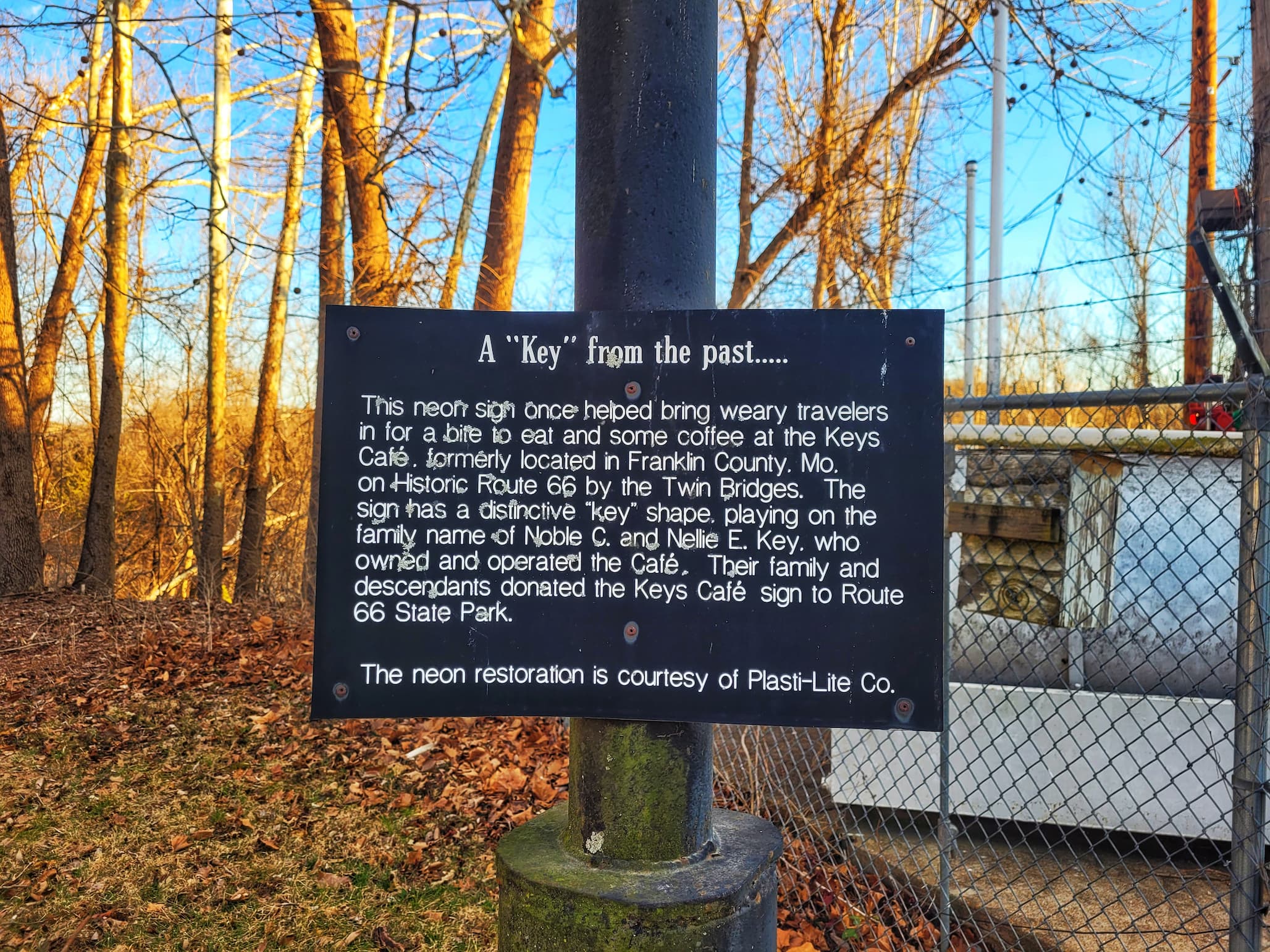
Near the visitor center, you’ll also find the restored neon sign from the former Keys Café, another preserved piece of Route 66 history.
How to Visit Route 66 State Park
Website: https://mostateparks.com/park/route-66-state-park
Visitor Center Address: 96 N Outer Rd, Eureka, MO 63025
Visitor Center Hours: March-October 9am-4pm daily
Off hours passport stamps available
The Story of Times Beach
Route 66 State Park also encompasses the former site of Times Beach.
Established in 1926 by the St. Louis Times newspaper as a planned resort community, the town never quite became the vacation destination that had been advertised. Instead, it developed into a small, middle-class town of about 2,000 residents.
In the early 1970s, oil was sprayed on the town’s dirt roads for dust control, a common practice at the time. Unfortunately, that oil was contaminated with dioxin. When the Meramec River flooded in 1982, the contamination spread further. Around the same time, the EPA confirmed the presence of dioxin in the soil. In 1983, the federal government began buying out residents and leveling the town for cleanup. Times Beach was officially disincorporated in 1985. After years of remediation, the site was removed from the EPA Superfund list in 2001.
Standing there today, in a peaceful state park, it’s difficult to imagine that an entire town once existed on the same ground. The story connects in an unexpected way to our earlier visit to the Weldon Spring Site. This region carries multiple layers of environmental history, each shaping the land in different ways.
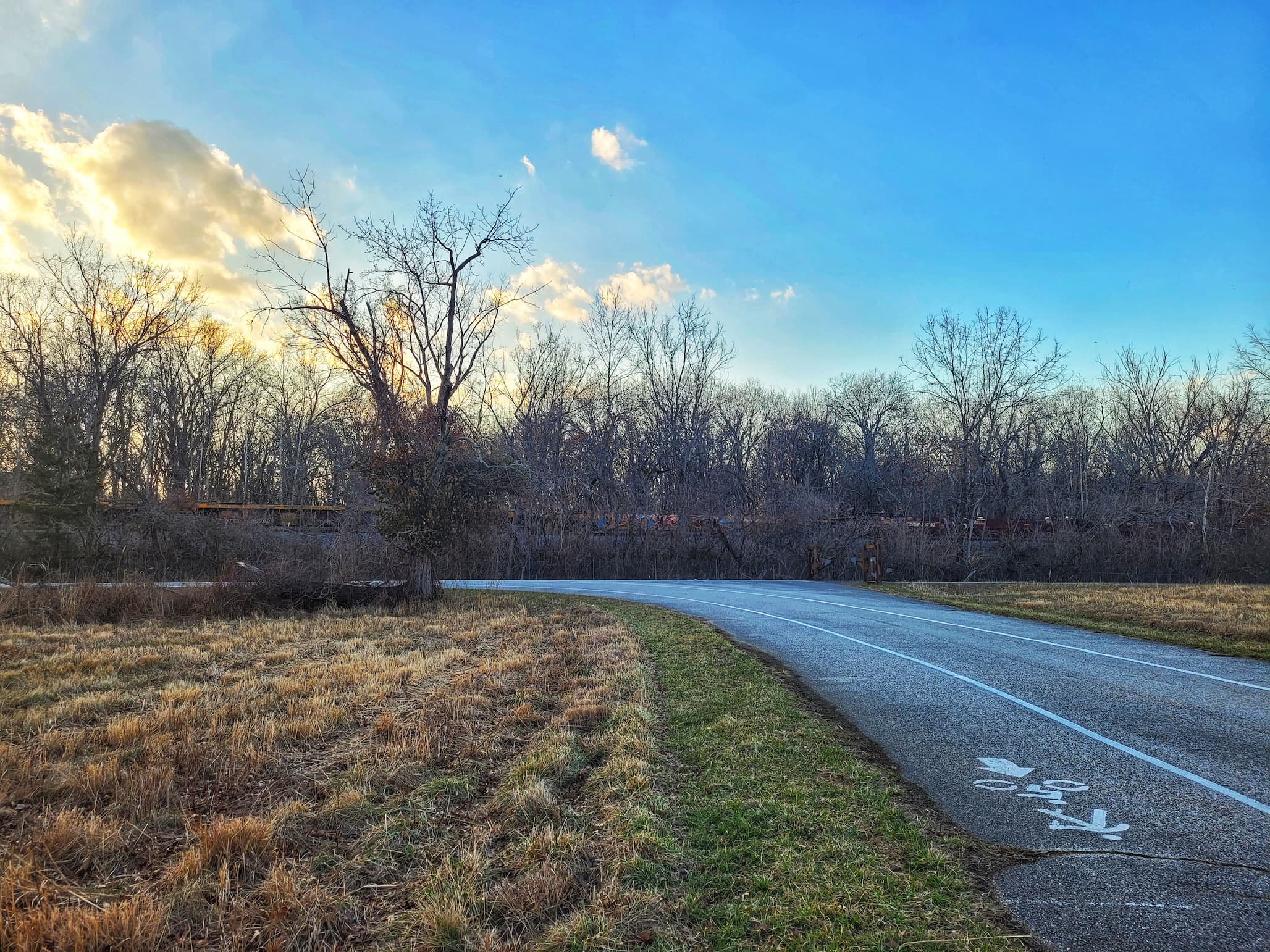
Friday 2/27: On the Road to Springfield, MO
Friday morning, Josh worked for a few hours while I finished packing up inside the RV. Before leaving Babler State Park, we drove through a few additional sections of the park to see more of the CCC-built structures. Our main goal was the park’s historic stables, an impressive stone and timber building constructed by the CCC. The craftsmanship is remarkable, and it’s one of those structures that immediately transports you back to the 1930s.
From there, we continued west toward Springfield, Missouri, our next overnight stop, with a few Route 66 detours along the way.
Pulaski County Tourism Office
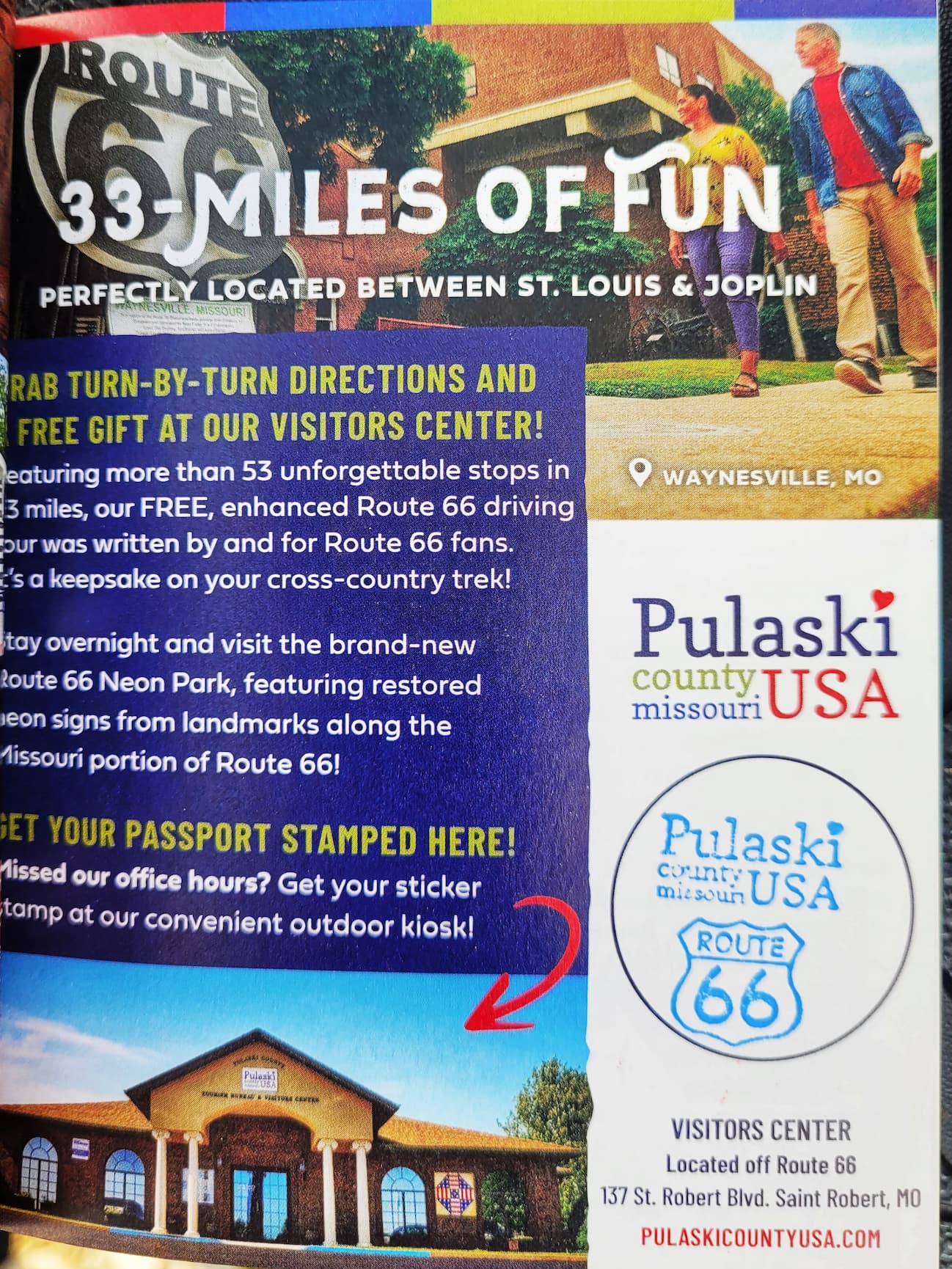
Our first stop was the Pulaski County Tourism Bureau to collect another Route 66 passport stamp (and a free pin). The staff were welcoming and happy to share brochures and suggestions for exploring the area further.
How to Visit the Pulaski County Tourism Office
Address: 137 St Robert Blvd suite a, St Robert, MO 65584
Website: https://visitpulaskicounty.org/
Off hours passport stamps available
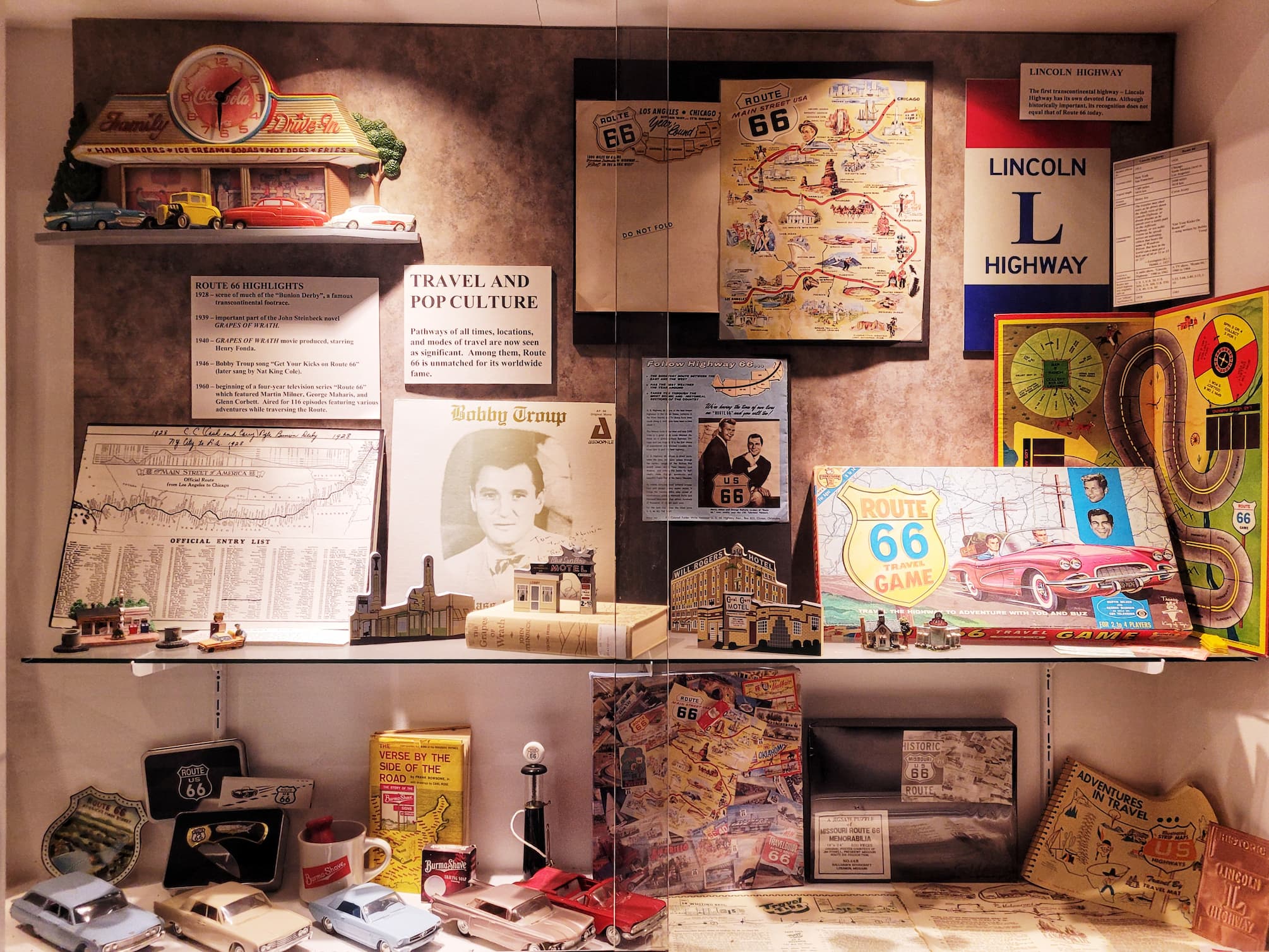
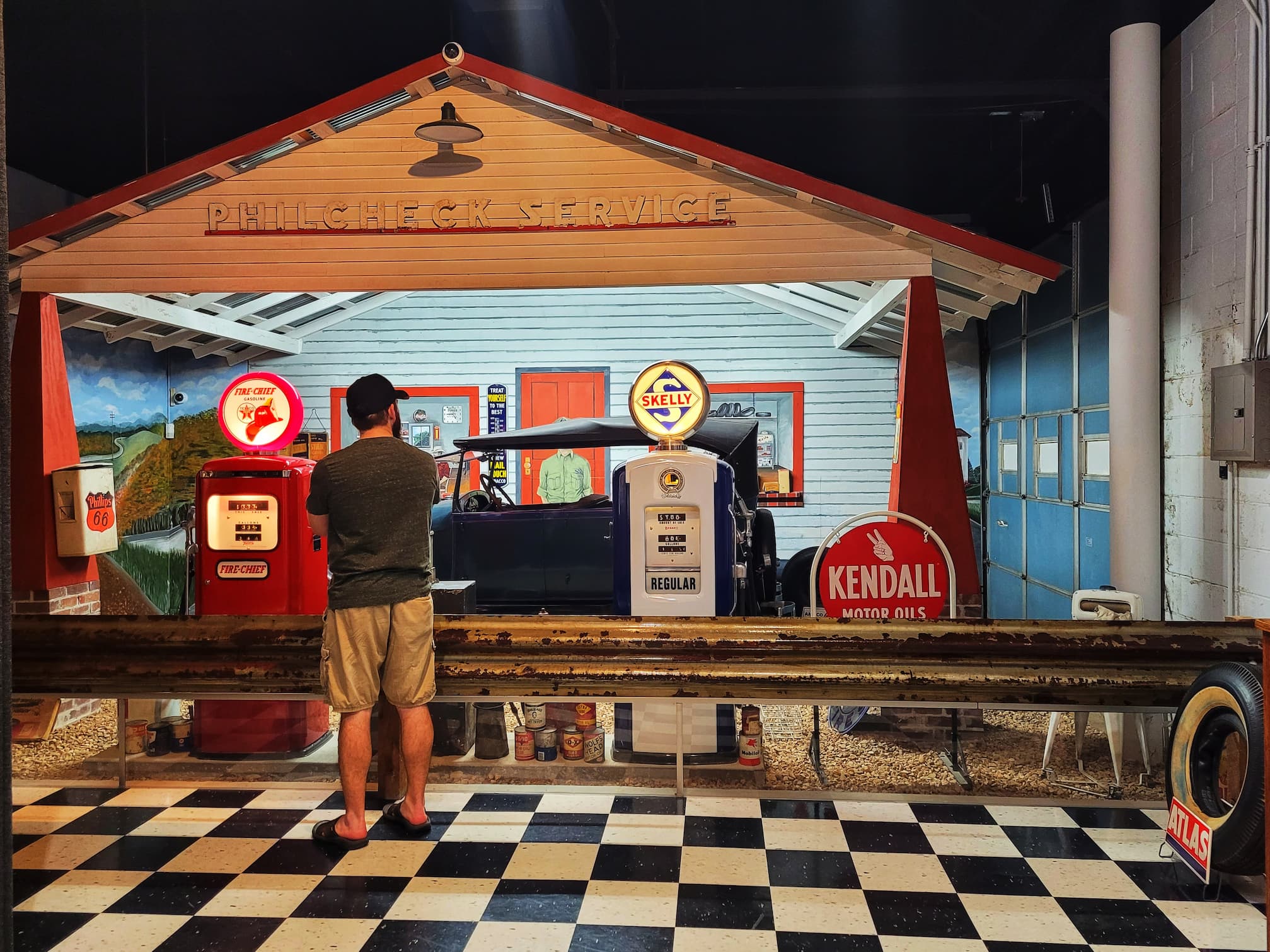
Lebanon Route 66 Museum
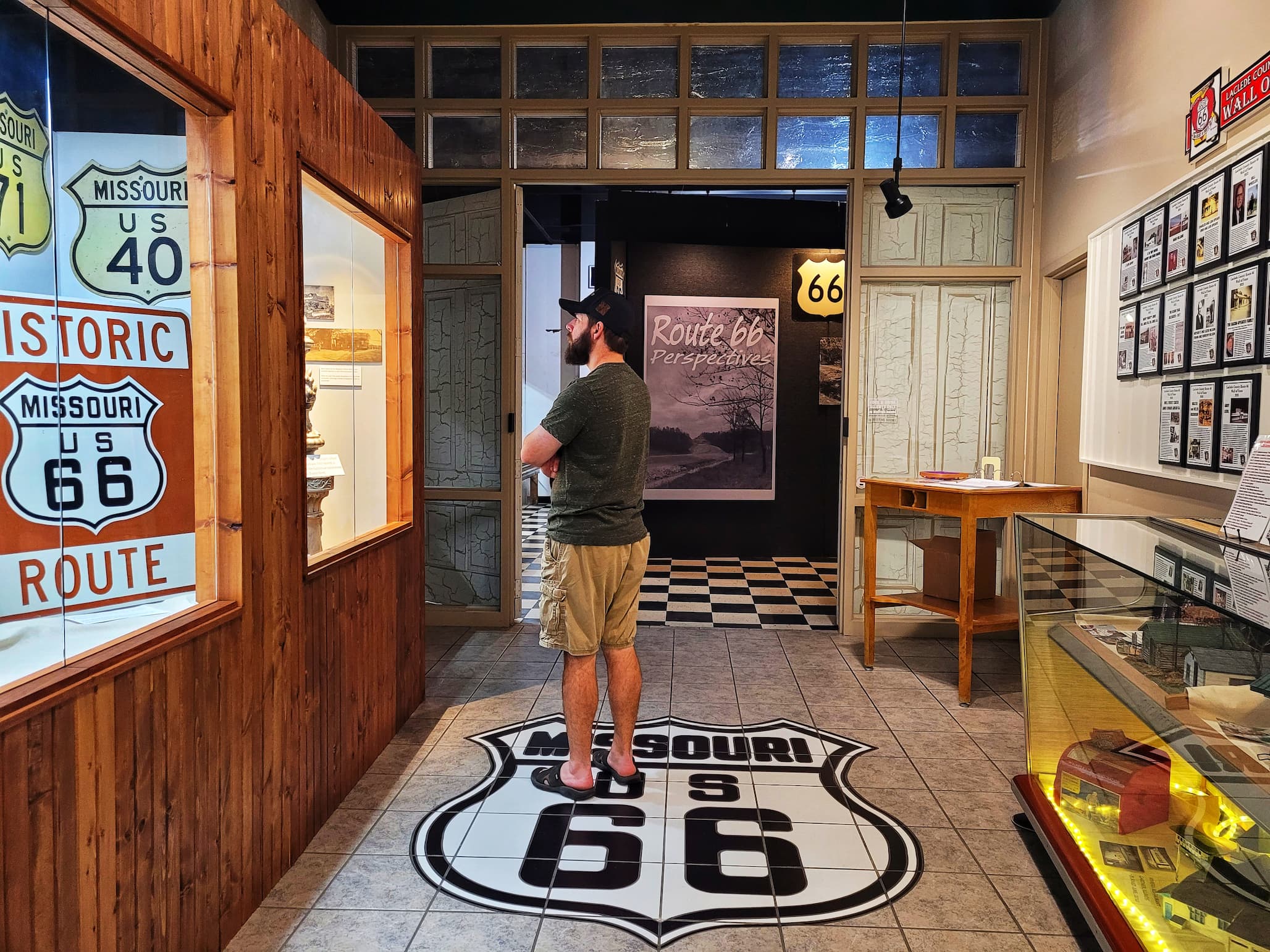
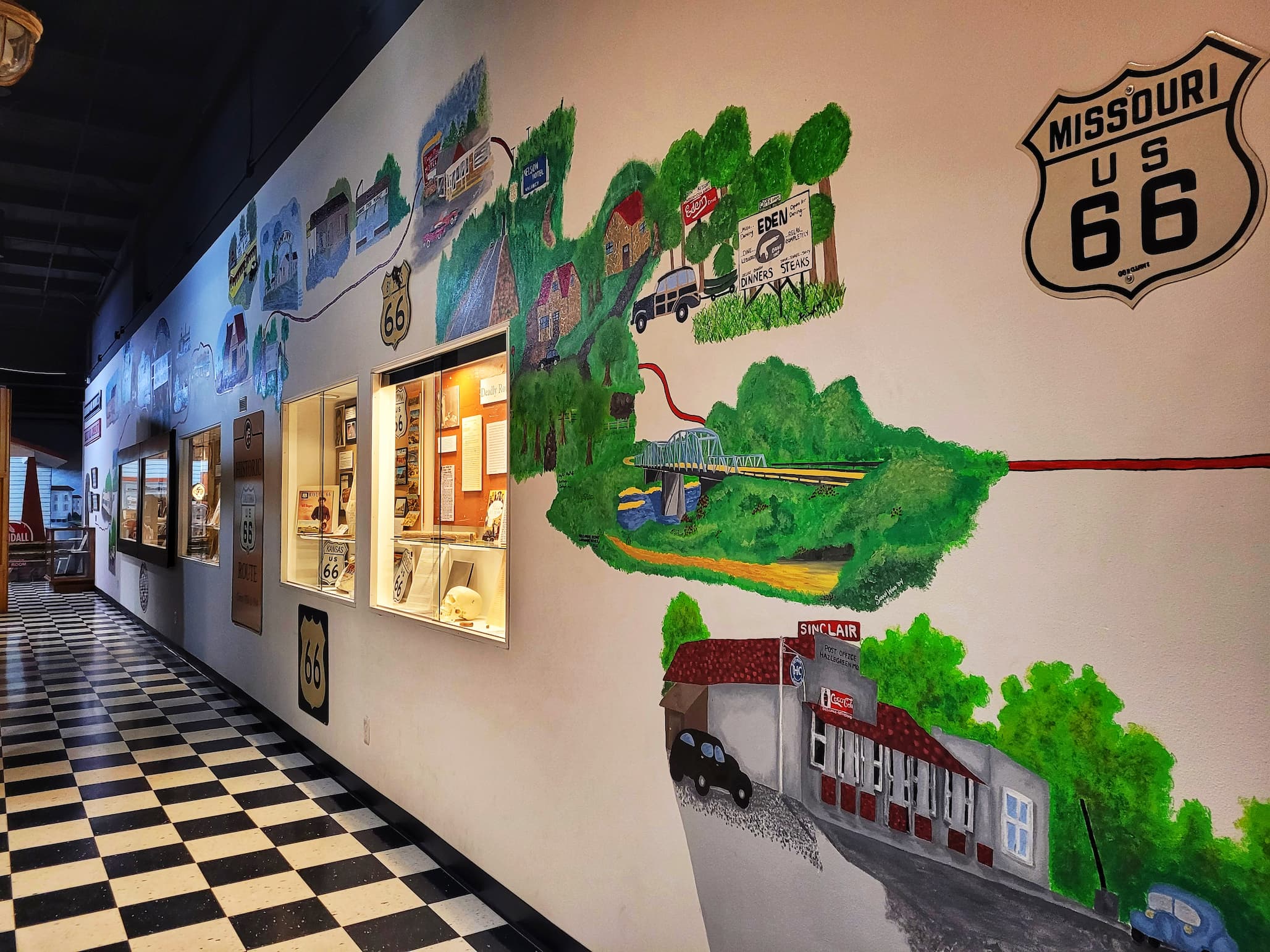
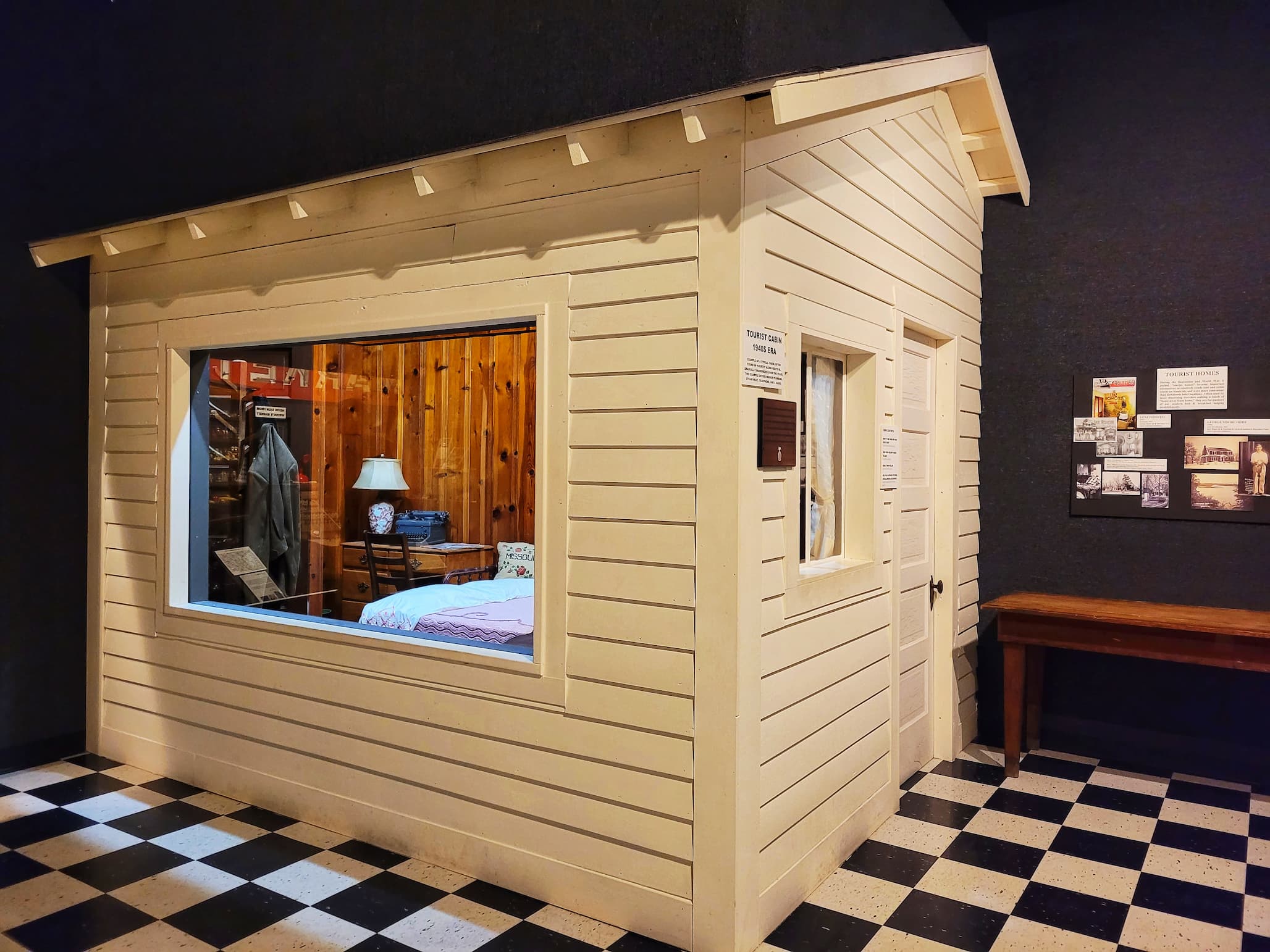
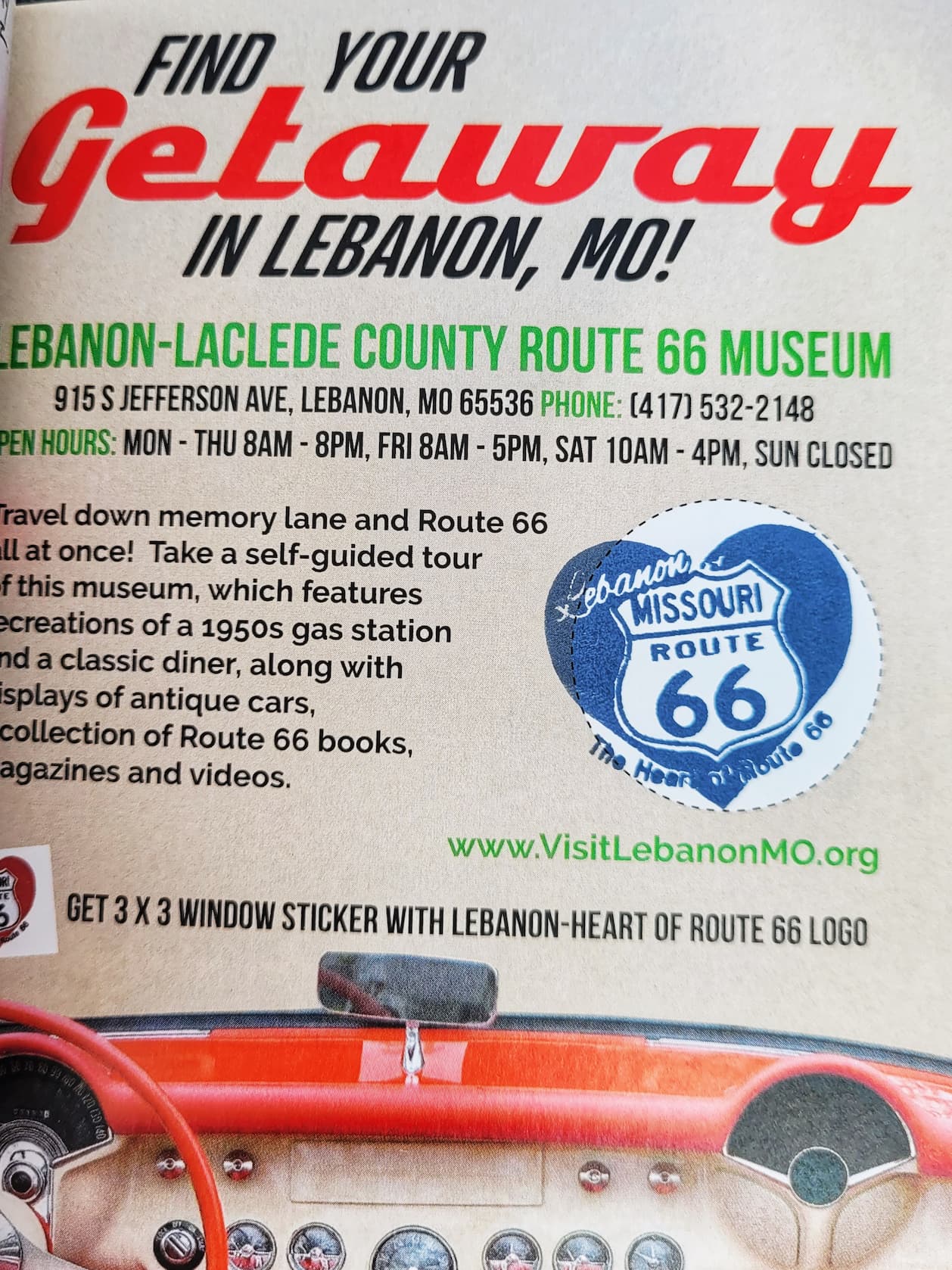
Next, we stopped at the Lebanon Route 66 Museum, housed inside the local library.
The museum offers well-curated exhibits covering both the broader history of Route 66 and Lebanon’s specific role along the highway. It’s compact but thoughtfully arranged, and we added another stamp to our passport before heading out. Check back soon, because I’ll be writing a full post about this museum!
How to Visit the Lebanon Route 66 Museum
Address: 915 S Jefferson Ave, Lebanon, MO 65536
Website: https://www.lebanon-laclede.lib.mo.us/66-museum/route-66-museum-home
Hours: Mon-Thurs 8am-8pm, Fri 8am-5pm, Sat 10am-4pm
Conway Rest Area
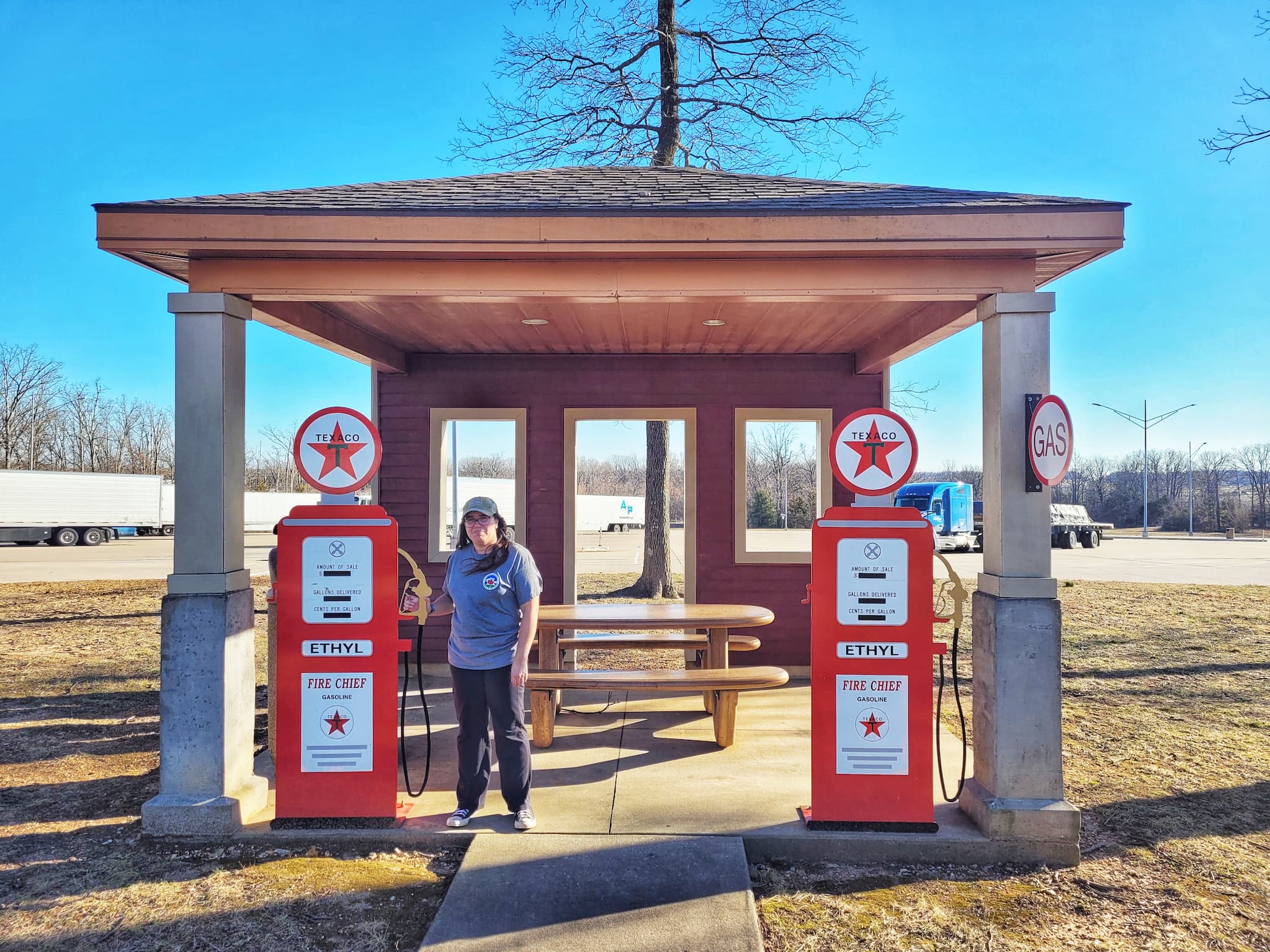
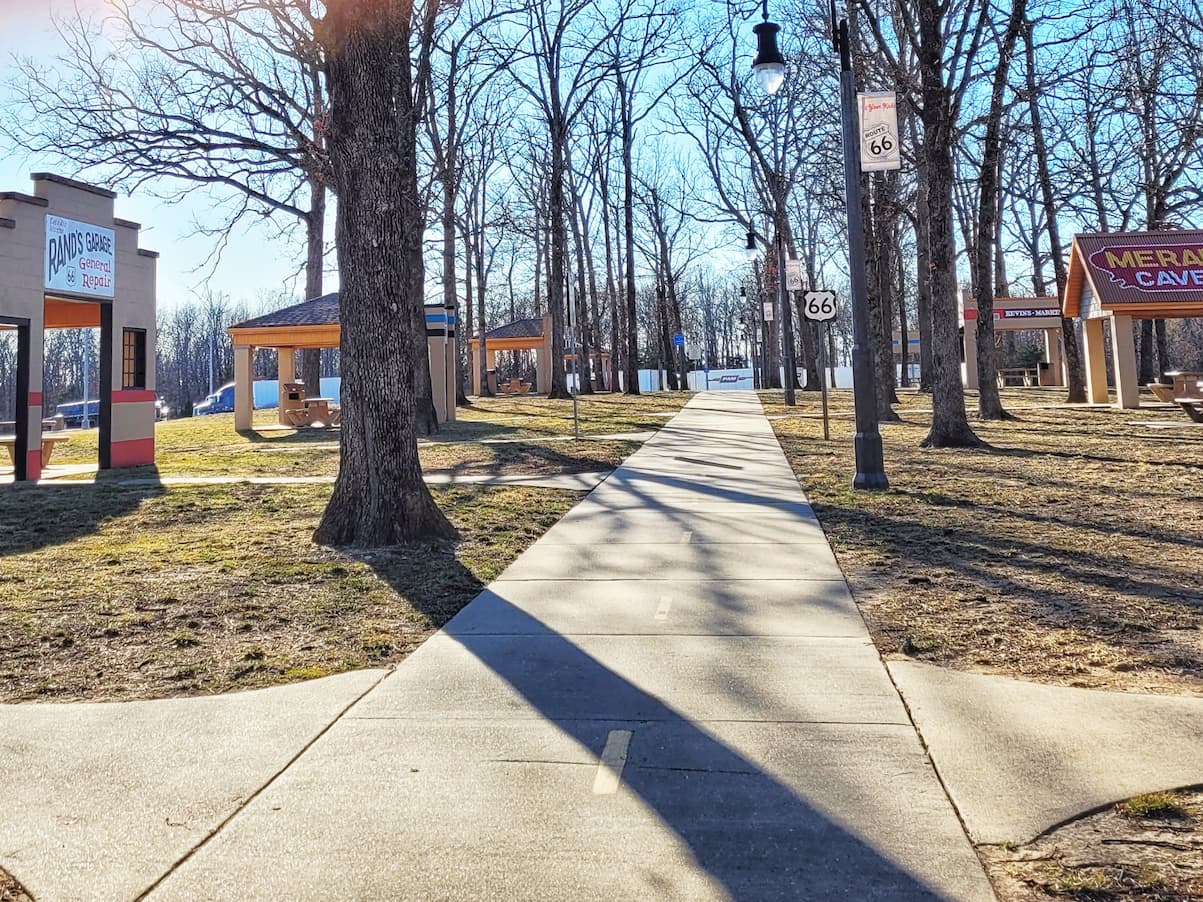
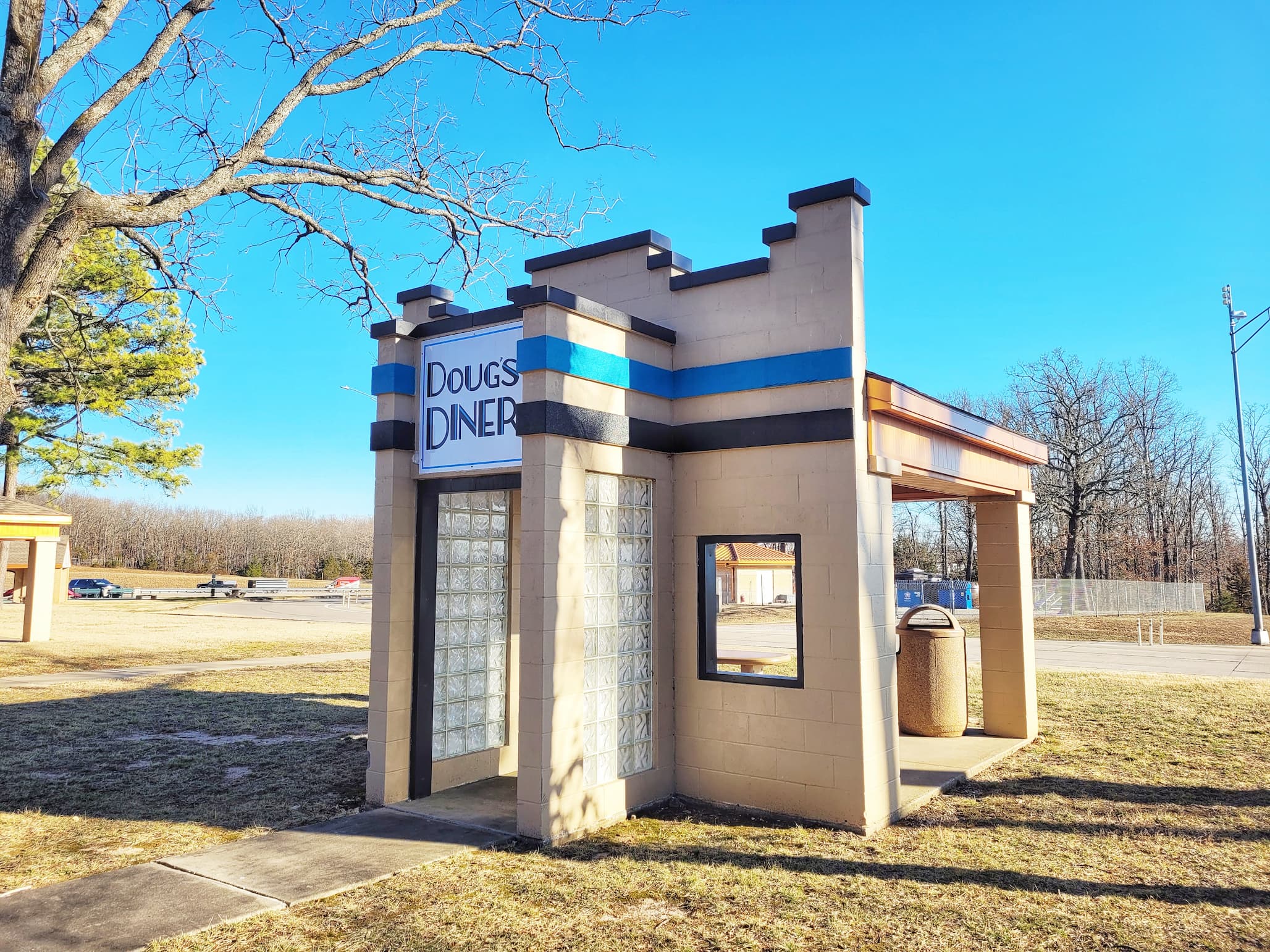
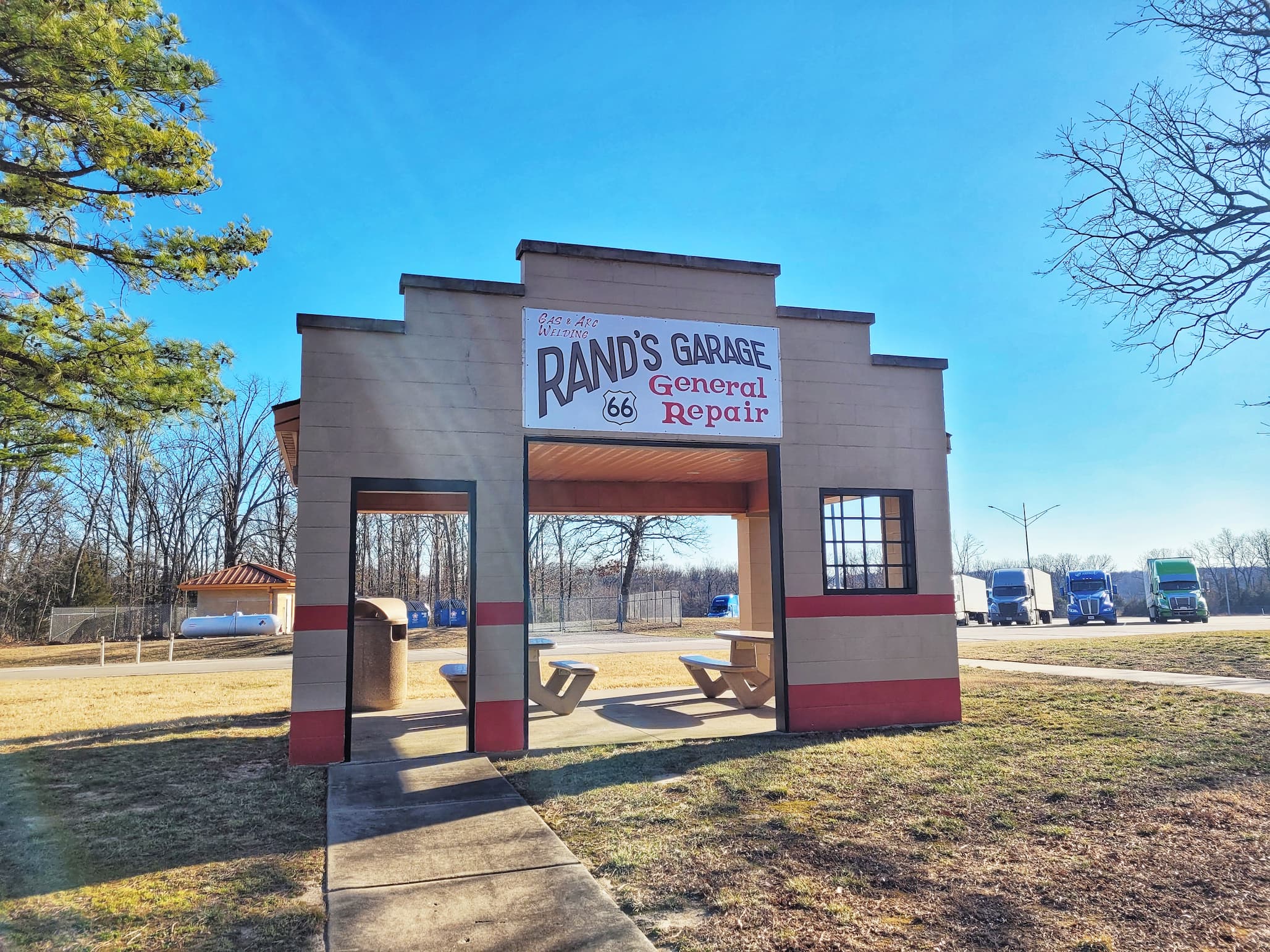
Our final roadside stop was the Conway Rest Area, which features playful Route 66-themed photo opportunities. The picnic pavilions are designed to resemble miniature Route 66 businesses, creating a fun and unexpectedly detailed rest stop experience.
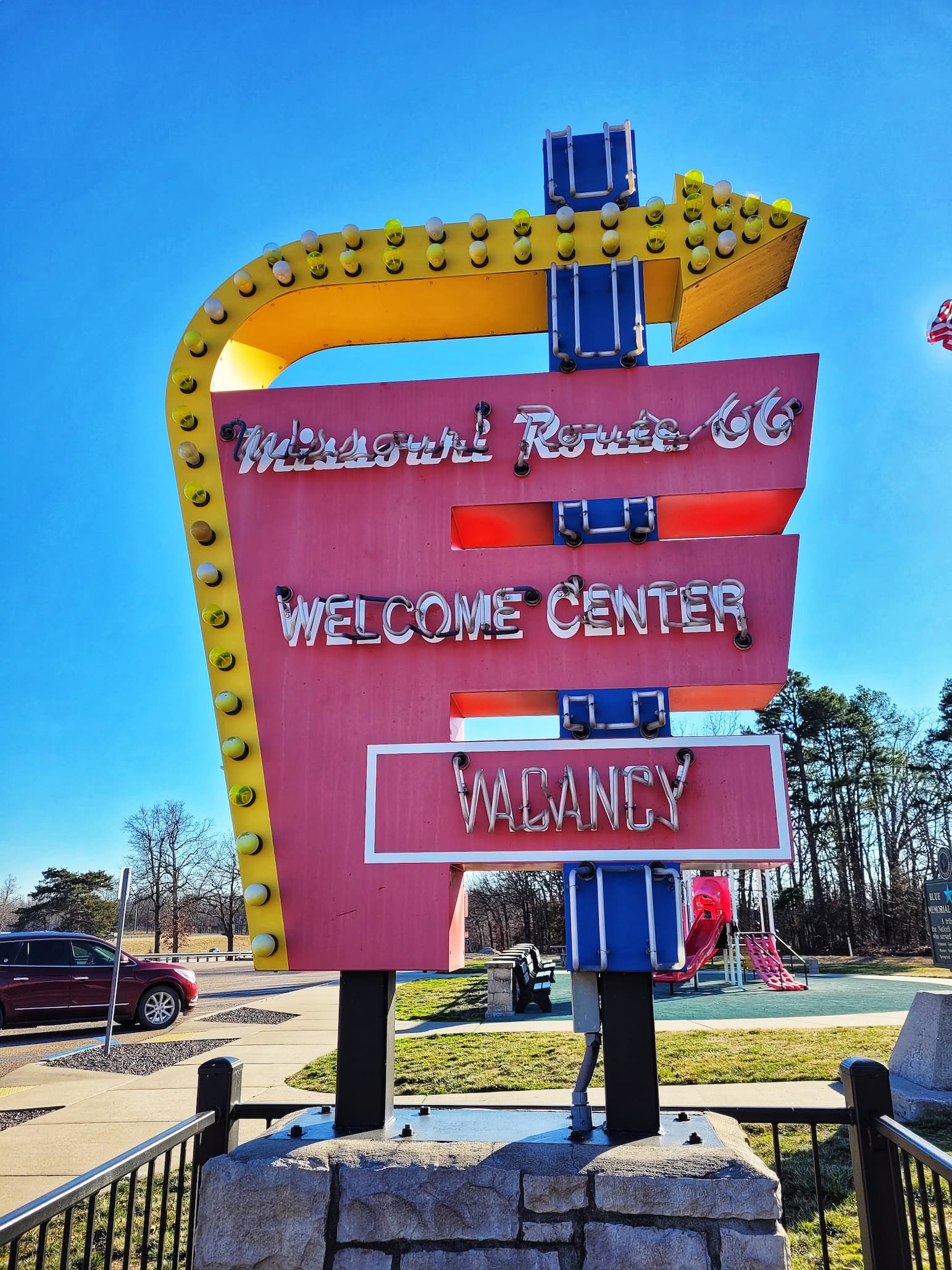
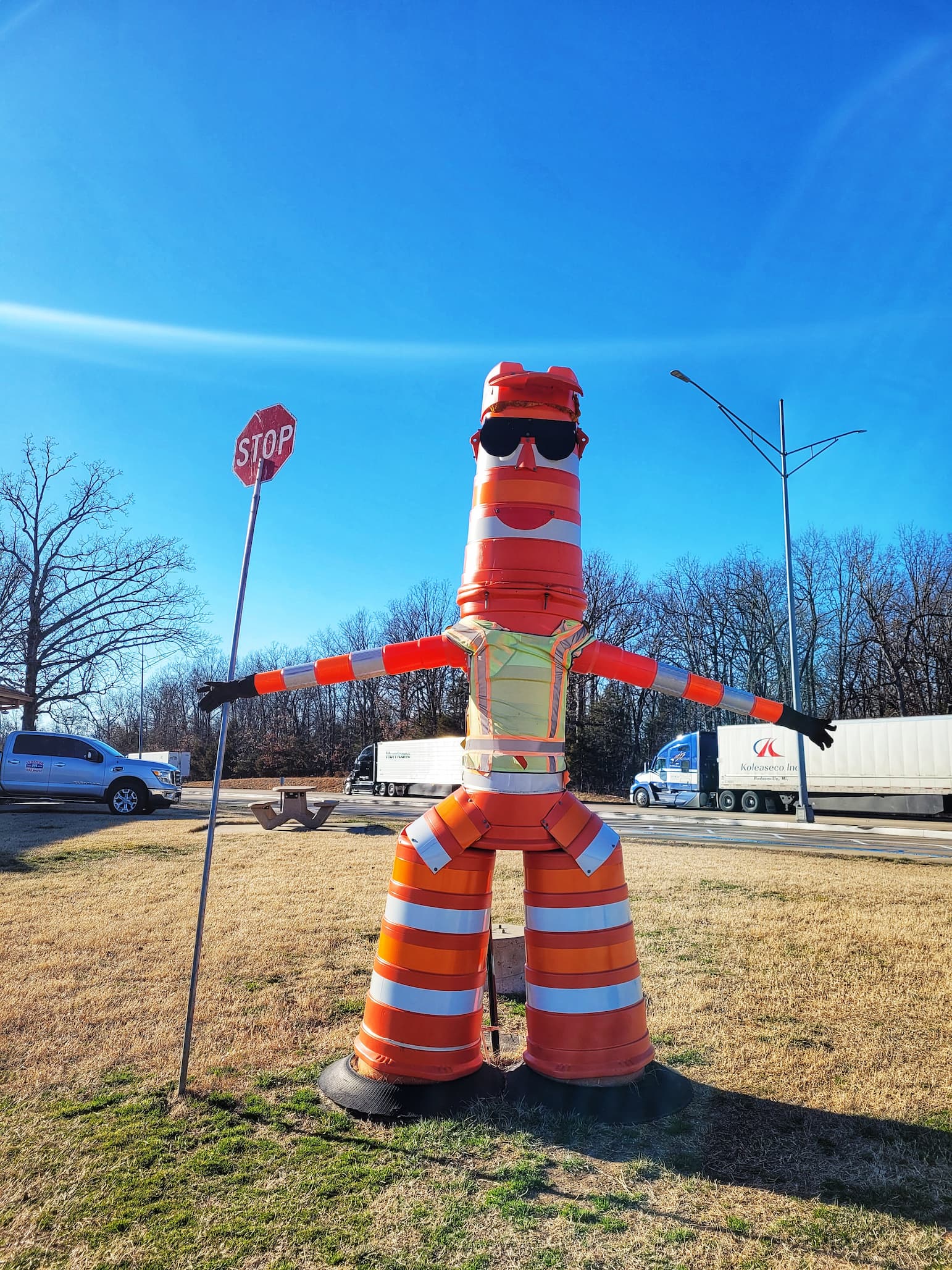
It’s a quick stop, but one that leans into the spirit of the Mother Road.
How to Visit the Conway Rest Area
Address: 110619 I-44, Conway, MO
Overnight in Springfield, And a Very Small World
We spent two nights in Springfield at American Legion Post LZ 639 through Harvest Hosts. This location offers dedicated RV parking and the option to pay for electric and water hookups, something we very much appreciated!
Josh went inside to check us in and returned with the news that once we were hooked up, we were apparently going back inside for drinks because he had already made friends.
After settling in, we joined the group for a very affordable dinner and drinks. As the conversation unfolded, we discovered that everyone at the bar was originally from Illinois. Then it got stranger.
One couple currently lives in Illinois and was visiting another couple. Their daughter lives in the town next to our home base. Her husband grew up in the same town as Josh. They went to high school together. They were in Cub Scouts together.
RV life has taught us many things, but one of the most consistent lessons is this: the world is smaller than you think.
Wrapping Up This Stretch of Route 66
From CCC craftsmanship and preserved neon signs to environmental reclamation sites and small-town museums, this section west of St. Louis offered far more depth than we expected.
It’s easy to think of Route 66 as diners and classic cars, but this stretch of Missouri tells a broader story- one shaped by railroads, industry, conservation programs, environmental challenges, and communities that continue to evolve.
And with Springfield ahead, we were only just getting started.
Route 66 Passport Stamps: Pacific, Eureka, Saint Robert, Lebanon
As Harvest Hosts affiliates, we earn commission on qualifying purchases.