The Oklahoma City National Memorial & Museum has been on our list for years, and during our week-long stay near Oklahoma City, we finally made time to visit. With workdays limiting how much we could explore, we only had one full day to really get out and experience the area, and this was the one place we knew we didn’t want to skip.
Located in downtown OKC, the memorial and museum honor the victims, survivors, and rescuers affected by the April 19, 1995 bombing of the Alfred P. Murrah Federal Building. The site includes a powerful Outdoor Symbolic Memorial, which is open 24/7, and a deeply immersive museum housed in a building that withstood the blast itself. Together, they create one of the most moving and meaningful things to do in Oklahoma City.
In this post, we’re sharing what you need to know to plan your visit, what you’ll see in each area, and our honest experience walking through both the memorial and the museum. This isn’t a light stop, but it’s an important one- and one we think belongs on any Oklahoma City itinerary, even if your time in the area is limited like ours was.
How to Visit the Oklahoma City National Memorial & Museum
This is one of those places you feel before you ever walk through the doors. We knew going in that the Oklahoma City National Memorial & Museum wouldn’t be a light visit, but it’s an important one, and incredibly well done.
The memorial itself is outdoors and open all day, every day, which makes it easy to visit even if you’re just passing through Oklahoma City.
Here’s what you need to know to plan your visit:
Location
- Address: 620 N Harvey Ave, Oklahoma City, OK 73102
- Right in downtown OKC and easy to access
- Official site:https://memorialmuseum.com/
Hours
- Museum:
- Monday–Saturday: 9am–5pm
- Sunday: 12pm–5pm
- Outdoor Memorial:
- Open 24 hours a day, 365 days a year (free to visit)
Museum Admission Prices
- Adults: $18
- Seniors: $16
- Military: $16
- Students (ages 6–17 or college): $15
- Kids 5 and under: Free
Parking
Free parking in the garage with museum admission (always a win when visiting downtown)
A Few Quick Tips
- Give yourself at least 1.5–2 hours if you plan to go through the museum, it’s powerful and very detailed
- The museum is emotionally heavy, especially the audio and survivor stories, so pace yourself
- Even if you don’t have time for the museum, the outdoor memorial alone is worth stopping for
This isn’t a “check it off the list” kind of stop. It’s a place to slow down, reflect, and remember, and one we think every American should visit at least once.
What to See at the Outdoor Symbolic Memorial
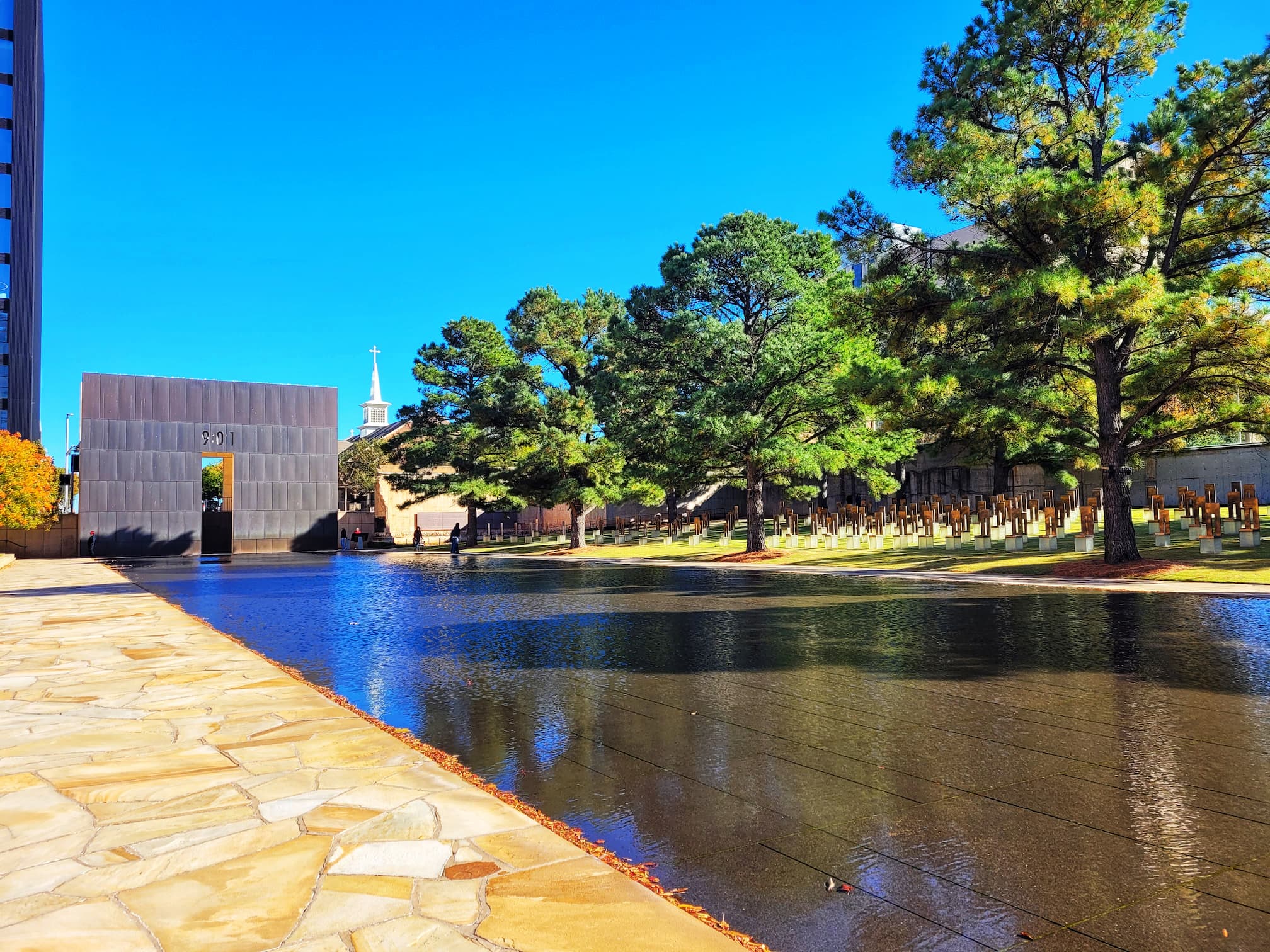
The Outdoor Symbolic Memorial is the heart of the site- quiet, powerful, and incredibly intentional. It sits on the exact footprint of where the Alfred P. Murrah Federal Building once stood, and even if you don’t step inside the museum, this alone is one of the most meaningful things to do in Oklahoma City.
What you’ll see as you move through the memorial:
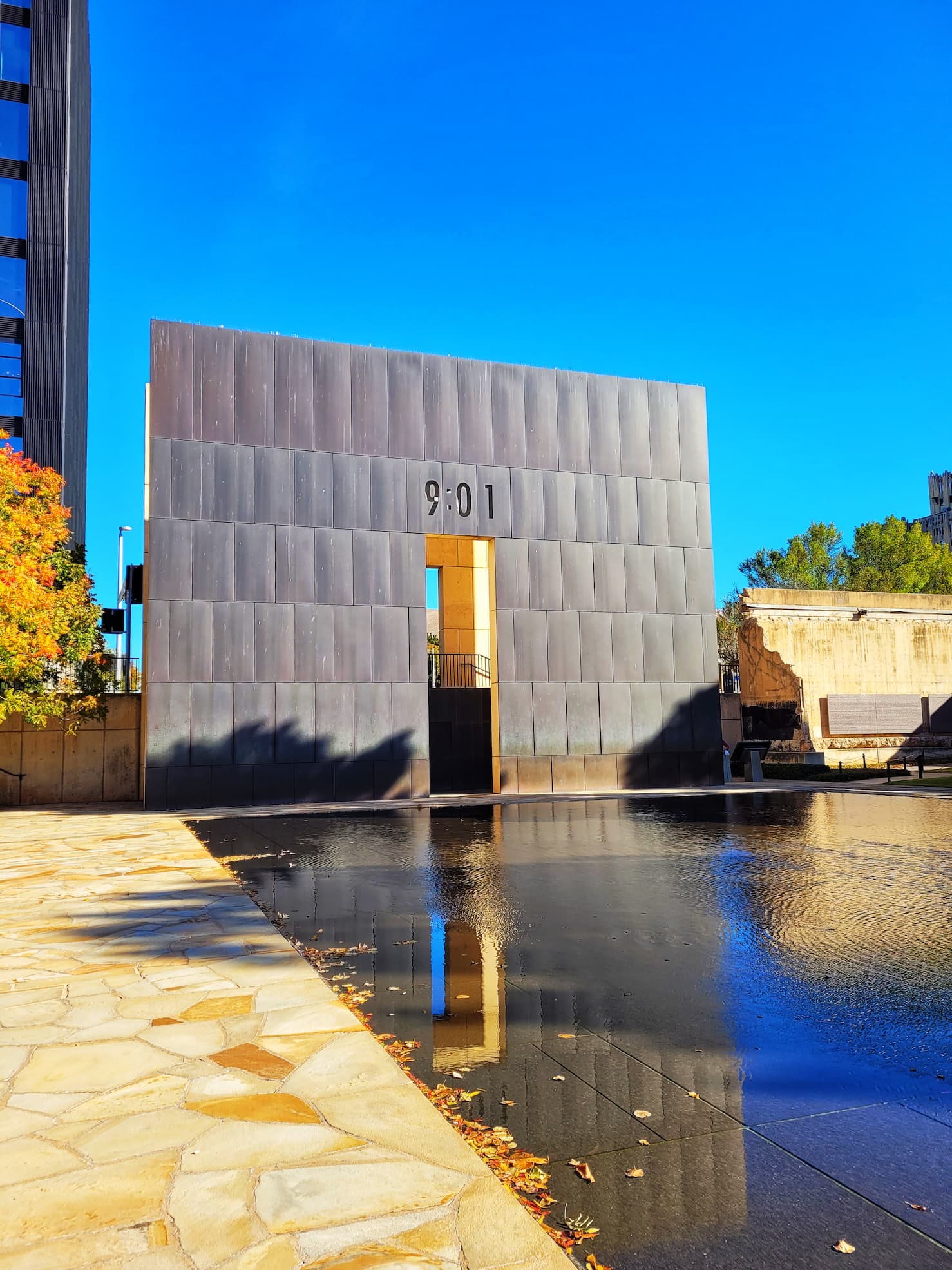
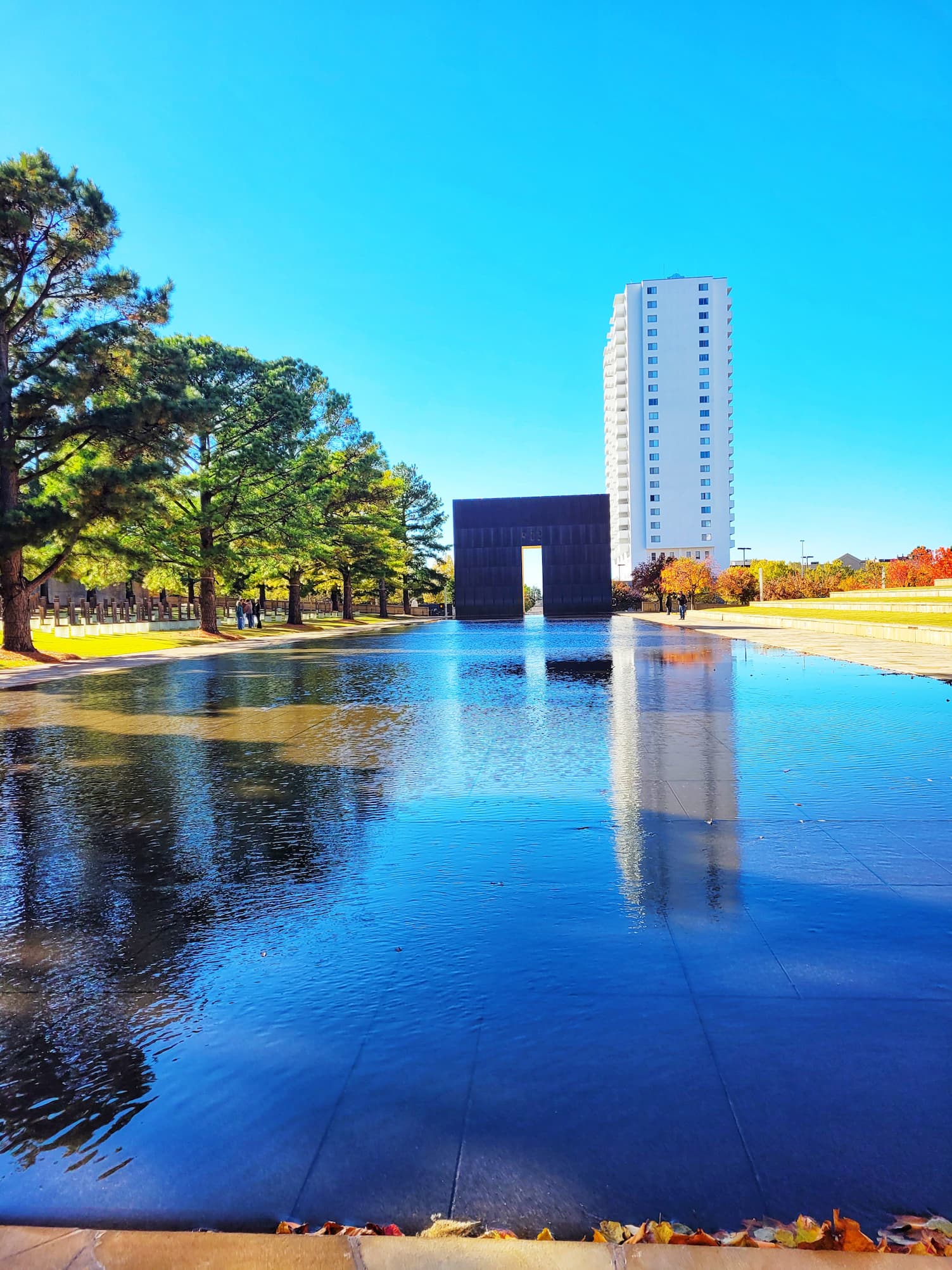
- Gates of Time: Twin gates marked 9:01am (the moment before the attack) and 9:03am (the moment after), with a reflecting pool between them representing the instant that changed Oklahoma City forever
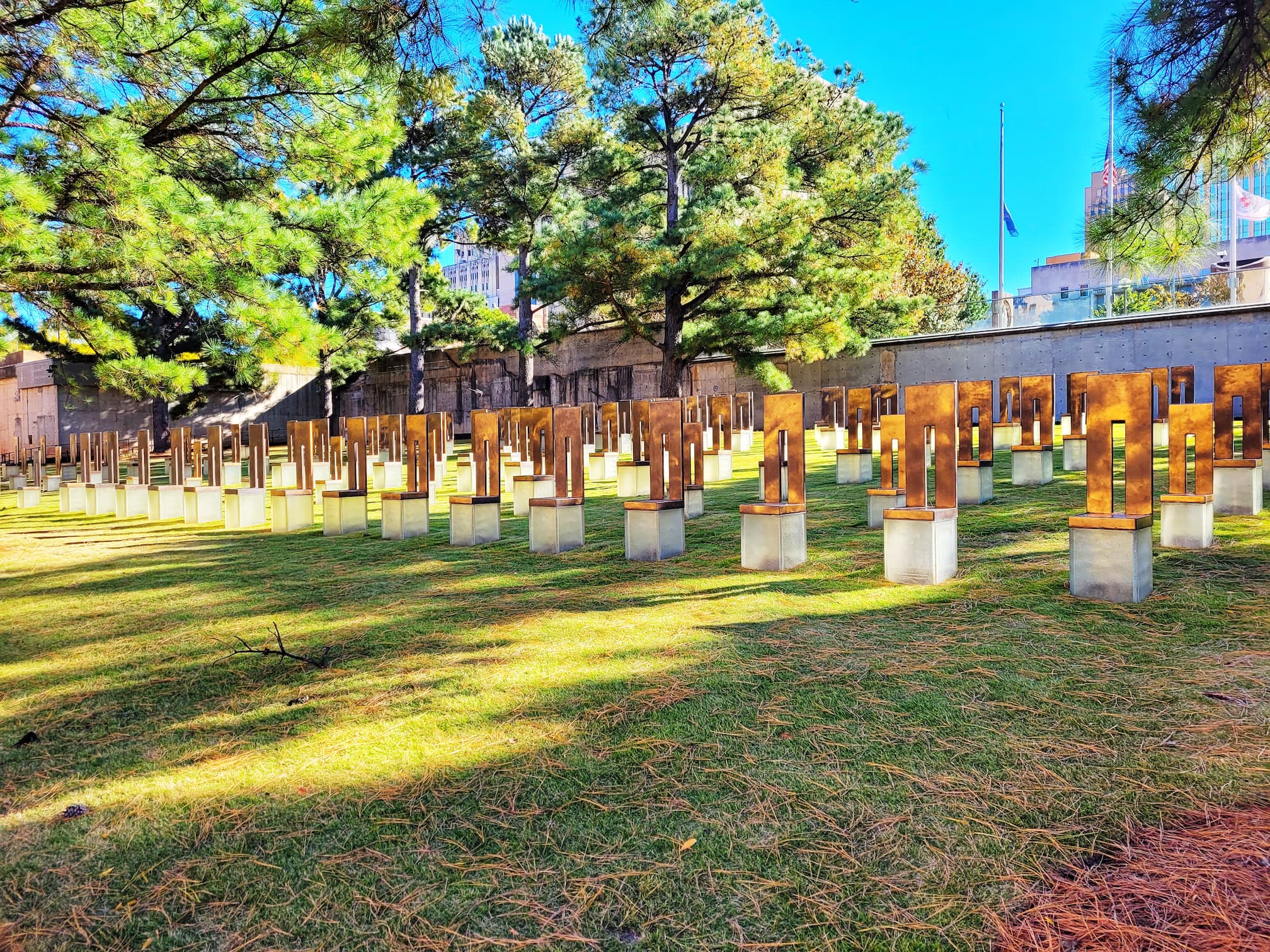
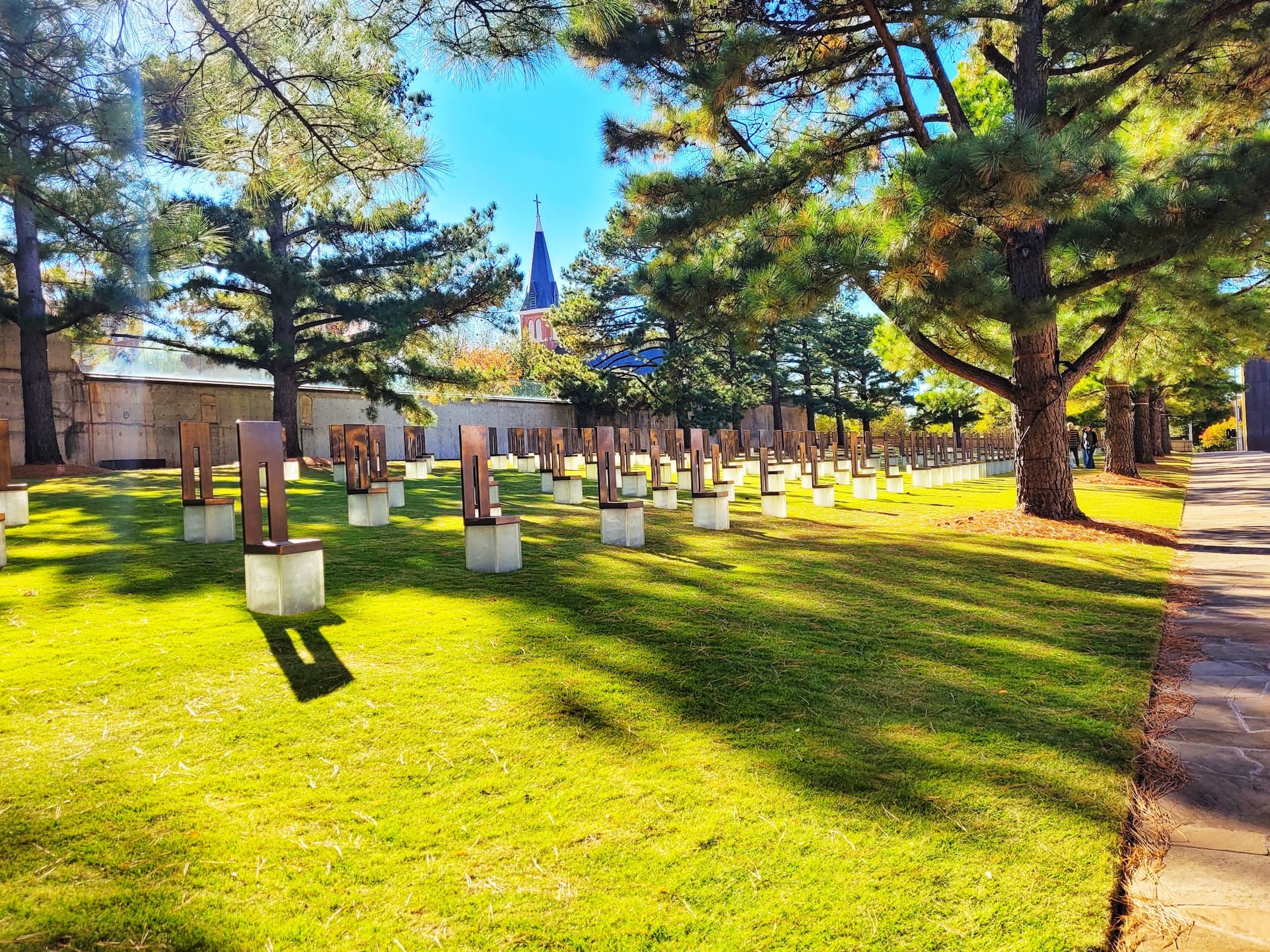
- Field of Empty Chairs: 168 glass and bronze chairs, each representing a life lost. They’re arranged by the floor of the building where each person was when they were killed, a detail that makes the scale and reality of the tragedy hit hard
- Survivors’ Wall: A remaining section of the original federal building with the names of survivors etched into the stone
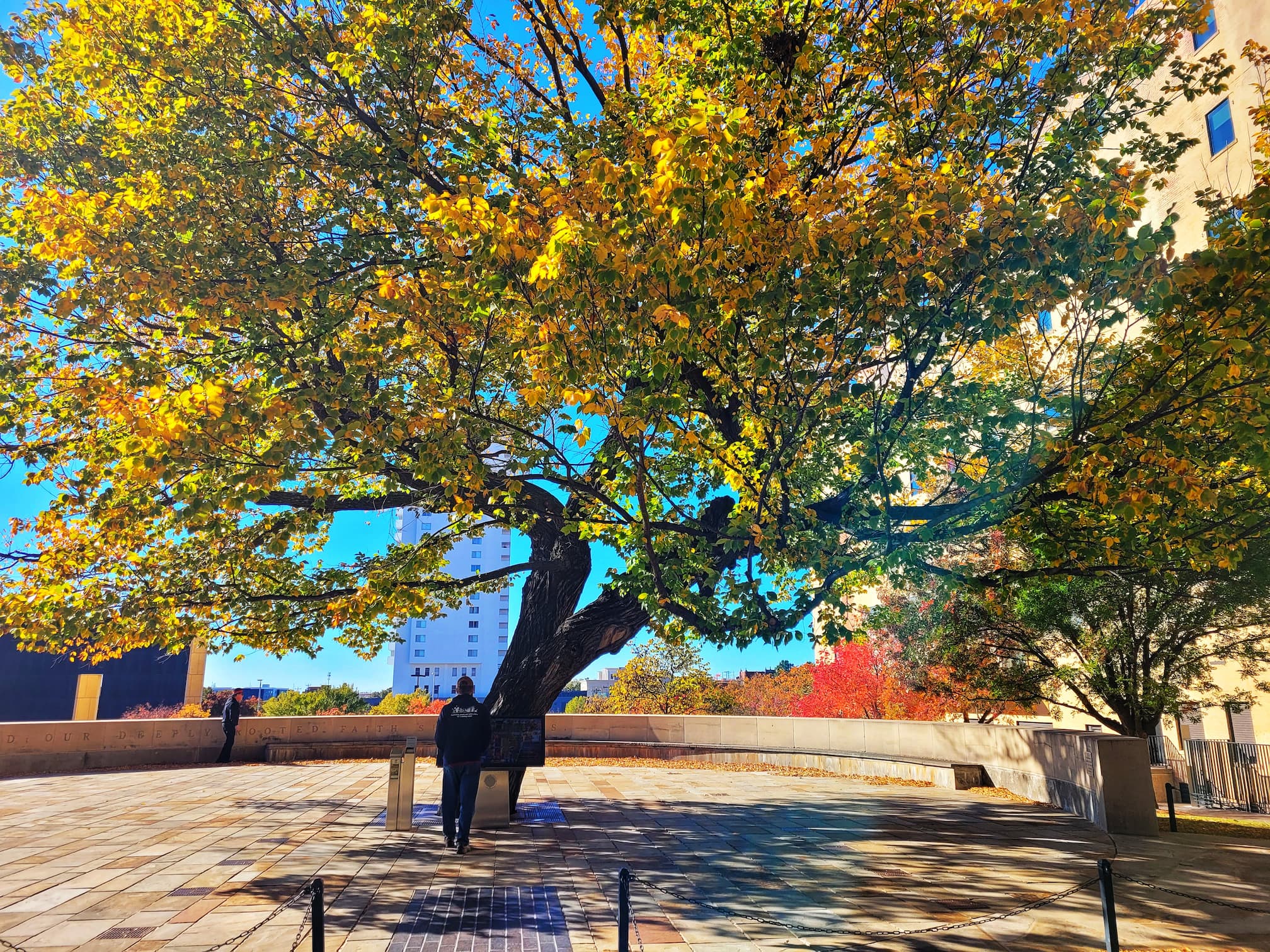
- Survivor Tree: A massive American elm that withstood the blast. It’s become a symbol of resilience and hope and is still standing strong today
- Rescuers’ Orchard: A ring of flowering trees representing the thousands of rescuers who came from near and far, surrounding the Survivor Tree
- Children’s Area: Tiles painted by children from around the world and sent to Oklahoma City in 1995, along with a chalk area where kids today can share their thoughts and feelings
- The Fence: Part of the original chain-link fence where people began leaving flowers, notes, and mementos in the days after the bombing. You can still leave tokens here; items are periodically archived to preserve them
The entire outdoor memorial is open 24/7.
What to See at the Oklahoma City National Memorial Museum
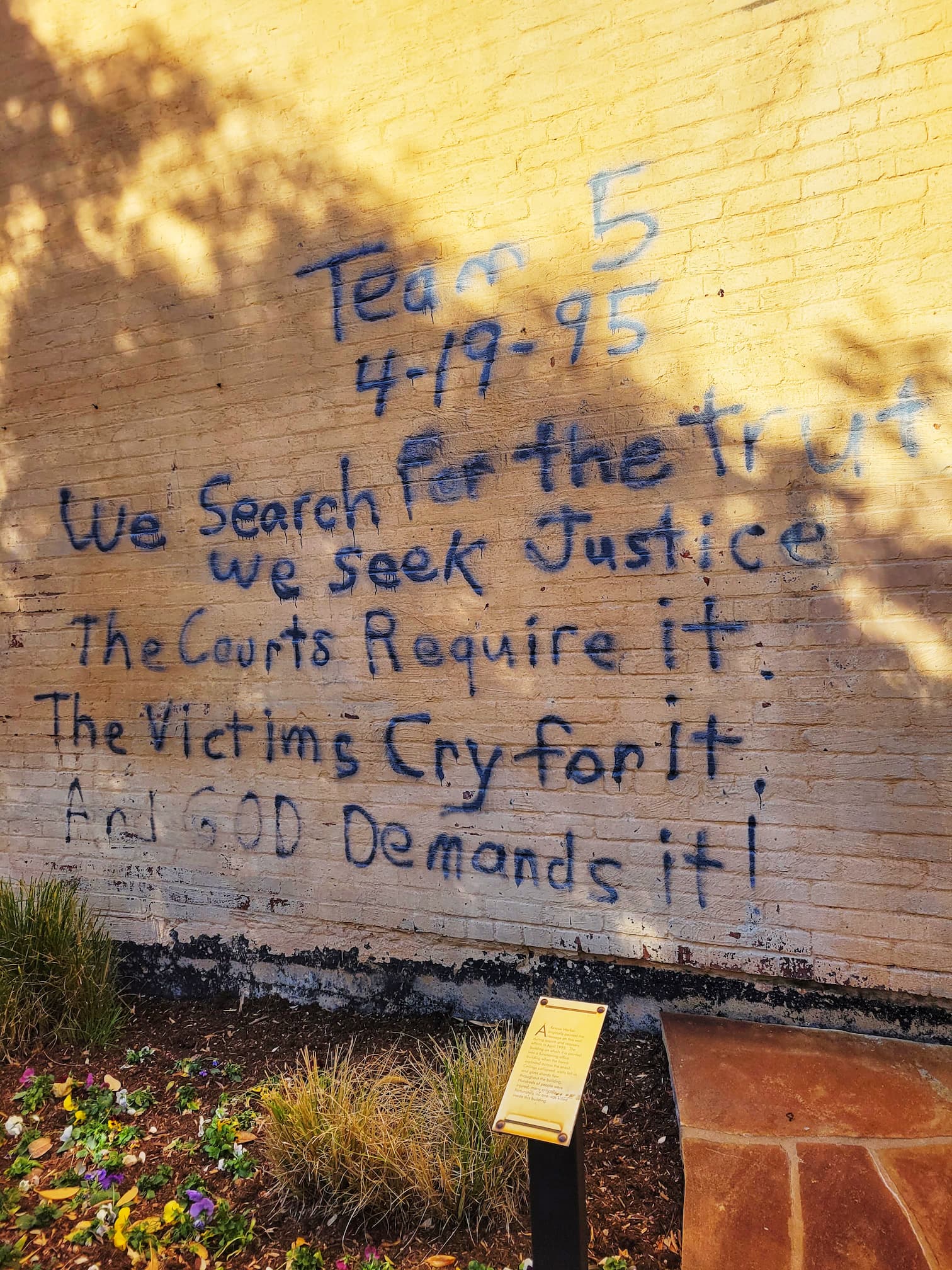
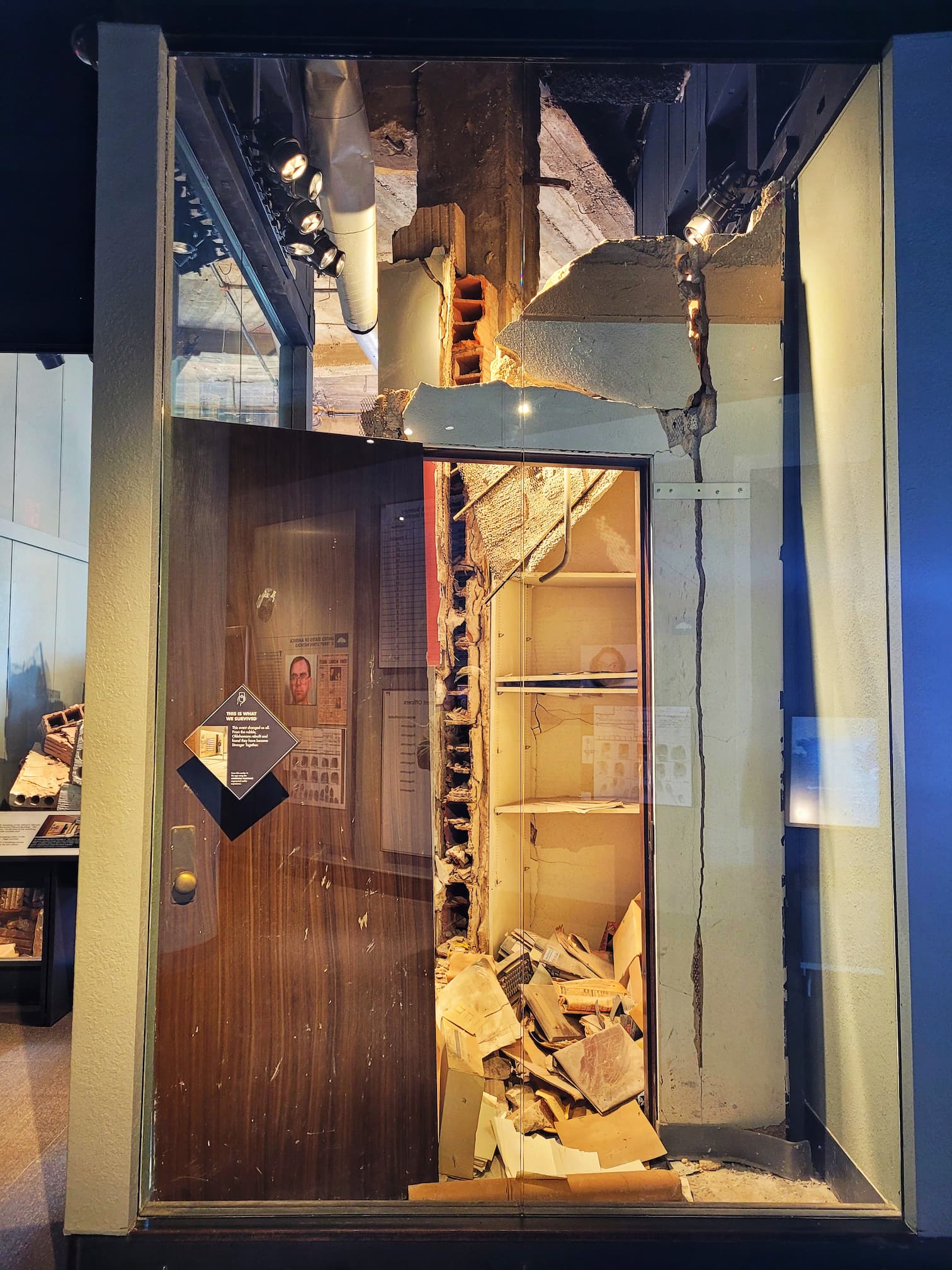
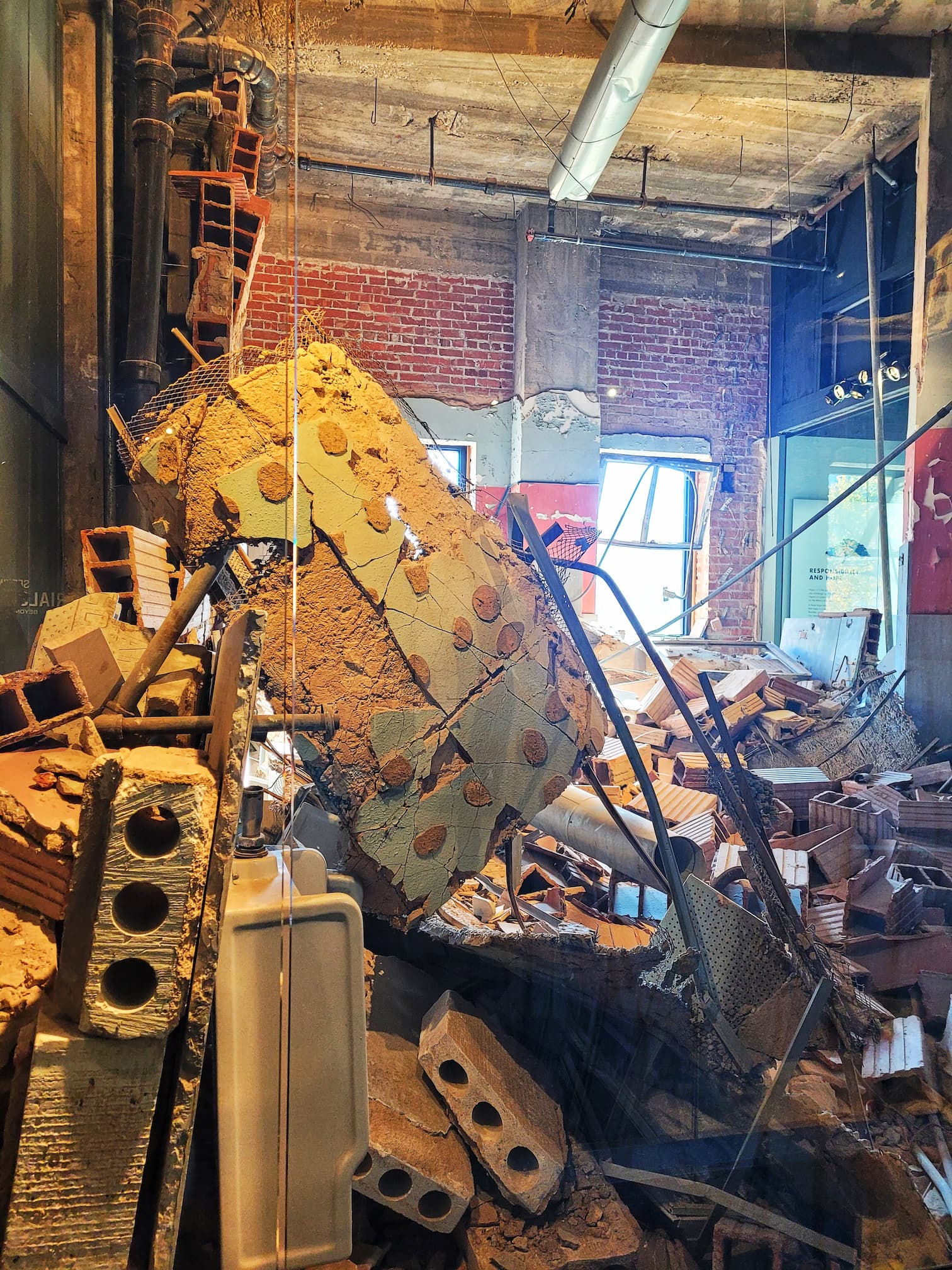
The Memorial Museum is housed in the former Journal Record Building, built in 1923, a structure that withstood the bombing itself. Parts of the damaged area have even been left as is to show the destruction that happened here.
This Oklahoma City museum is self-guided and incredibly immersive. It doesn’t rush you. It doesn’t sugarcoat anything. And it does an exceptional job of explaining not just what happened on April 19, 1995, but the ripple effects that followed.
Inside the museum, you’ll experience:
- A chronological walkthrough of the April 19, 1995 bombing of the Alfred P. Murrah Federal Building
- Audio, video, and interactive exhibits, including hundreds of hours of recorded stories
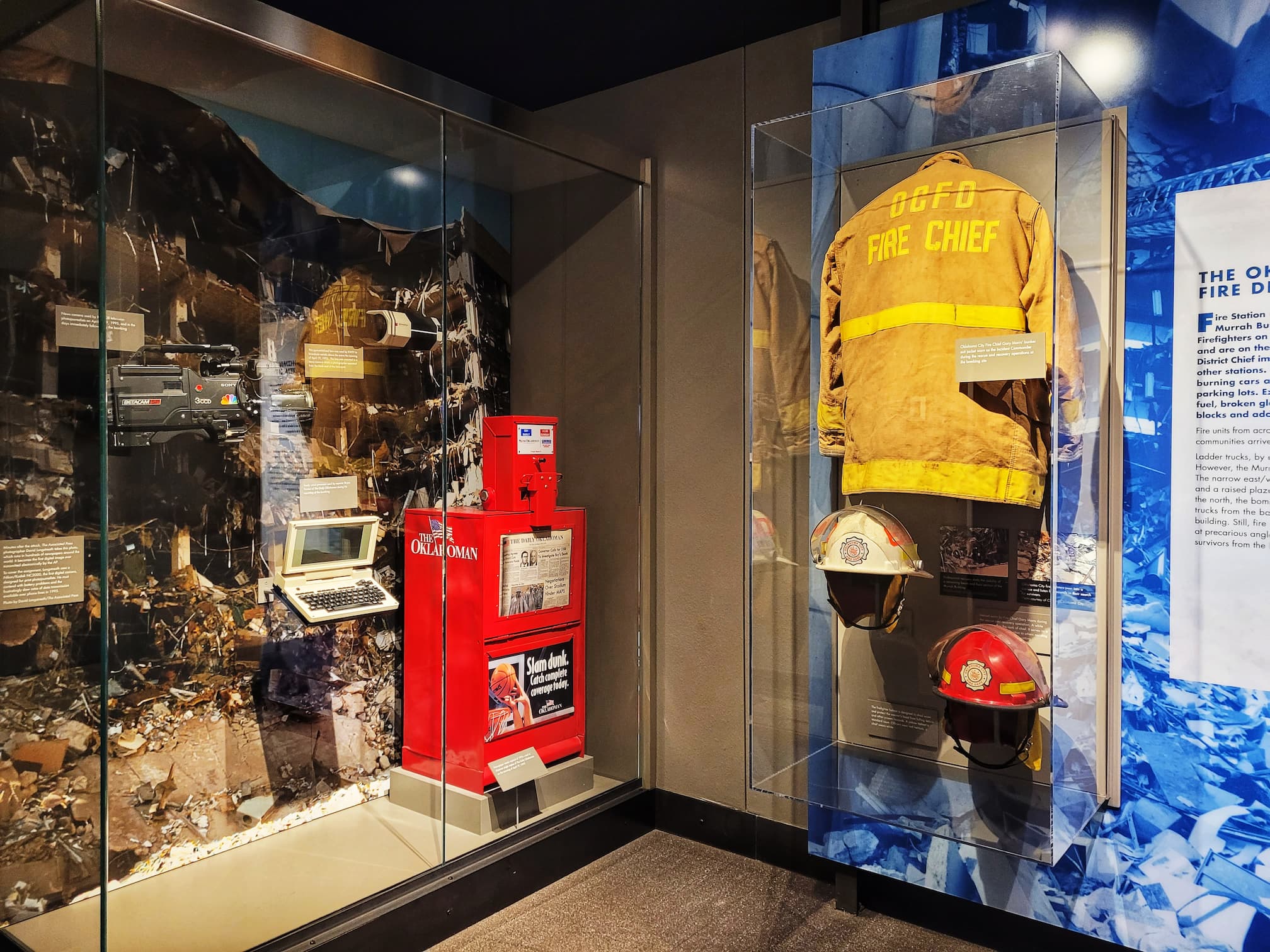
- Artifacts from the day of the bombing, rescue efforts, and investigation
- Exhibits covering the rescue and recovery, the national response, and the investigation and trial of those responsible
- An augmented reality phone app that adds extra layers of information as you move through the museum
Most visitors should plan for at least 1.5 hours, and honestly, more if you like to read and listen closely. It’s emotionally heavy, but extremely well done, one of the most impactful museums we’ve visited anywhere in the country.
If you’re looking for meaningful, educational things to do in Oklahoma City, this museum belongs at the top of the list.
The National Park Service at the Oklahoma City Memorial
The National Park Service oversees the Memorial site itself and partners with the museum. Their presence adds another layer of education and accessibility, especially for families and park lovers.
National Park Service highlights:
- The site is part of the Oklahoma City National Memorial, with NPS involvement in education and programming
- Junior Ranger Program available
- National Park Passport stamp available (just ask at the front desk)
- Ranger-led programs typically offered between the opening of the memorial and Labor Day
You can find more official information here: https://www.nps.gov/okci
Whether you’re collecting passport stamps, traveling with kids, or just appreciate ranger-led storytelling, the National Park Service presence makes this Oklahoma City attraction even more meaningful.
Our Experience & Review of the Oklahoma City National Memorial & Museum
I’ve wanted to visit the Oklahoma City National Memorial for years, so I’m really glad we finally made it happen. Still, walking in, I wasn’t totally sure what to expect, especially from the museum. From photos alone, it’s hard to grasp the scale, and I honestly assumed it would be fairly small and something we’d breeze through.
That was… very wrong.
We parked in the nearby parking garage (free with validated museum admission, which was a nice surprise) and headed inside. The museum begins with a short video introduction narrated by Kristin Chenoweth, which sets the tone without being overwhelming.
The first room is mostly text-based exhibits, and I remember thinking, okay, this might be a lot of reading. But that assumption didn’t last long.
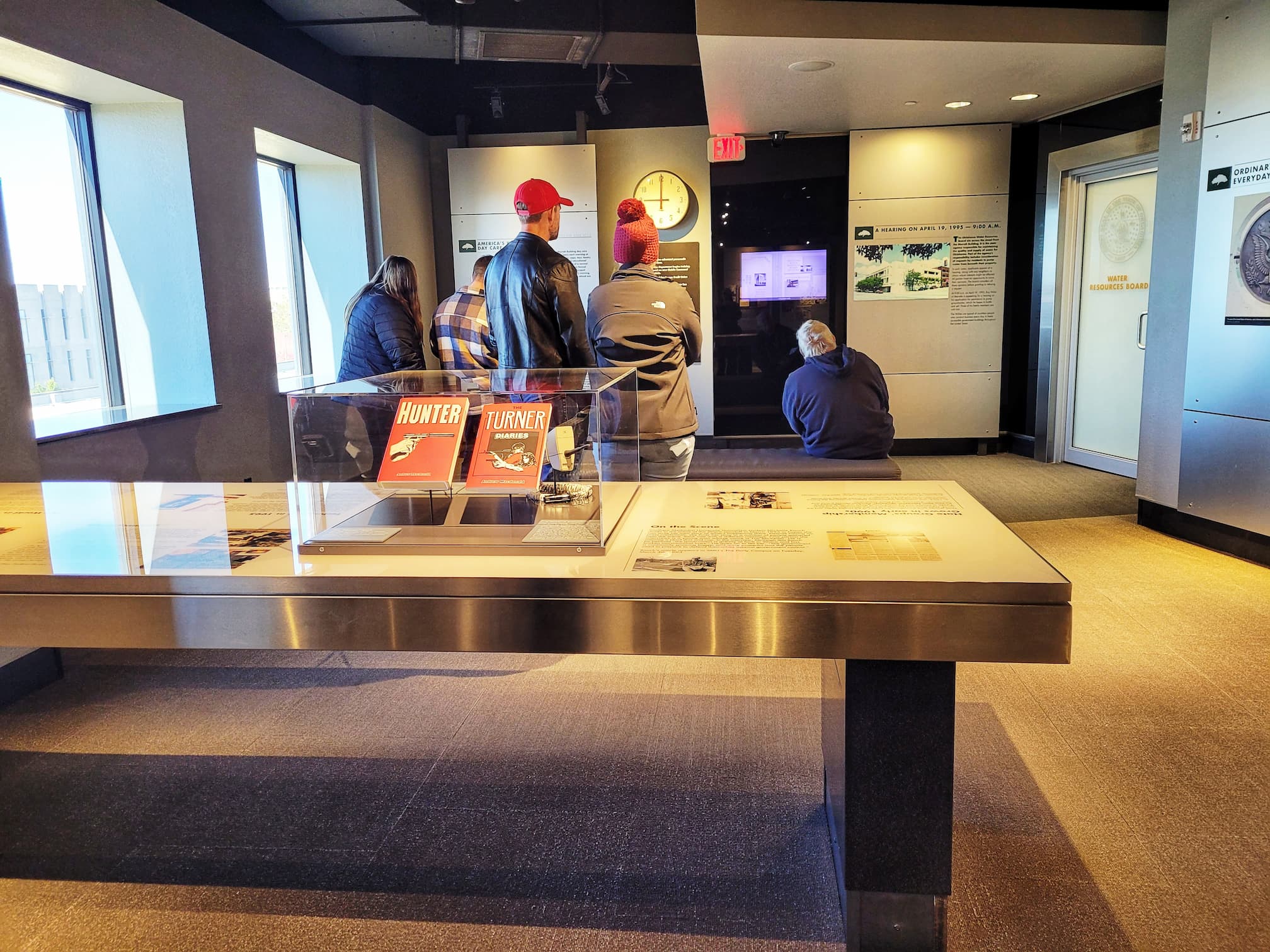
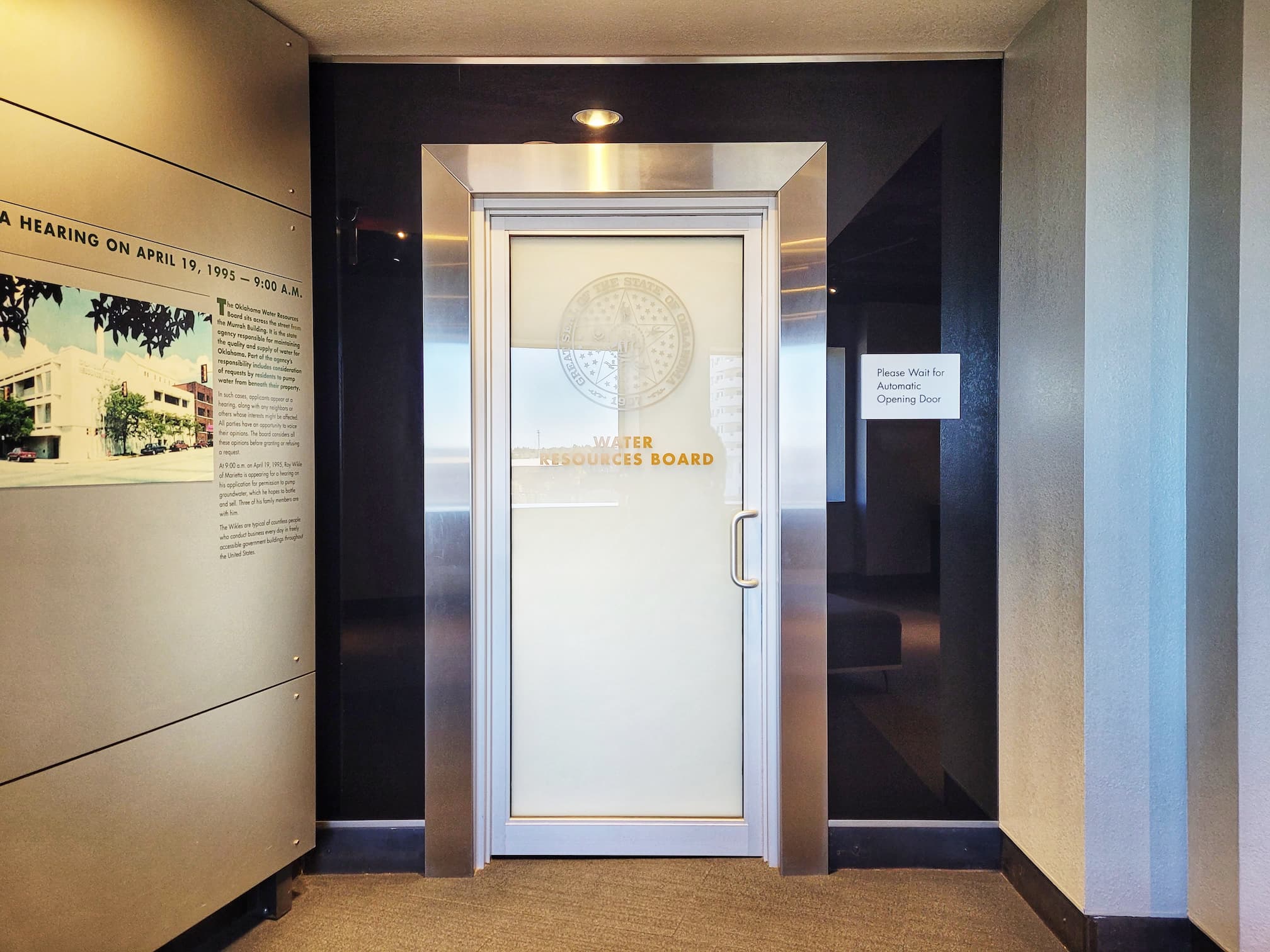
To leave that first room, you watch a video featuring people who were attending meetings in the Murrah Building that morning. They talk about completely ordinary plans, the kind of normal, forgettable details you don’t think twice about, and then the doors open into the next space.
The second room is set up like a conference room. You sit down and listen to the actual recording from a water rights meeting that was happening that morning. It starts out so normal. Casual. Almost boring. And then, without warning, there’s the explosion. When the doors to the next room opened, it felt like crossing into chaos.
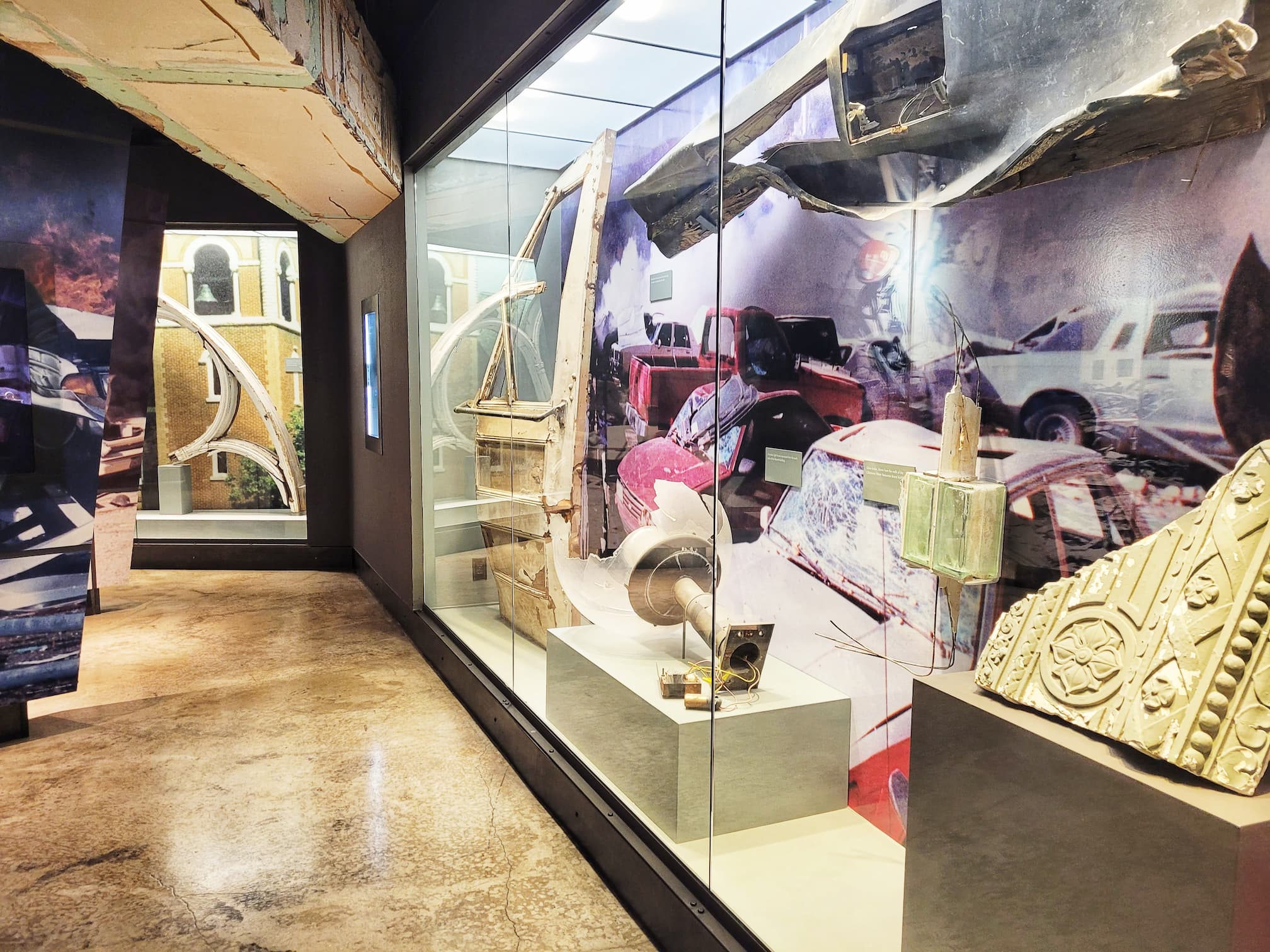
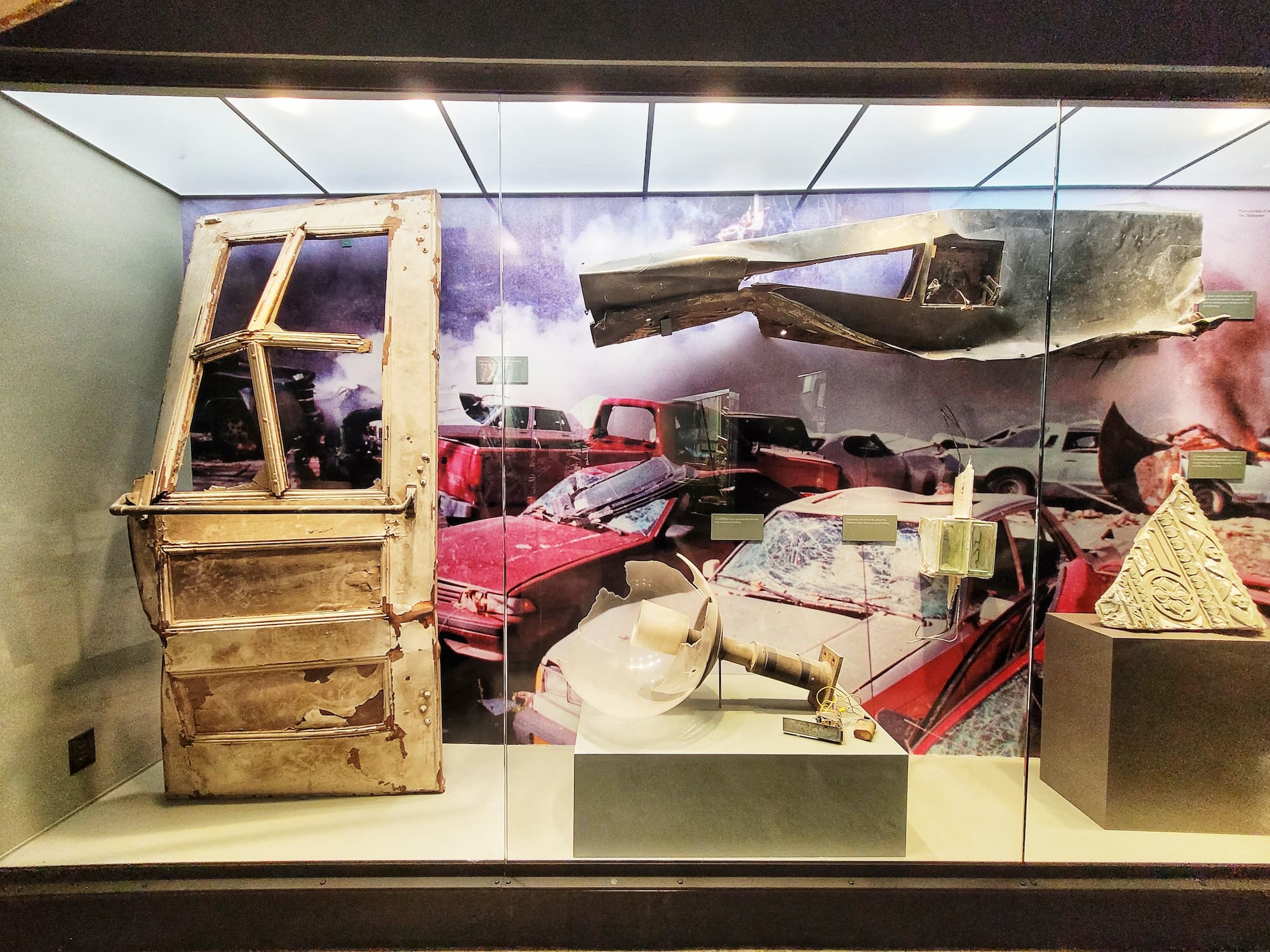
That third room is loud- sirens, shouting, overlapping noise. News footage plays on screens, and display cases hold real debris from the building. That progression through the first few rooms was incredibly immersive and powerful. It genuinely puts you in the shoes of the people who were there that day, and it hits hard.
From there, the museum opens up and you move at your own pace. We spent far more time than we expected.
Throughout the rest of this Oklahoma City museum, there are:
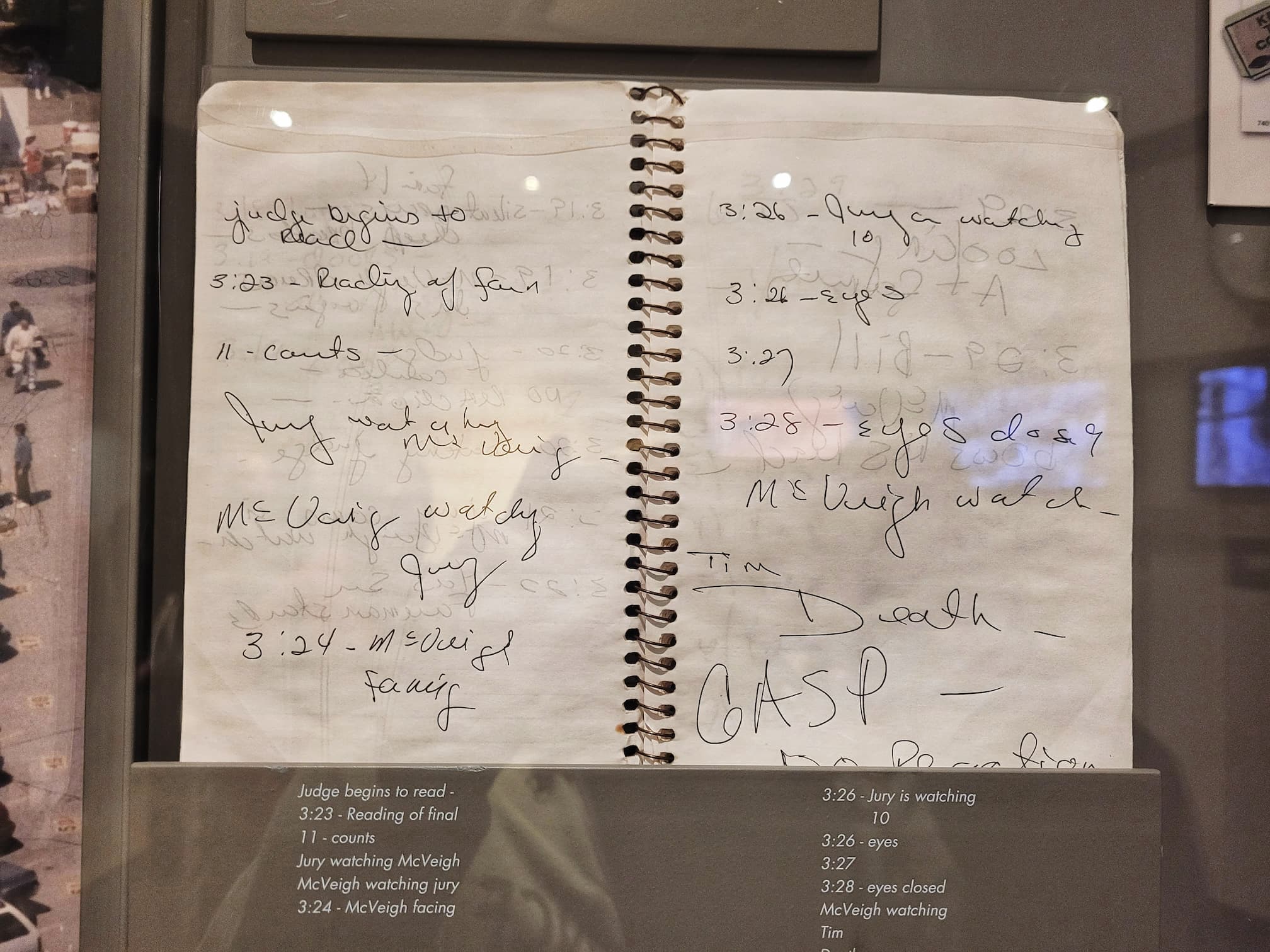
- Artifacts recovered from the building and individual offices
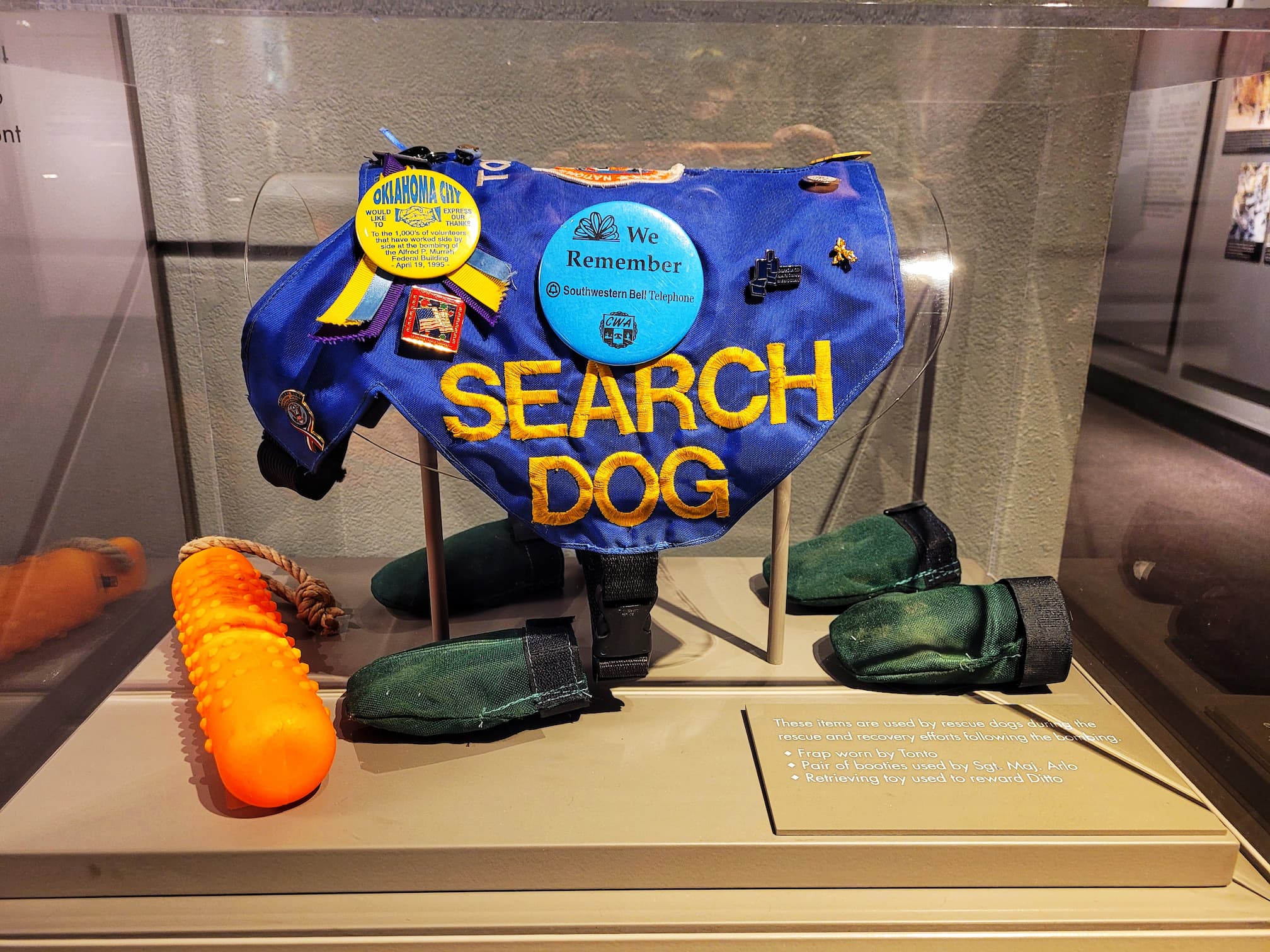
- Items related to police, fire, and rescue efforts
- Continuous news footage playing on screens
- Exhibits covering the criminal investigation, court case, and aftermath
The overall mood inside is very somber. People were quiet, mostly whispers, the occasional sniffle, and it felt like everyone was moving slowly and intentionally. Because of that, I wouldn’t recommend bringing young kids through the museum unless they’re very well behaved and able to be quiet. Everyone there when we visited was very somber.
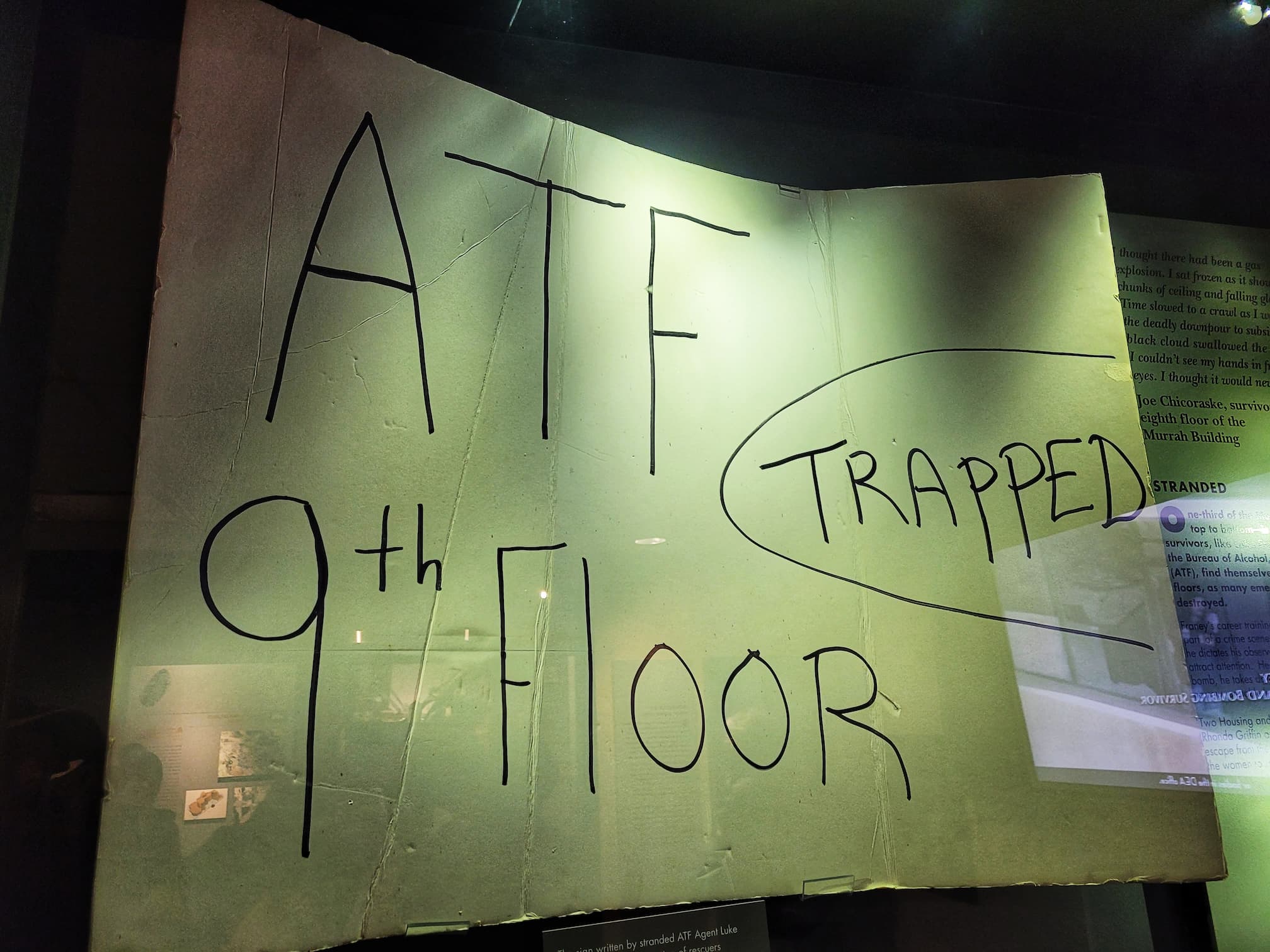
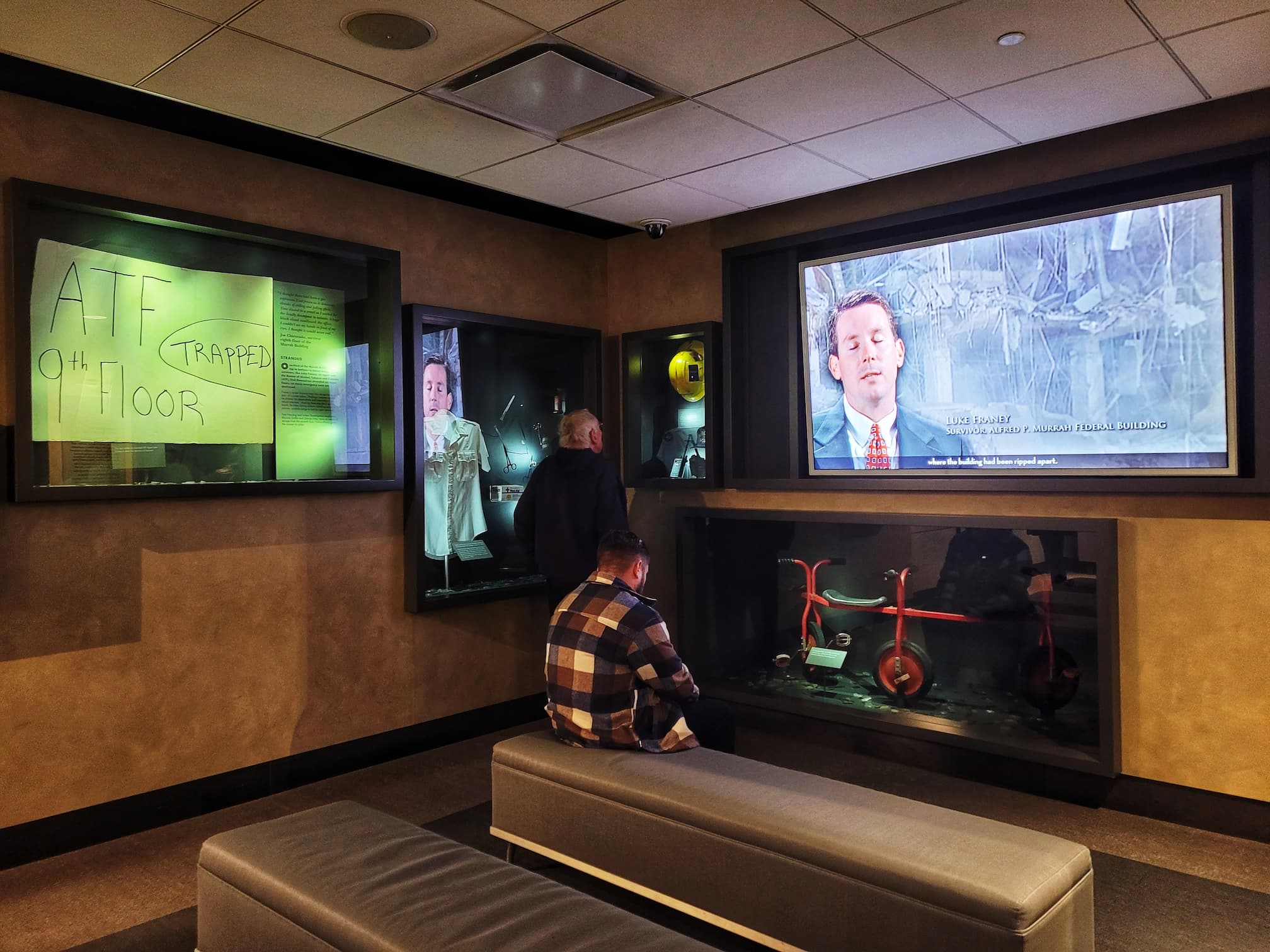
What really stood out to me was how surreal it felt to walk through a museum dedicated to something that happened in our lifetime, something we (vaguely) remember watching unfold on the news. We visit a lot of museums, but most of the time they’re centered on events that feel distant and historical. This didn’t feel like history at all. It also felt different because of the sheer amount of news footage. So many museums cover eras before this level of technology existed, but here there’s an overwhelming amount of real video, real audio, and real-time reporting. It makes everything feel immediate in a way that’s hard to shake.
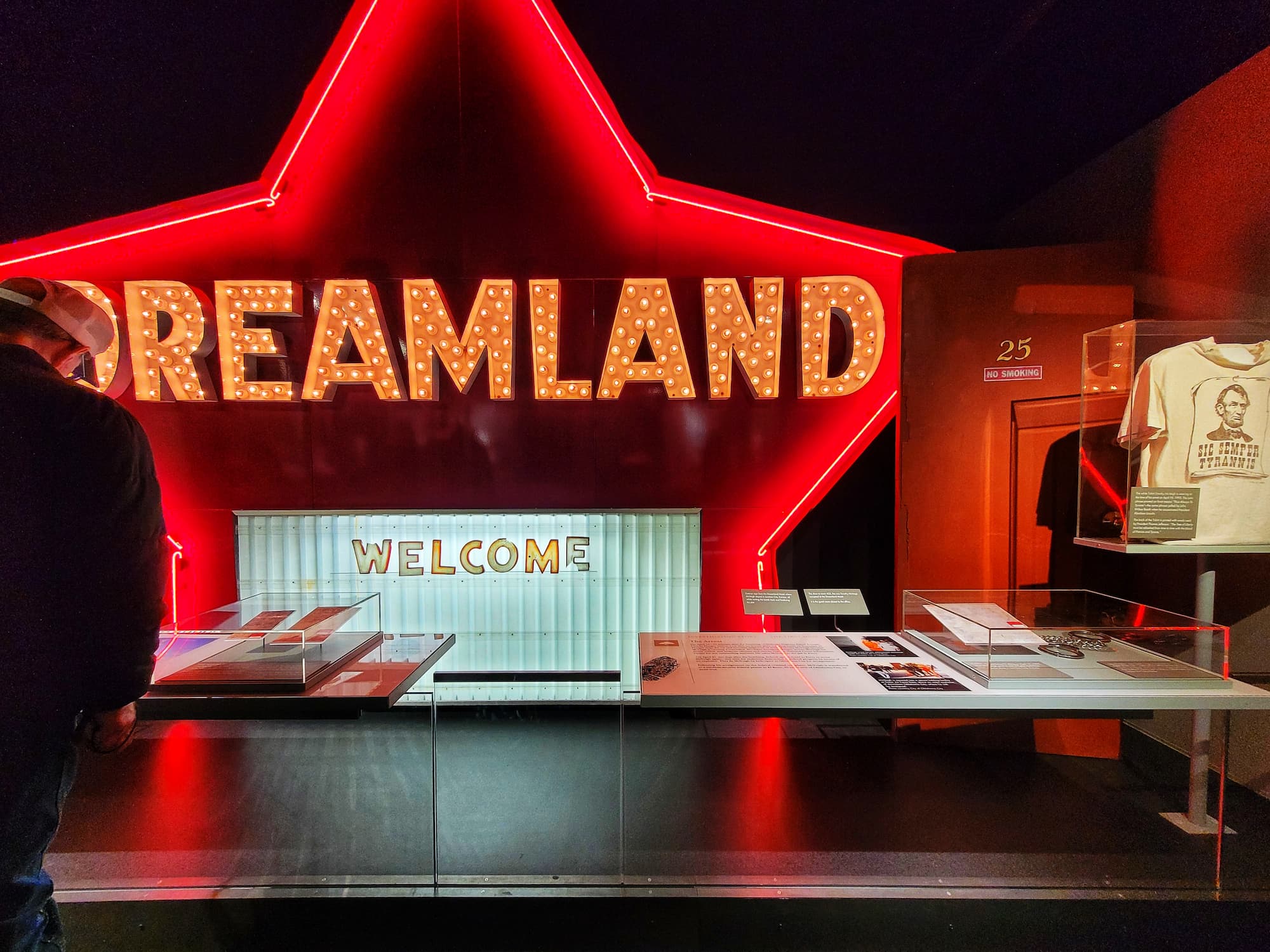
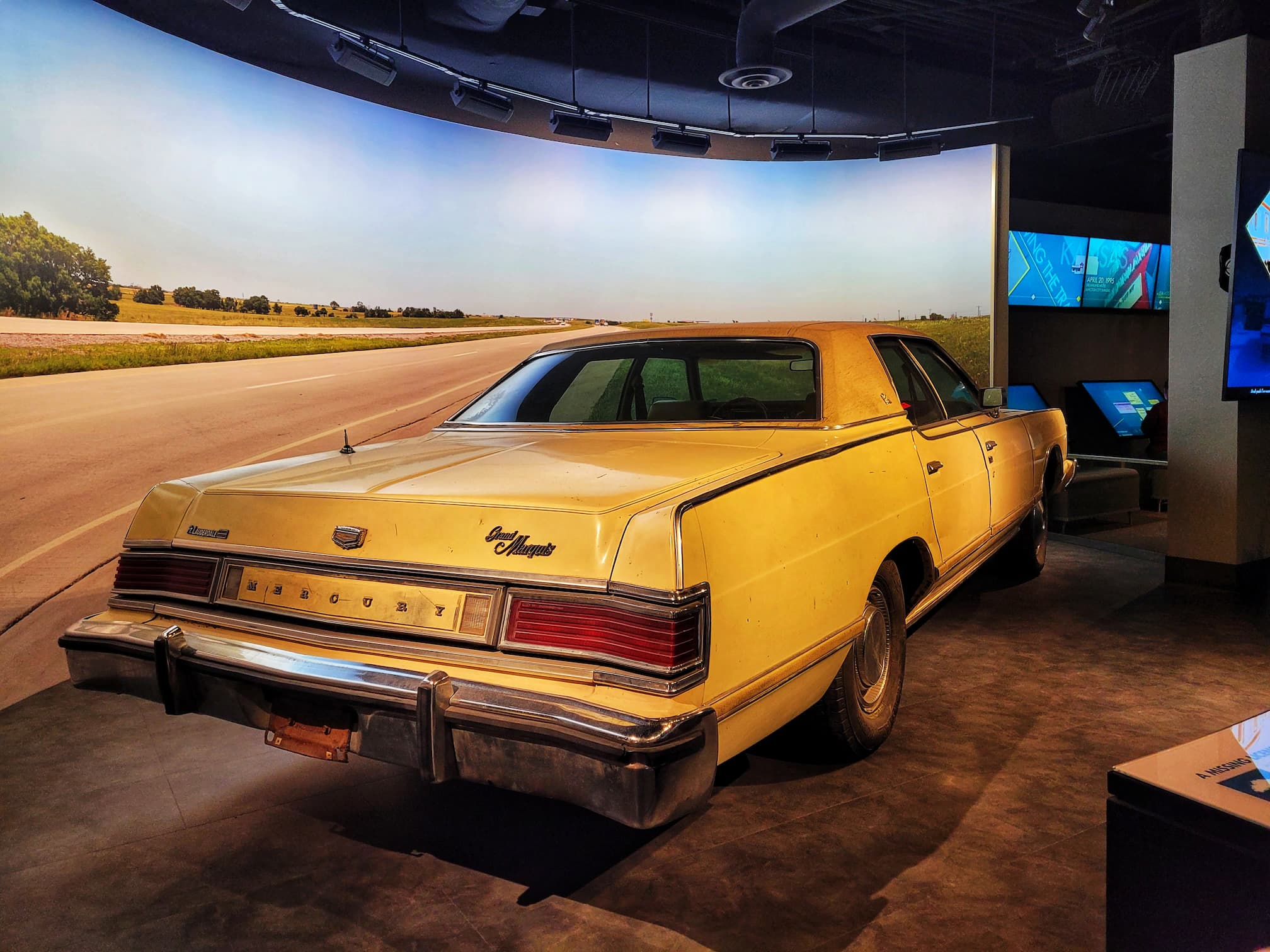
After finishing the museum, we spent time walking through the Outdoor Symbolic Memorial, which is beautifully and thoughtfully done. If you’re short on time in Oklahoma City and have to choose, at the very least, make time for the memorial itself. But if you can do both, the museum adds so much context and depth to the experience.
This is one of those places that stays with you long after you leave, and one we’re really glad we didn’t skip.
A Brief Overview of the Oklahoma City Bombing
On the morning of April 19, 1995, an American extremist carried out a bombing that would forever change Oklahoma City, and the country. A rented truck packed with an improvised bomb was parked in front of the Alfred P. Murrah Federal Building, and at 9:02 a.m., it exploded. In seconds, a large portion of the building collapsed, nearby cars were destroyed, and hundreds of surrounding structures were damaged.
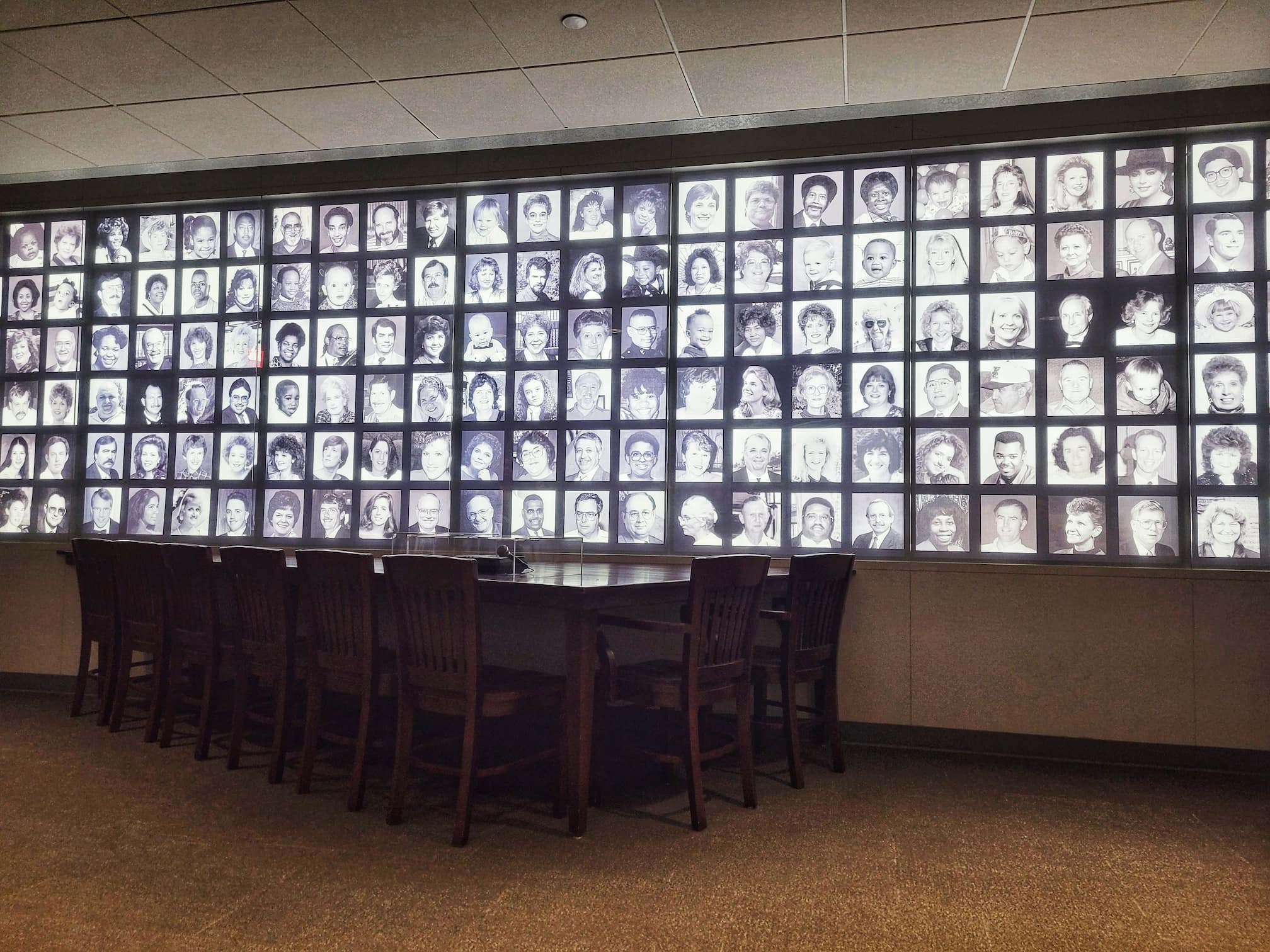
The human impact was devastating. 168 people were killed, including 19 children, and hundreds more were injured. At the time, it was the deadliest act of domestic terrorism in U.S. history. In the immediate aftermath, many assumed the attack had been carried out by foreign terrorists, especially given the recent World Trade Center bombing just two years earlier.
The investigation moved quickly. Evidence from the blast led authorities to the man responsible, who, remarkably, had already been arrested during a routine traffic stop less than two hours after the explosion. From there, investigators uncovered a network of planning, extremist motivations, and additional accomplices. What followed became one of the largest and most exhaustive investigations in FBI history. Standing at the memorial today, it’s impossible not to feel the weight of that day, and the reminder of how ordinary moments can be shattered in an instant.