There’s a stretch of Lake Michigan shoreline where time feels like it folds in on itself, where five futuristic houses from the 1933 Chicago World’s Fair now sit perched above the dunes like colorful postcards from the past. These Century of Progress homes, once built as showpieces to preview the “future of American living,” now reside inside Indiana Dunes National Park, restored and lived in nearly a century later. In this post, I’m sharing everything we learned on our tour: how the houses traveled from Chicago to tiny Beverly Shores, the history behind each one, and what it’s really like to step inside them today. I’ll walk through the stories of the homes, the town that adopted them, the national park that protects them, and how you can snag tickets for this once-a-year, blink-and-you’ll-miss-it experience.
An Unlikely Lakeshore Story
To really appreciate the Century of Progress homes, you have to zoom out- not just into the 1930s World’s Fair, but to the little town and the huge national park that ended up becoming their unlikely guardians.
From Chicago’s “Century of Progress” to Lake Michigan’s Shore
The name Century of Progress comes straight from the 1933–34 Chicago World’s Fair, where more than 39 million people flocked to see how science, technology, and bold ideas could shape everyday life. The fairgrounds were filled with futuristic visions, but very few of the buildings survived once the show ended.
Five did.
The Florida Tropical, Rostone, Armco–Ferro, Cypress Log Cabin, and House of Tomorrow were packed up, literally, and shipped to Indiana. Four crossed Lake Michigan by barge, Cypress came by truck, and they landed in the tiny lakeshore town of Beverly Shores. Today, all five are protected inside Indiana Dunes National Park.
But their story wasn’t smooth sailing after that. For decades, the houses deteriorated in the wind, salt spray, and freeze-thaw cycles off the lake. By the time the National Park Service took stewardship, they were in rough shape.
Enter Indiana Landmarks, with a creative solution: They lease the homes from the Park Service, then sublease them to tenants who agree, at their own expense, to fully restore and maintain them. It’s an unusual arrangement, but it’s the reason these rare architectural time capsules still stand today.
Beverly Shores: A Dreamy Lake Town With Big Plans
Before its colorful row of World’s Fair architecture, Beverly Shores was already shaping up to be a resort destination.
At the turn of the century, the Chicago, Lake Shore, and South Bend Railway made it easy for Chicagoans to escape to Lake Michigan’s dunes for the weekend. Developers saw opportunity, and in the 1920s, the Frederick H. Bartlett Company bought over 3,600 acres to build a huge planned community. But then came the Great Depression, and many of those homes were never built.
Ownership shifted, the town was renamed, and slowly, piece by piece, the community took form. In an effort to attract attention, Robert Bartlett purchased 16 structures from the Chicago World’s Fair to relocate to Beverly Shores. Besides the five modernist houses preserved today, another ten Colonial Village buildings once stood here, though none remain.
Beverly Shores incorporated in 1947, and in the decades that followed, it became a tight-knit place squeezed between dunes, lake, and rising interest in conservation. A 1970s push to make the entire town part of the National Lakeshore didn’t succeed, but many private properties were acquired, limiting further sprawl.
Then, in the late 1990s and early 2000s, came a wave of new construction, and a lot of very large lakefront homes. The town today is a mix of original charm, architectural oddballs, and modern dream houses, all perched along one beautiful stretch of shoreline.
Indiana Dunes National Park: Where Science Meets Sand
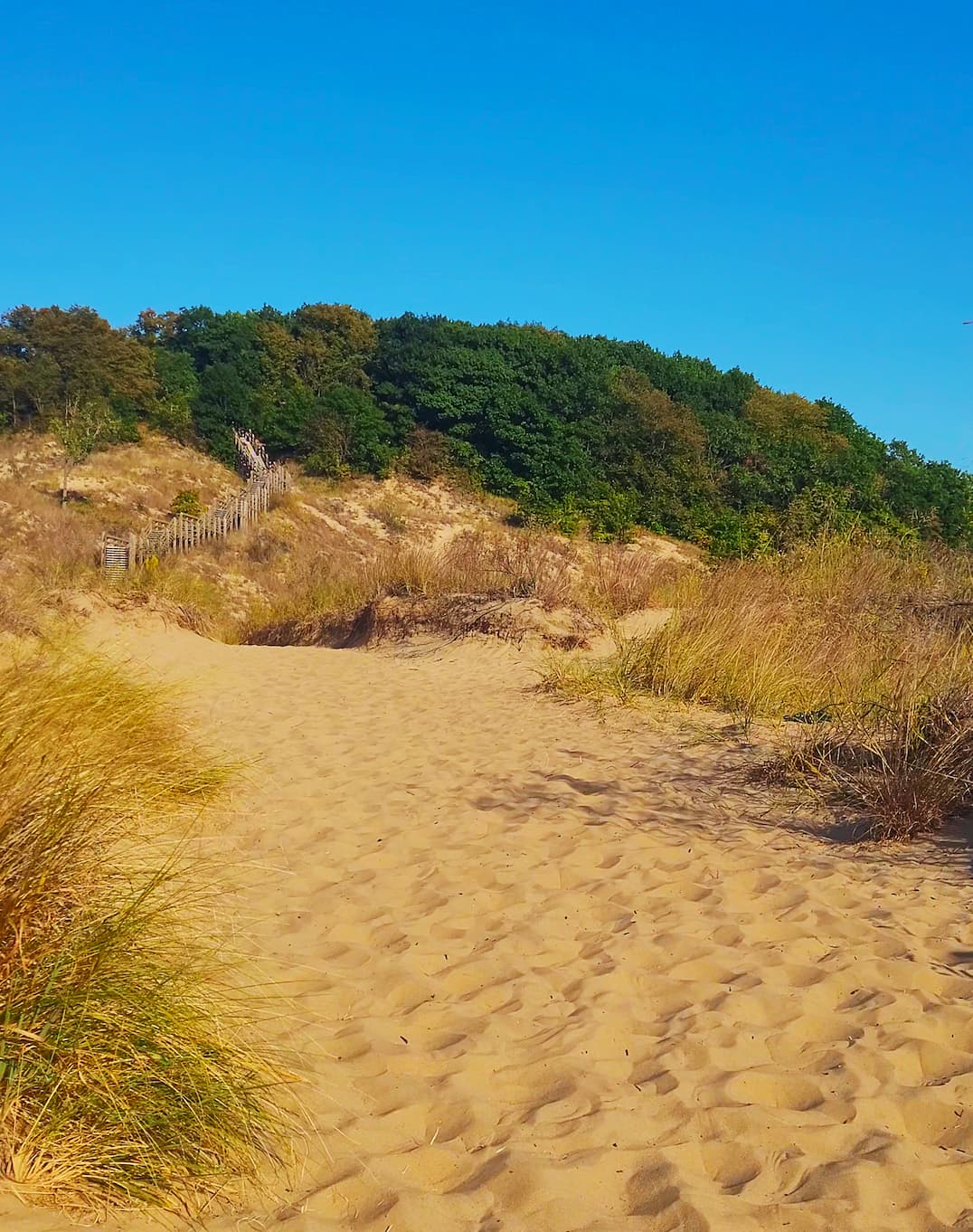
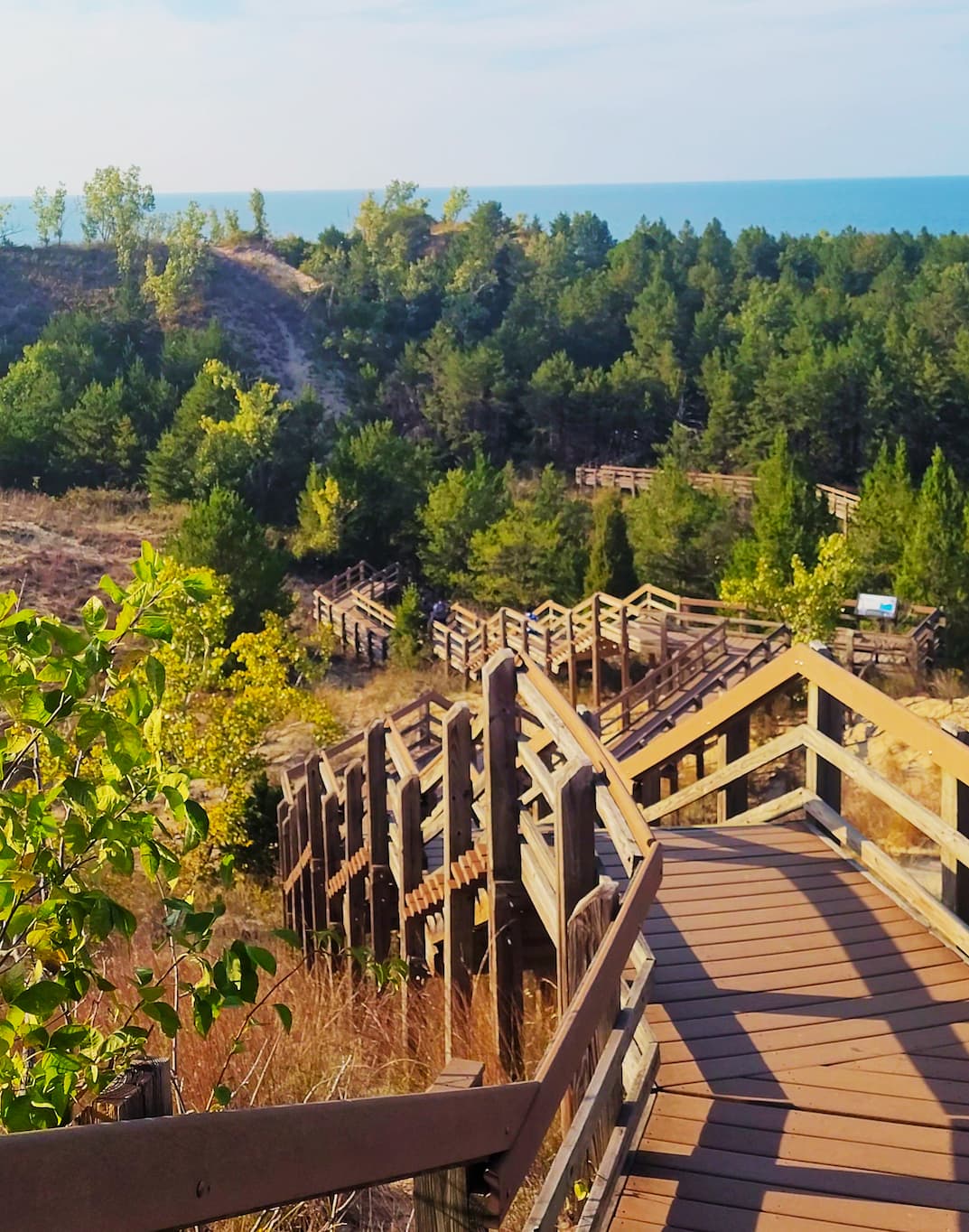
The dunes landscape feels like magic- towering sand, thick forests, wetlands, prairies, and windswept beaches all crammed into one place. But it took decades of effort to keep this area wild.
Chicagoans were early champions of the dunes. By the late 19th century, the region was already a beloved escape, and groups like the Prairie Club camped, hiked, and advocated fiercely for protection. Pulling pieces together took time, a 1916 hearing (just after the National Park Service was established) had outstanding support for creating “Sand Dunes National Park,” but WW1 put a pause on it. Indiana Dunes State Park was established in 1926, but industry and development continued threatening the surrounding landscape.
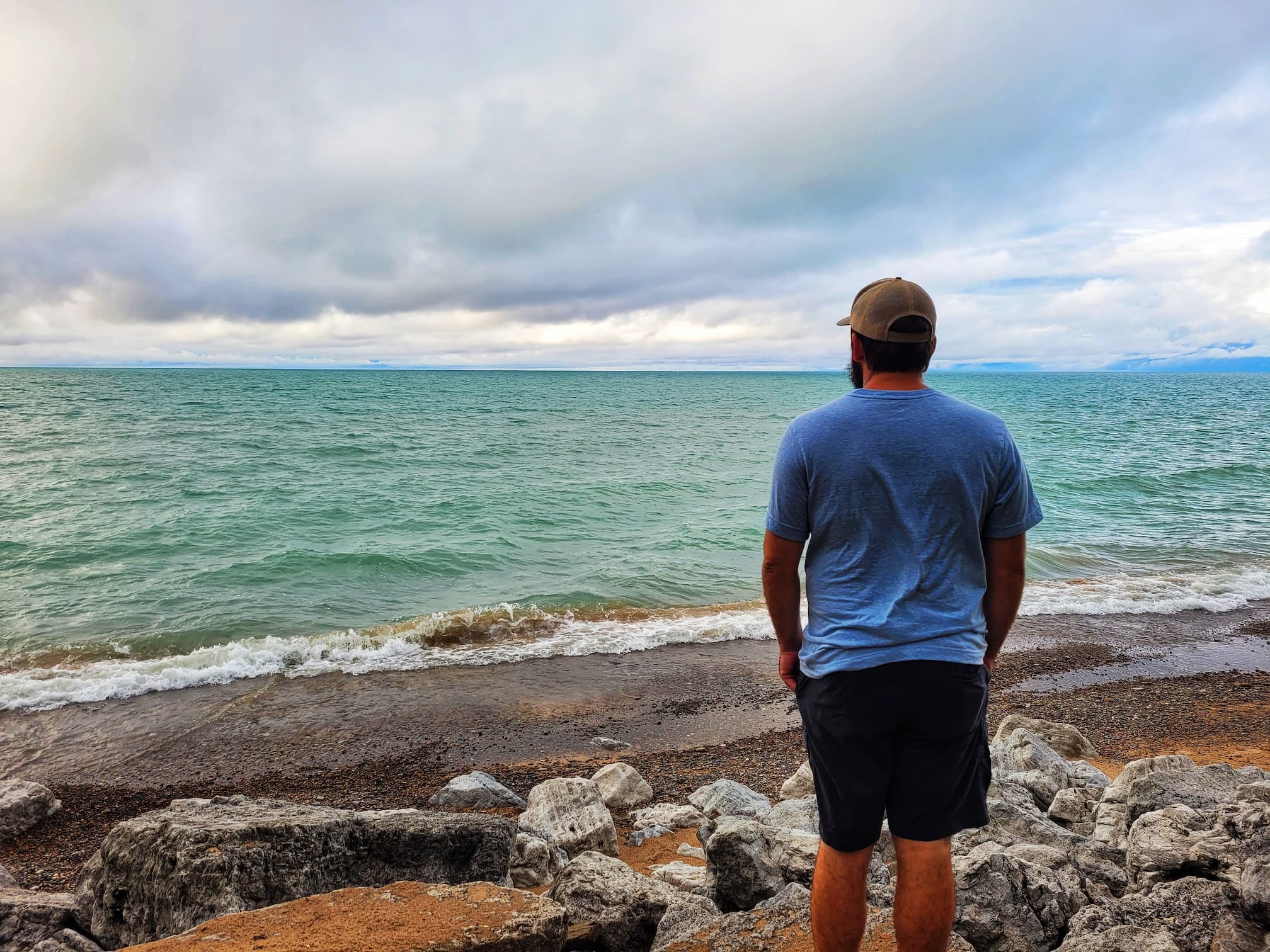
It wasn’t until 1966 that the U.S. finally designated the Indiana Dunes National Lakeshore, and since then, four separate bills have expanded the park’s footprint to more than 15,000 acres. In 2019, it earned full National Park status- America’s 61st.
What makes the dunes truly special is biodiversity. Within one park boundary you’ll find towering dunes, sandy beaches, quiet wetlands, a rare quaking bog, oak savannas and woodlands, and prairies filled with wildflowers.
This combination makes the region one of the most diverse ecosystems in the Midwest.
Century of Progress Home Tour: About the Experience
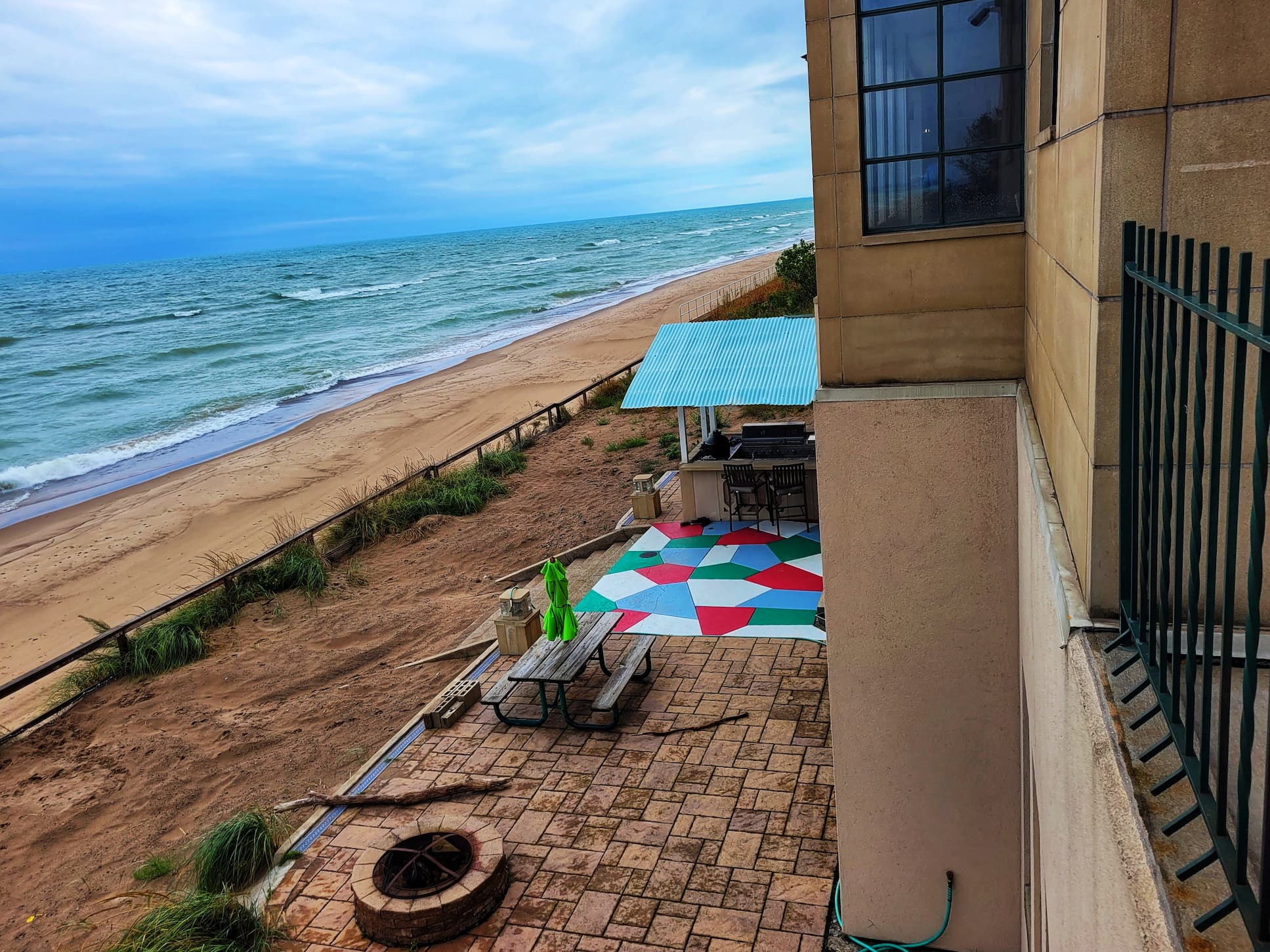
Every now and then, we stumble onto an experience that feels like stepping through time, and this one did exactly that. Each September, Indiana Dunes National Park opens up a handful of the famous Century of Progress homes for a rare peek inside. If you’ve ever driven past this colorful little row of architectural experiments and wondered what they look like behind closed doors, this is your chance.
Except… tickets go FAST. Like, Taylor Swift presale fast.
We snagged ours by starting to refresh the website in the 10 minutes before the sale was supposed to start. I was able to get 2 tickets and by the time I was done checking out, very few were left. I did one more refresh out of curiosity and they were all sold out in probably 15-20 minutes of going on sale.
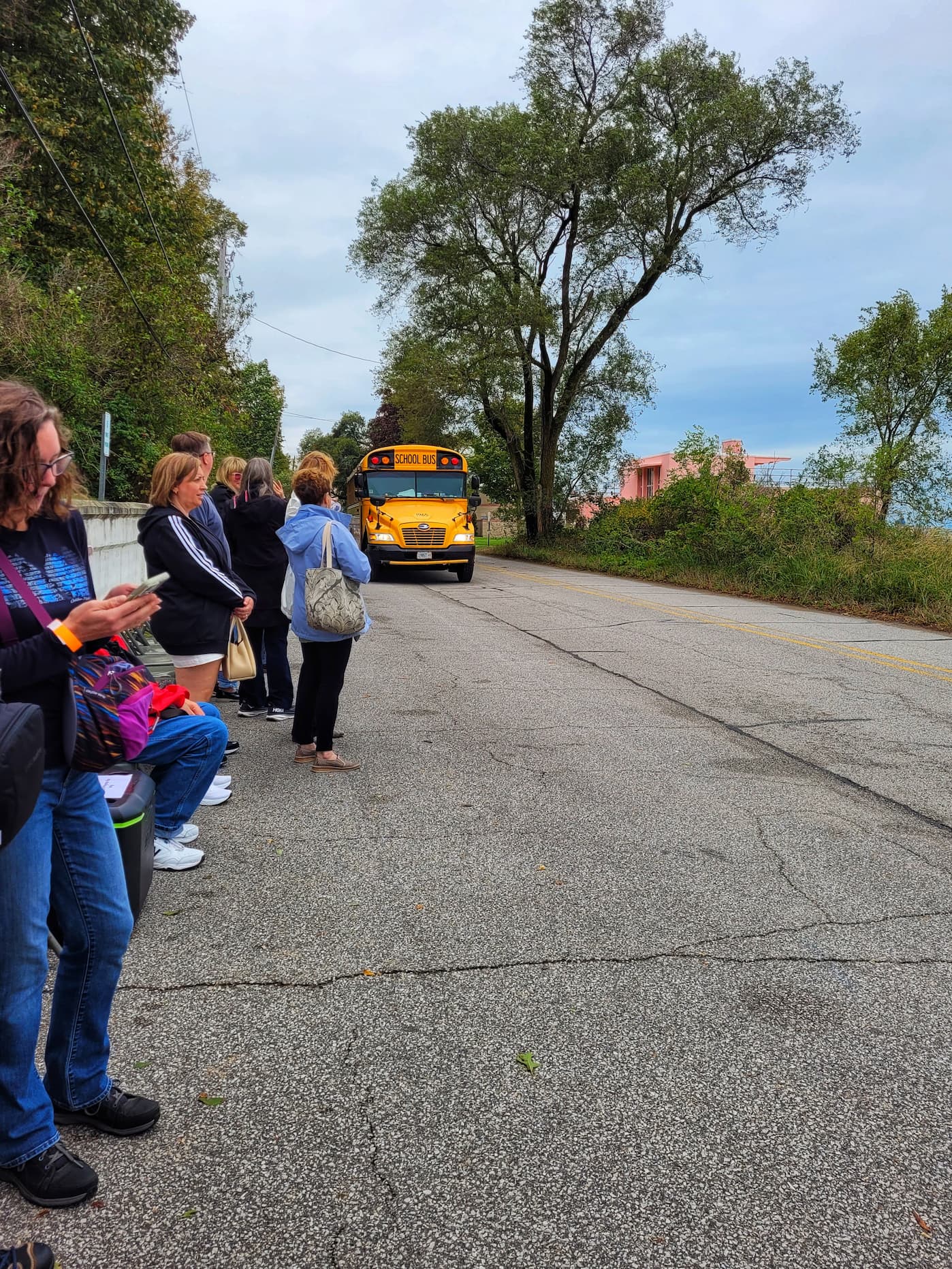
Here’s how the tour works:
- Happens once a year, always the last weekend of September
- Run by Indiana Landmarks in partnership with the National Park Service
- Tickets go on sale early August and sell out within an hour
- Seriously- set an alarm, be on the site early, and refresh like your life depends on it
- $35 per person
- Check in and park at the Indiana Dunes Visitor Center
- From there, hop on the shuttle bus to Beverly Shores
- Tour includes entry into four houses:
- Florida Tropical House
- Rostone House
- Armco-Ferro House
- Cypress Log House
- Plus a visit to the House of Tomorrow, but only from the outside (for now!)
- Expect about 2+ hours total, including shuttle time and walking between homes
- No interior photos allowed (these are private residences, and the homeowners kindly let us snoop)
- Inside, you’ll see private decor, not museum staging, which definitely made it a unique experience compared to regular house muesums
- We loved chatting with tenants, rangers, and Indiana Landmarks volunteers
- They were welcoming, passionate, and eager to share stories about renovations, quirks, and the legacy of the World’s Fair
What makes this tour feel so special is the collision of old and new. These homes were built as futuristic experiments for the 1933 Chicago World’s Fair, and now they’re real, lived-in houses- filled with personality, pets, everyday furniture, and families who love them fiercely. It’s unlike any historic home tour we’ve ever done.
Meet the Century of Progress Homes
The House of Tomorrow
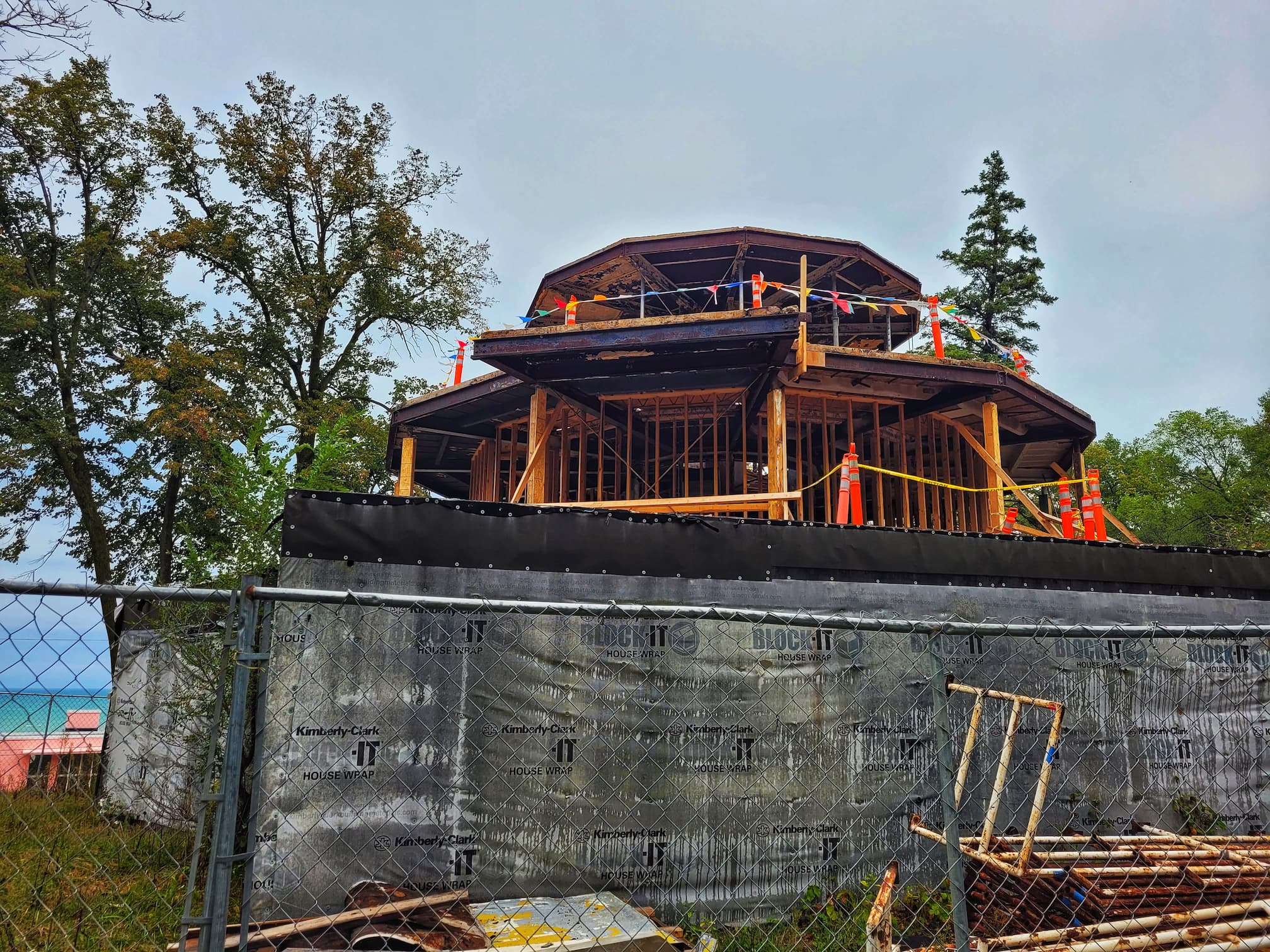
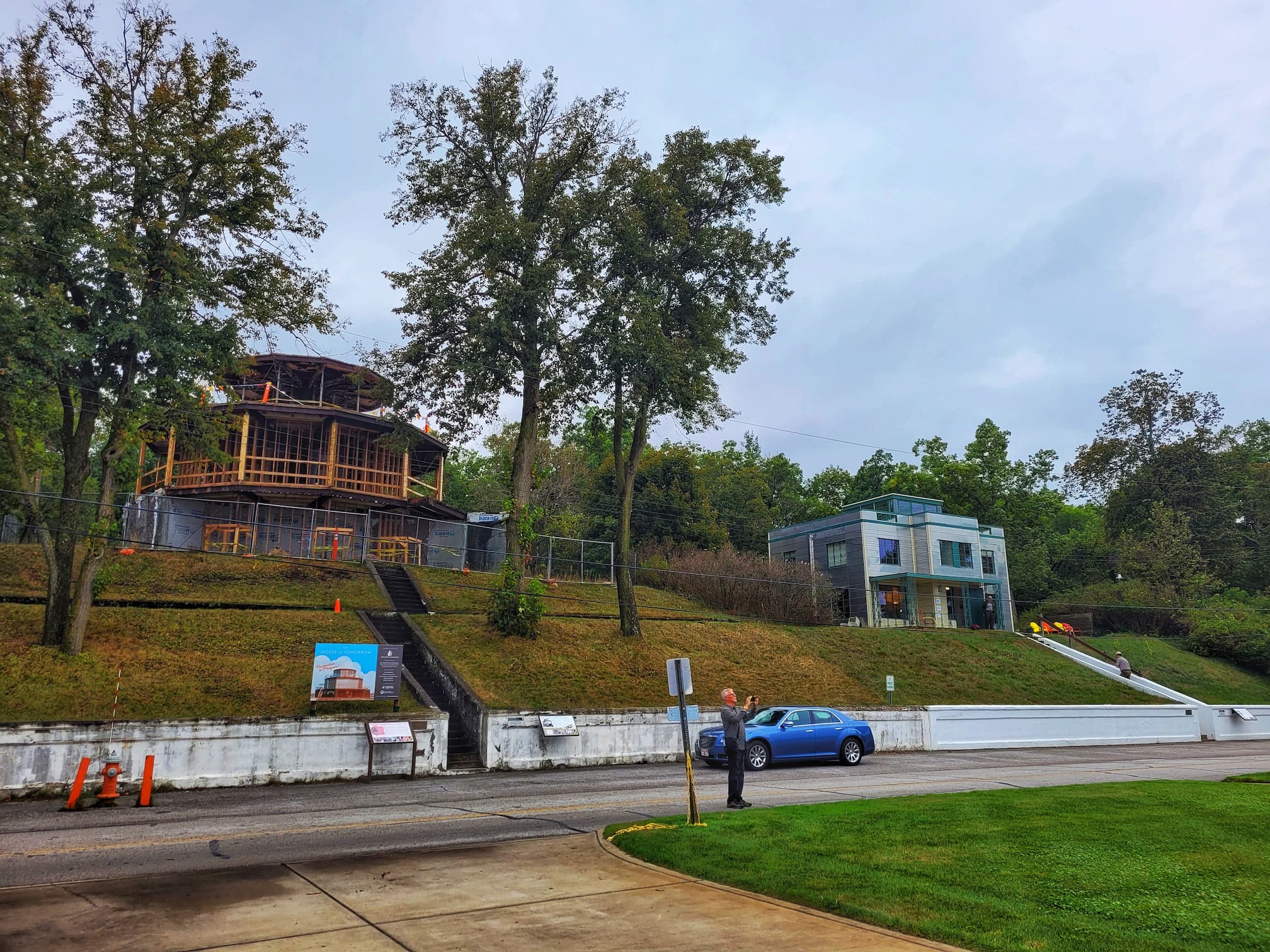
Even though you can’t go inside just yet, the House of Tomorrow is the star of the show, and honestly, it completely steals your imagination from the moment you see it.
Dubbed “America’s First Glass House” back in the 1930s (decades before Philip Johnson and others made glass houses famous), this circular home was designed by Chicago architect George Fred Keck for the 1933 Century of Progress World’s Fair. The whole idea was to show fairgoers the home of the future- one that embraced light, technology, and everyday convenience future families surely couldn’t live without.
And it delivered in the coolest ways:
- Floor-to-ceiling glass walls flooding the house with natural light
- A central air-conditioning system (practically sci-fi for the ’30s)
- A wide-open floor plan
- The first General Electric dishwasher ever offered to the public
- An “iceless” refrigerator
- An attached garage with a push-button opener
- And because why not dream big, an attached hangar for the family airplane
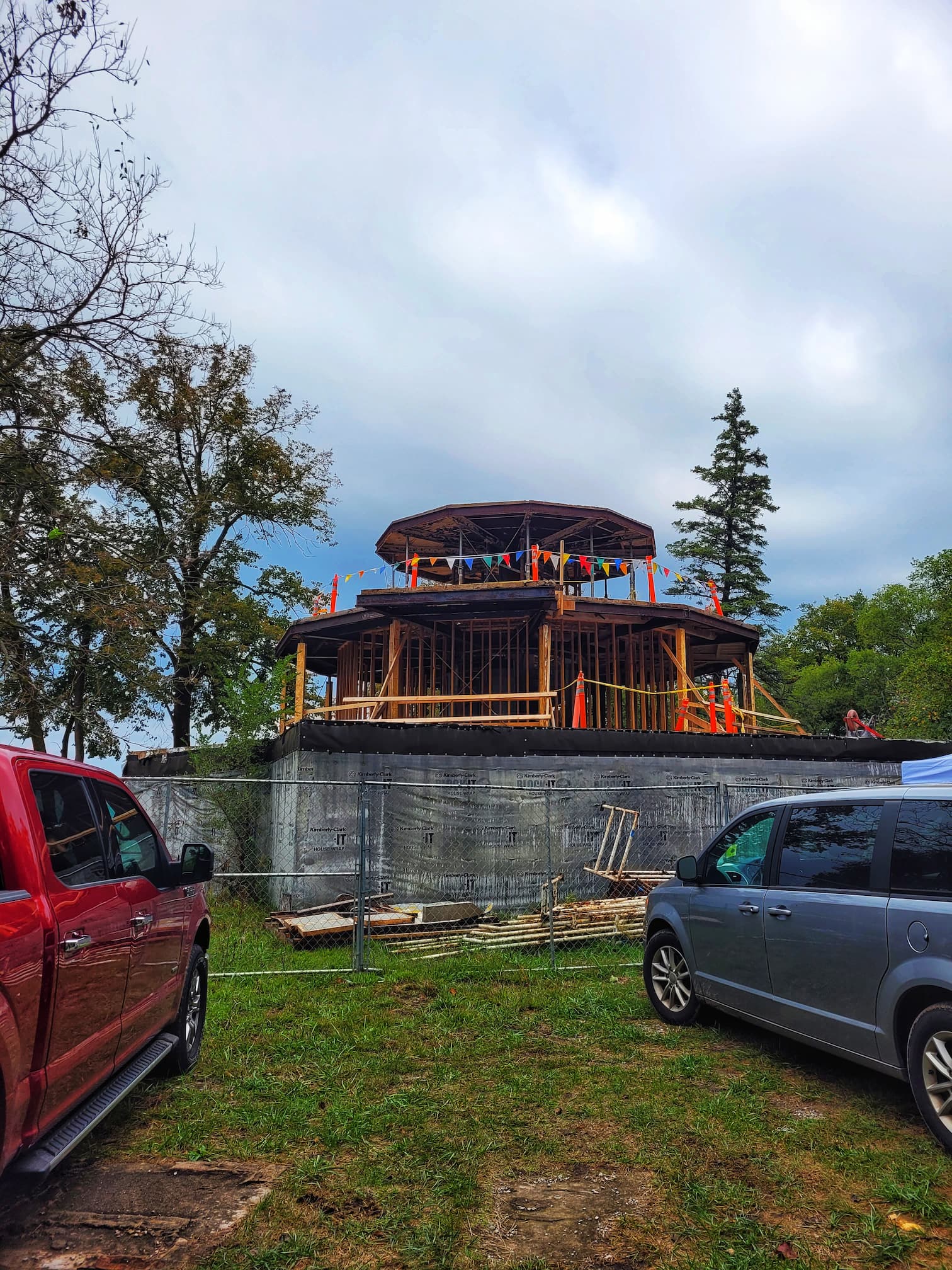
But dreaming big came with challenges. Unlike the other Century of Progress homes, which have benefitted from private sub-lessees willing to pour money into restoration, the House of Tomorrow proved tougher to adapt. It sat vacant beginning in 1999, after decades of modifications and wear, and it eventually needed more than fresh paint and a new roof.
The good news is that that vision is finally in motion. In 2016, the National Trust for Historic Preservation named the house a National Treasure, partnering with Indiana Landmarks and the National Park Service to figure out how to bring the building back to its futuristic glory. After years of planning, NPS approved a restoration approach, and in April 2024, the first phase of rehabilitation officially launched.
During our tour we stood outside imagining what it will look like when the scaffolding comes down, and it will be exciting to keep checking back for updates. It’s easily the most architecturally innovative and historically significant of all the fair homes, and we cannot wait until the day tours finally include stepping inside.
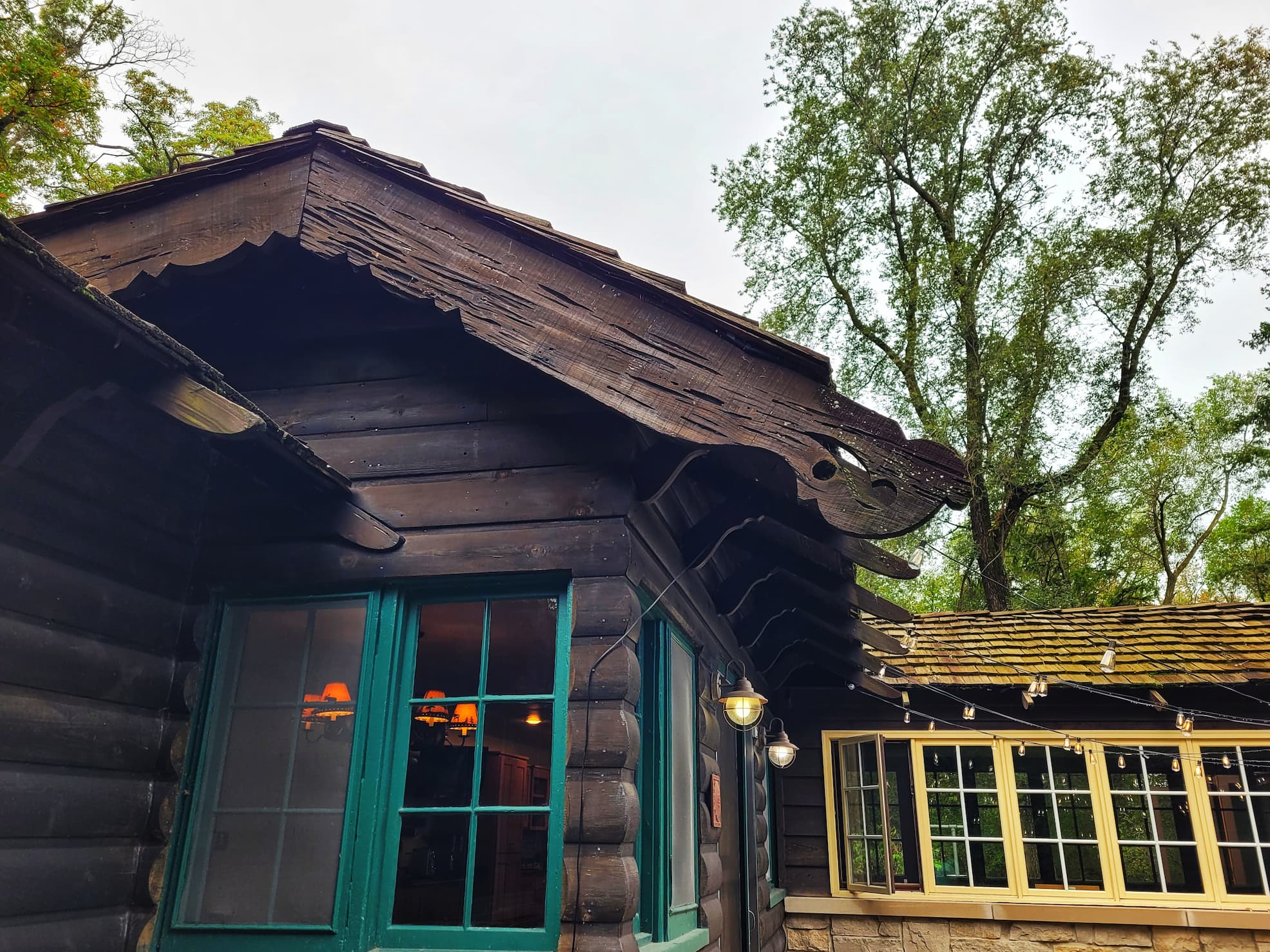
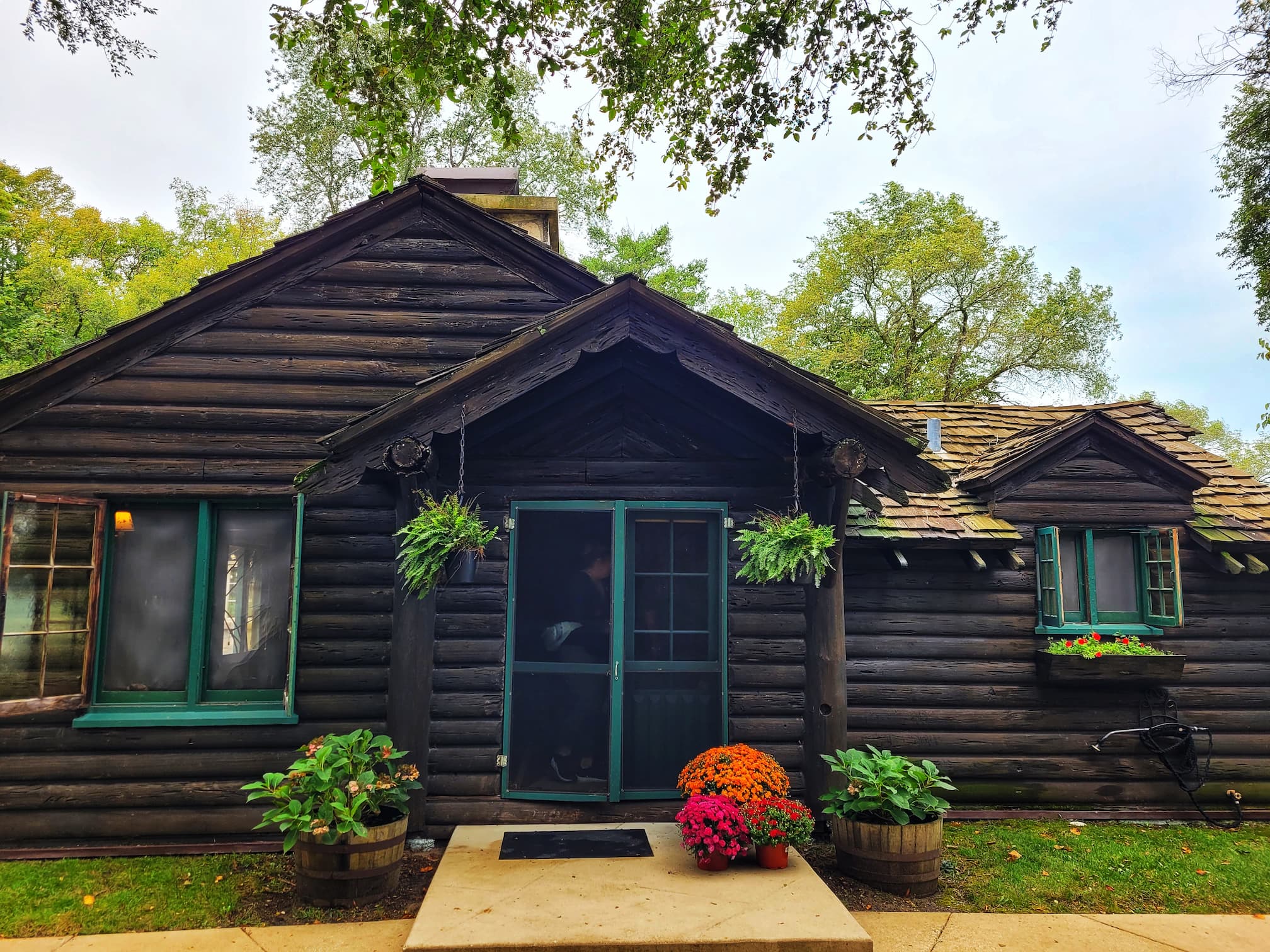
The Cypress Log Cabin Home
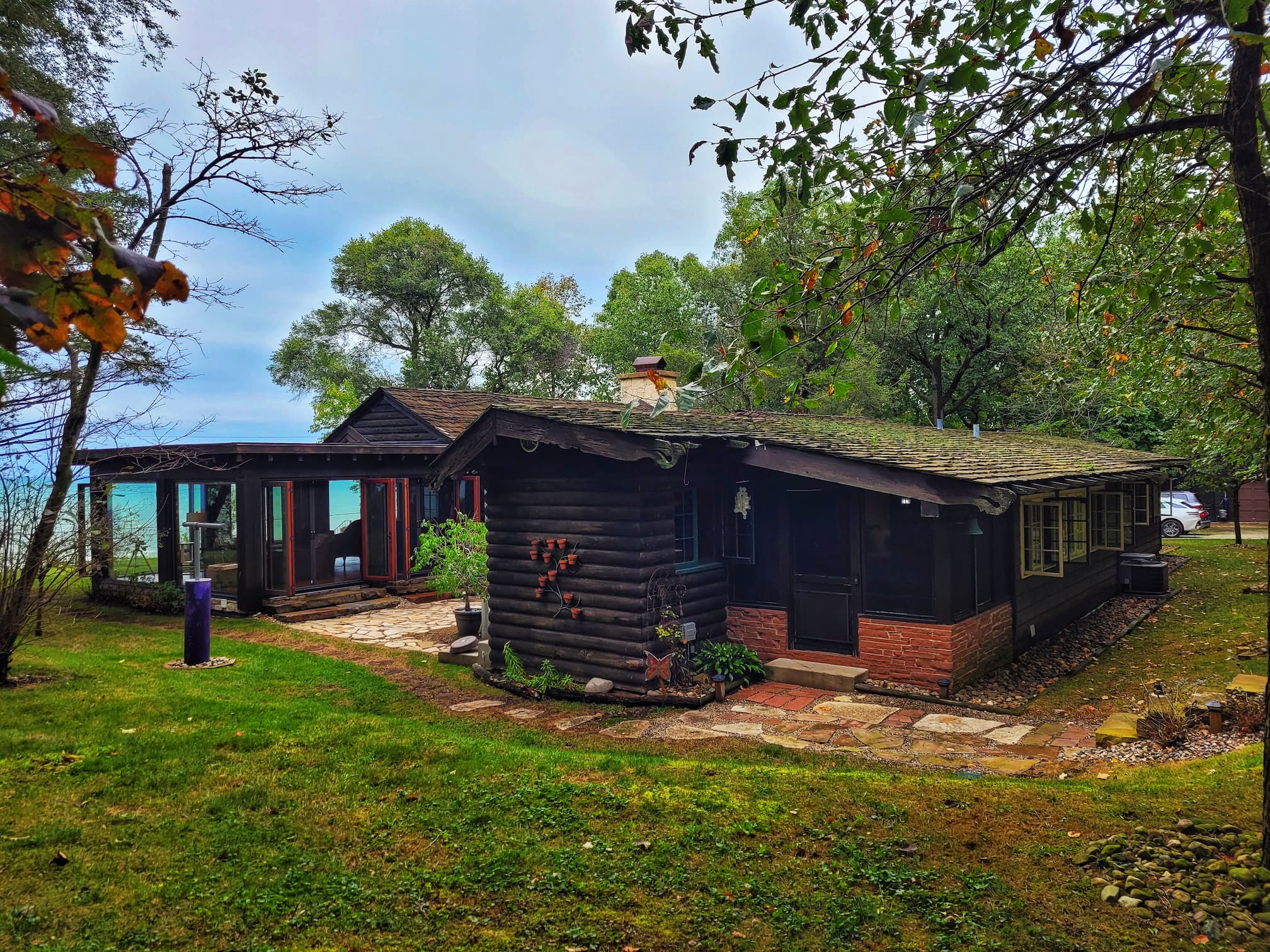
If the House of Tomorrow feels like the future, the Cypress Log Cabin is all cozy throwback vibes, just make it 1930s World’s Fair style. This one looks like it was plucked straight out of a national forest and set down beside Lake Michigan… which, honestly, is part of its charm.
Built entirely from Southern cypress logs, this home was sponsored by the Southern Cypress Manufacturers’ Association out of Jacksonville, Florida. Their mission was to show off what cypress could really do, because this wood is tough, resilient, and far more versatile than most people realized at the time.
Designed by architect Murray D. Heatherington, the cabin was meant as a demonstration structure, not a family dwelling. But in a fun twist, it became the only residence in the Home and Industrial Arts Group during the 1933 Fair. A representative from the manufacturers’ association and his wife actually lived in part of the cabin during the event. (Not a bad perk of the job, right?)
Today, the cabin is the only structured lodging inside Indiana Dunes National Park, thanks to its transformation into a short-term rental. You can kick back among historic logs and imagine traveling the highways of the 1930s to the new “modern” fairgrounds. You can check availability here:https://inthedunes.com/
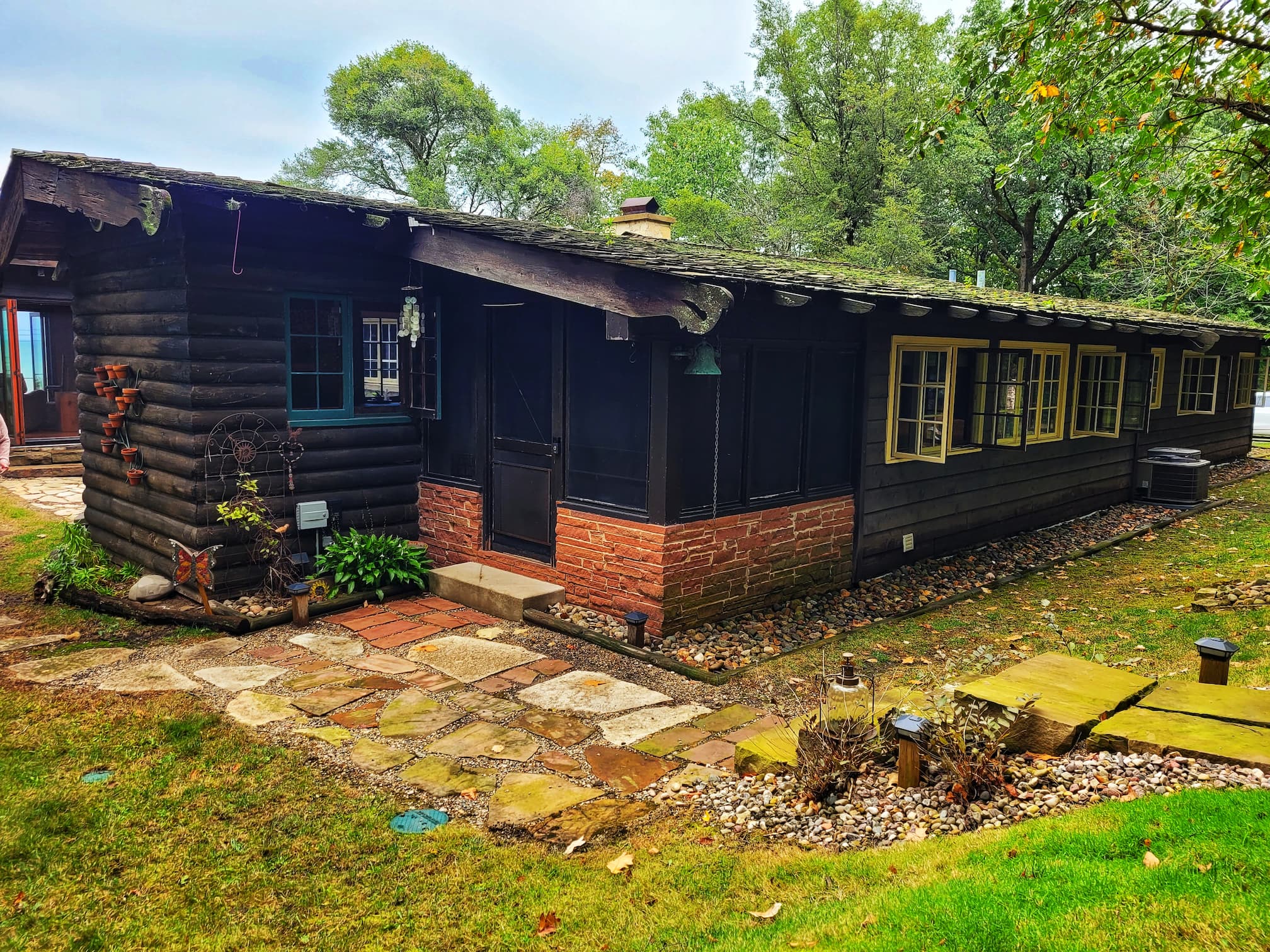
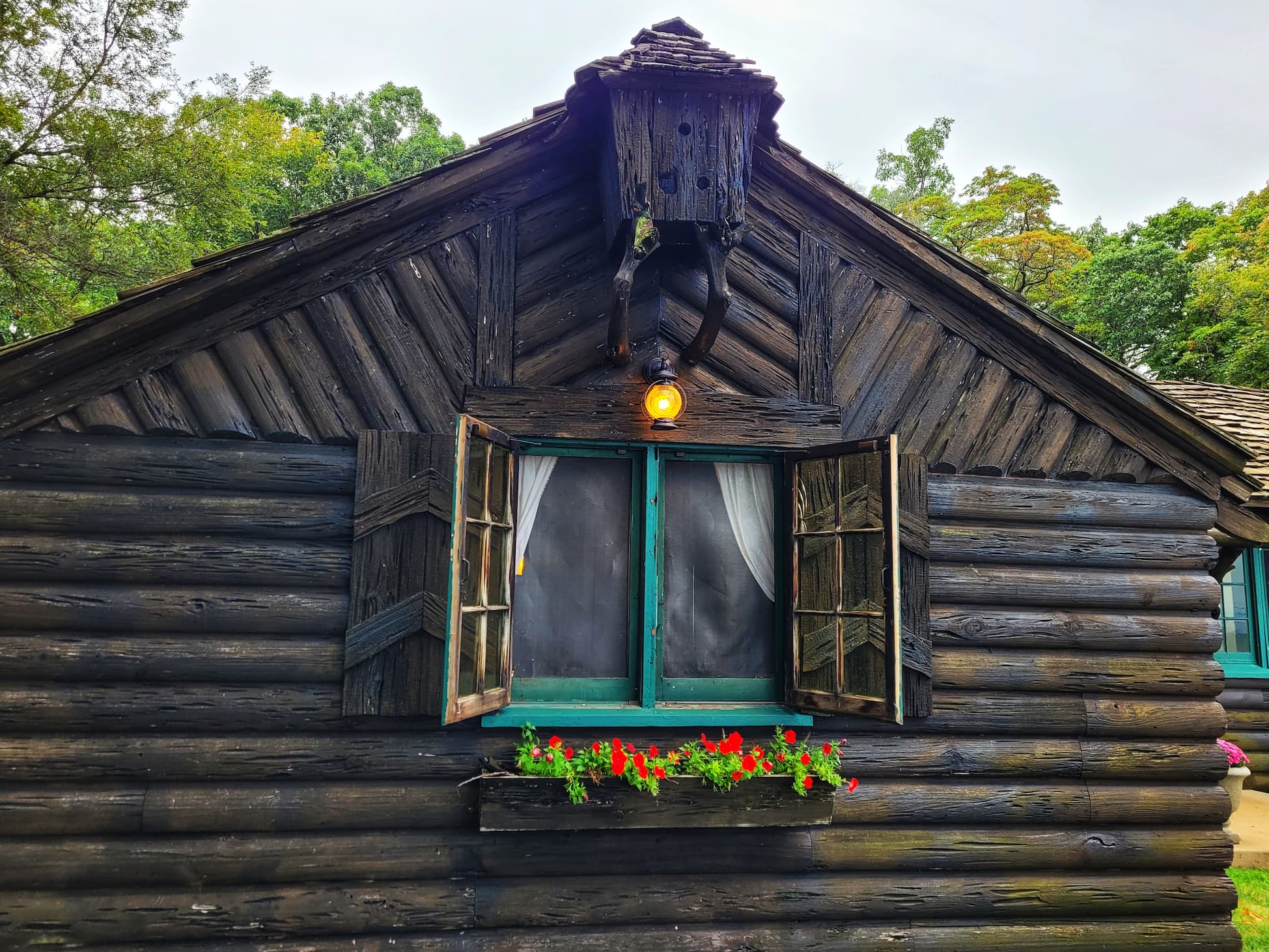
Inside, the house is practically a love letter to cypress:cypress siding, cypress shakes, cypress structural timbers, cypress walls & cypress floors, cypress window shades, and even cypress furnishings.
And for its more recent chapter, one of the restoration efforts after relocation included wood salvaged from downed cypress trees after Hurricane Katrina, tying past and present together in a pretty poetic way.
Of all the homes on the tour, this one feels the most lived-in (in a comforting lodge-by-the-lake kind of way). It’s rustic, warm, and surprisingly elegant for being made almost entirely out of one material. We left wanting to curl up inside with a cup of hot cocoa, or at least come back for a weekend stay.
The Florida Tropical House
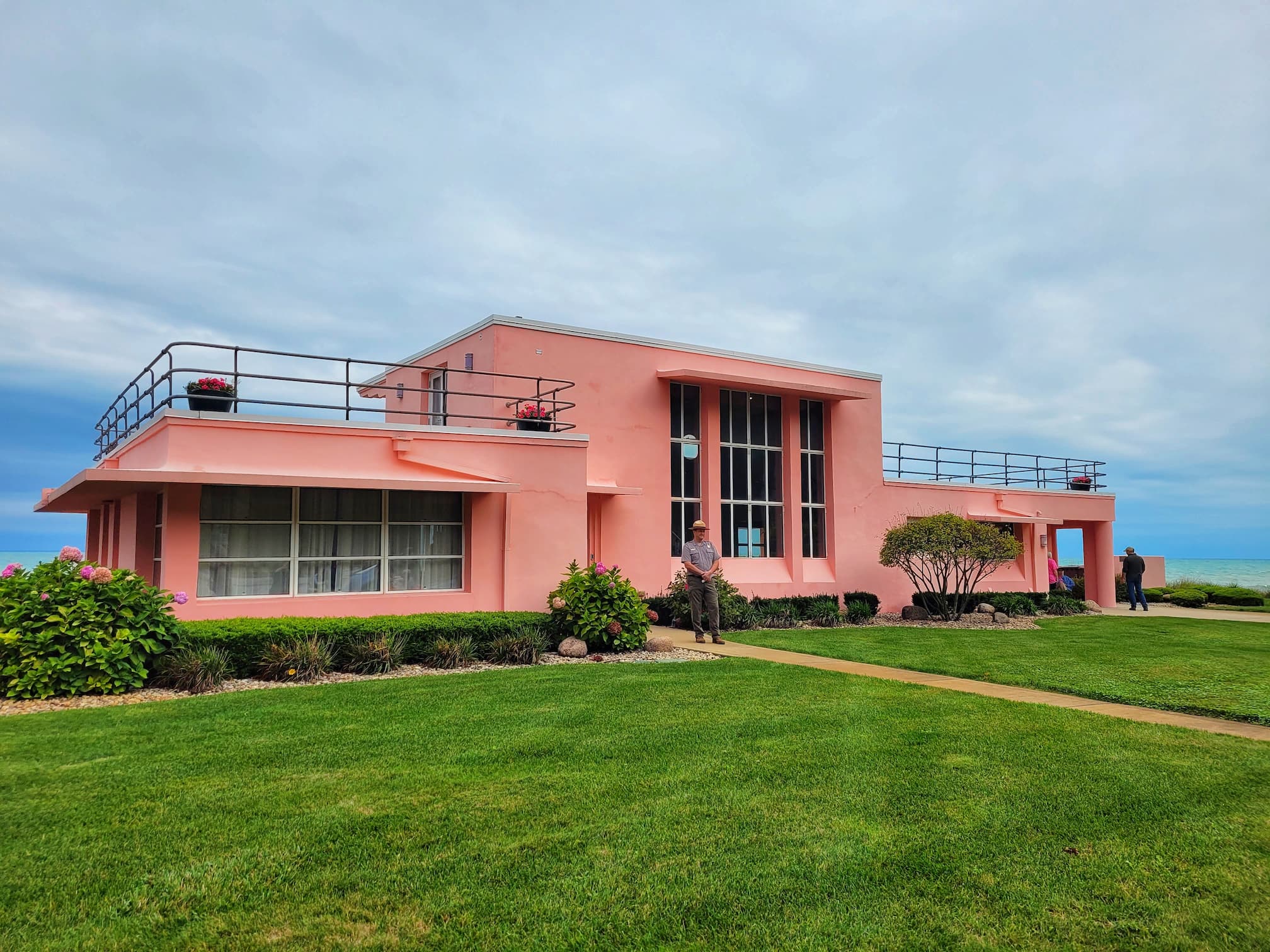
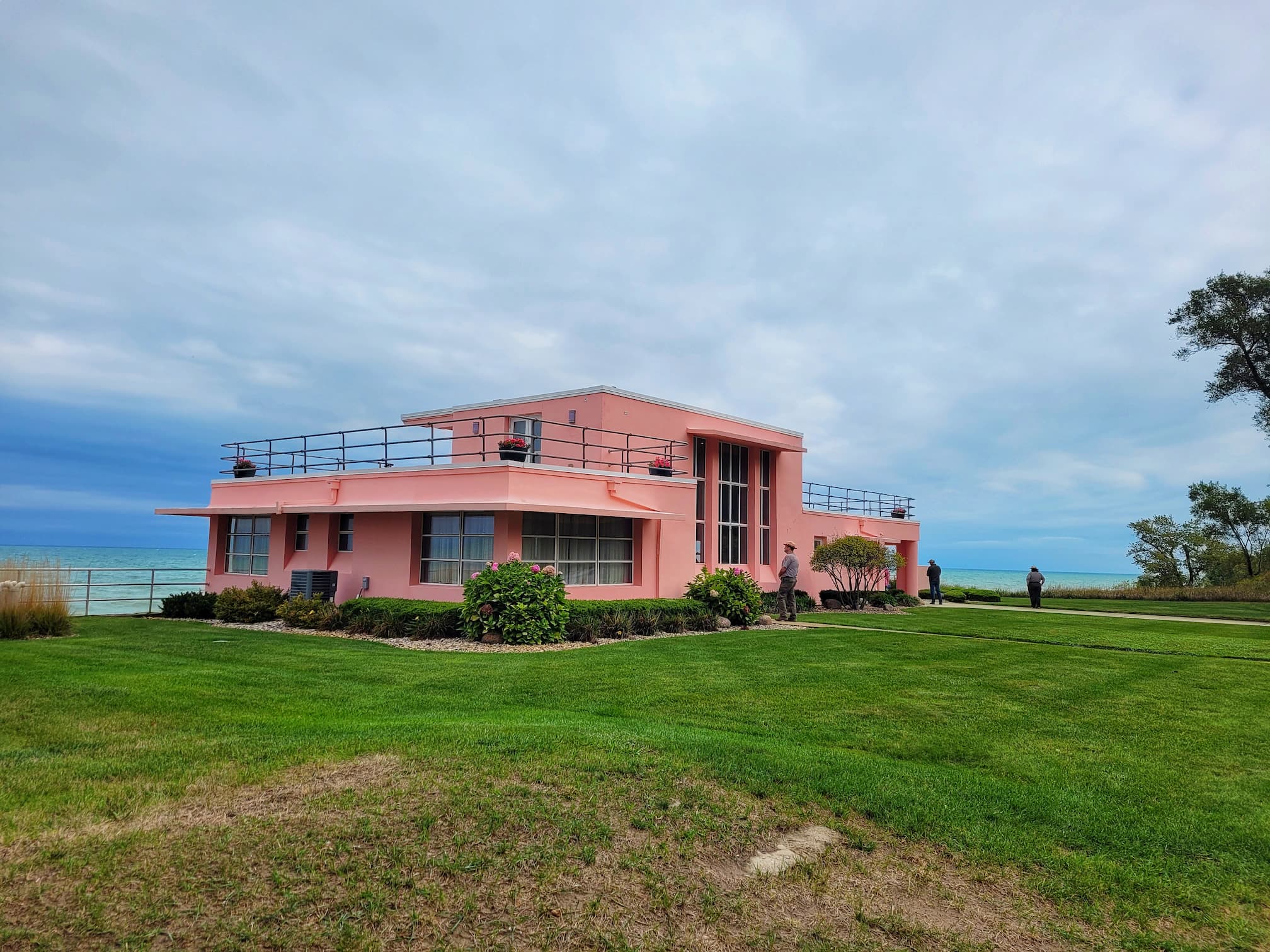
If Barbie ever needed a lakeside getaway, she’d absolutely choose the Florida Tropical House. This one pops with color and personality, and it’s impossible not to smile the second it comes into view.
Designed by Miami architect Robert Law Weed, the house was meant to transport World’s Fair visitors straight to South Florida without leaving Chicago. Sponsored by the State of Florida, it doubled as both a home and a tourism ad- “look how fun and modern we are, don’t you want to come visit?”
We love how deliberately “Florida” the whole design is. Weed didn’t just build a modern house; he designed a home that responds to tropical living:
- Indoor–outdoor flow with big terraces and a huge rooftop patio
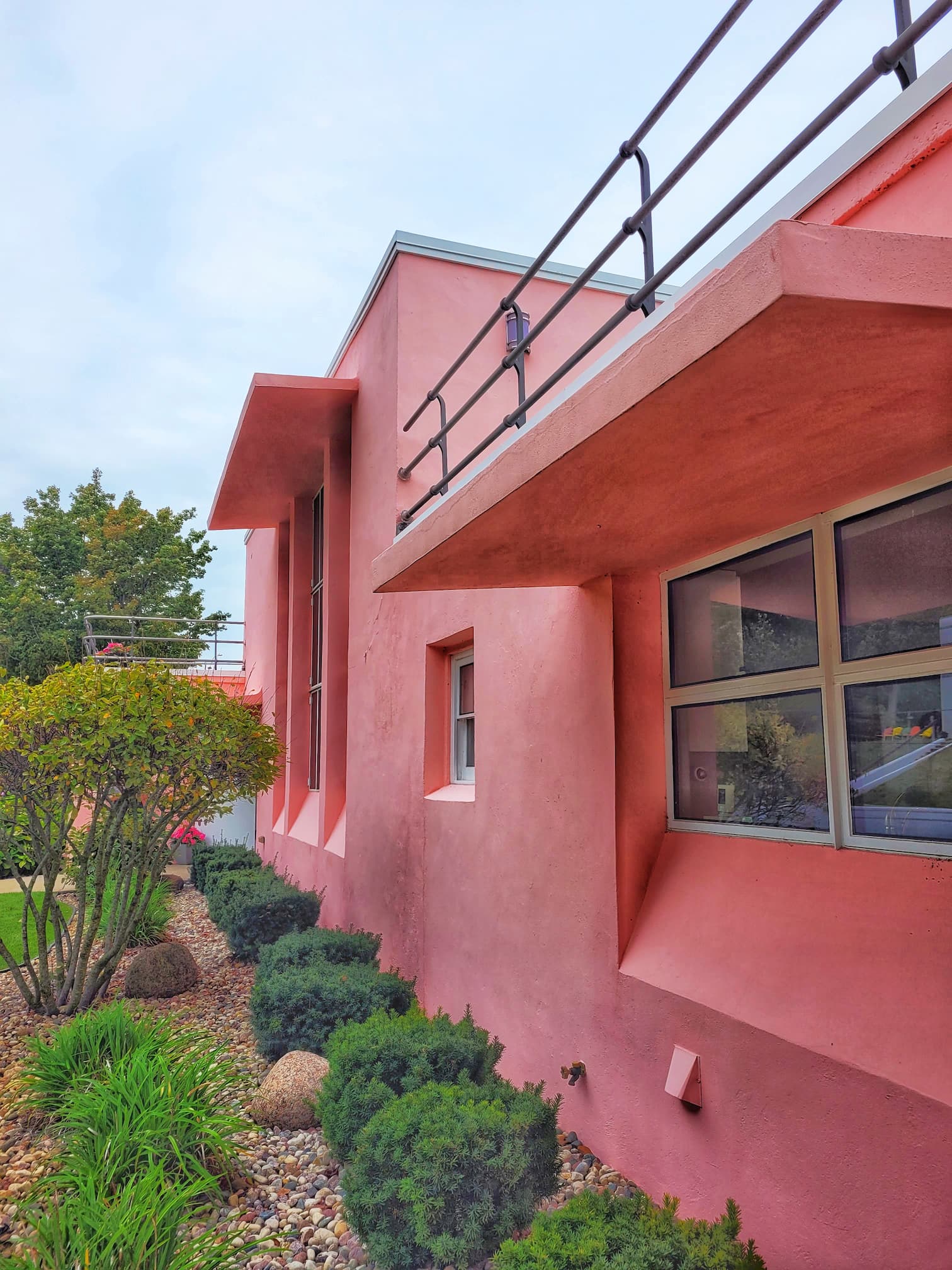
- A dramatic overhanging balcony that feels like it should be overlooking coral-colored waves
- Modernist lines and playful proportions that still look fresh 90+ years later
- A layout meant to catch breezes, maximize shade, and blur the line between inside and out
Originally, Weed wanted poured concrete walls, but budgets (even on world-stage projects!) have limits. To keep costs in check, the structure was framed in wood and covered in a lightweight concrete stucco finish instead. Florida also used the house as a chance to show off its building resources, filling it with native materials like travertine, limestone, clay tile, and Portland cement.
Of all the homes, the Florida Tropical House feels the most like a vacation, with its playful curves, breezy corners, and that fabulous flamingo exterior that stands out against the dune grasses. It’s cheerful, bold, a little bit dreamy, and absolutely unforgettable.
We walked away half-wishing we lived in a pastel Miami neighborhood, and half-convinced we need more color in our life.
The Armco–Ferro House
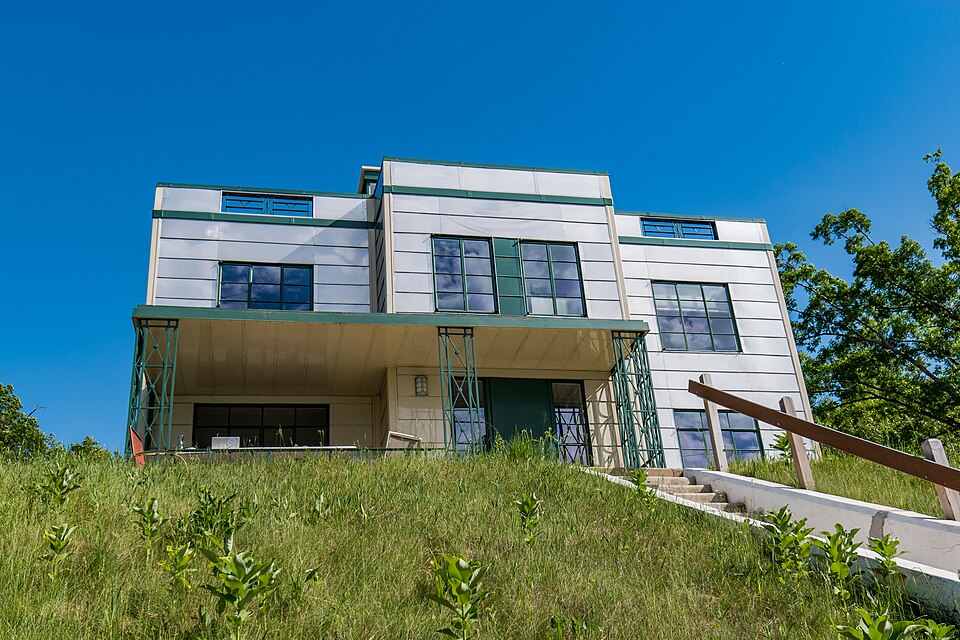
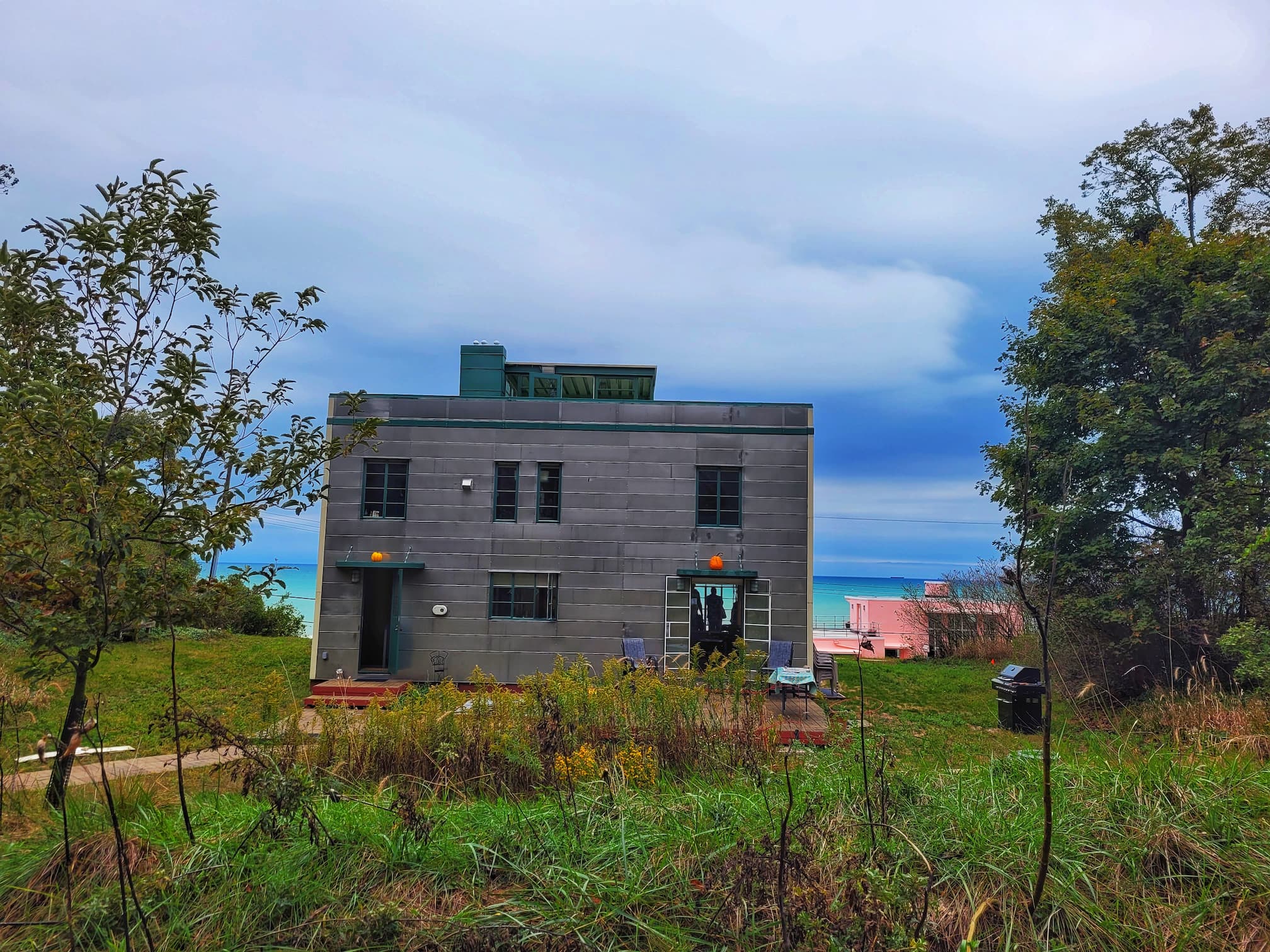
If the other homes were about style, luxury, and architectural flash, the Armco–Ferro House was all about practicality, and honestly, we loved it for that. This one feels like the World’s Fair took a look at the average American family and said: Let’s build a future where everyone can afford something modern, durable, and built to last.
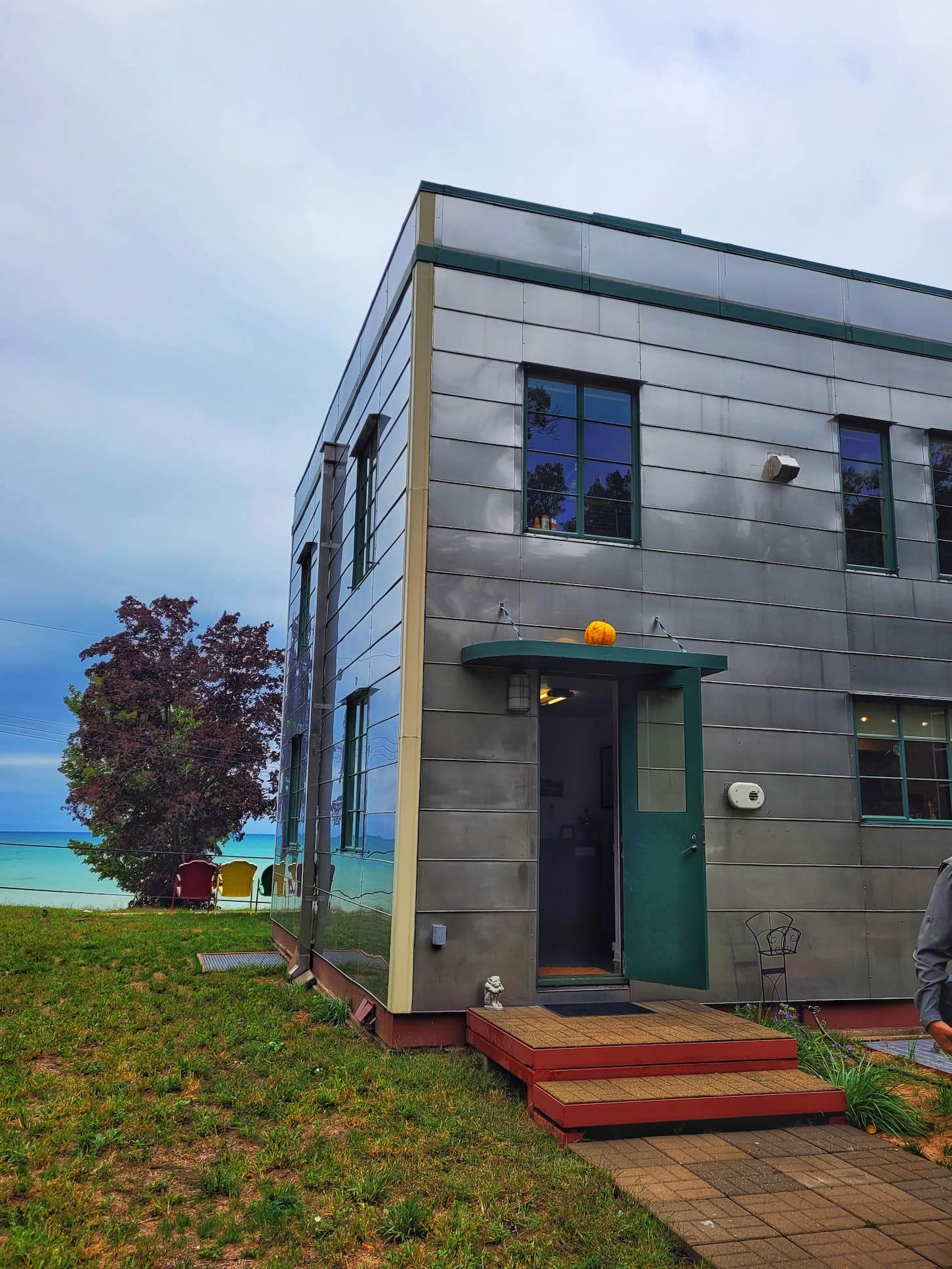
Designed by Cleveland architect Robert Smith Jr., the house was created to meet the fair’s challenge of inventing a mass-producible, affordable home. And the solution was steel. Lots and lots of steel.
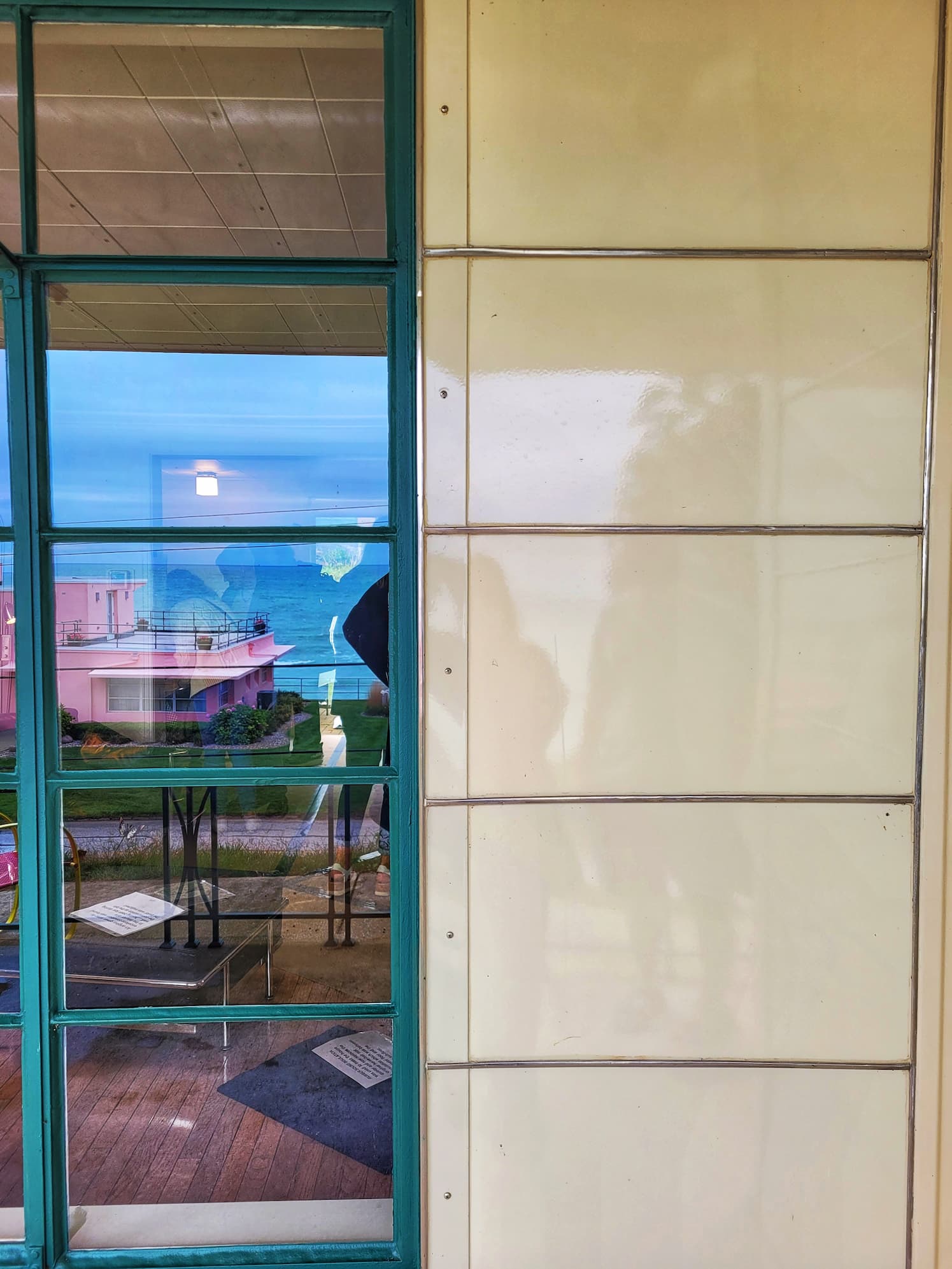
The structure is made from corrugated steel panels, factory-formed sheets that simply bolt together, just like a giant erector set. Those pieces are then clad in porcelain-enameled steel, manufactured by the Ferro Enamel Corporation. It made the house weather-resistant, low-maintenance, and nearly indestructible.
If this sparks memories of the post-WWII Lustron homes, you’re not imagining it, this house is widely considered one of the inspirations behind that later steel-home movement. And as a Lustron fan, I was absolutely geeking out when we stepped inside.
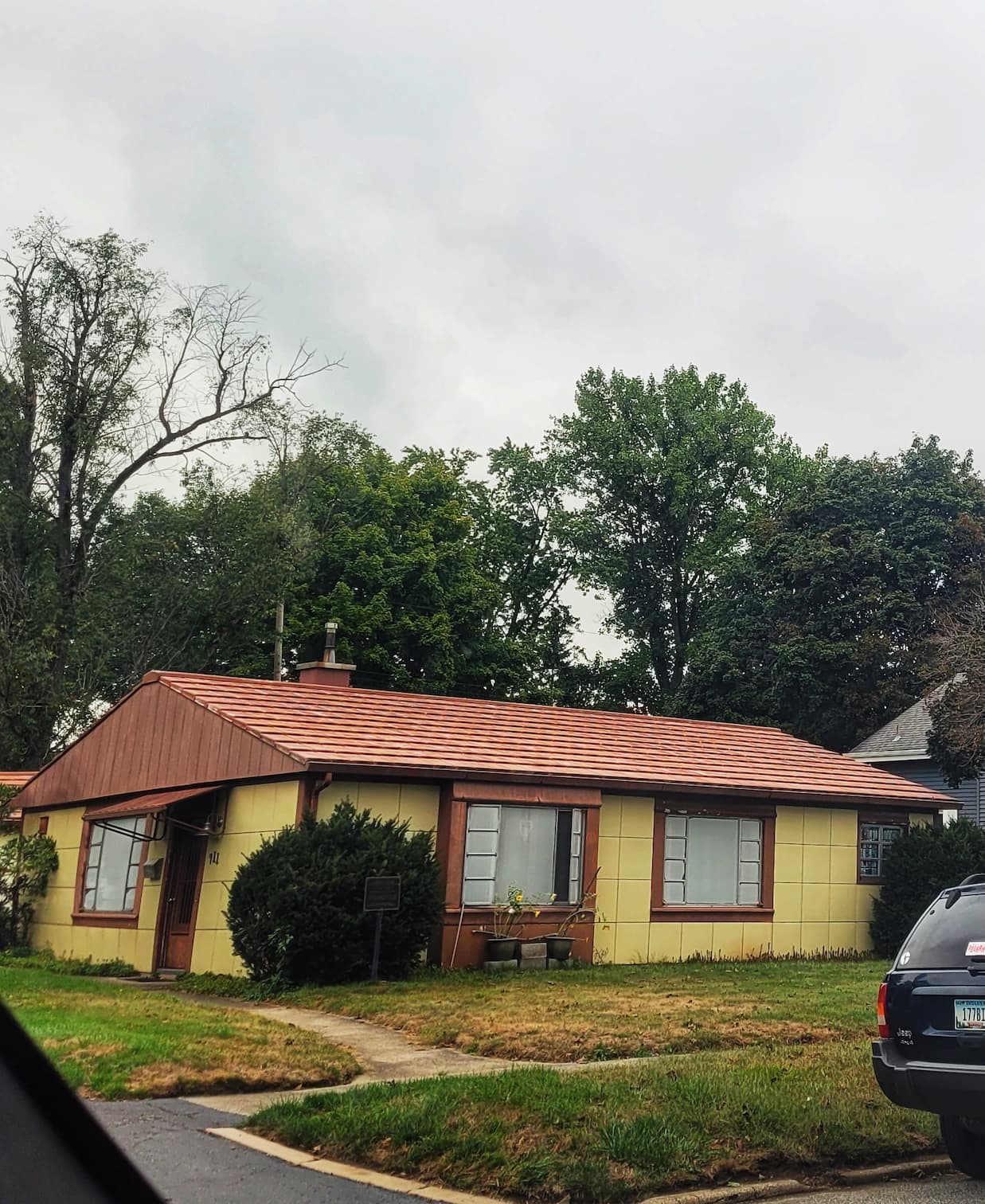
One of our favorite moments on the tour happened here. Josh noticed that the yard was filled with native plants, and because he works for a native plant nonprofit, he struck up a conversation with the tenant tending the garden. Five minutes later, she was proudly showing him photos, swapping plant stories, and explaining how her pollinator prairie almost cost her the lease- apparently native landscaping wasn’t always welcomed by the powers-that-be. She pushed back, advocated for biodiversity, and won. (Not all heroes wear capes—some plant milkweed.)
Of all the houses, the Armco–Ferro might not look the flashiest, but it feels like the one that changed everyday housing the most. Built for function, designed for the many, and still charming nearly a century later.
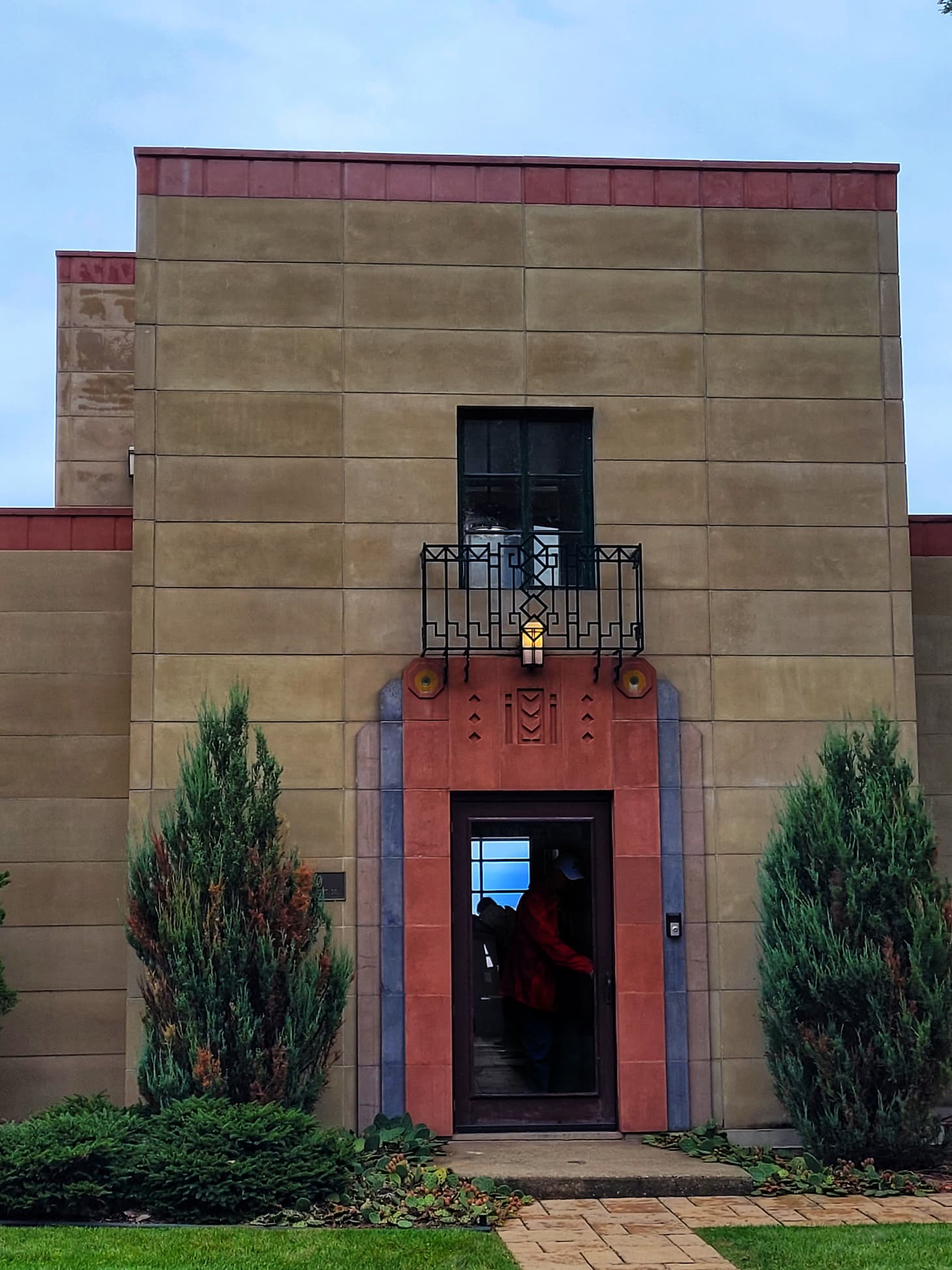
The Wieboldt–Rostone House
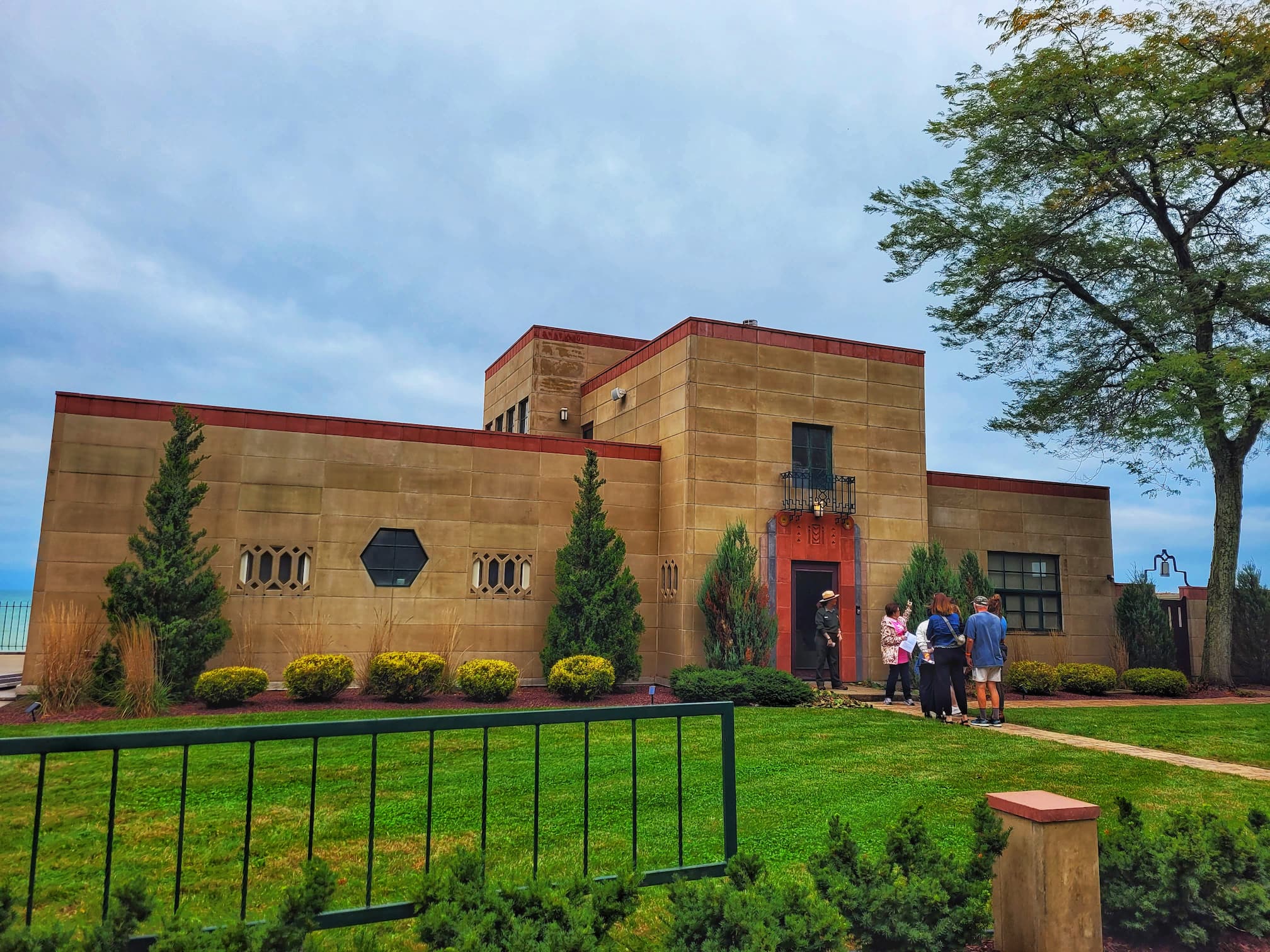
If the House of Tomorrow was the bold dreamer and the Armco–Ferro was the practical doer, then the Wieboldt–Rostone House was the optimistic inventor- the one that confidently swore “nothing could ever go wrong!” (Spoiler: something definitely went wrong.)
Designed by Walter Scholer from Lafayette, Indiana, the house was built with a steel frame and clad in a brand-new experimental composite called Rostone. This material was made from a mix of shale, limestone, and alkali, and its creators were more than a little excited about it. They promised Rostone could be produced in endless colors and textures, and boldly advertised that it would never need repairs.
Well… time had other plans.
While the panels were cleverly engineered, precast in a factory with nuts already embedded so they could be bolted straight onto the house, inside and out, the material didn’t hold up the way its inventors hoped. Over the decades, the Rostone began to deteriorate, especially on the exterior walls exposed to Lake Michigan’s weather mood swings.
By the 1950s, the answer was to cover much of the house in Perma-stone, a concrete stucco veneer meant to provide a sturdier shield. You can still spot patches of original Rostone if you look closely, and it’s fun to imagine the experimental stone textures and “never-fails” optimism that once wrapped the whole house.
Even though Rostone didn’t quite rise to its super-material promise, the Wieboldt–Rostone House still stands as a time capsule of invention. And honestly, that spirit is exactly why these houses still capture imaginations today.
Bonus Stop: Beverly Shores Depot Museum & Art Gallery
Once we wrapped up our house tour, the shuttle dropped us at one more spot that rounded out the day perfectly- the Beverly Shores Depot Museum & Art Gallery.
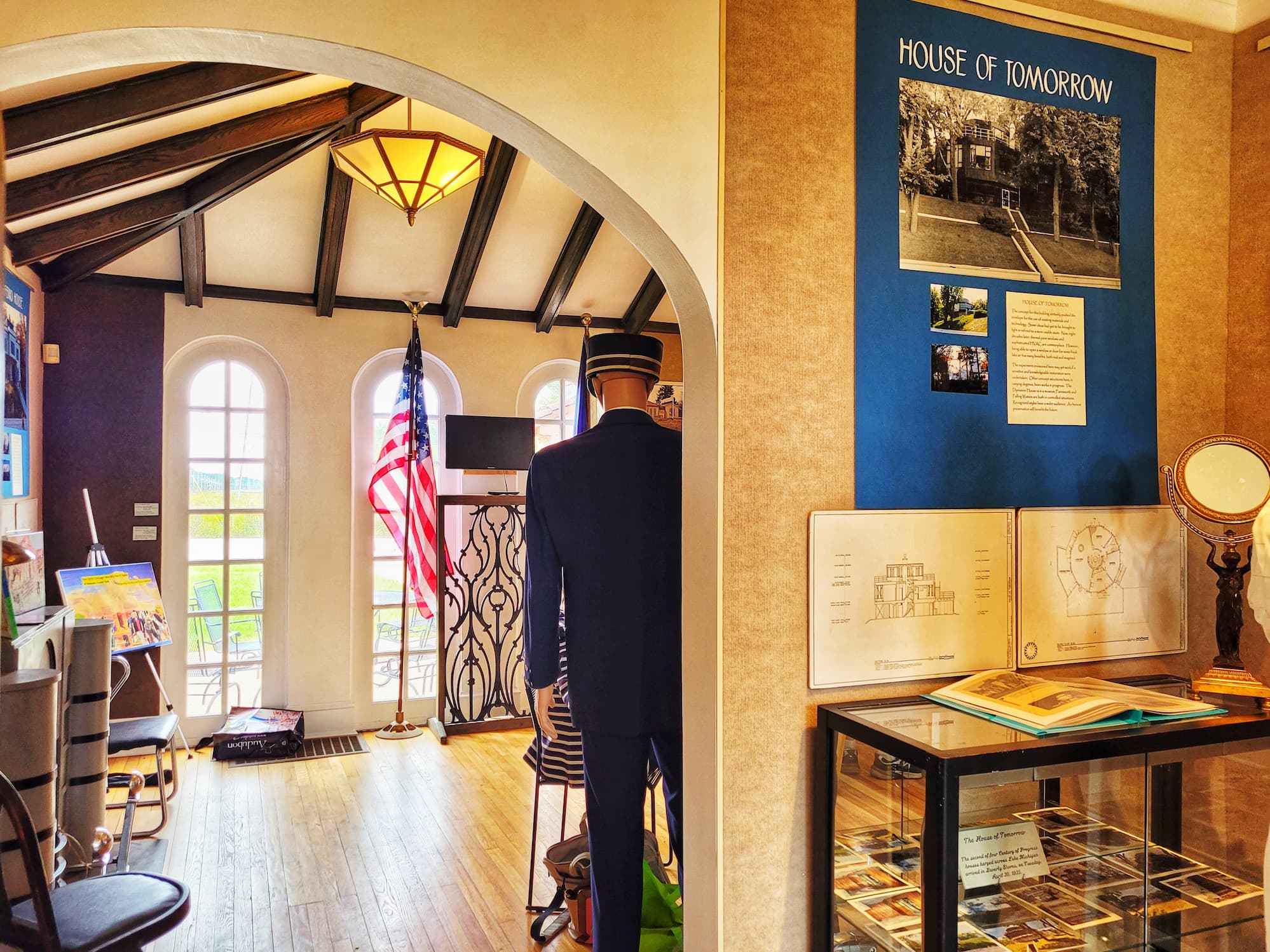
Housed inside a beautiful Spanish Colonial Revival train depot, the building alone is worth a pause. It first opened in 1929 when Beverly Shores was gearing up to become the next big lake resort town, and trains brought weekenders from Chicago straight to the shoreline. Fast-forward to 1998, and the depot was carefully restored and reborn as a museum dedicated to telling the town’s story.
Inside, you’ll find exhibits that capture the history of the community, from ambitious early developments to the arrival of the World’s Fair houses and the decades of preservation work that followed. The museum has also taken its mission out into the wider community, creating a Heritage Trail marked with signage that shows where other historic structures once stood. It’s like a little time machine scavenger hunt through town.
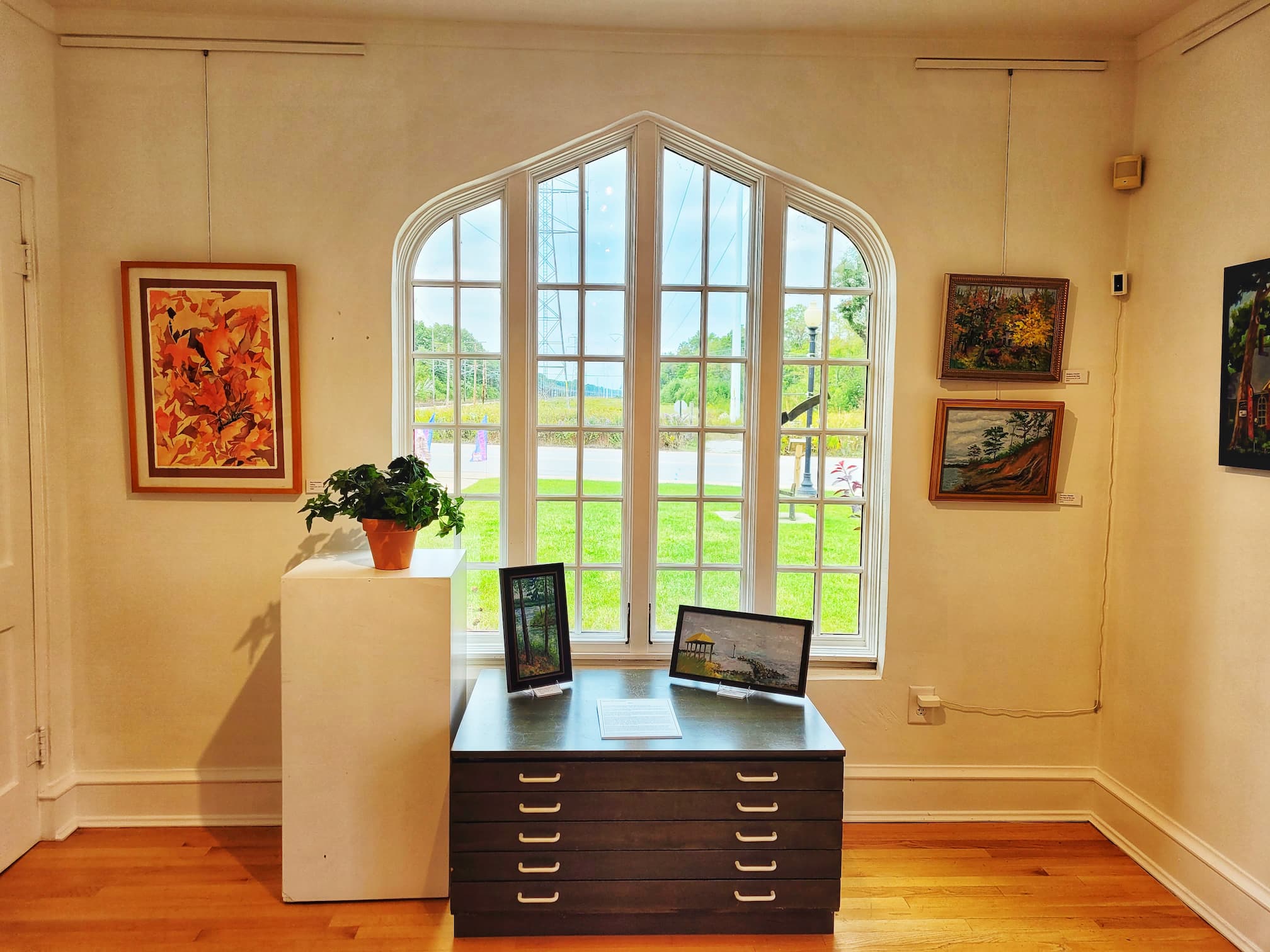
And because Beverly Shores has always had an artsy streak, part of the depot now serves as an art gallery, featuring rotating work by local and regional artists. It feels like the perfect pairing- history preserved on one wall, creativity evolving on the other.
Whether you’re soaking up storyboards or browsing paintings, the Depot Museum is one of those places that ties everything together: the homes, the town, the people, and the dunes themselves. Don’t skip it, it’s the quiet cherry on top of a magical slice of Indiana history.
Check their hours ahead of time online at https://bsdepot.org/
More to Do In and Around Indiana Dunes National Park
Looking for more to do in and around Indiana Dunes National Park? Check out these posts:
5 Unforgettable Experiences You’ll Love at Indiana Dunes National Park
Explore More: 10 Hidden Gems Near Indiana Dunes National Park