We spent a long weekend in Madison while Josh was working a vendor booth, and in between coffee dates and exploring with friends, I carved out a Saturday morning for something a little different, a free tour of the Wisconsin State Capitol. What I expected to be a quick, “sure, why not?” activity ended up being one of the highlights of the trip. From marble-filled courtrooms and historic murals to hidden badgers and panoramic dome views, this building is equal parts beautiful, historic, and surprisingly accessible. If you’re headed to Madison, here’s exactly what to expect- and why it’s worth adding to your list.
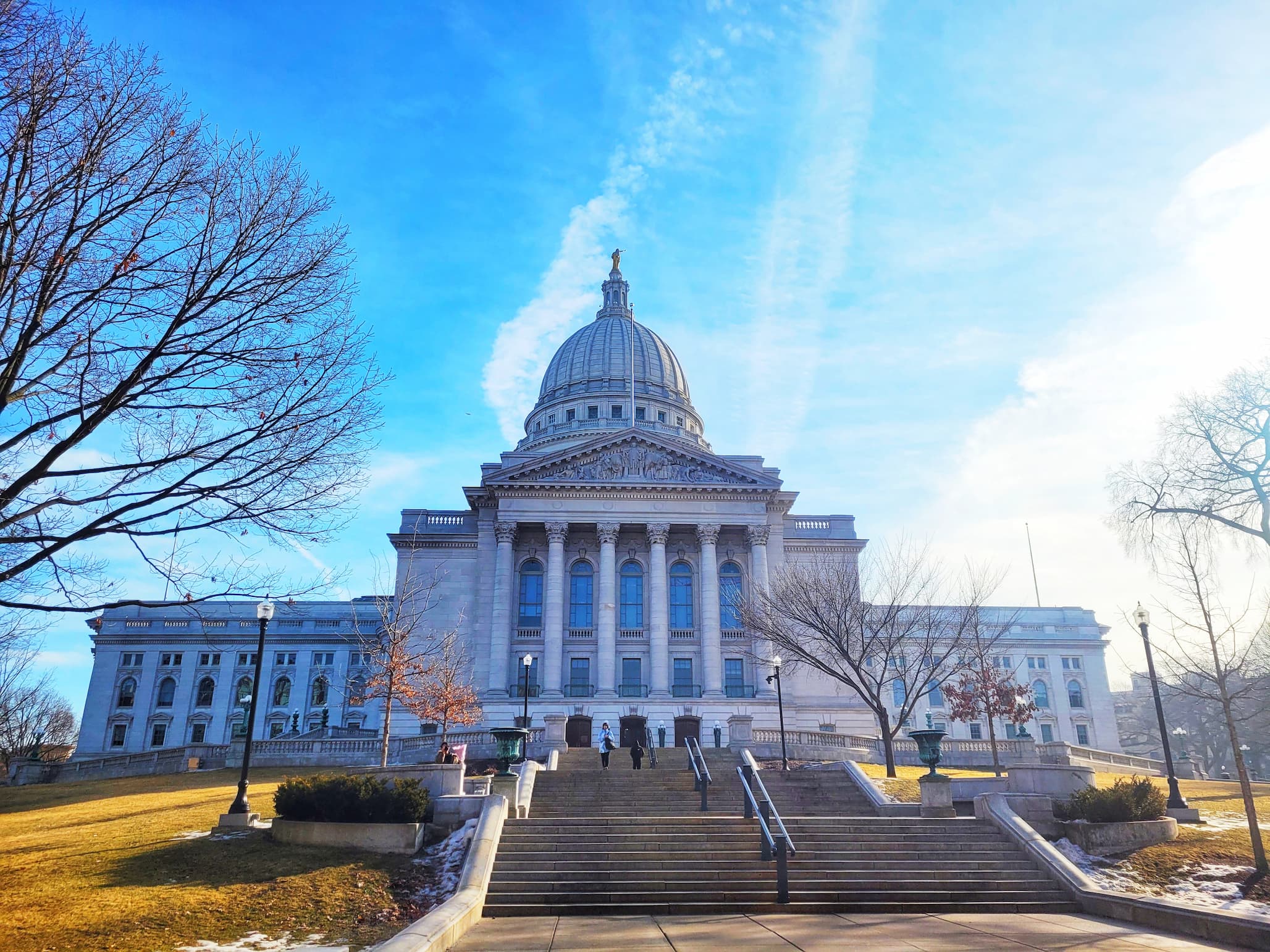
Touring the Wisconsin State Capitol (For Free!)
If you’ve been around here for a while, you know I will never turn down a free tour- especially when it involves gorgeous architecture, a little history, and the chance to peek behind doors you wouldn’t normally walk through.
While we were in Madison for the weekend, my friend Krista scooped me up Saturday morning and we headed to the Wisconsin State Capitol for one of their free guided tours and I had a great time (even as a lifelong Illinoisan)! Before I get into the pretty details, here’s exactly how to visit for yourself:
How to Tour the Wisconsin State Capitol
Cost: Free!
When Tours Are Offered: Free guided tours run daily, year-round, except Easter Sunday, Thanksgiving, Christmas Eve, Christmas Day, and New Year’s Day
Tour Times:
- Monday–Saturday: 9am, 10am, 11am, 1pm, 2pm, 3pm
- Sunday: 1pm, 2pm, 3pm
- Memorial Day–Labor Day: An additional 4pm tour on weekdays
Where to Go: Tours depart from the Information Desk in the Rotunda.
No need to schedule in advance as long as your group has fewer than 10 people. (We just walked up.)
Length: About 45–50 minutes.
What You’ll See: It depends on what’s happening in the building that day, but may include:
- The Rotunda
- Assembly Chamber
- Senate Chamber
- North Hearing Room
- Governor’s Conference Room
- Wisconsin Supreme Court
Building Hours:
- Monday–Friday: 8am–6pm
- Saturday & Sunday: 8am–4pm
And this surprised me: there’s no security screening to enter the building.
Observation Deck: The outdoor observation deck (yes, you can go up into the dome!) is open mid-April through December, weather permitting. It may close during bad weather.
Parking: There are parking garages nearby in downtown Madison, which makes it pretty easy to add this to your day.
My Overall Review of the Wisconsin State Capitol Tour
I went with one of my childhood best friends who now lives near Madison (10/10 recommend having a local chauffeur when you’re traveling in a truck the size of a small building). My truck definitely would not have fit in the closest parking garage downtown, so RVers and oversized vehicle friends, take note. There is a surface lot a few blocks away and some street parking, but it’s tight. If you’re rolling into town in anything larger than a standard SUV, plan ahead.
We visited on a Saturday and were able to see:
- The Rotunda
- The Wisconsin Supreme Court chamber
- The Senate chamber
There were meetings happening in the Assembly and the hearing room, so those were closed to tours that day. Our guide also mentioned they’re temporarily not doing the Governor’s Conference Room or anything near the governor’s office due to a recent security issue.
I was a little disappointed we couldn’t see everything, but it’s a completely free tour of an active government building, so honestly… hard to complain.
I have to talk about this because it genuinely surprised me: there is no security screening to enter the building. No metal detector. No bag check. Nothing. Our guide said it’s one of only 11 state capitols in the country without security, because it’s meant to be “the people’s building.” I’m so used to even small county courthouses having basic screening that walking straight in felt really weird.
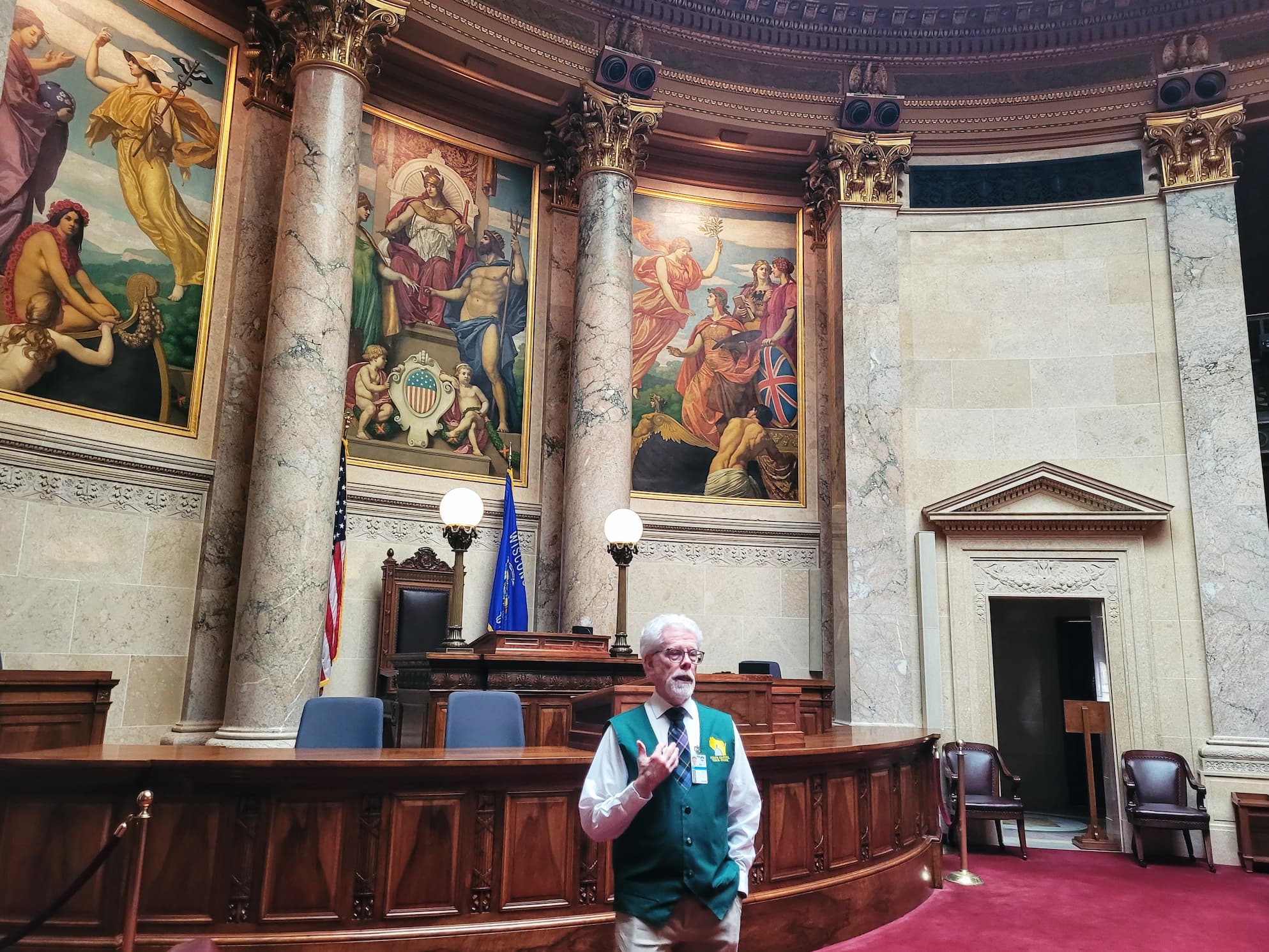
Our tour started on the ground floor beneath the Rotunda, where we got an overview of the building’s history and architecture. From there we moved through the Supreme Court chamber, then the Senate chamber, and wrapped up on the first-floor Rotunda balcony. Our guide was awesome, he shared lots of interesting nuggets of history, and some jokes, and was all-around friendly and informative.
Even with a few rooms closed, I thought it was absolutely worth doing. The architecture alone makes it worthwhile, and getting context from a guide adds so much more than just wandering around on your own.
An Overview of Our Wisconsin Capitol Tour
The Rotunda
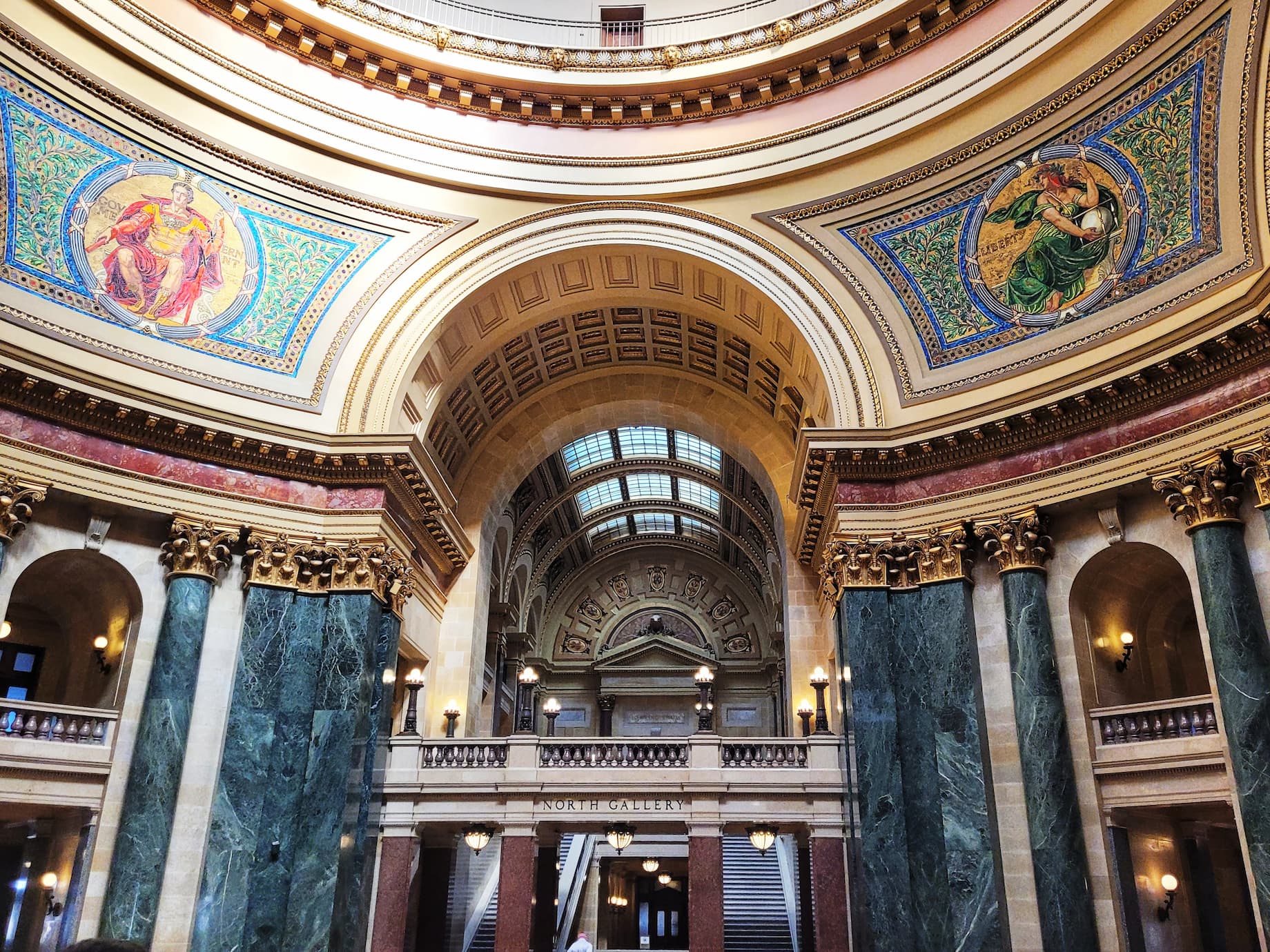
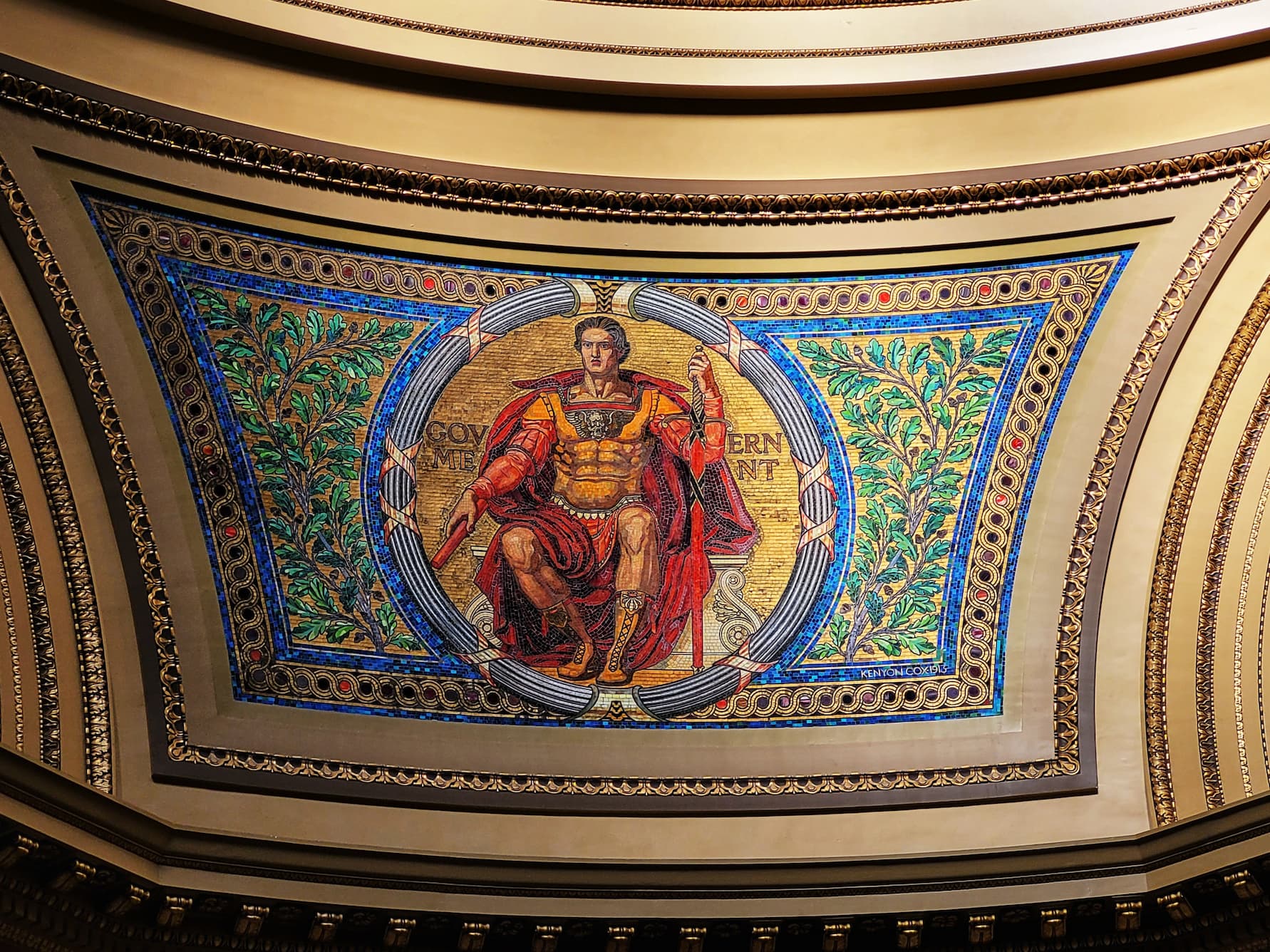
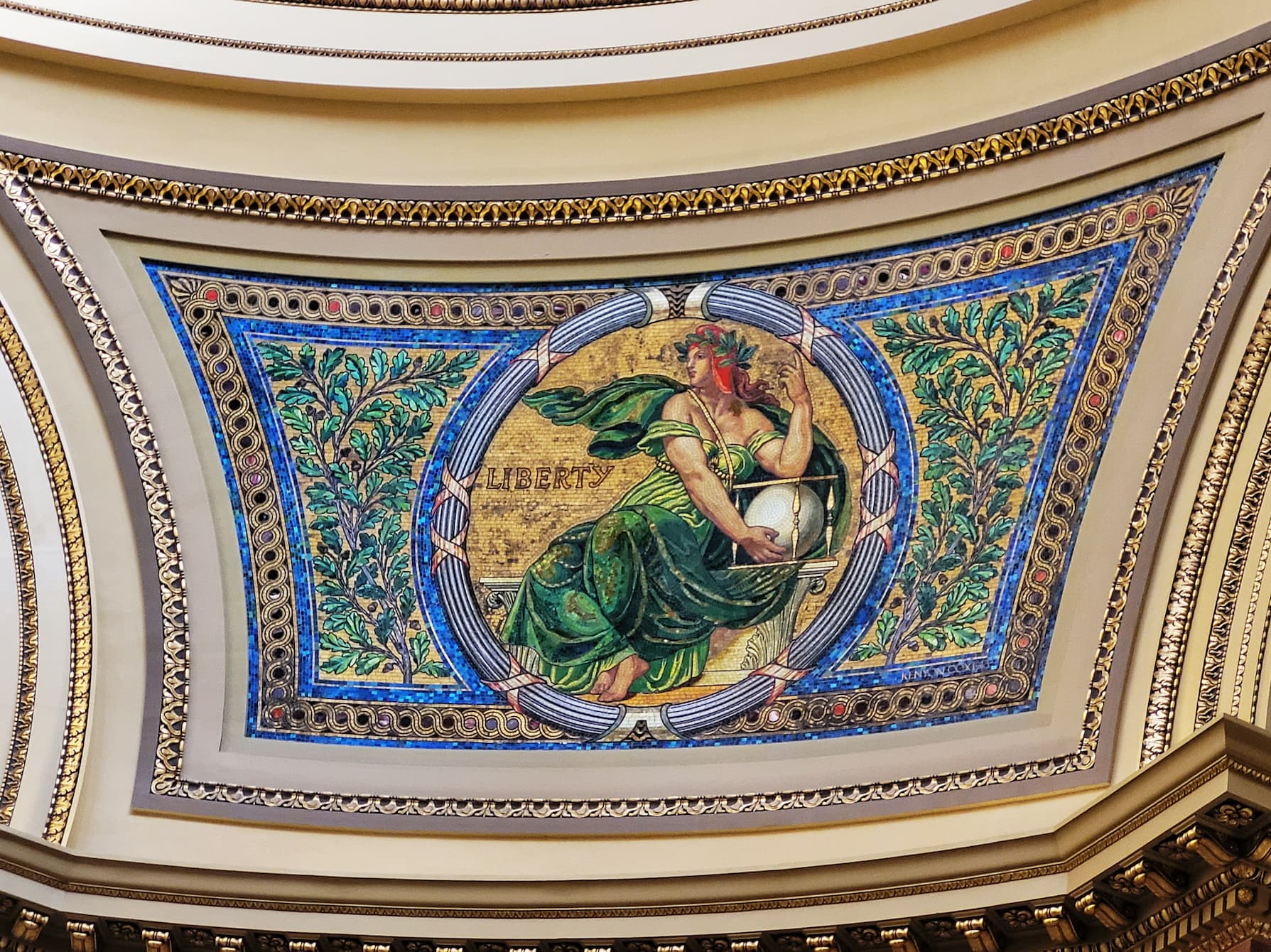
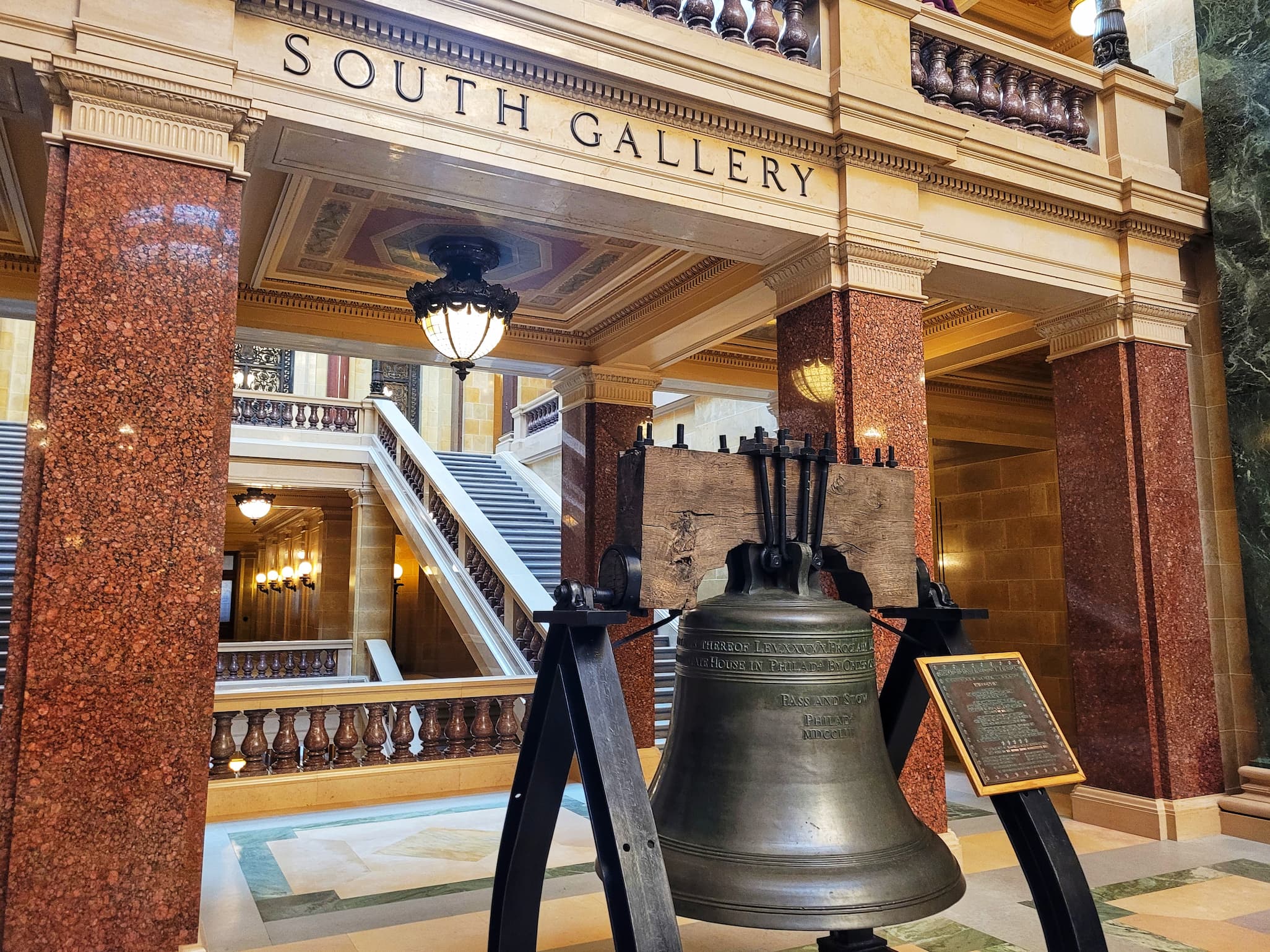
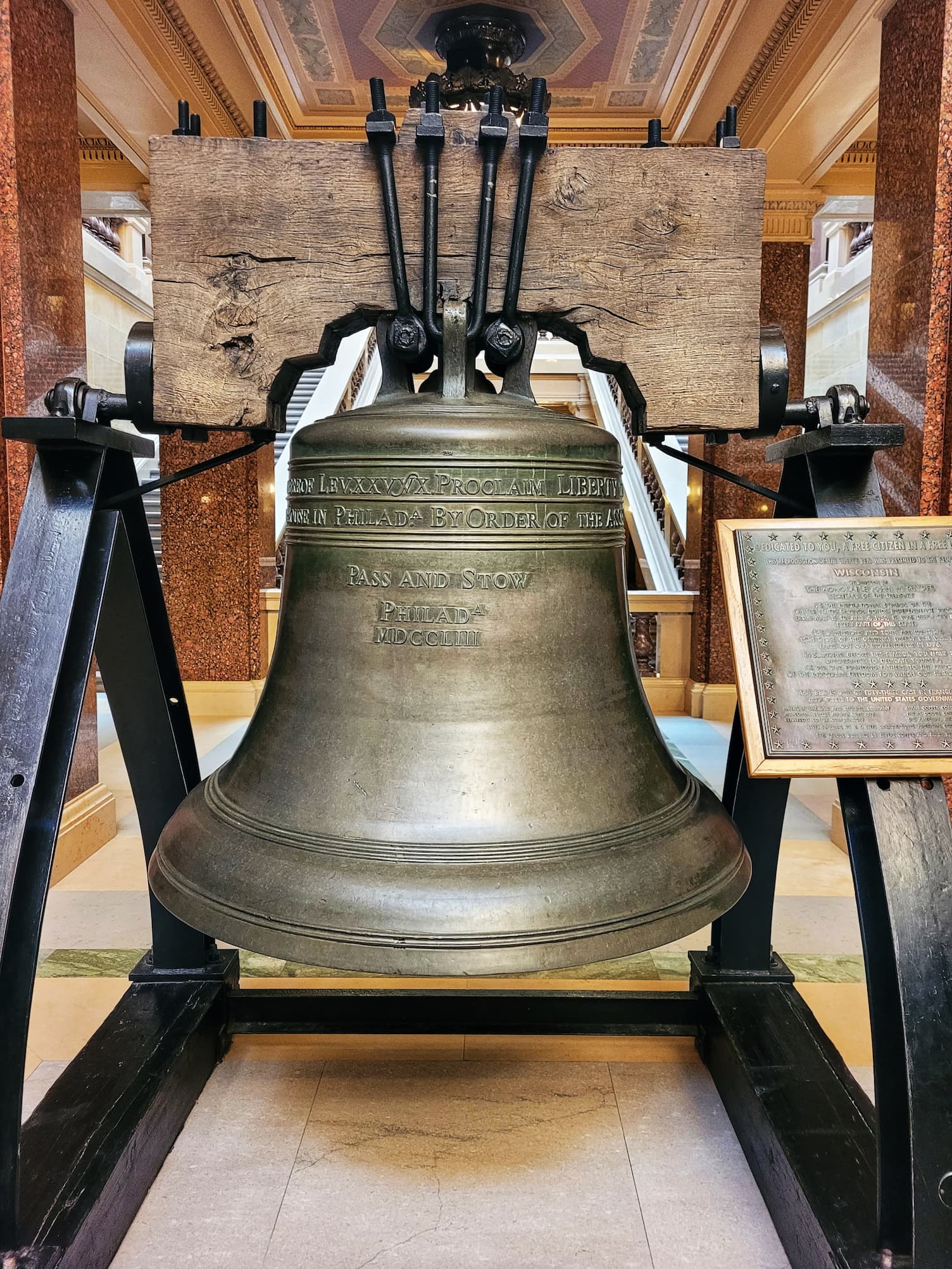
If you only have time to pop into one space inside the Wisconsin State Capitol, make it the Rotunda. It’s the heart of the building, and it shows. On the first floor you’ll find a replica of the Wisconsin State Constitution, a bust of former governor Robert M. La Follette, a replica Liberty Bell, and a Veterans Memorial. Look up and you’ll see four massive mosaics, each 12 feet tall and made of roughly 100,000 pieces of glass tile, representing the three branches of government plus Liberty. They were designed by the same artist who created murals for the Library of Congress!
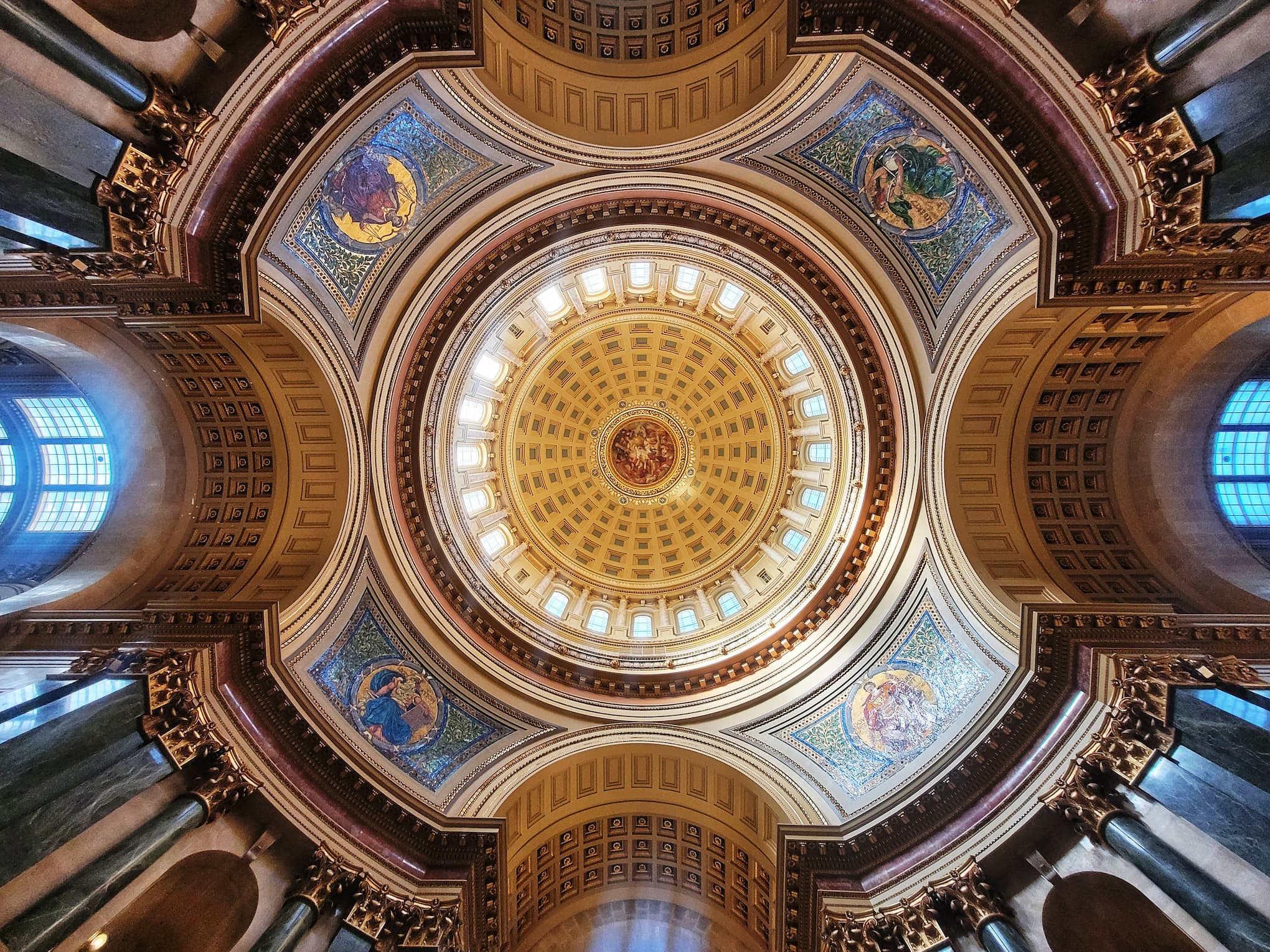
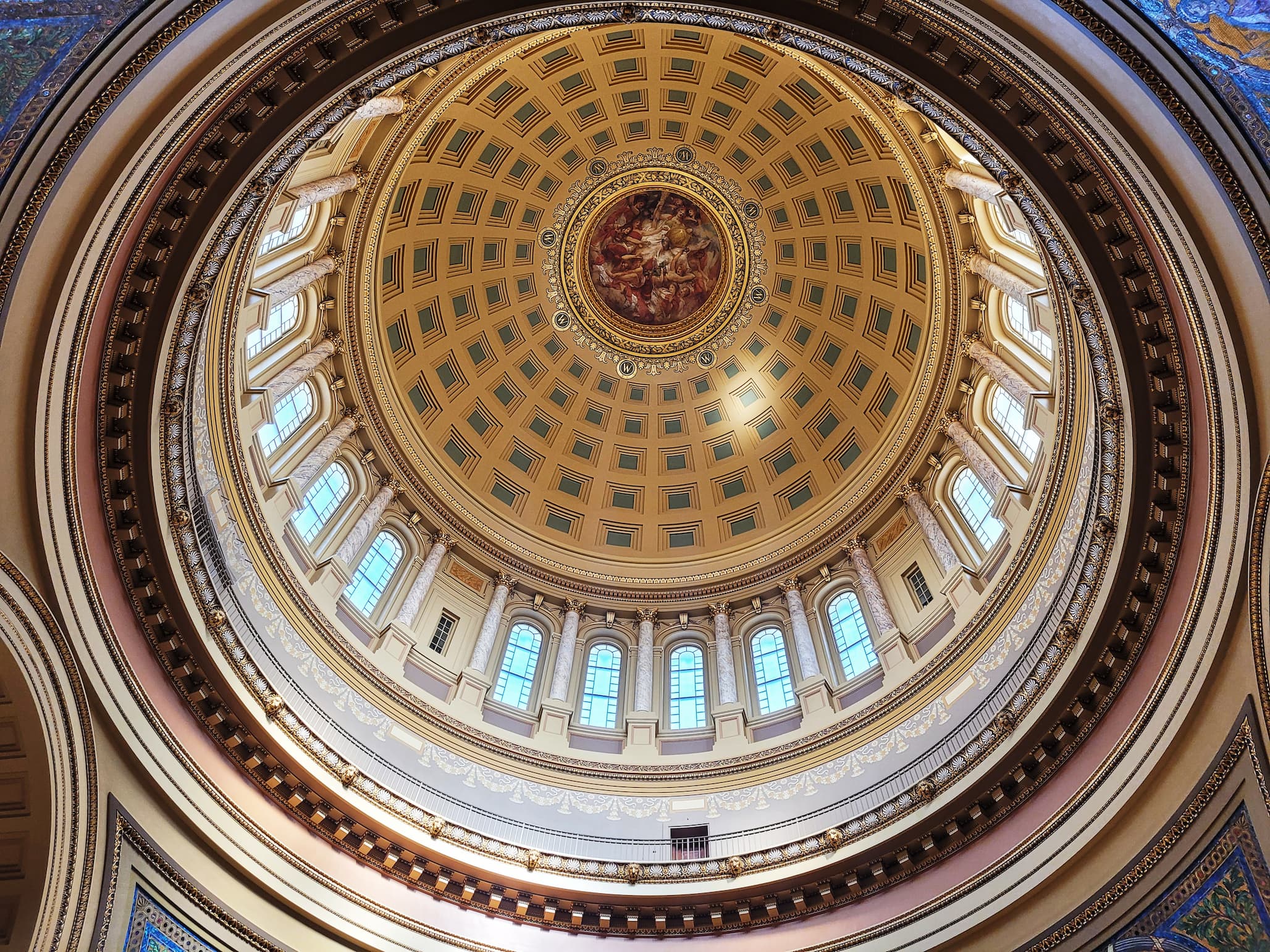
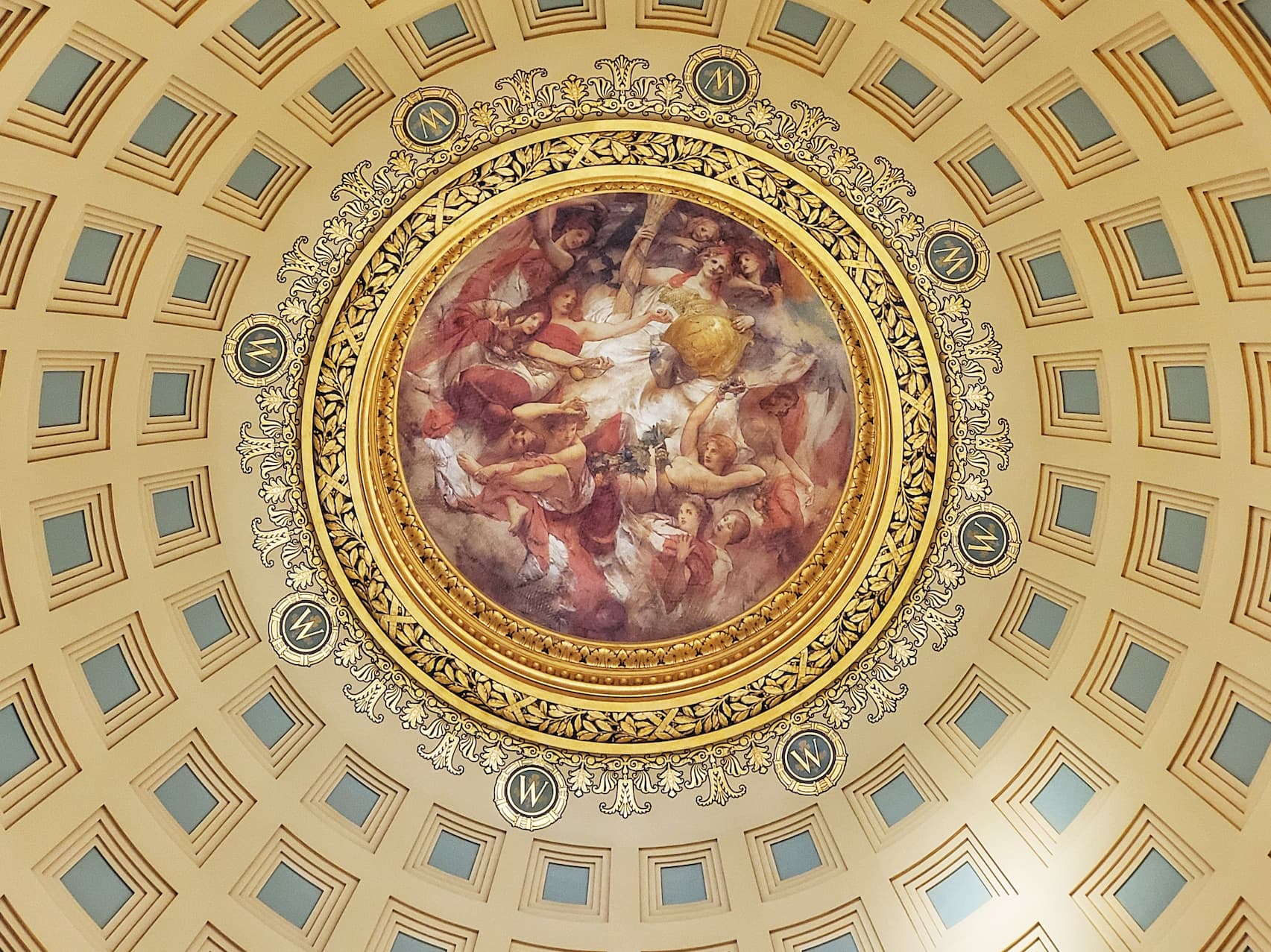
This is also where you start to appreciate the building’s history. Madison was chosen as the capitol site in 1837 (by a single vote- thanks in part to land-buying influence from James Duane Doty), and the current building, designed by architect George B. Post, is actually the third capitol, completed in 1917. Fun fact: Wisconsin installed the world’s first electronic voting machine in the Assembly chamber that same year. It’s also one of the few state capitols that houses all three branches of government under one roof. And as you’re wandering, keep an eye out- there are said to be around 1,200 badgers hidden throughout the building. Oh, and after spotting stone from all over the world, I was oddly excited to finally identify Wisconsin’s own red granite (the state stone) in those massive columns.
The Supreme Court Chamber
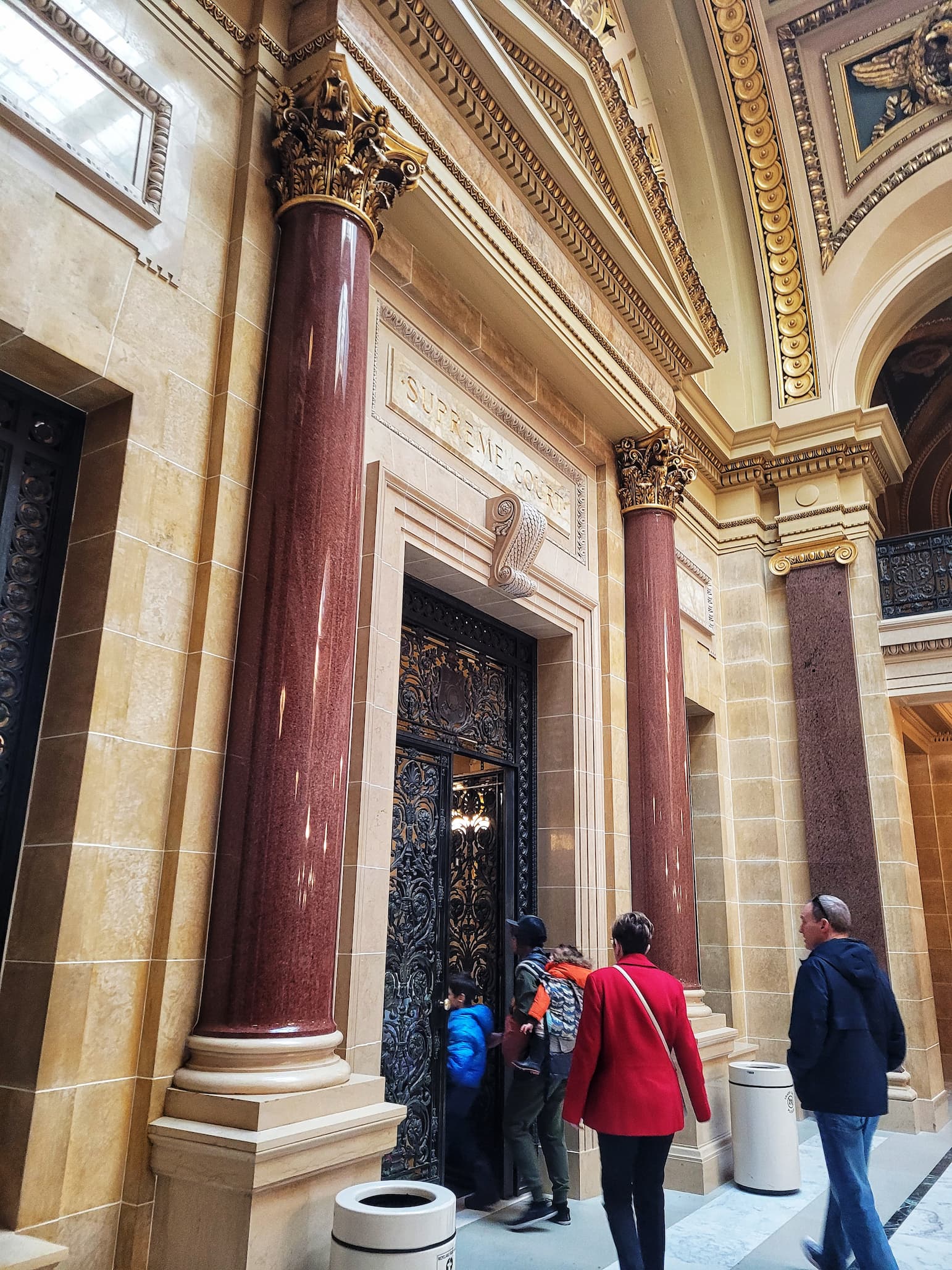
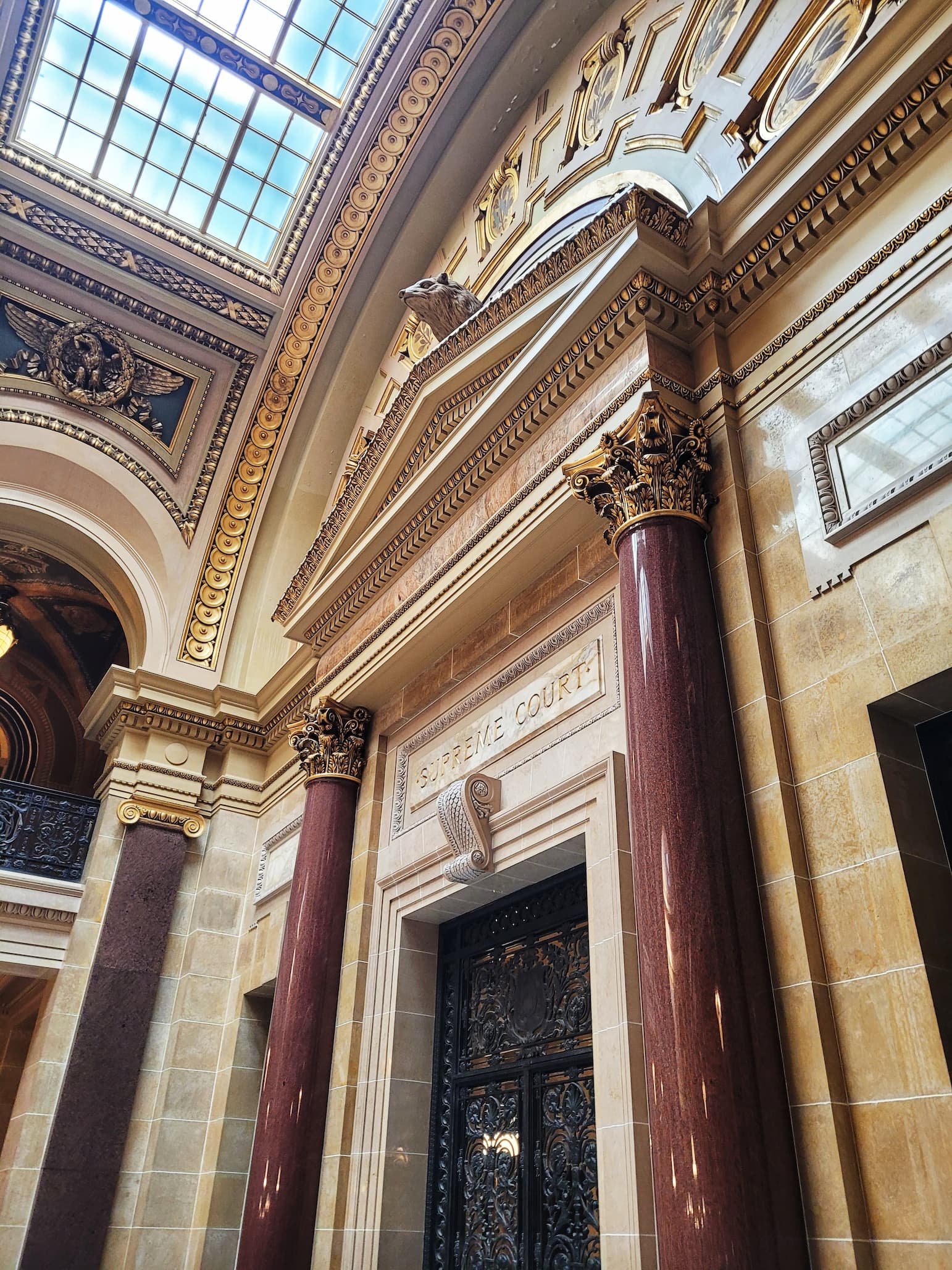
Up on the second floor of the east wing is the Supreme Court Chamber, still actively used by the Wisconsin State Supreme Court justices and the Fourth District Court of Appeals for oral arguments. Wisconsin’s Supreme Court has seven justices (currently six are women!), each elected in non-partisan elections to 10-year terms.
This room has more marble than any other space in the building, with stone sourced from France, Germany, Italy, Maryland, and Tennessee. The columns are made from a specific type of French marble that’s no longer available, which makes the space feel even more special. The mahogany furniture is original to the room; while the justices now use more comfortable modern chairs, the original seats are still displayed behind them. We were even able to take a seat in this room, in some of the original chairs (just not the fancy judge ones!)
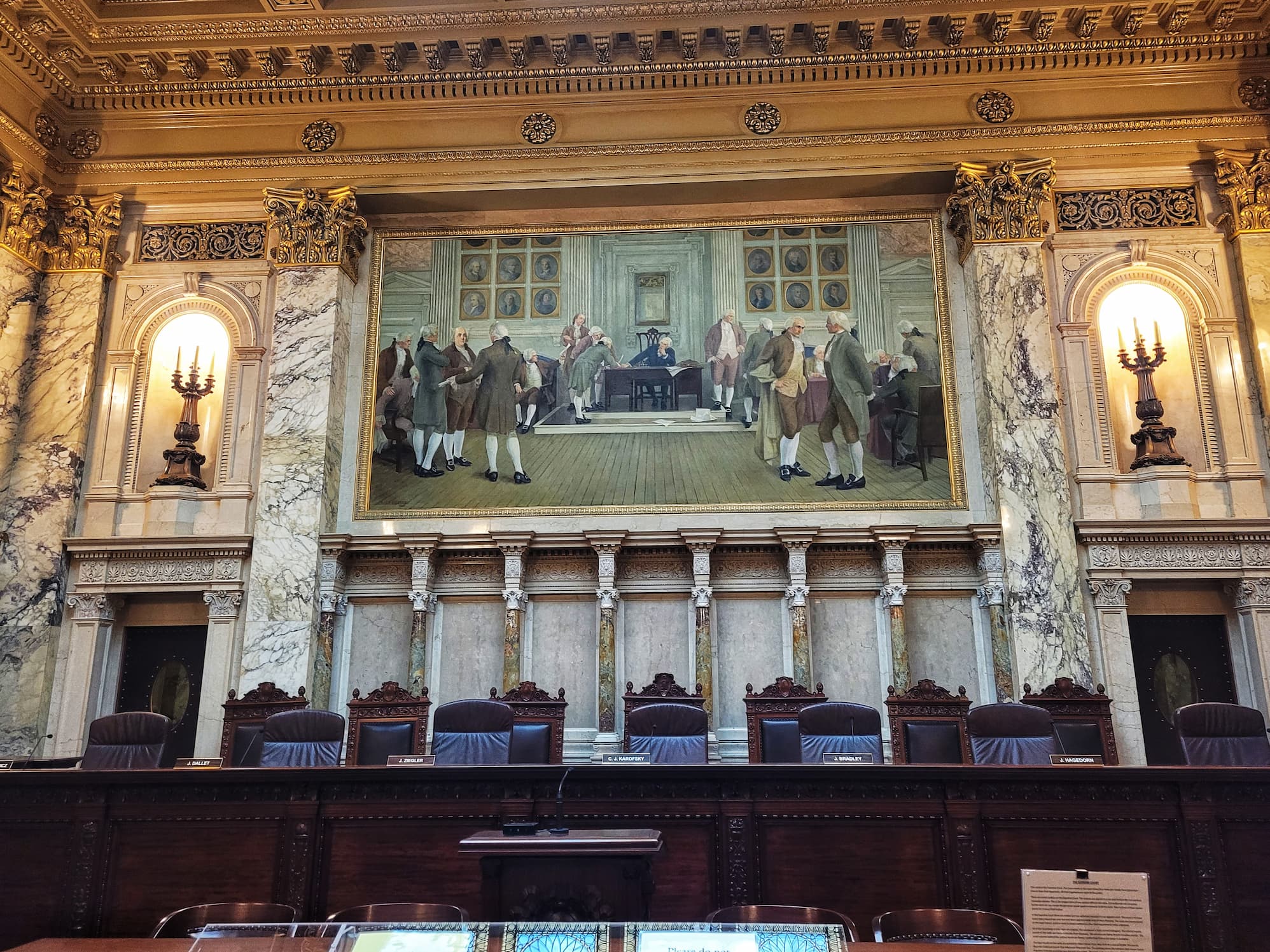
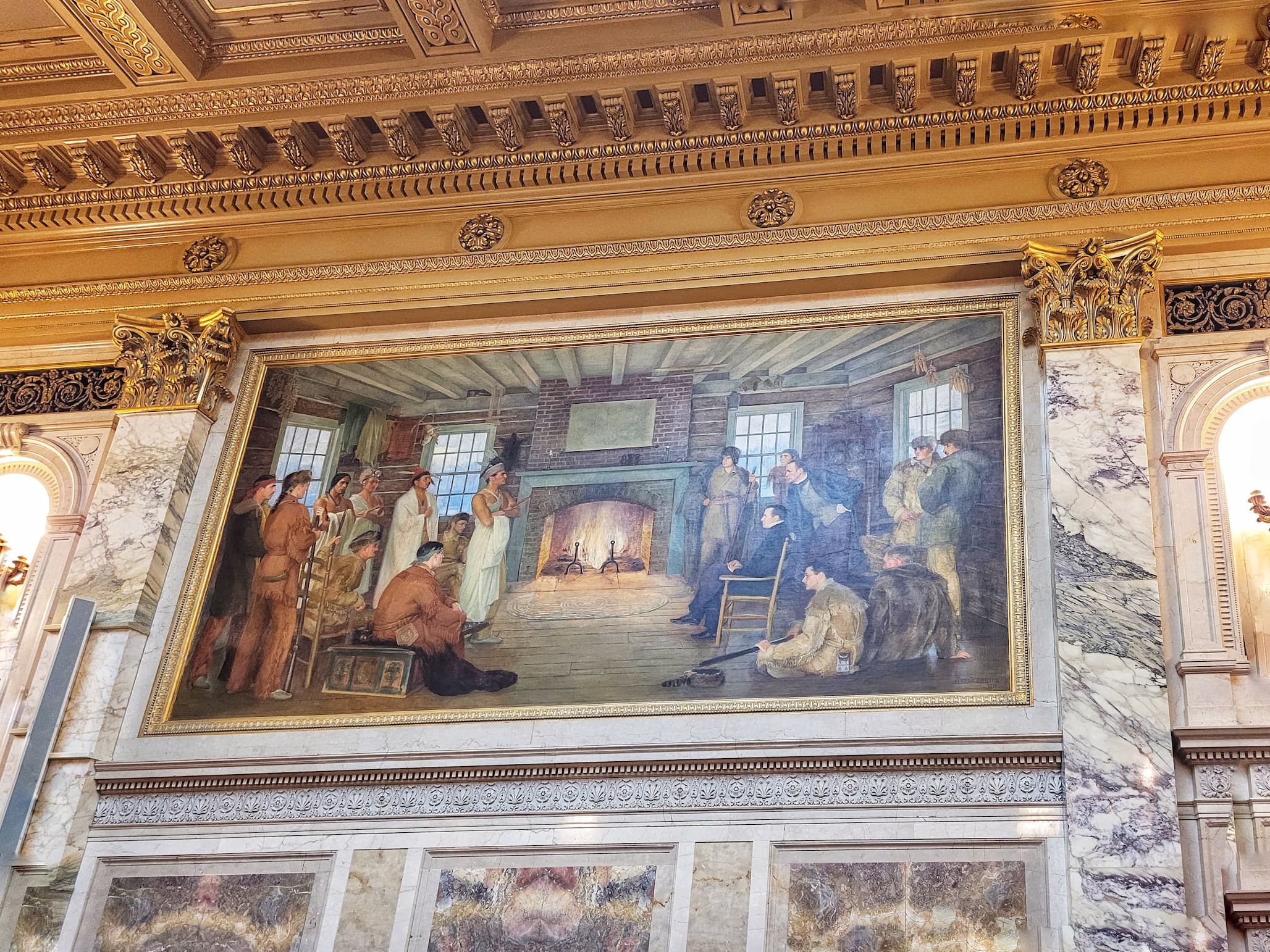
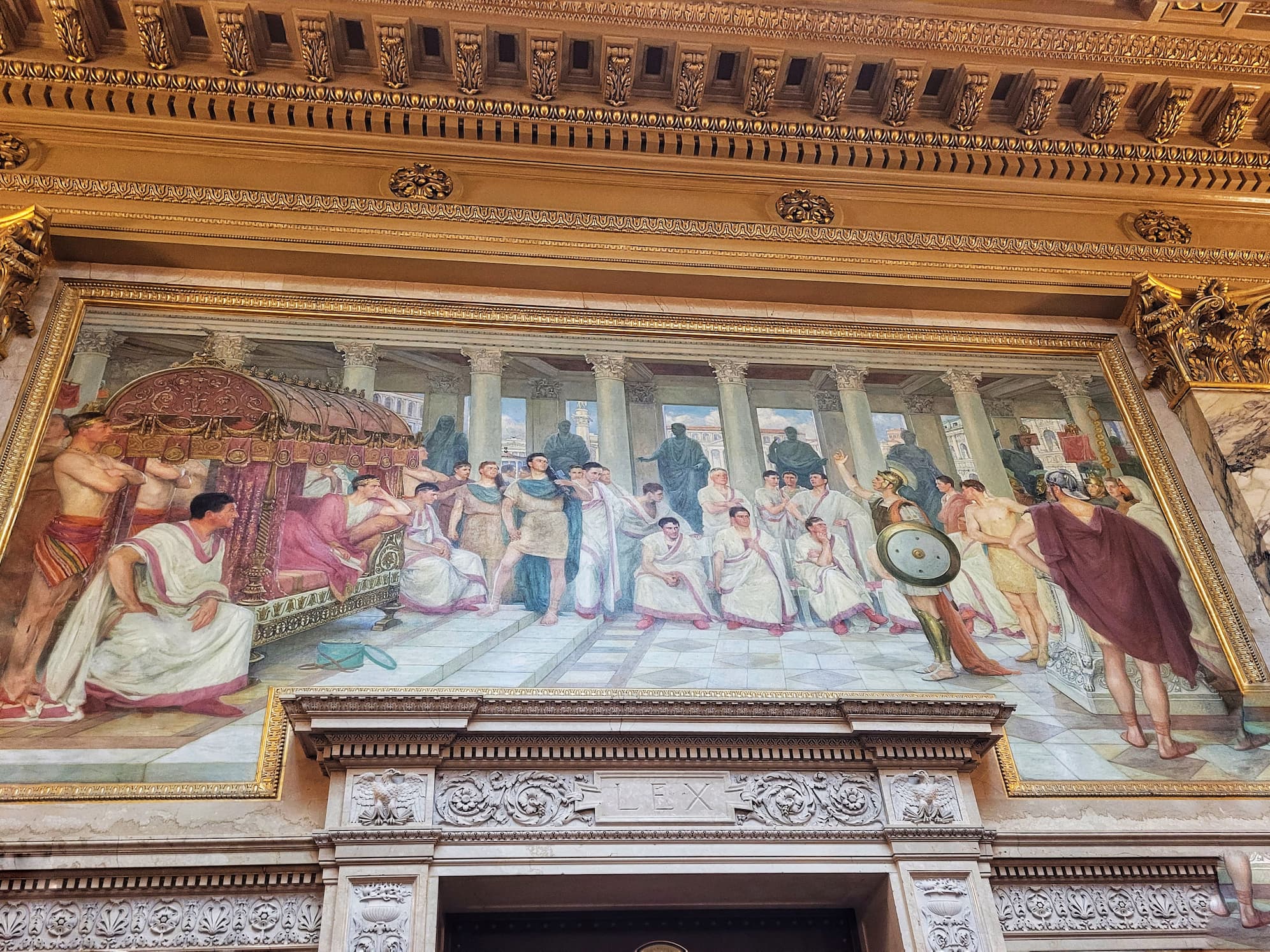
The four murals, painted by Albert Herter, each depict pivotal moments in legal history: Caesar Augustus presiding over a trial, the signing of the Magna Carta, the signing of the U.S. Constitution, and the trial of Chief Oshkosh, which marked the first time a jury was used in Wisconsin.
The Senate Chamber
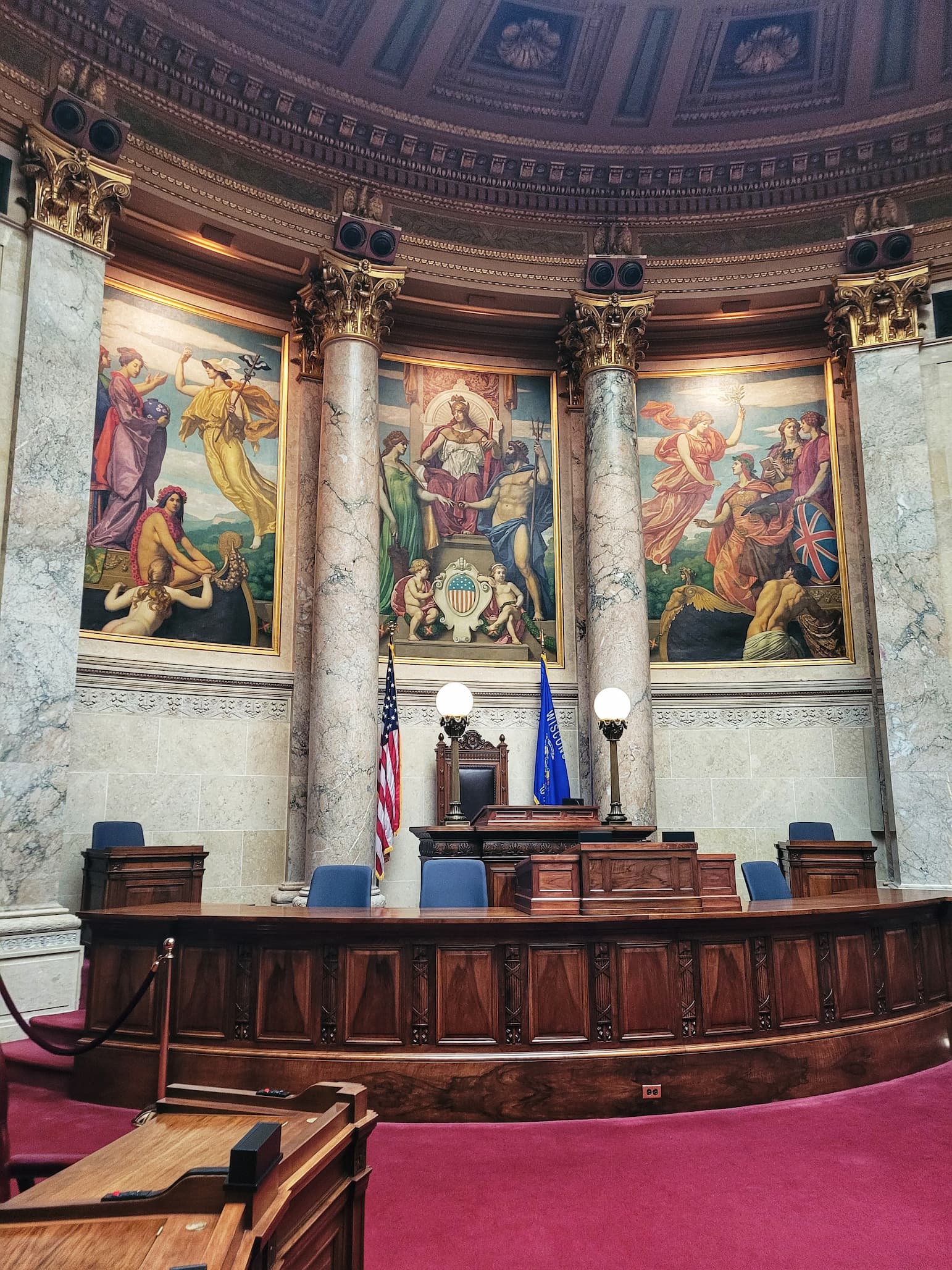
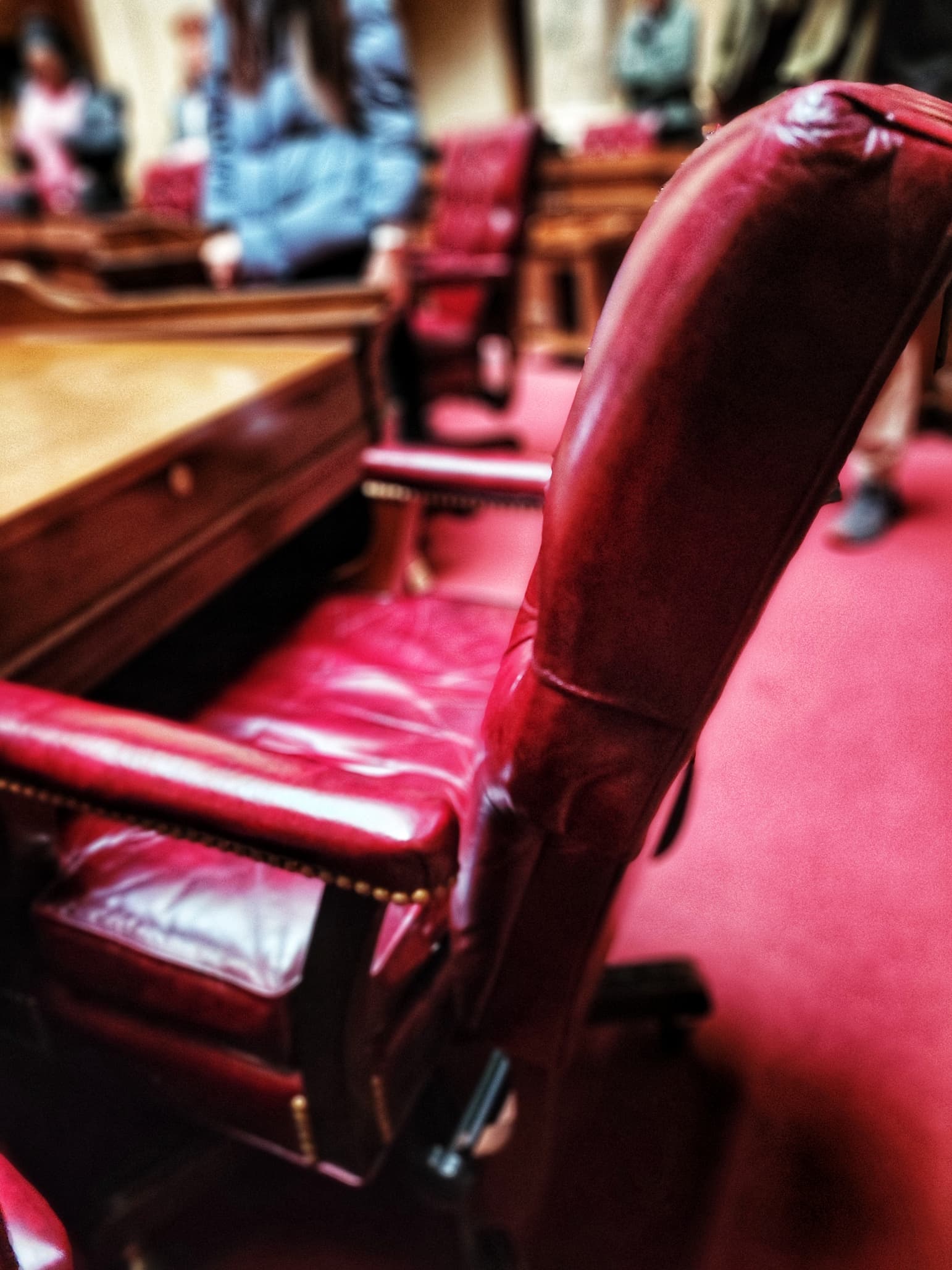
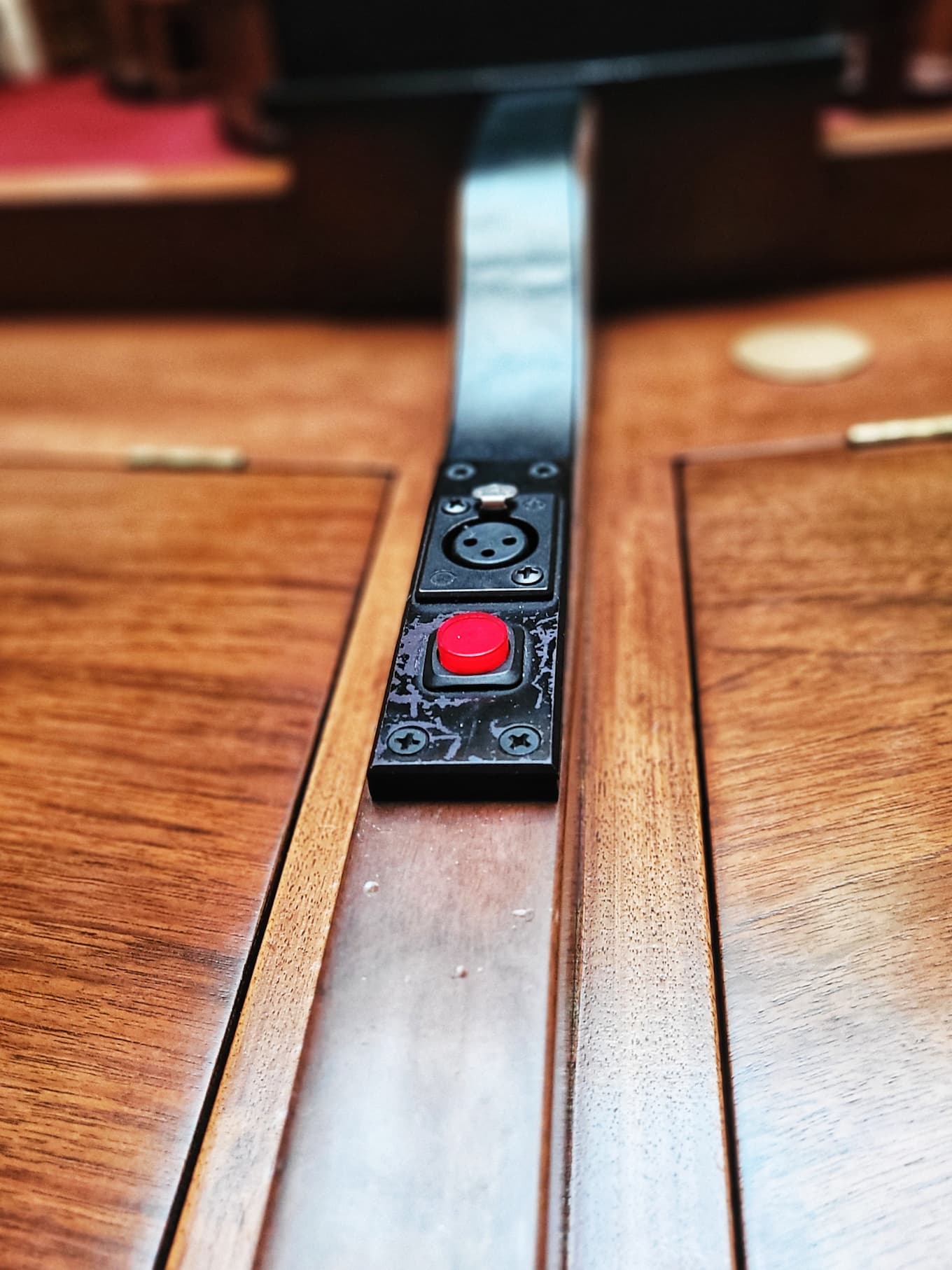
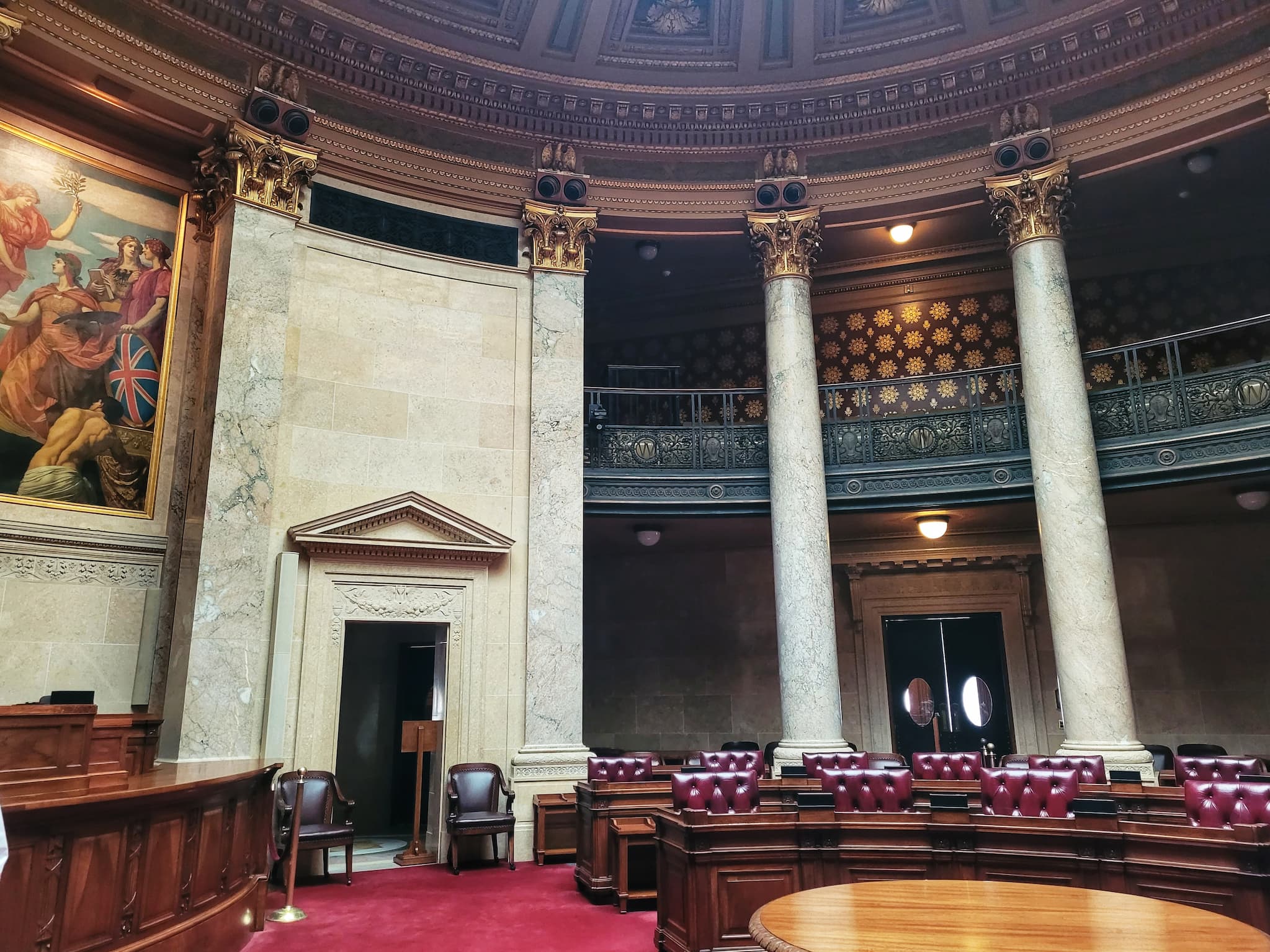
On the second floor of the south wing, you’ll find the Senate Chamber- home to Wisconsin’s 33 state senators. The layout is circular, with minority party members seated in the inner ring of desks and the majority party in the outer ring, which I thought was such an interesting visual representation of how the chamber functions. Up close, you can see where senators plug in their microphones and use the buttons at their desks to request to speak- little behind-the-scenes details that make it feel very real.
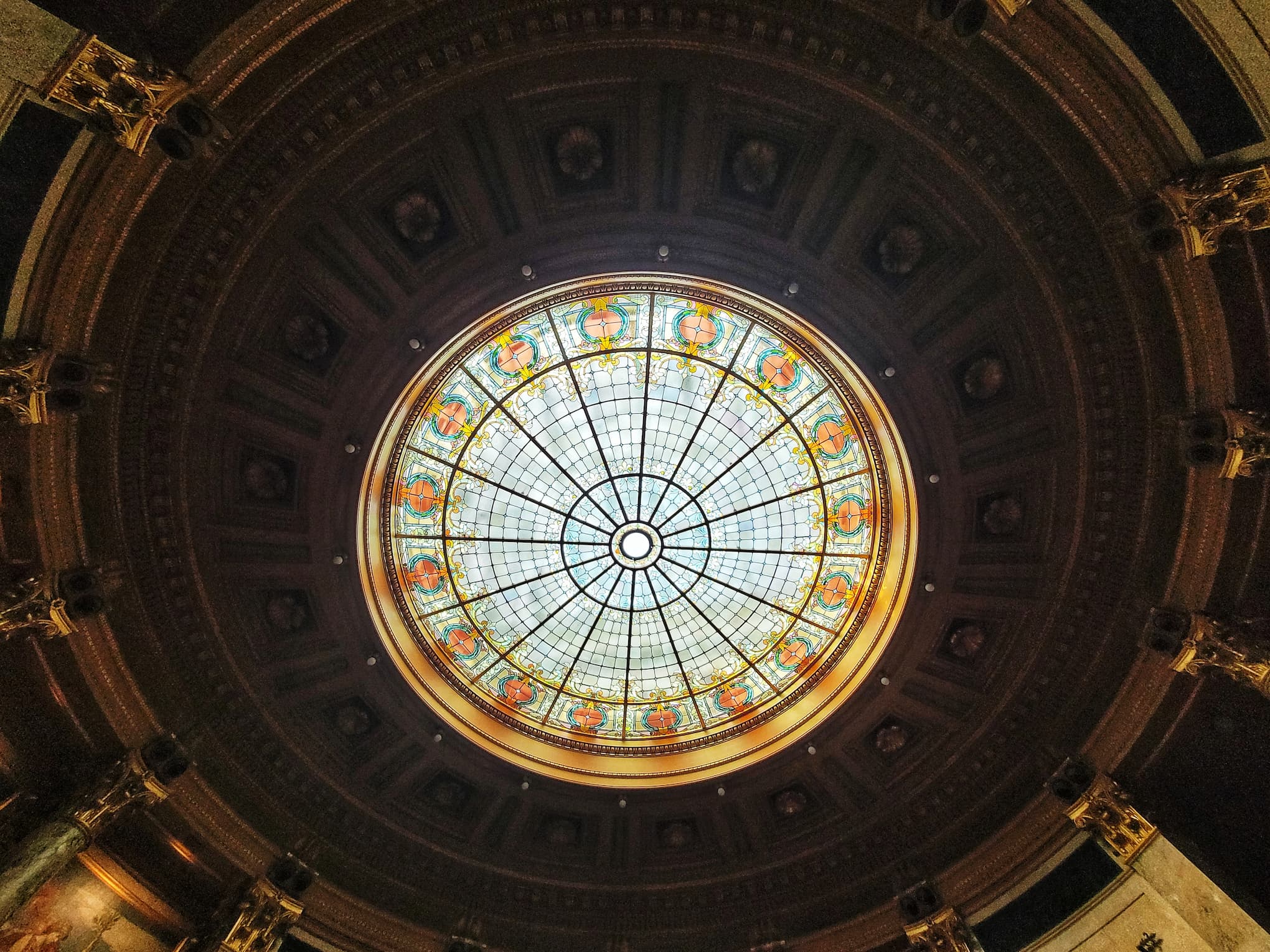
The room itself is stunning: Italian and French marble, a skylight overhead, and original walnut furniture still in use. There’s also a third-floor gallery above the chamber (and the Assembly) where the public can sit and observe proceedings. At the front of the room is a mural by Kenyon Cox titled “The Marriage of the Atlantic and the Pacific,” commemorating the opening of the Panama Canal, a dramatic, larger-than-life backdrop for everyday legislative work.